In another setback for the electric vehicle industry, the Ministry of Heavy Industries has clearly stated that there are no plans to increase subsidies for different types of electric vehicles.

The plan to boost electric car manufacturing in India is still uncertain because the guidelines for making it work have not been finalized. The policies for supporting the production and sale of electric vehicles in India seem to be on hold. In the Union Budget presented last month, there were no new announcements about incentives to promote EV sales, even though the industry was hoping for an extension of the earlier subsidy scheme, FAME (Faster Adoption and Manufacturing of Hybrid and Electric Vehicles).
Another plan aimed at promoting the manufacturing of electric passenger cars in India has also been stalled since it was quickly announced in March. The guidelines for this plan have not yet been published, and only one meeting with stakeholders has been held so far. There is significant dissatisfaction within the industry over this scheme because it favors domestic manufacturing and aligns with the demands of some global electric vehicle manufacturers like Tesla. Domestic manufacturers disagree with the concessions proposed for Tesla and other global companies, causing the situation to remain unresolved.
Now, in a further blow to the electric vehicle ecosystem, the ministry of heavy industries has categorically denied any plans to increase subsidies for various categories of EVs. To a question about any plans to increase subsidies for various EV categories for improving EV penetration, MoS B S Varma said in a written reply in the Rajya Sabha, “There is no such proposal to increase subsidy per unit for various types of e-vehicles under consideration in the Ministry of Heavy Industries as there is no slowdown in the sales of electric vehicles in the country, with the existing subsidies/incentives under the schemes being implemented…”
FAME ambiguity:
Multiple Members of Parliament have asked the same question in both Houses during the ongoing Budget Session. Each time, the Ministry of Heavy Industries has avoided answering directly by only listing the current schemes for promoting electric vehicles. Many wonder if a third edition of the purchase subsidy scheme, FAME, will be introduced. This question is also on the minds of India’s electric vehicle manufacturers because the first two editions of FAME helped boost sales by offering purchase subsidies. These subsidies reduced the cost of electric vehicles, which are usually more expensive than comparable internal combustion engine vehicles.
However, the ministry has avoided addressing these repeated questions and continues to give the same response: the Electric Mobility Promotion Scheme (EMPS) has been in place since April 1 and will run until September 30 to incentivize sales of electric two and three-wheelers. Additionally, a production-linked incentive scheme with a budget of INR 25,938 crore is ongoing to support the manufacturing of electric vehicles and parts. The Scheme to Promote Manufacturing of Electric Passenger Cars has been announced, but its guidelines have not yet been issued.
The ambiguity over FAME III comes when people close to the developments point towards political uncertainties and the era of coalition politics leading to a back and forth over the policy. “I am told that it is in the works but stuck with the Prime Minister’s office. There is some political tug of war currently, which may be delaying the policy formulation. I am given to understand that the third edition of FAME is unlikely to promote electric two wheelers in any significant manner,” said a person who declined to be identified. It is pertinent to note here that FAME II initially offered heavy incentives for e2ws.
Electric Cars:
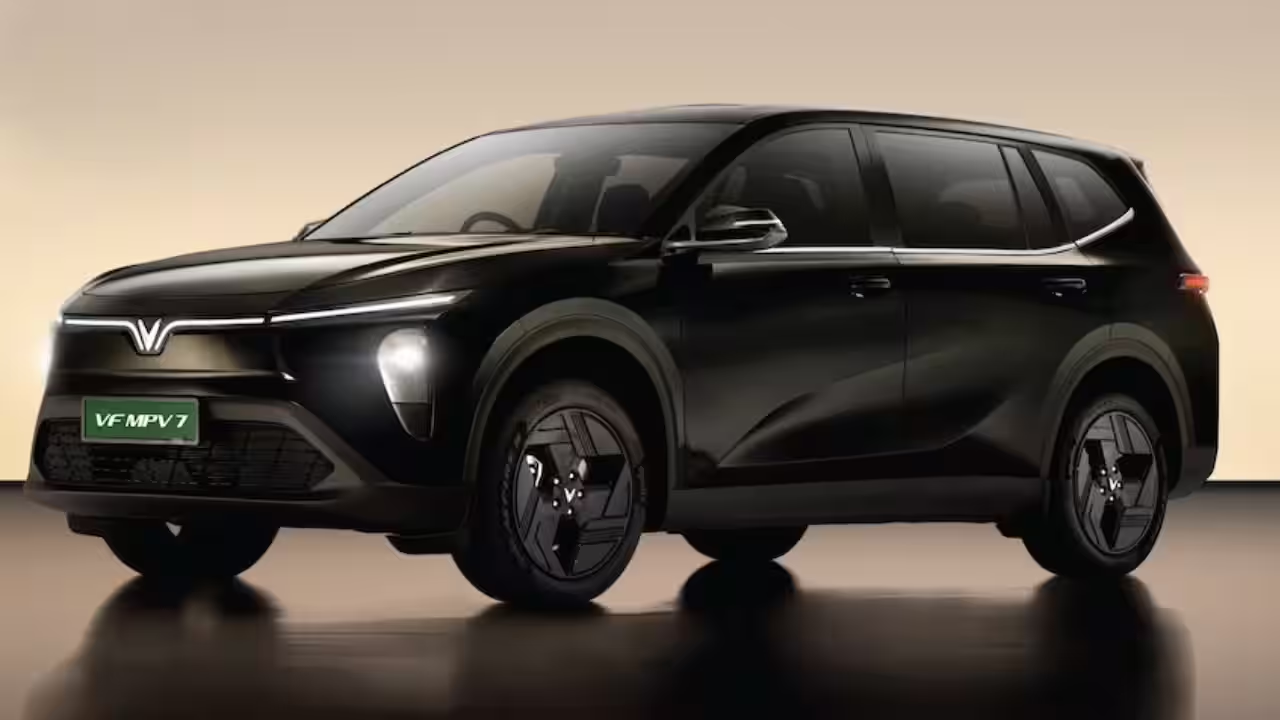
The plan to boost electric car manufacturing in India is still in limbo because the guidelines for implementing it have not been finalized. Minister of State Varma said that the first stakeholder consultation was held in April, with participation from "major" original equipment manufacturers (OEMs). However, he confirmed that the guidelines are still pending. Meanwhile, the person quoted earlier mentioned that only a few larger domestic OEMs attended this meeting, and Tesla seems uninterested in India's efforts to encourage it to build its electric cars here. For now. This person said that VinFast, the Vietnamese auto maker, was going ahead with investments regardless of the policy contours but any more global OEMs coming in at this time would depend on the concessions the domestic OEMs can wrest from the government. Major domestic OEMs have raised objections over the policy provisions, specifically those allowing concessional imports of high value EVs into India in lieu of domestic commitments.