Bentley Torcal EV
450 Lakh*

 Khyati Sharma 2026-11-26

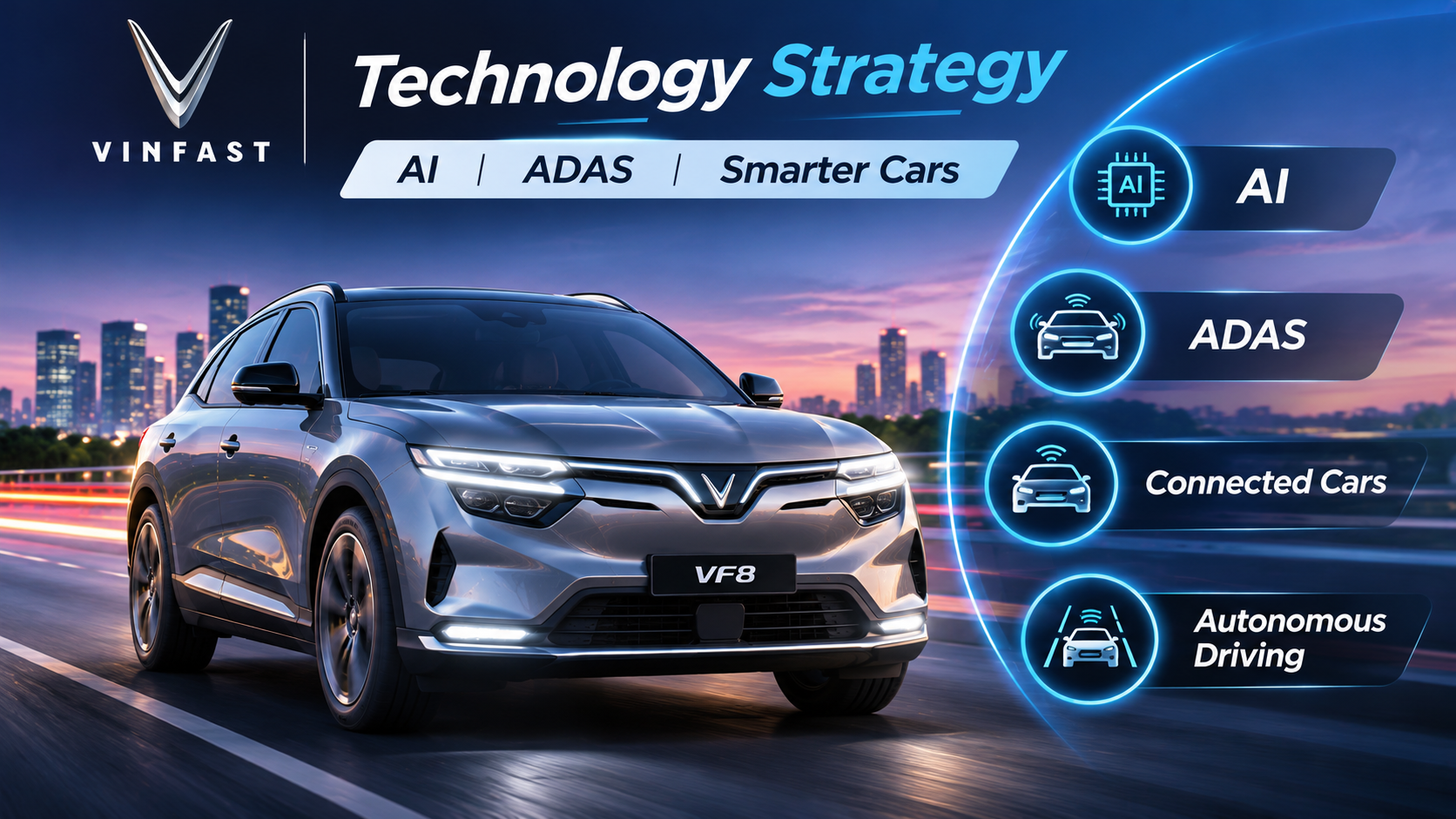
VinFast cars is stepping up its investment in artificial intelligence (AI), advanced driver-assistance systems (ADAS) and software-defined vehicles as the Vietnamese electric vehicle manufacturer looks to strengthen its position in the global automotive industry. The company is moving beyond electric powertrains and battery technology, with a greater focus on making its vehicles smarter, safer and more connected.
At the V-Creator All Star Summit 2026, held in Nha Trang, Vietnam, from November 15 to 19, VinFast presented its latest technology roadmap. The strategy includes developing its own vehicle software, introducing more advanced driver-assistance features and exploring higher levels of automated driving.
The technology push could also be relevant to growing EV markets such as India, where connected features, vehicle safety and intelligent driving assistance are becoming increasingly important.
One of the key parts of VinFast's technology strategy is the development of software-defined vehicles (SDVs). Unlike traditional vehicles that depend on multiple separate electronic control units, software-defined vehicles use more integrated computing systems to manage different vehicle functions.
VinFast is already moving in this direction with its new-generation VF 8, launched in Vietnam in May 2026. The electric SUV introduces a next-generation electrical and electronic architecture developed in-house.
At the centre of this system is a Central Vehicle Computer (CVC), which coordinates various vehicle functions and supports more integrated software development.
This architecture is expected to help VinFast improve vehicle performance, introduce new digital features and make software development more flexible. It could also make future upgrades easier as the company expands its electric vehicle portfolio.
Artificial intelligence is becoming an important part of VinFast's future vehicle development. The company is working on AI-powered perception systems that help vehicles understand their surroundings, identify potential hazards and support driver-assistance functions.
The new-generation VF 8 is the first model to receive VinFast's internally developed ADAS suite. Its features include:
Adaptive cruise control
Lane-keeping assistance
Highway driving assistance
Automatic emergency braking
Blind-spot warnings
Surround-view monitoring
These features are designed to support drivers in different traffic situations and improve overall road safety.
VinFast is also combining AI-powered perception and sensor fusion with conventional algorithms for vehicle movement and control. This approach is intended to balance performance, safety, reliability and development costs.
It is important to understand that Level 2 ADAS does not make a vehicle fully autonomous. Drivers must remain attentive and supervise the system at all times.
VinFast is following two technology development paths. The first focuses on improving Level 2 and enhanced Level 2 driver-assistance systems for passenger vehicles, while the second explores Level 4 automated driving for future mobility applications.
Level 4 technology aims to allow a vehicle to handle driving tasks autonomously within specific operating conditions without continuous human driving input. However, the technology requires extensive testing, validation and regulatory approval before it can be introduced commercially.
The company is also exploring advanced AI technologies, including end-to-end learning and Vision-Language-Action (VLA) models. These systems are being studied to help vehicles interpret visual information, understand complex traffic situations and make appropriate driving decisions.
VinFast has also demonstrated automated parking and vehicle-summoning capabilities as part of its broader technology development programme.
VinFast is combining its in-house engineering work with partnerships involving international technology companies.
In January 2026, VinFast announced a strategic partnership with automotive AI company Autobrains. The collaboration focuses on developing enhanced Level 2++ driver-assistance technology and exploring a more affordable autonomous-driving architecture.
Pilot testing of the upgraded technology began on the VF 8 and VF 9.
The partnership also includes development of a proposed Robo-Car architecture using seven standard cameras and a compact computing chip. The aim is to reduce dependence on expensive hardware such as LiDAR systems, radar arrays and high-definition maps.
In June 2026, the collaboration expanded to include a next-generation Level 4 automated-driving programme using NVIDIA's DRIVE Hyperion platform.
These partnerships are expected to help VinFast accelerate development while building its own engineering and software capabilities.

Another important part of VinFast's technology strategy involves collecting and analysing real-world driving data.
The company plans to use the broader Vingroup ecosystem, particularly Green SM, its affiliated electric mobility services operator, to support the development of AI-powered driving systems.
Commercial electric vehicle fleets can generate large amounts of driving data across different roads, weather conditions and traffic environments. This information can help engineers identify challenging driving situations and improve the performance of driver-assistance software.
Vietnam's busy urban roads, with dense motorcycle traffic and constantly changing traffic conditions, also provide a challenging environment for testing AI-based driving technology.
VinFast's development process includes data collection, AI training, virtual simulation, benchmarking and vehicle-level validation. This approach can help engineers improve software before introducing it into production vehicles.
VinFast's technology plans also extend beyond driving assistance. The company is developing a connected-car ecosystem designed to make vehicle ownership more convenient.
Its technology strategy includes digital infotainment systems, voice assistance, mobile connectivity, remote vehicle monitoring and over-the-air software updates.
Over-the-air (OTA) updates allow manufacturers to deliver certain software improvements and feature updates without requiring owners to visit a service centre. Connected services can also support remote diagnostics and vehicle monitoring through smartphone applications.
VinFast's annual report also describes its AI-enabled voice assistant technology, including ViVi 3.0, which uses generative AI to improve responses and recommendations through user interactions.
These technologies are expected to play an increasingly important role in how future electric vehicles interact with their owners.
India is an important market in VinFast's international expansion plans. The company has already introduced electric vehicles in the country and is working to establish its presence in the competitive electric SUV segment.
Its investment in AI, ADAS and connected-car technology could help strengthen its future product positioning in India.
However, the latest technology announcements do not mean that all these features will immediately arrive in Indian-market vehicles. The company has not confirmed the rollout of its newly developed Level 2 or Level 4 systems across its India-spec lineup.
Any India-specific introduction will depend on vehicle specifications, testing, safety requirements, regulations and local market positioning.
For Indian customers, the most relevant developments could include improved driver assistance, smarter infotainment systems, connected services and future software upgrades.
|
Technology area |
VinFast's development |
|
Software-defined vehicles |
New electronic architecture with Central Vehicle Computer |
|
ADAS |
In-house Level 2 driver-assistance systems |
|
AI development |
AI-based perception and advanced learning models |
|
Autonomous driving |
Level 4 technology under development |
|
Technology partners |
Autobrains and NVIDIA |
|
Connected cars |
Voice assistant, remote monitoring and OTA updates |
|
Fleet data |
Exploring Green SM operations for AI development |
|
India relevance |
Potential future application in India-spec EVs |
VinFast's latest technology strategy shows that the company wants to compete in more than just the electric vehicle market. Its investment in proprietary software, AI, ADAS and autonomous-driving research reflects a broader ambition to develop intelligent vehicles for global markets.
The new-generation VF 8 represents an important step in this direction, introducing the company's next-generation electronic architecture and internally developed ADAS technology.
While Level 4 autonomous driving remains under development, the company's partnerships with Autobrains and NVIDIA could help accelerate future progress.
For India, the biggest development to watch will be whether VinFast brings these advanced technologies to its locally available electric vehicles. As competition in the Indian EV market increases, intelligent features and connected-car technology could become important factors in attracting buyers.













BMW
₹45.30 - 54.26 Lakh