BYD Denza Z9 GT
156.8 Lakh*
 Khyati Sharma 2026-11-24

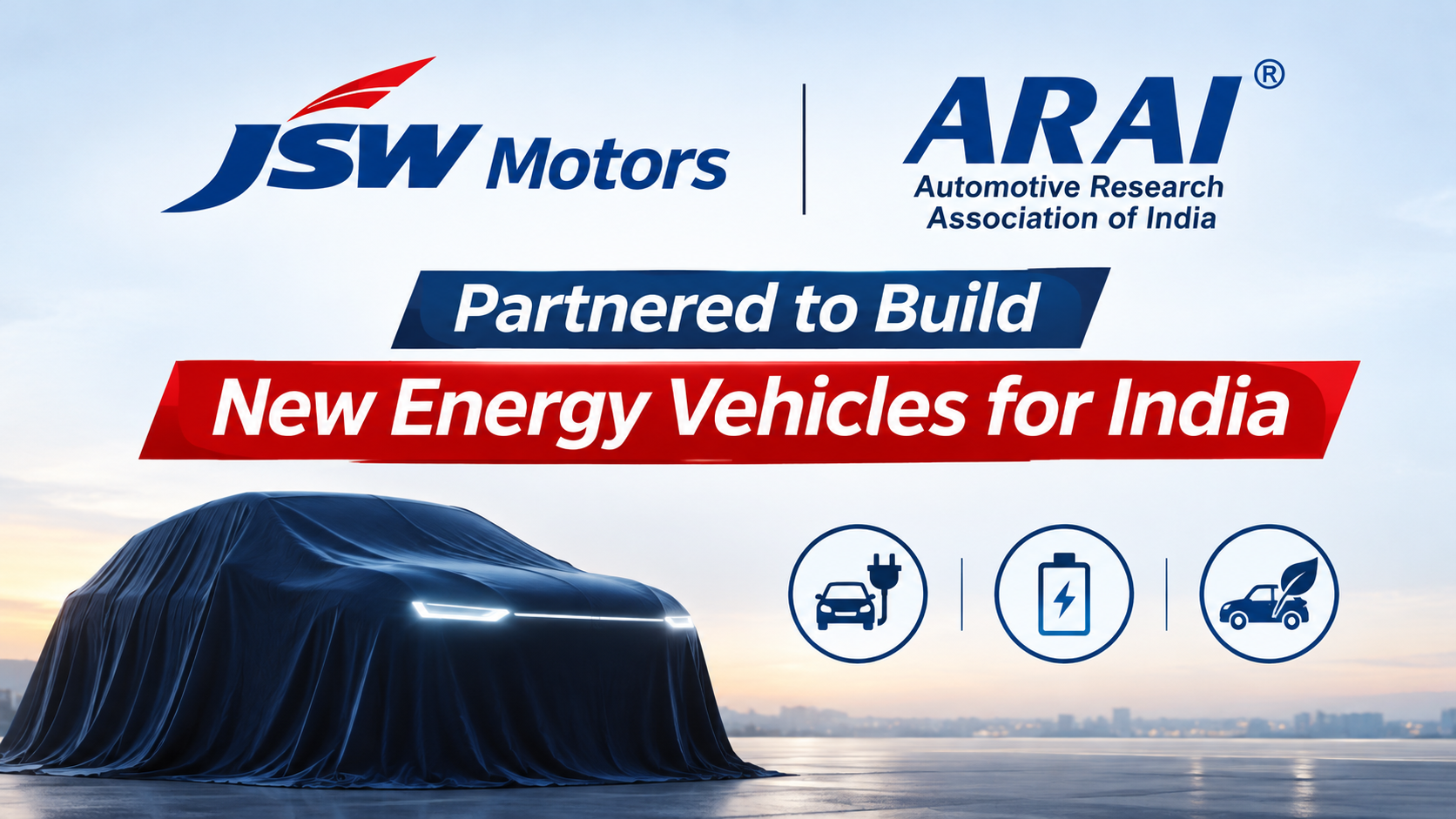
JSW Motors is strengthening its plans for India's evolving automobile industry by partnering with the Automotive Research Association of India (ARAI) to develop new energy vehicles (NEVs) for the domestic market.
The partnership is an important step in JSW Motors' strategy to explore advanced automotive technologies and develop vehicles suited to Indian driving conditions and customer requirements.
With the Indian automobile industry gradually moving towards electric mobility, hybrid technology and cleaner powertrains, collaborations between automotive manufacturers and research organisations are becoming increasingly important.
The association with ARAI is expected to support JSW Motors in areas such as vehicle engineering, testing, validation and technology development as it works towards establishing its presence in India's passenger vehicle market.
The Memorandum of Understanding (MoU) was signed on November 23, 2026, at ARAI's headquarters in Kothrud, Pune.
The agreement was signed by Ranjan Nayak, CEO of JSW Motors, and Dr Reji Mathai, Director of ARAI, in the presence of senior representatives from both organisations.
Under this partnership, ARAI will bring its automotive research, engineering, testing, validation and certification expertise to JSW Motors' vehicle development programmes.
The main objective is to combine global automotive technologies with Indian engineering capabilities to develop vehicles that can handle the country's diverse road conditions, weather and driving environments.
JSW Motors wants to strengthen its indigenous engineering capabilities rather than simply introduce internationally developed vehicles into the Indian market.
The partnership covers several important areas of automotive development. These technologies will play an important role in improving vehicle performance, safety, reliability and regulatory compliance.
1. Vehicle Engineering and Testing
One of the primary objectives is to strengthen vehicle engineering and testing capabilities.
ARAI will support JSW Motors in establishing technical benchmarks, evaluating vehicle performance and conducting validation activities.
Testing under Indian operating conditions is important because vehicles need to perform reliably across different road surfaces, temperatures, traffic conditions and driving environments.
2. Advanced Driver Assistance Systems (ADAS)
Another major focus area is Advanced Driver Assistance Systems (ADAS).
ADAS technologies use cameras, sensors and electronic systems to assist drivers and improve road safety.
The collaboration will cover the development and validation of these systems.
This could help JSW Motors prepare vehicles with advanced safety technologies suited to Indian traffic conditions. However, the company has not confirmed which specific ADAS features will be offered in its upcoming SUV.
3. Battery Systems Engineering and Validation
Battery technology is another important area covered under the agreement.
As JSW Motors prepares to develop new energy vehicles, battery engineering and validation will become essential for ensuring performance, reliability and safety.
The collaboration will help strengthen its capabilities in battery system development and testing.
This is particularly relevant as the company explores electrified powertrain technologies for the Indian market.
4. Functional Safety and Automotive Cybersecurity
Modern vehicles increasingly depend on electronic control systems, connected technologies and software-based functions.
The partnership will also cover functional safety, cybersecurity and engineering compliance.
These areas are important for ensuring that vehicle systems operate reliably and that safety-critical functions are properly developed and evaluated.
As vehicles become more connected and technologically advanced, automotive cybersecurity is becoming an increasingly important part of vehicle development.
5. Homologation and Regulatory Certification
The agreement also includes homologation and regulatory certification.
Homologation is the process through which a vehicle is tested and approved to ensure that it meets the applicable regulations before being sold in a particular market.
ARAI's experience in automotive testing and certification will help JSW Motors strengthen its regulatory readiness for future vehicle launches.
6. Research, Innovation and Engineering Skill Development
Apart from vehicle testing, the two organisations will also collaborate on research, technology development, innovation and knowledge exchange.
Engineering skill development will also form part of the partnership.
This could help JSW Motors build stronger in-house capabilities and support the development of future mobility technologies.
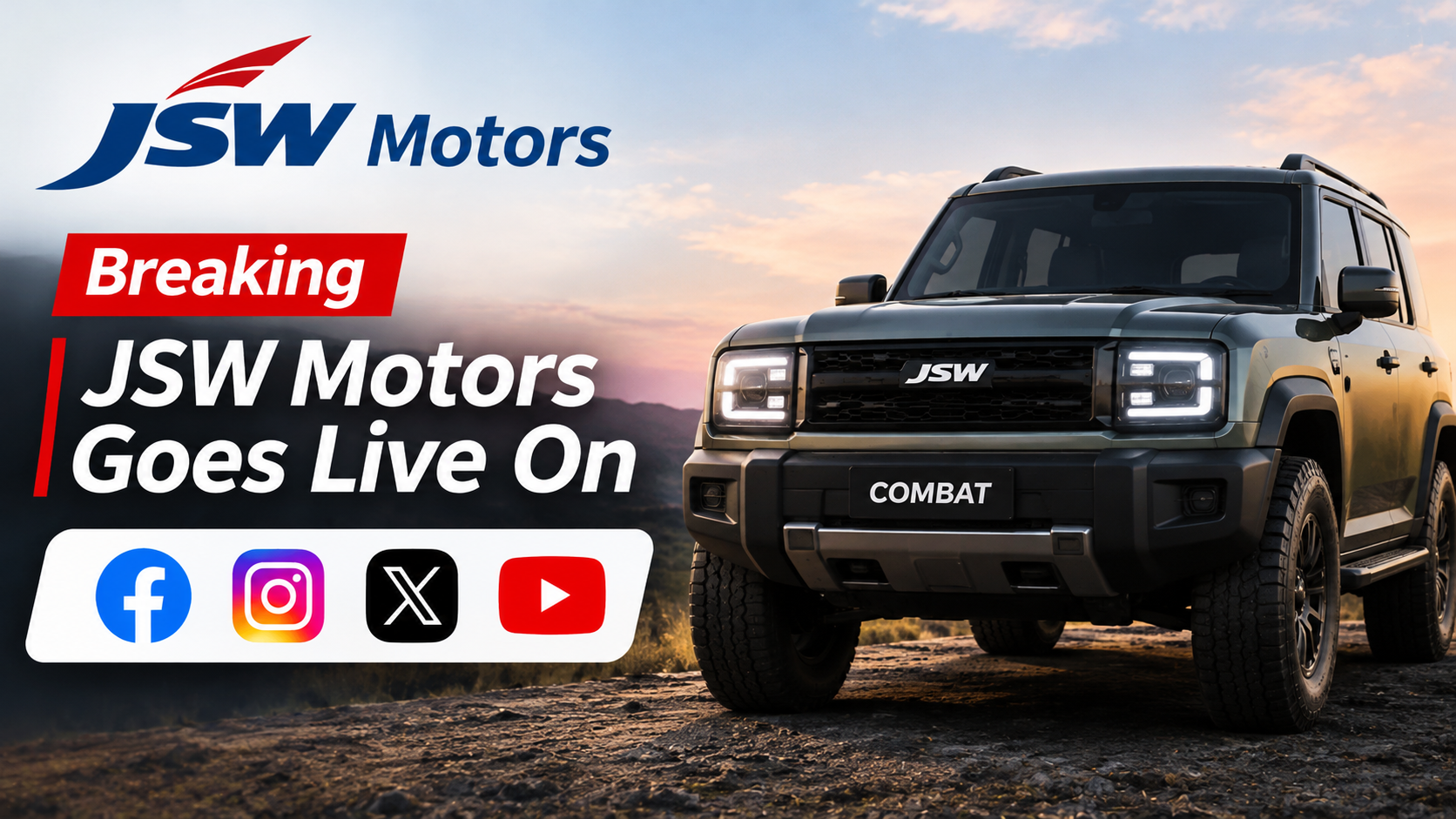
The partnership with ARAI comes at an important time for JSW Motors as the company prepares for its official brand launch on December 3, 2026.
The company is expected to unveil its first SUV at the event, marking its entry into India's passenger vehicle market.
The upcoming SUV is expected to be called the JSW Combat and is anticipated to feature plug-in hybrid technology.
The vehicle is expected to combine a conventional petrol engine with electric propulsion, offering customers an alternative to conventional petrol and diesel SUVs.
However, JSW Motors has not yet officially announced the final India-specification engine, battery capacity, driving range, performance figures or pricing.
The first SUV will be manufactured at the company's greenfield production facility in AURIC, Chhatrapati Sambhajinagar, Maharashtra.
This manufacturing facility will form an important part of JSW Motors' plans to establish its own passenger vehicle manufacturing ecosystem in India.
The ARAI collaboration is not the company's only recent technology partnership.
JSW Motors has also been working with other technology companies to strengthen its vehicle engineering and software capabilities.
Two notable collaborations include:
Tata Elxsi: The partnership is aimed at establishing an engineering hub in Pune to support the development of mobility solutions.
KPIT Technologies: The collaboration focuses on building the software and digital technology backbone for JSW Motors' new energy vehicle portfolio.
These partnerships indicate that JSW Motors is working to establish an ecosystem covering vehicle engineering, software development, electrification and testing.
By bringing together Indian engineering companies and global automotive technologies, the company aims to develop vehicles that meet domestic requirements while maintaining international standards.
India's automobile industry is gradually moving towards electrification, hybrid powertrains, connected vehicle technologies and advanced safety systems.
For a new manufacturer like JSW Motors, developing vehicles that meet Indian customer expectations and regulatory requirements will be an important challenge.
The partnership with ARAI could provide several advantages:
|
Area |
Expected benefit |
|
Vehicle engineering |
Better vehicle development and validation |
|
ADAS technology |
Improved development of driver assistance systems |
|
Battery technology |
Stronger battery engineering and testing |
|
Functional safety |
Better evaluation of safety-critical systems |
|
Cybersecurity |
Improved protection of connected vehicle systems |
|
Homologation |
Support for regulatory approvals |
|
Research and development |
Development of future mobility technologies |
JSW Motors CEO Ranjan Nayak highlighted the company's ambition to build a world-class Indian automobile manufacturer with strong indigenous engineering capabilities.
He explained that the association with ARAI would bring together global automotive technologies and Indian expertise in testing, validation, safety and innovation.
Dr Reji Mathai, Director of ARAI, also highlighted the organisation's experience in automotive research, testing, validation and certification.
The collaboration will allow ARAI to contribute its expertise in emerging technologies, including ADAS, battery systems, functional safety and automotive cybersecurity.
Both organisations aim to support the development of globally competitive new energy vehicles designed around Indian requirements.




Volkswagen
₹10.71 - 20.61 Lakh

Audi
₹117.00 - 135.24 Lakh

Land Rover
₹93.55 - 320.74 Lakh