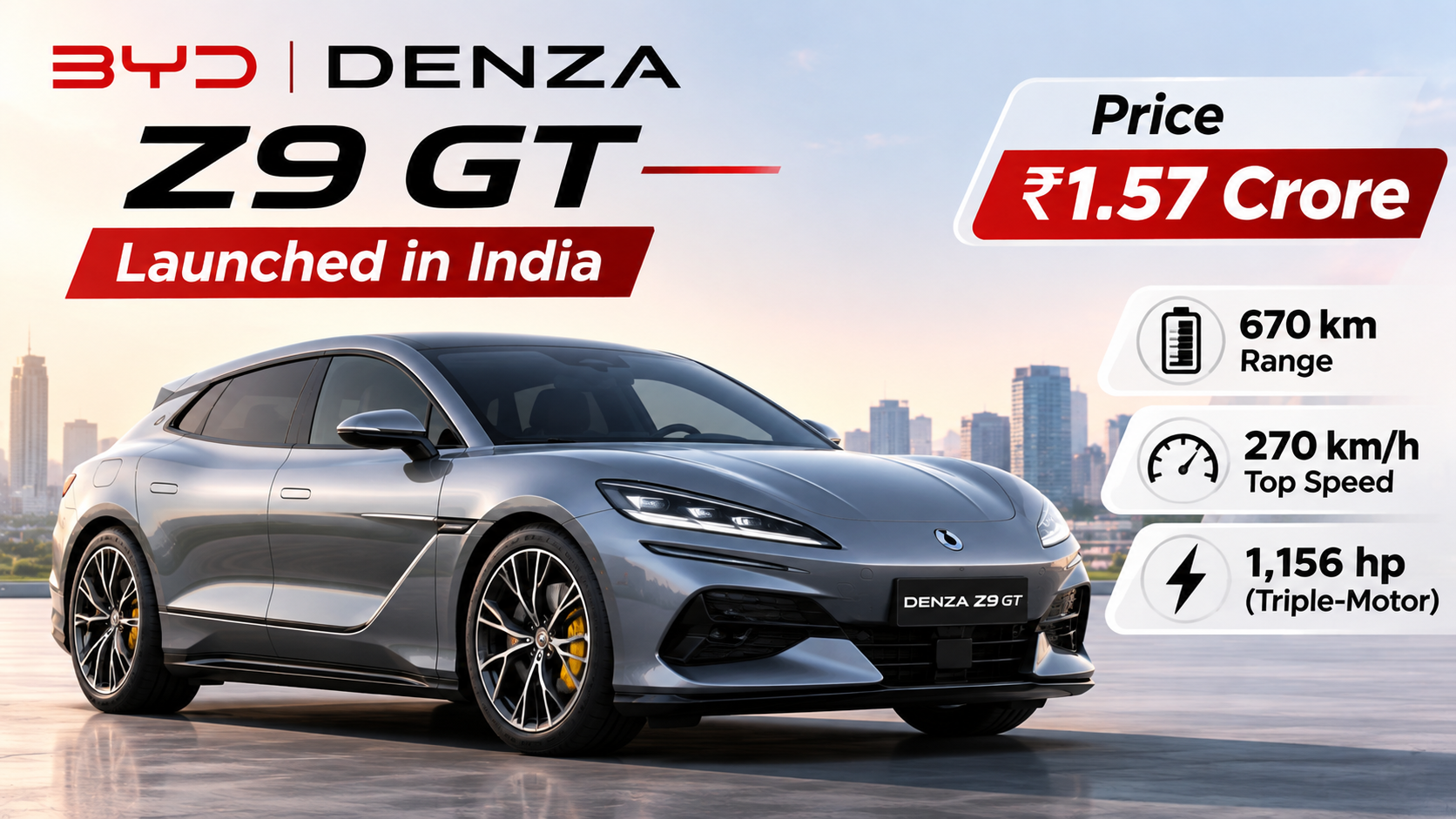
BYD Denza Z9 GT
156.8 Lakh*

 Khyati Sharma 2026-11-17

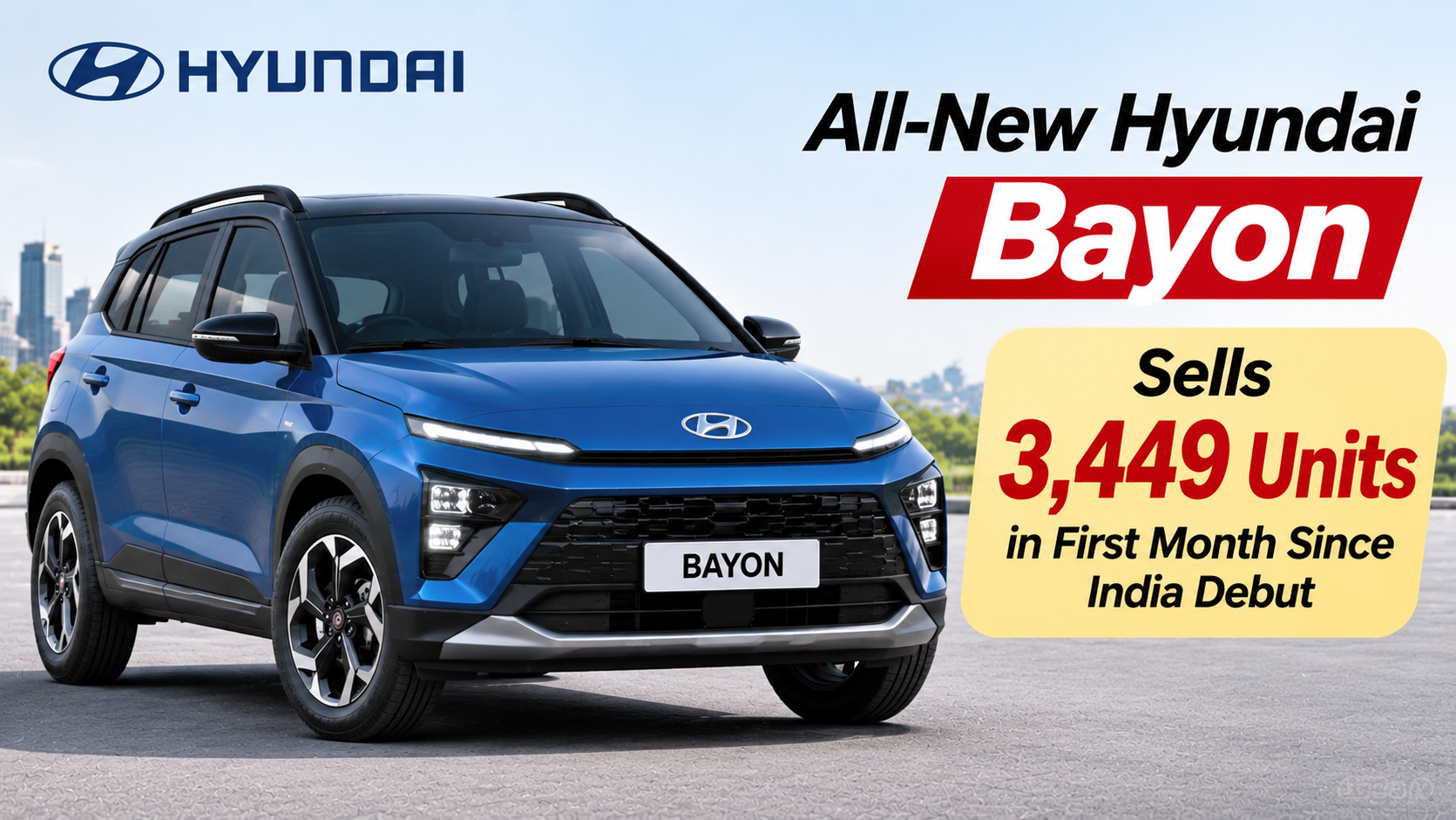
Hyundai Motor India has recorded an encouraging start for its newly launched SUV, the Hyundai Bayon, which registered 3,449 units in its first month of sales in October 2026. The new SUV entered the Indian market on October 26 and quickly contributed to the company's overall domestic sales performance.
The Bayon accounted for approximately 5% of Hyundai's total domestic passenger vehicle dispatches and around 8% of its utility vehicle dispatches during October. The achievement is particularly notable because the SUV cars was available for only the final five days of the month.
The new Hyundai Bayon is positioned between the Venue and Creta in the company's Indian SUV lineup. It targets buyers looking for a spacious, technology-rich SUV with a familiar petrol engine and modern connected features.
The strong initial numbers have also helped Hyundai strengthen its position in India's competitive midsize SUV segment.
The Hyundai Bayon recorded 3,449 wholesale units in October 2026, making an impressive entry into Hyundai's monthly sales chart.
The SUV was launched in India on October 26, 2026, and its first-month sales figures cover just five days of availability.
Despite the limited sales period, the Bayon secured the seventh position among Hyundai's models in October.
The new SUV contributed approximately 5.5% to Hyundai's total domestic passenger vehicle sales of 62,799 units. It also accounted for around 8% of the company's utility vehicle dispatches.
These figures represent factory dispatches to dealerships rather than confirmed retail registrations or customer deliveries.
Hyundai launched the Bayon in India with an introductory starting price of Rs 9.99 lakh (ex-showroom). The top-end variant is priced at Rs 18.15 lakh (ex-showroom).
The SUV is available in multiple variants, offering manual and automatic transmission options.
Its pricing places it between the Venue and Creta, giving customers another option in Hyundai's expanding SUV portfolio.
The competitive starting price could help the Bayon attract buyers looking for a feature-rich SUV without moving into a higher price bracket.
The Hyundai Bayon is powered by a 1.5-litre, four-cylinder naturally aspirated petrol engine.
The engine produces 115 PS of maximum power and 143.8 Nm of peak torque. Buyers can choose between a six-speed manual transmission and Hyundai's Intelligent Variable Transmission (iVT).
The automatic version also gets features such as Dash Boost Mode and Sporty Drive Tech, designed to improve acceleration response and overtaking performance.
|
Specifications |
Hyundai Bayon |
|
Engine |
1.5-litre MPi Petrol |
|
Engine Type |
Naturally Aspirated |
|
Cylinders |
4 |
|
Maximum Power |
115 PS |
|
Maximum Torque |
143.8 Nm |
|
Transmission |
6-Speed Manual / iVT |
|
Fuel Type |
Petrol |
|
Drive Type |
Front-Wheel Drive |
The Hyundai Bayon focuses heavily on technology and cabin comfort. One of its biggest highlights is the integration of a generative AI-powered voice assistant, which allows occupants to control selected vehicle functions using voice commands.
Some of the key features include:
Dual 12.3-inch digital displays
Generative AI voice assistant
Wireless smartphone connectivity
Connected-car technology
Panoramic sunroof
Ventilated front seats
360-degree camera
Level 2 Pro ADAS
Premium audio system
Wireless charging
The SUV also offers more than 500 embedded voice commands across six languages, including Hindi and Hinglish, making it suitable for Indian customers.
The Bayon has been introduced as an important addition to Hyundai's Indian SUV portfolio. It sits between the Venue and Creta, allowing the company to target a wider range of customers.
Hyundai aims to strengthen its position in the midsize SUV segment through the Bayon and Creta.
The company is targeting combined annual sales of approximately 2.5 lakh units from these two SUVs.
With its competitive pricing, connected technology and familiar petrol engine, the Bayon could become an important contributor to Hyundai's future sales performance.
The Bayon entered Hyundai's October 2026 sales chart in seventh position. The Creta continued to lead the company's lineup, followed by the Venue and Exter.
Here is the model-wise sales performance for October 2026:
|
Hyundai Model |
October 2026 Sales |
|
Creta |
17,955 |
|
Venue |
13,017 |
|
Exter |
8,509 |
|
Aura |
7,349 |
|
i20 |
5,528 |
|
Grand i10 |
5,458 |
|
Bayon |
3,449 |
|
Alcazar |
775 |
|
Verna |
75 |
|
Ioniq 5 |
1 |
|
Total |
62,799 |
Hyundai is also expected to introduce a CNG version of the Bayon in the future.
According to media reports, the company is considering a CNG powertrain with a dual-cylinder setup, potentially making the SUV more attractive to customers looking for lower running costs.
The CNG version is reportedly targeted for January 2027. However, Hyundai has not officially confirmed its launch date, mileage or pricing.
If introduced, the CNG option could expand the Bayon's appeal among customers who regularly drive long distances and prioritise fuel efficiency.
The Hyundai Bayon's first-month performance provides an encouraging start for the newly launched SUV. Recording 3,449 wholesale units within just five days of availability indicates initial interest in the model.
The next few months will be important in determining its actual demand and whether it can maintain strong monthly sales.
Hyundai will also be looking to strengthen the Bayon's position through its feature package, competitive pricing and potential CNG introduction.
The upcoming sales reports will reveal whether the Bayon can become one of Hyundai's leading contributors in the Indian SUV market.
The all-new Hyundai Bayon has made a promising entry into India by recording 3,449 wholesale units in October 2026. Despite being available for only five days, the SUV secured seventh position in Hyundai's model-wise sales chart.
Its 1.5-litre petrol engine, dual-screen dashboard, AI-powered voice assistant and advanced safety features make it an interesting addition to Hyundai's portfolio.
The upcoming months will determine whether the Bayon can maintain its initial momentum and become another major volume driver for Hyundai in India.





Land Rover
₹64.86 - 81.85 Lakh