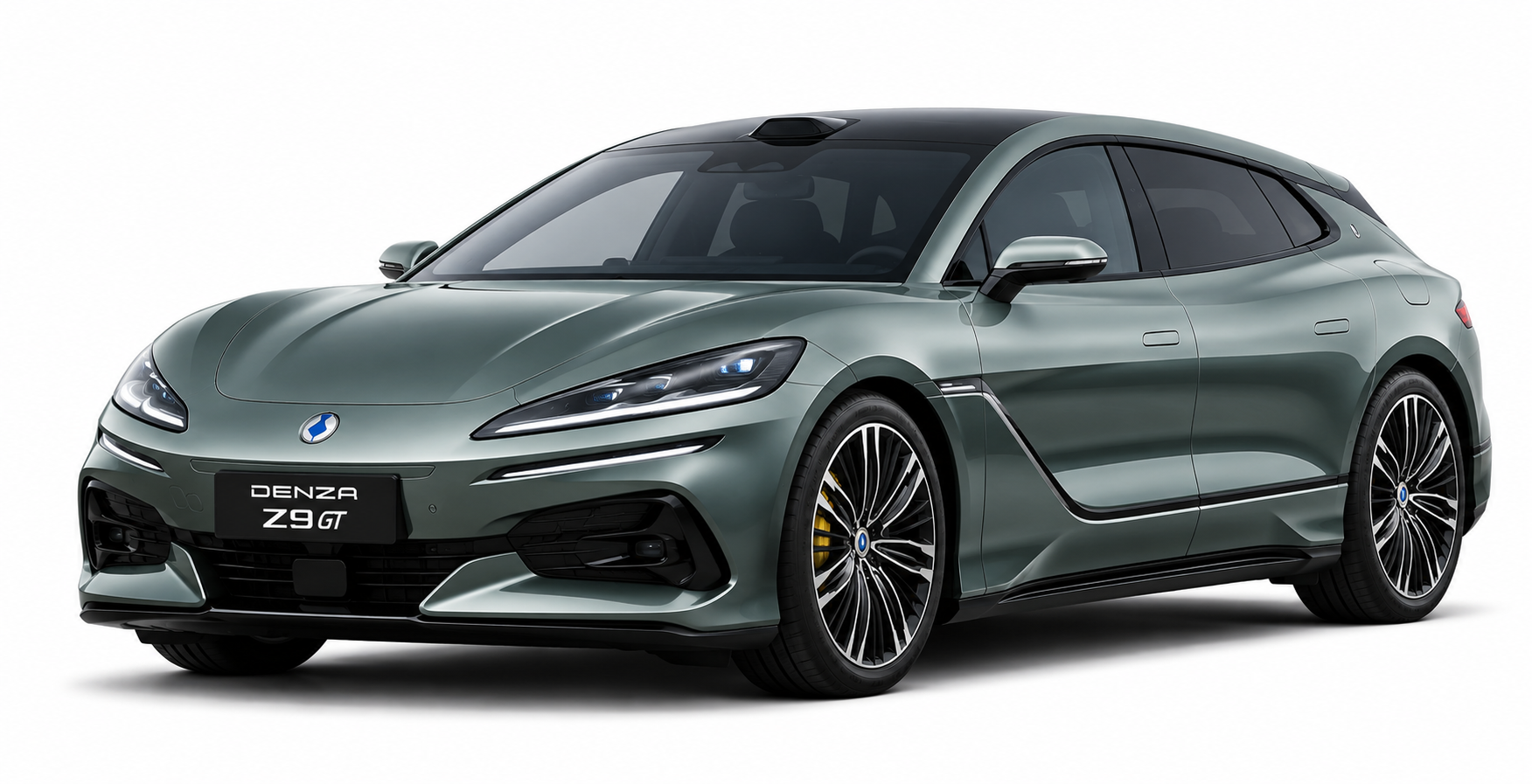
BYD Denza Z9 GT
156.8 Lakh*

 Khyati Sharma 2026-11-16

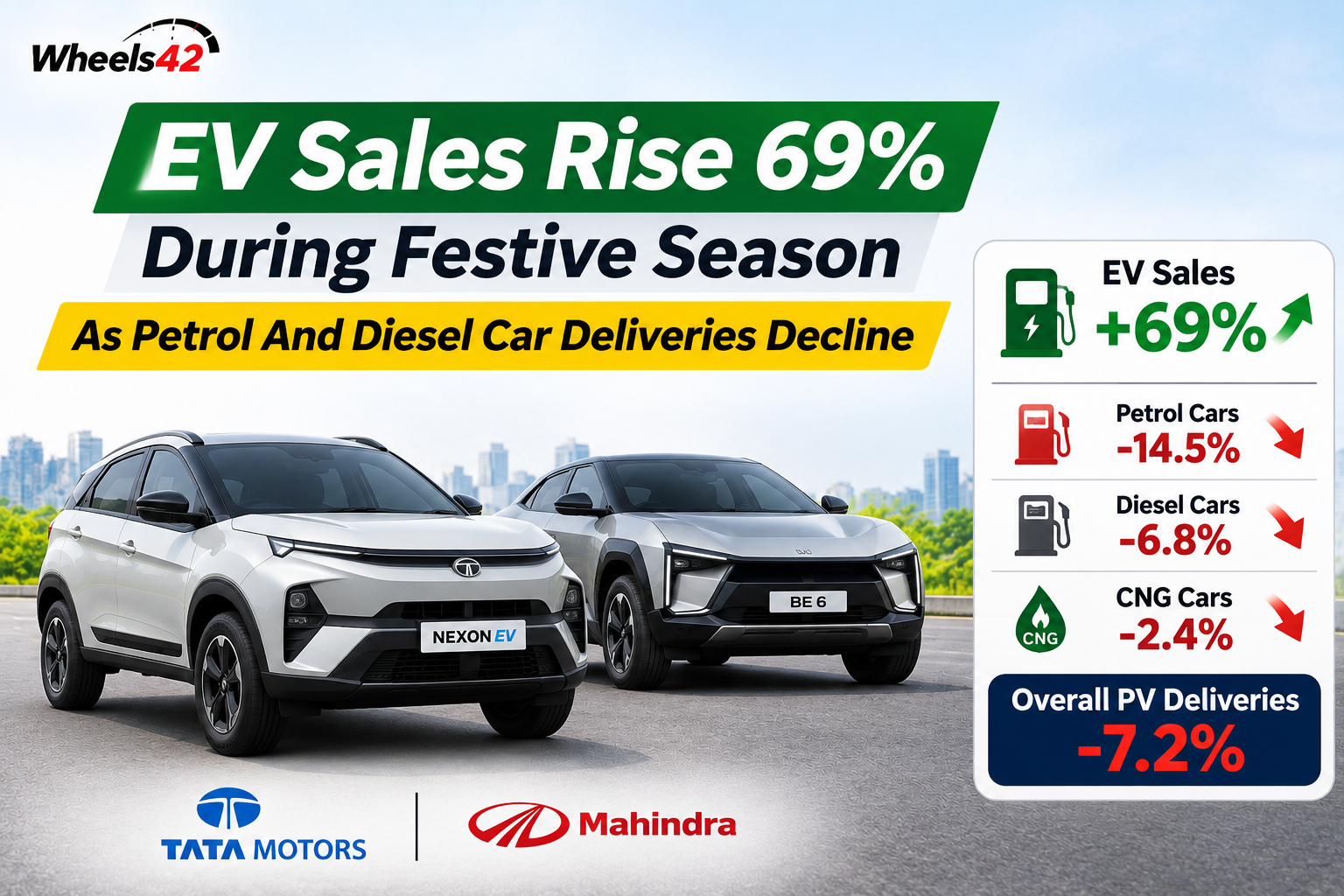
India's electric passenger vehicle market recorded a strong performance during the 2026 festive season, with electric car deliveries increasing by 69% year-on-year to 40,122 units during the 32-day period from Navratri to Bhaidooj, ending November 11. The growth came at a time when deliveries of petrol, diesel and CNG cars declined, highlighting the growing interest in electric mobility among Indian buyers.
According to data from Dynamics, petrol car deliveries fell by 14.5%, while diesel and CNG models registered declines of 6.8% and 2.4%, respectively. Overall passenger vehicle retail deliveries also declined by 7.2% during the period.
The increase in electric car sales was led by Tata Motors and Mahindra & Mahindra, which together accounted for nearly 80% of total electric passenger vehicle deliveries during the festive period.
The numbers indicate that electric cars are gaining ground even as the wider passenger vehicle market faces pressure. However, the strong EV performance also comes with a challenge: automakers are finding it difficult to meet the growing demand because of production and supply constraints.
Petrol vs Diesel vs CNG vs Electric Cars: How to Choose the Right Fuel Type
The 2026 festive season proved to be an important period for India's electric passenger vehicle market. Electric car deliveries increased 69% compared with the corresponding festive period last year, reaching 40,122 units by November 11.
The 32-day period from Navratri to Bhaidooj is particularly important for the Indian automobile industry because it generally contributes around 10–11% of annual vehicle sales.
The latest performance indicates that more customers are considering electric cars when purchasing a new vehicle. Factors such as lower running costs, increasing awareness of EV technology and a wider range of electric models are supporting this growth.
Electric vehicles also improved their share of the passenger vehicle market. Their contribution increased to 6.9% during the festive period, compared with 3.8% in the same period last year.
This improvement is significant because it came despite a decline in overall passenger vehicle deliveries.
While electric cars recorded strong growth, conventional fuel-powered passenger vehicles experienced a weaker performance.
Petrol cars continued to account for the largest share of the Indian passenger vehicle market, but their retail deliveries declined 14.5% during the festive period.
Diesel cars also registered a decline of 6.8%, while CNG-powered passenger vehicle deliveries fell 2.4%.
Petrol car deliveries dropped to approximately 301,000 units from 352,000 units in the corresponding festive period last year.
The numbers suggest that electric vehicles are gaining attention among customers who previously considered conventional petrol or diesel options.
However, this does not necessarily mean that buyers are shifting directly from petrol and diesel cars to electric vehicles. Overall passenger vehicle demand was also lower during the latest festive period, and several factors may have influenced purchasing decisions.
Despite the strong performance of electric cars, India's overall passenger vehicle retail market recorded a decline during the 32-day festive period.
Total passenger vehicle deliveries fell 7.2% year-on-year to approximately 581,000 units, compared with 626,000 units during the same period last year.
One important reason behind the decline is the high comparison base.
The previous year's festive period benefited from GST rate reductions that came into effect on September 22, 2025. These changes coincided with the major festive buying season and supported vehicle purchases.
As a result, the latest festive-season figures were compared against a relatively strong period in 2025.
The difference between electric vehicle growth and overall passenger vehicle performance shows that EVs are gaining market share even when the wider market is under pressure.
|
Vehicle Category |
Performance During Festive Season |
|
Electric Cars |
40,122 units |
|
Electric Car Growth |
69% |
|
Petrol Car Deliveries |
-14.50% |
|
Diesel Car Deliveries |
-6.80% |
|
CNG Car Deliveries |
-2.40% |
|
Overall PV Deliveries |
5,81,000 units |
|
Overall PV Growth |
-7.20% |
|
EV Share of PV Retail Sales |
6.90% |
|
EV Share in Previous Year |
3.80% |
|
Festive Period |
32 days, ending November 11, 2026 |
Tata Motors continued to hold the leading position in India's electric passenger vehicle market during the festive season.
The company recorded electric car retail deliveries of 16,220 units, representing 71% year-on-year growth.
Its electric vehicle portfolio includes models such as the Tiago EV, Punch EV, Nexon EV and Curvv EV. The availability of different body styles and price points has helped Tata Motors attract customers across multiple electric vehicle categories.
However, increasing demand has also created supply challenges for the company.
Tata Motors Passenger Vehicles Managing Director Shailesh Chandra recently indicated that the company was meeting only around 60–65% of customer demand for its electric vehicles.
The company is looking to increase monthly EV supplies to approximately 20,000 units over the following two to three months, compared with around 16,000 units at the time of the announcement.
Tata Motors had also recorded more than 47,000 EV sales during the September quarter, representing approximately 90% growth. Dealer inventory was reported at around 10 days, indicating relatively limited stock availability.
Mahindra & Mahindra also recorded strong growth in its electric vehicle business during the latest festive period.
The company registered 9,407 electric vehicle deliveries, an increase of 84% compared with the previous year.
Its electric SUV portfolio includes the BE 6 and XEV 9e, which have helped the company strengthen its presence in the premium electric SUV category.
Mahindra's performance indicates growing customer interest in electric SUVs, particularly as more buyers consider vehicles with modern technology, long-range capabilities and SUV styling.
Based on the reported Tata Motors and Mahindra figures, the two companies together delivered 25,627 electric cars during the festive period, representing approximately 64% of the reported total of 40,122 units.
The company is also working to increase its electric vehicle production capacity to meet growing demand.
Mahindra currently has an EV production capacity of approximately 8,000 units per month. It plans to add another 4,000 units of monthly capacity by February–March.
The 69% increase in festive-season EV deliveries highlights the growing acceptance of electric mobility in India.
Several factors are supporting this change.
1. Lower Running Costs
Electric vehicles generally have lower energy costs per kilometre than petrol and diesel cars, depending on electricity tariffs, charging arrangements and driving conditions.
For people who regularly commute within cities, the potential savings can become an important reason to consider an electric car.
2. Growing Electric SUV Choices
The Indian market now offers electric vehicles across different body styles and price categories.
Customers can consider compact electric cars, electric hatchbacks and larger electric SUVs according to their requirements.
The growing number of options from manufacturers such as Tata Motors and Mahindra is helping increase awareness and interest.
3. Better Awareness of EV Technology
Electric vehicle technology is becoming more familiar to Indian customers.
Buyers are increasingly learning about battery capacity, driving range, home charging and maintenance requirements before purchasing an EV.
This growing awareness can help reduce some of the hesitation associated with switching from conventional vehicles.
4. Interest in Modern Features
Many new electric cars offer connected-car technology, digital displays, advanced safety features and modern cabin layouts.
These features can make electric vehicles attractive to customers looking for a technology-focused driving experience.
5. Home Charging Convenience
For customers with dedicated parking spaces, installing a home charging point can make EV ownership more convenient.
Charging overnight can reduce the need for frequent visits to public charging stations, particularly for people whose daily journeys remain within the vehicle's available range.
The strong growth in electric car deliveries is also creating a challenge for manufacturers.
Tata Motors and Mahindra have both indicated that production capacity and vehicle availability are important factors affecting their ability to meet customer demand.
Tata Motors is planning to increase its monthly EV supplies, while Mahindra is preparing to expand its electric vehicle production capacity.
These developments suggest that the next phase of EV growth will depend not only on customer interest but also on how quickly manufacturers can increase production.
If supply improves, automakers may be able to convert more customer enquiries and bookings into actual deliveries.
However, production expansion will need to be supported by battery availability, component supply chains and manufacturing capacity.
One important point in the latest festive-season sales report is the difference between retail deliveries and factory dispatches.
The 69% EV growth figure refers to customer deliveries, which are commonly tracked through vehicle registration and retail data.
Factory dispatches, on the other hand, represent vehicles shipped by manufacturers to dealerships.
These two figures do not always move in the same direction during a particular month.
For example, the Society of Indian Automobile Manufacturers (SIAM) reported double-digit growth in passenger vehicle factory dispatches during October 2026, ahead of the main Diwali festival.
This does not contradict the decline in festive-period retail deliveries because the two datasets cover different stages of the vehicle sales process and different reporting periods.
Factory dispatches can increase when manufacturers send more vehicles to dealerships, even if the final customer registrations are weaker.
For this reason, the latest figures should be understood as a comparison of actual customer deliveries rather than manufacturer wholesale sales.
The latest festive-season performance suggests that electric vehicles are becoming a more important part of India's passenger vehicle market.
Although petrol cars continue to dominate overall sales volumes, the growing share of electric vehicles indicates that the market is gradually becoming more diverse.
Tata Motors and Mahindra are currently benefiting from their established electric vehicle portfolios, while other manufacturers are also expanding their EV plans.
The next few months will be important in determining whether the festive-season growth can continue beyond the traditional buying period.
Higher production capacity, improved charging infrastructure, competitive pricing and wider customer awareness will all influence the pace of electric vehicle adoption.
India's electric car market recorded an impressive performance during the 2026 festive season, with deliveries increasing 69% year-on-year to 40,122 units.
The growth came as petrol, diesel and CNG car deliveries declined, while overall passenger vehicle retail sales fell 7.2%.
Tata Motors remained the leading electric car manufacturer, recording 16,220 deliveries, while Mahindra followed with 9,407 units.
The increase in EV market share from 3.8% to 6.9% also highlights the growing importance of electric vehicles in India's passenger vehicle market.
However, rising demand has created supply challenges for manufacturers, making production expansion a key priority.