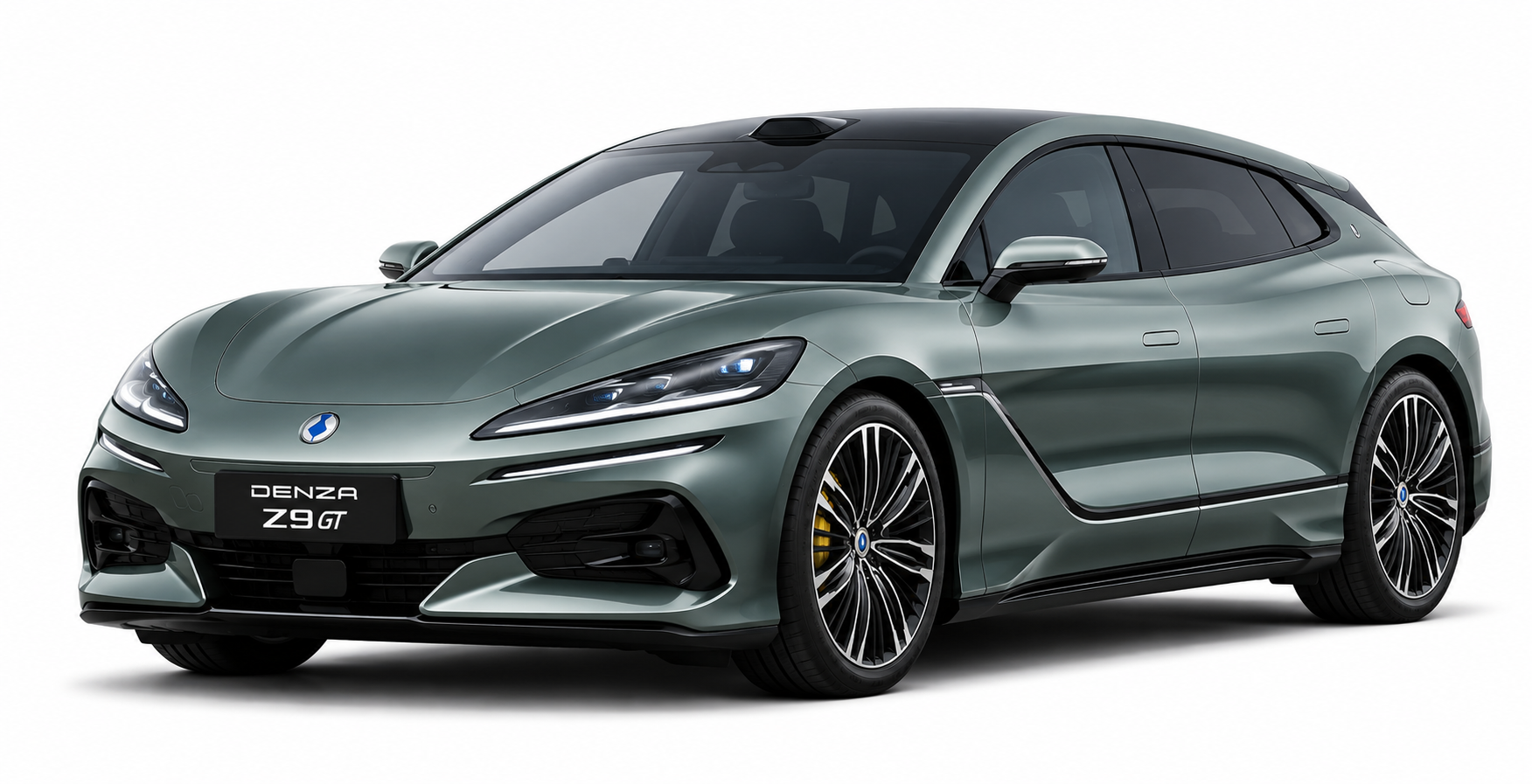
BYD Denza Z9 GT
156.8 Lakh*
 Khyati Sharma 2026-11-23

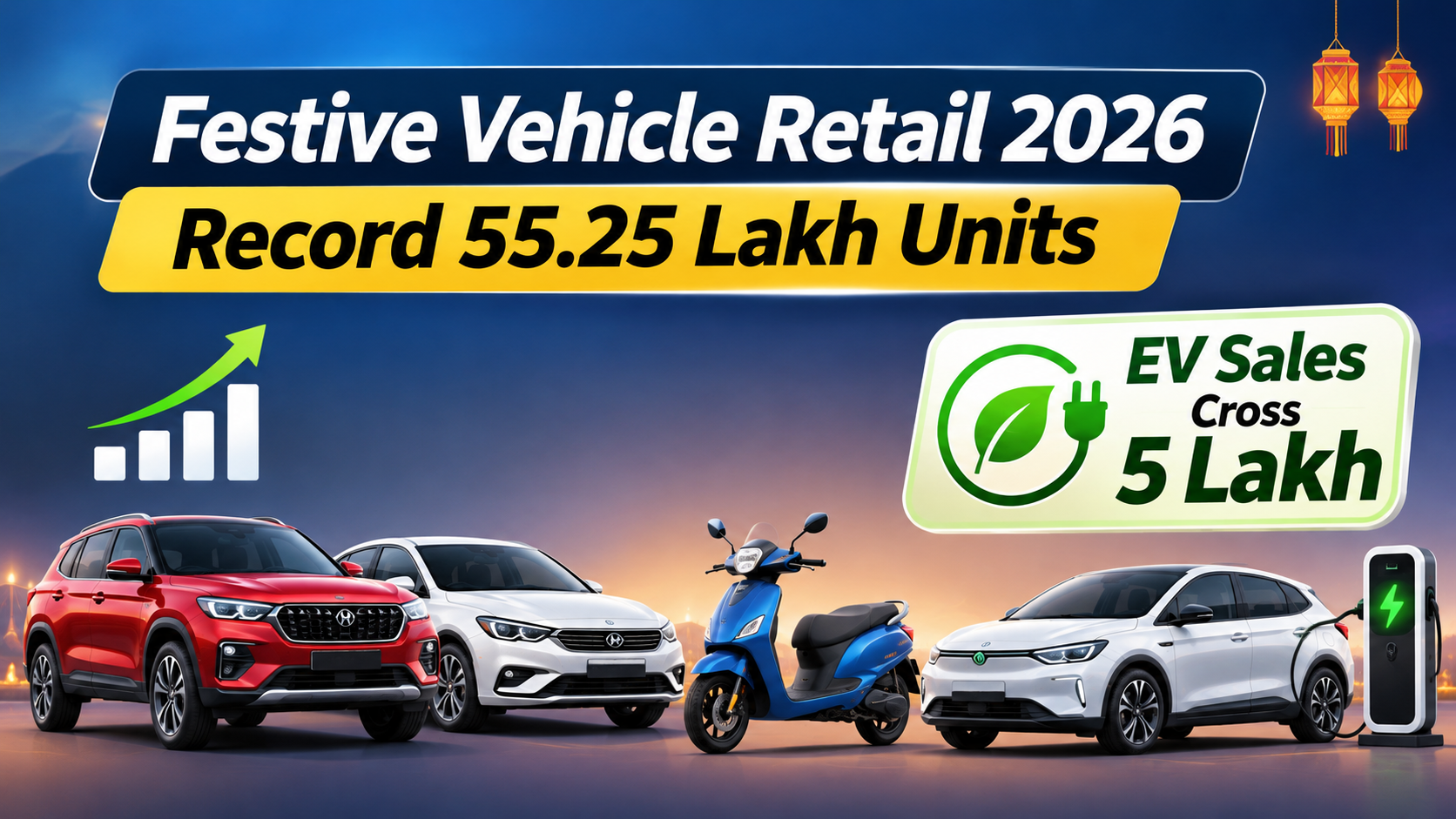
India's automobile industry has achieved a major milestone during the 2026 festive season, with total vehicle retail sales reaching a record 55.25 lakh units. According to the Federation of Automobile Dealers Associations (FADA), a total of 55,25,490 vehicles were registered during the 42-day festive period between October 11 and November 21, 2026.
The latest figures represent a year-on-year growth of 2.21% compared with 54,05,956 units recorded during the corresponding festive period in 2025. The performance is particularly significant because the previous year had already recorded strong demand following GST 2.0-related price changes.
One of the biggest highlights of the 2026 festive season was the increasing popularity of electric vehicles. Total EV retail sales crossed the five-lakh mark for the first time during a single festive period, reaching 5,09,667 units.
Electric two-wheelers and electric passenger vehicles recorded particularly strong growth, indicating increasing customer interest in electric mobility across India.
However, passenger vehicle sales remained under pressure, declining 7.16% year-on-year. Let's take a closer look at the category-wise performance and the major highlights of India's festive automobile sales in 2026.
According to FADA, India's total vehicle retail sales reached 55,25,490 units during the 42-day festive season of 2026.
This was the highest-ever retail performance recorded during a comparable festive period.
Compared with the 2024 festive season, vehicle retail sales increased by 23.95%, showing that the Indian automobile market has maintained its growth momentum over the longer term.
The festive period covered Navratri through 15 days after Dhanteras, including the Diwali buying season.
Several factors contributed to the performance, including improved vehicle affordability, festive discounts, changing customer preferences and increasing availability of different powertrain options.
Two-wheelers continued to account for the largest share of total vehicle registrations, while electric vehicles emerged as one of the fastest-growing areas of the market.
The latest FADA report shows that most major automobile categories recorded positive year-on-year growth during the festive period. However, passenger vehicles were an exception.
|
Vehicle Category |
Festive 2026 Sales |
YoY Growth |
|
Two-Wheelers |
43,13,276 |
3.67% |
|
Three-Wheelers |
1,93,576 |
5.32% |
|
Commercial Vehicles |
1,55,761 |
7.13% |
|
Passenger Vehicles |
7,48,616 |
-7.16% |
|
Tractors |
1,03,809 |
2.24% |
|
Construction Equipment |
10,452 |
26.06% |
|
Total Vehicle Retail |
55,25,490 |
2.21% |
Electric vehicles were among the biggest highlights of India's 2026 festive automobile market.
According to FADA, total electric vehicle retail sales reached 5,09,667 units during the 42-day festive period, compared with 3,33,935 units in the same period last year.
This represents an impressive year-on-year growth of 52.62%.
It is also the first time that electric vehicle registrations have crossed five lakh units during a single 42-day festive period in India.
Electric vehicles accounted for approximately 9.2% of total vehicle retail sales during the period, meaning nearly one in every 11 vehicles sold was electric.
The growth was supported by increasing demand for electric two-wheelers, electric passenger vehicles and electric commercial vehicles.
Electric two-wheelers remained the largest contributor to India's festive EV sales.
A total of 3,30,846 electric two-wheelers were registered during the festive season, compared with 2,05,373 units in 2025.
This represents year-on-year growth of 61.10%.
Electric scooters and motorcycles are attracting customers because of their lower running costs, convenient charging options and increasing product availability.
Manufacturers are also expanding their electric two-wheeler portfolios with different battery capacities, riding ranges and price options.
The increasing availability of charging infrastructure in urban areas is another factor supporting EV adoption.
Electric passenger vehicles also recorded impressive growth during the 2026 festive season.
According to FADA, electric passenger vehicle retail sales reached 52,104 units, compared with 30,133 units during the corresponding period in 2025.
This represents year-on-year growth of 72.91%.
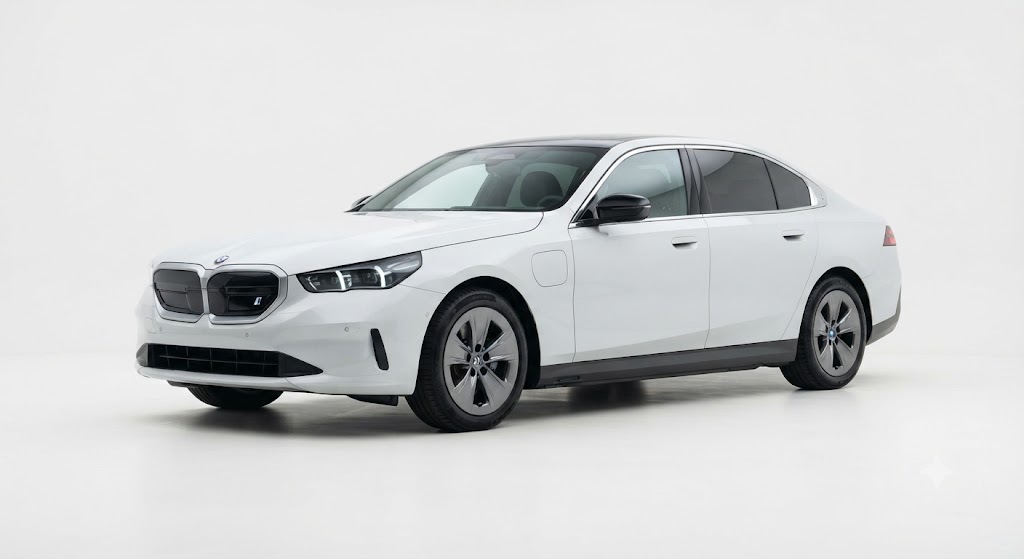
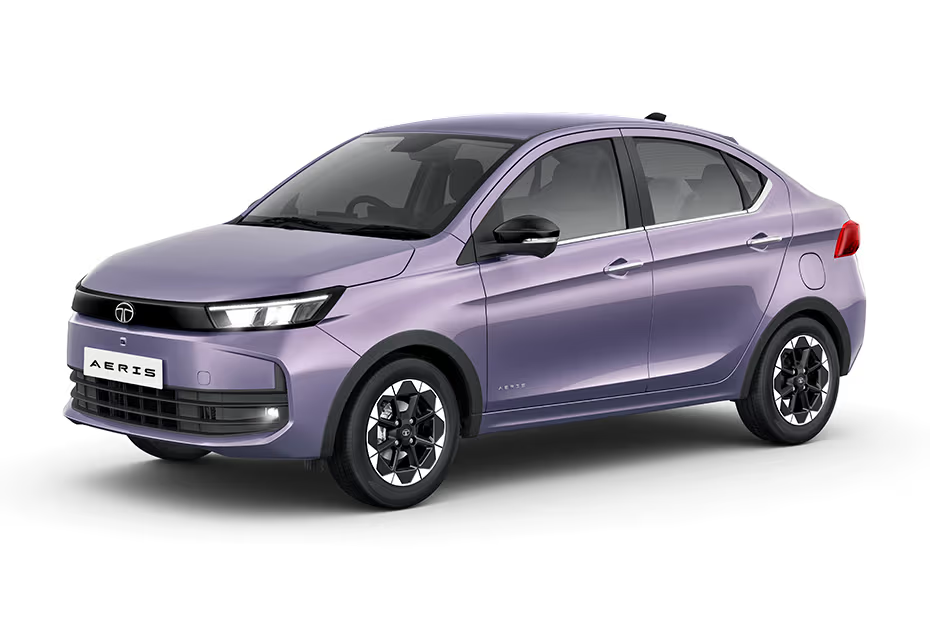
The increasing popularity of electric cars from manufacturers such as Tata Motors, Mahindra, MG Motor and BYD is helping expand the electric passenger vehicle market.
Customers are increasingly considering electric cars because of their lower running expenses, improving driving ranges and availability of different models across price segments.
The growing competition among manufacturers is also giving buyers more choices in the electric car market.
Electric three-wheelers recorded 1,20,330 units during the festive season, compared with 95,920 units in the previous year.
This represents growth of 25.45%.
Electric three-wheelers are becoming increasingly important for last-mile transportation, passenger mobility and commercial operations.
Their relatively low operating expenses make them attractive for drivers and fleet operators looking to reduce fuel-related costs.
Electric commercial vehicles recorded the strongest growth among the reported EV categories.
Sales increased to 6,387 units during the 2026 festive period, compared with 2,509 units in the corresponding period last year.
This represents an increase of 154.56%.
The growth highlights increasing interest in electric commercial mobility, particularly for urban logistics, delivery operations and other business applications.
While the overall automobile market recorded positive growth, passenger vehicle sales experienced a decline during the festive season.
According to FADA, passenger vehicle retail sales reached 7,48,616 units, compared with 8,06,322 units in the corresponding period last year.
This represents a year-on-year decline of 7.16%.
However, passenger vehicle sales were still 16.43% higher than the 2024 festive season, indicating that the segment remains above its earlier sales levels.
FADA President Sai Giridhar noted that passenger vehicle retail performance recovered during the later part of the festive period after facing a significant decline during the Navratri phase.
The overall performance suggests that demand conditions varied across vehicle categories and different stages of the festive season.
Two-wheelers remained the biggest contributor to India's total festive vehicle retail sales.
The segment recorded 43,13,276 units, registering growth of 3.67% compared with the previous year.
Three-wheelers also recorded positive growth of 5.32%, reaching 1,93,576 units.
Commercial vehicle sales increased 7.13% to 1,55,761 units, indicating continued demand for vehicles used in transportation, logistics and business operations.
Tractor sales increased 2.24% to 1,03,809 units, while construction equipment retail recorded impressive growth of 26.06% to 10,452 units.
This performance shows that the festive demand was not limited to passenger cars and motorcycles. Commercial transportation, agricultural vehicles and construction equipment also contributed to the overall market growth.
Another important highlight of the latest FADA report is India's progress towards achieving more than three crore vehicle retail sales in a calendar year.
FADA has indicated that the country is approaching this historic milestone for the first time.
The record festive performance has provided additional momentum to the automobile industry.
Increasing vehicle affordability, expanding product choices, growing electric vehicle adoption and customer demand across different segments could support the market's performance.
However, the final annual retail figure will depend on vehicle demand during the remaining weeks of 2026.
The latest figures highlight two important developments in the Indian automobile market.
First, the overall vehicle retail market continues to expand despite a high comparison base from the previous year.
Second, electric vehicles are becoming an increasingly important part of India's automobile industry.
The growth of electric two-wheelers and passenger vehicles indicates that customers are gradually becoming more comfortable with electric mobility.
At the same time, the decline in passenger vehicle retail sales shows that growth is not uniform across all categories.
For automobile manufacturers, the latest performance highlights the importance of offering affordable vehicles, improving fuel efficiency, expanding electric vehicle portfolios and providing better ownership experiences.
India's 2026 festive automobile market has achieved a new record, with total vehicle retail sales reaching 55.25 lakh units during the 42-day period.
According to FADA, overall retail sales increased 2.21% year-on-year, while electric vehicle sales crossed five lakh units for the first time during a single festive season.
Electric two-wheelers and electric passenger vehicles were major contributors to EV growth, recording increases of 61.10% and 72.91%, respectively.
However, passenger vehicle sales declined 7.16%, showing that the market continues to experience different demand trends across categories.
With electric mobility gaining momentum and overall vehicle retail approaching the three-crore annual milestone, 2026 is becoming an important year for India's automobile industry.













Volkswagen
₹46.99 - 54.26 Lakh