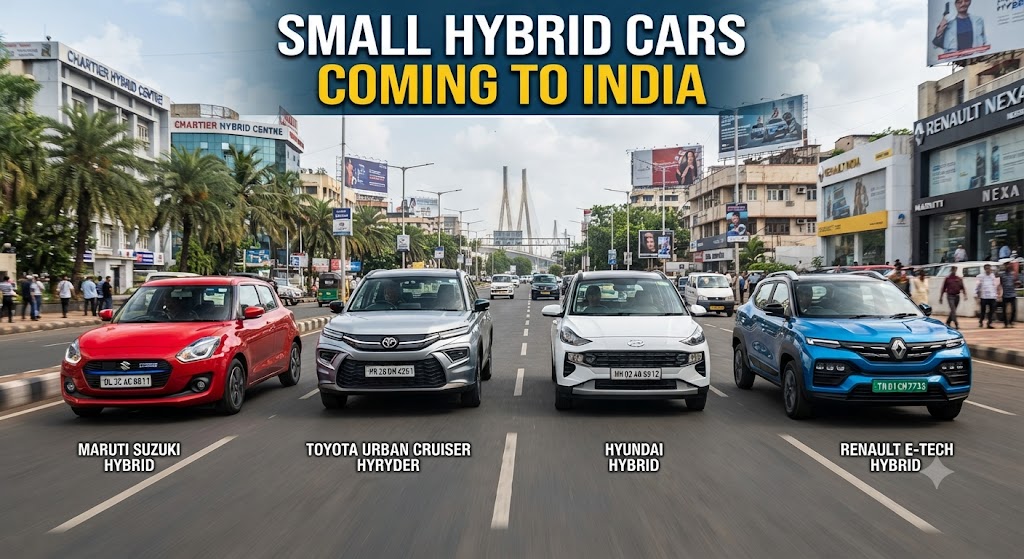
India's hybrid-car market is entering an important phase. Strong hybrids have traditionally been concentrated in relatively expensive models, but that could change as manufacturers look to bring smaller and more affordable hybrid cars and SUV cars to the market.
Several automakers, including Maruti Suzuki, Hyundai, Toyota and Renault, are reportedly preparing compact hybrid models for India over the next 18–24 months. The push is being encouraged by growing demand for fuel-efficient vehicles and upcoming fleet-efficiency requirements.
The biggest development could be the expansion of hybrid technology into vehicles below four metres, where lower taxation can make the technology more accessible to mainstream buyers.
Why Are Small Hybrid Cars Becoming Important?
Hybrid vehicles can offer a middle ground between conventional petrol cars and fully electric cars.
A strong hybrid combines a petrol engine with an electric motor and battery. Depending on the system, the vehicle can use electric assistance during acceleration and may also operate on electric power during certain low-speed conditions.
For Indian buyers, this has several potential advantages:
- Better fuel efficiency in urban traffic
- No need for regular external charging in conventional hybrids
- Lower fuel consumption than comparable petrol models
- Familiar refuelling experience
- Potentially lower emissions
- Greater suitability for buyers who are not ready for an EV
The challenge has traditionally been cost. Strong-hybrid technology has generally appeared in larger and more expensive vehicles. Upcoming compact hybrids could change that equation.
Maruti Suzuki Fronx Hybrid
The Maruti Suzuki Fronx is expected to be one of the most important upcoming compact hybrids.
Maruti Suzuki is reportedly developing an affordable in-house hybrid system, with the Fronx expected to be among the first models to receive it. Reports indicate that the company is working on a system using a small petrol engine as part of a series-hybrid setup with an electric motor and battery.
The Fronx is particularly important because it already occupies a popular compact-SUV space. Adding a hybrid powertrain could allow buyers to choose better efficiency without moving into a significantly larger or more expensive vehicle.
The model is expected to be followed by other Maruti products as the company expands its hybrid technology.
Maruti Suzuki Could Expand Hybrid Technology Further
The Fronx may only be the beginning.
Maruti Suzuki is reportedly evaluating the same basic hybrid technology for models such as the Baleno, Swift and Brezza. The company is looking to make its own hybrid system more cost-effective and suitable for mass-market vehicles.
If this strategy moves forward, hybrid technology could eventually become available across several popular Maruti models rather than being restricted to larger SUVs.
This could be significant for buyers who want improved fuel economy but don't want to pay the premium associated with larger strong-hybrid vehicles.
Toyota Urban Cruiser Taisor Hybrid
Toyota cars could also benefit from the expansion of compact hybrid technology.
Reports indicate that Toyota is planning a hybrid version of the Urban Cruiser Taisor, following the introduction of the hybrid Fronx.
The Taisor shares its basic platform with the Fronx, so the potential addition of hybrid technology would give Toyota an opportunity to enter the more affordable hybrid-SUV space.
For buyers, this could create an interesting choice between Toyota's brand positioning and Maruti's widespread sales and service network.
Hyundai's Small Hybrid Plans
Hyundai cars is also preparing to enter the smaller hybrid segment.
The company is reportedly working on a compact hybrid vehicle for India, with a possible launch around mid-2027. The exact model and final powertrain specifications have not yet been officially confirmed.
Hyundai already has a strong presence in the compact and mid-size SUV market, so its entry into affordable hybrids could increase competition significantly.
The company could use its existing expertise in electrified powertrains to develop a hybrid system suited to Indian conditions and pricing requirements.
Renault's Compact Hybrid SUV
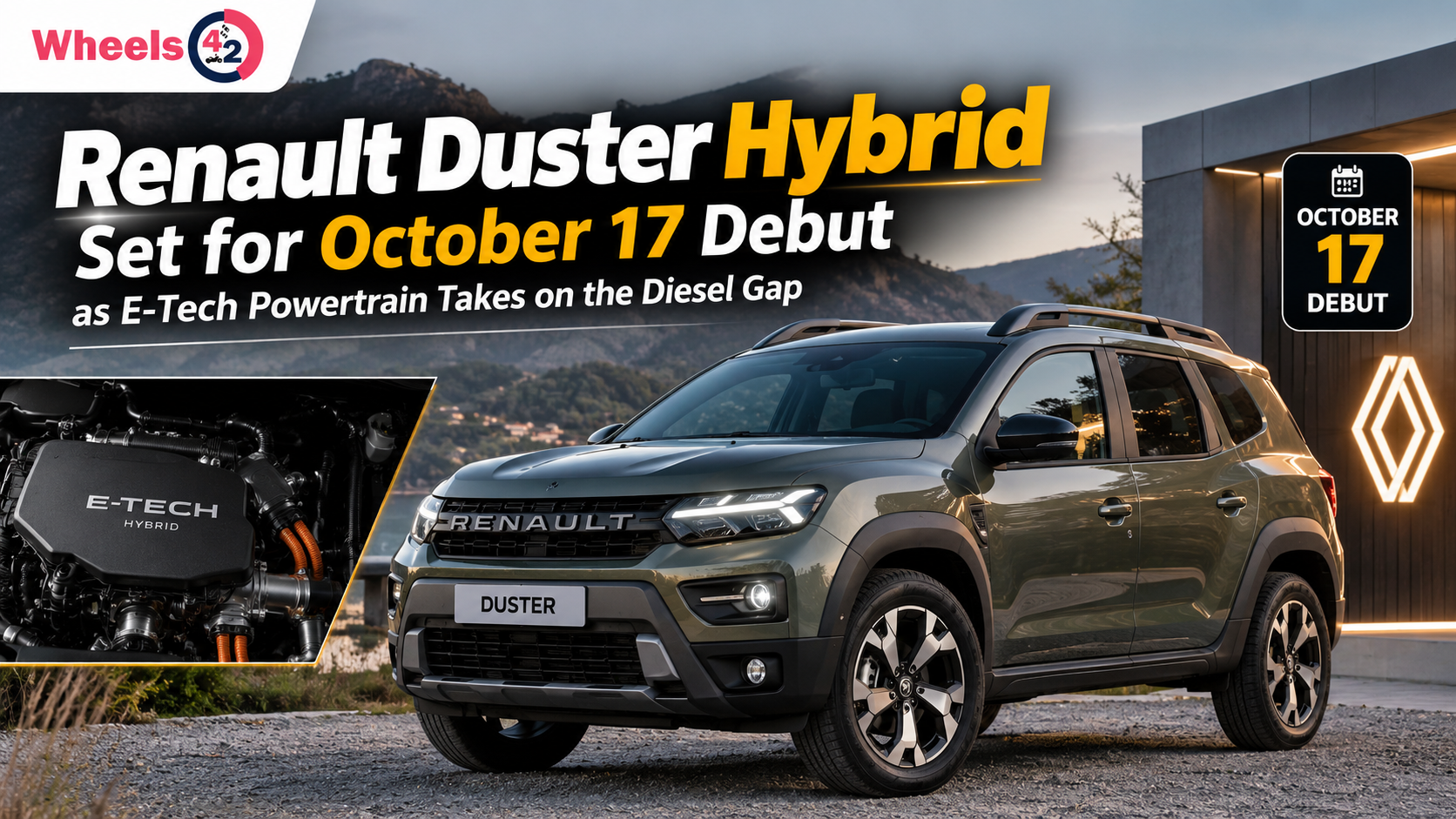
Renault cars is another manufacturer preparing a smaller hybrid offering.
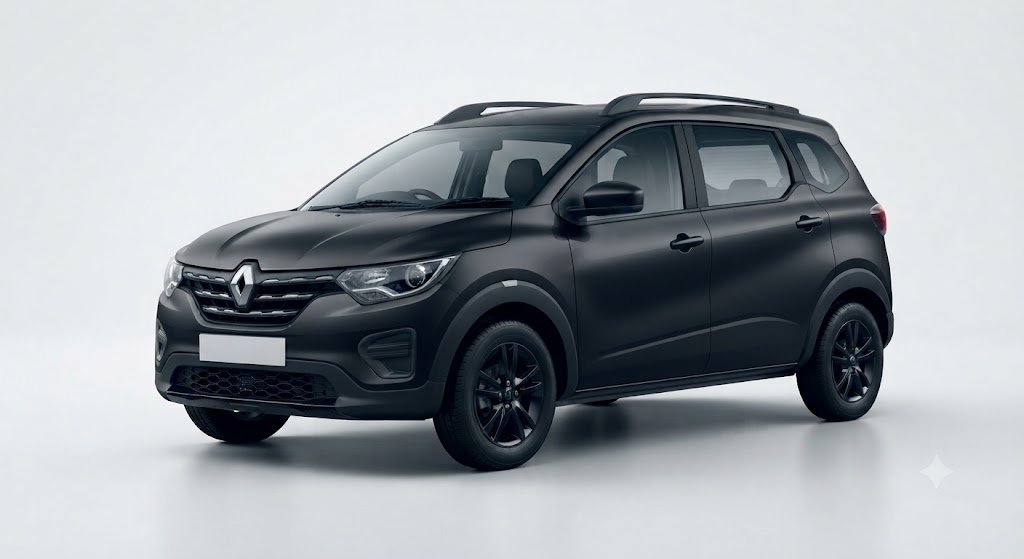
A sub-four-metre urban SUV based around the Bridger concept is reportedly being developed with a hybrid powertrain and is expected to arrive towards the latter part of 2027.
Renault's return to the affordable hybrid segment could be particularly interesting because the company has historically had a strong presence in India's compact SUV market.
A competitively priced hybrid Renault could give buyers another alternative to Maruti, Toyota and Hyundai.
Why the Sub-Four-Metre Segment Matters
The biggest opportunity for manufacturers is the sub-four-metre category.
Compact cars and SUVs already have strong demand in India because they combine relatively manageable dimensions with lower ownership costs.
If hybrid technology can be integrated without pushing prices too high, manufacturers could potentially offer:
Compact size + lower fuel consumption + no regular charging requirement
That combination could appeal to urban buyers who cover significant distances every month.
CAFE-III Norms Could Accelerate Hybrid Adoption
Upcoming CAFE-III fuel-efficiency regulations are another important factor behind manufacturers' focus on efficiency.
The new framework applies from April 2027 to March 2032 and sets fleet-level fuel-consumption targets for passenger-vehicle manufacturers. Hybrid vehicles receive efficiency-related benefits under the system, although EVs receive larger compliance advantages.
This means manufacturers have a strong incentive to improve the average efficiency of their vehicle portfolios.
Small hybrids could therefore serve two purposes: offering customers better fuel economy while helping manufacturers meet increasingly demanding fleet-efficiency requirements.
Will Small Hybrids Be Cheaper Than Current Hybrids?
That will be one of the biggest questions.
Currently, strong-hybrid options in India's mainstream market are generally positioned above the most affordable petrol cars. Smaller hybrid vehicles could reduce the entry price substantially, but the final price will depend on:
- Battery size
- Motor configuration
- Localisation
- Engine technology
- Production volume
- Hybrid-system cost
- Government taxation
The lower GST structure for compact cars is also improving the business case for manufacturers considering affordable hybrids.
However, buyers should wait for official prices before assuming that a particular hybrid model will be cheaper than a conventional petrol version.
Hybrid vs Petrol vs EV: Which Could Make More Sense?
|
Factor
|
Petrol
|
Hybrid
|
EV
|
|
Initial cost
|
Usually lower
|
Usually higher
|
Varies significantly
|
|
Fuel/energy cost
|
Moderate to high
|
Lower potential
|
Generally lower
|
|
Charging requirement
|
No
|
No external charging for conventional hybrid
|
Yes
|
|
Long-distance convenience
|
Strong
|
Strong
|
Depends on charging network
|
|
City efficiency
|
Moderate
|
Strong
|
Strong
|
|
Highway use
|
Convenient
|
Convenient
|
Increasingly convenient
|
|
Emissions
|
Higher
|
Lower potential
|
Zero tailpipe emissions
|
|
Technology cost
|
Lower
|
Higher
|
Higher
|
|
Best suited for
|
Budget-focused buyers
|
Efficiency-focused buyers
|
Buyers with charging access
|
What Could This Mean for Indian Car Buyers?
The arrival of smaller hybrids could give buyers more choice.
Someone who drives extensively in city traffic but doesn't have access to home charging could find a hybrid particularly attractive. Similarly, buyers who regularly travel long distances may prefer the flexibility of a hybrid over an EV.
At the same time, buyers should not assume that every hybrid will automatically be cheaper to own. The higher purchase price needs to be compared with expected fuel savings over the ownership period.
When Could These Cars Arrive?
The exact launch dates remain subject to change because most of these models have not yet received complete official launch announcements.
Current industry reporting points towards a broader hybrid expansion over the next 18–24 months, with the Maruti Suzuki Fronx among the products expected to lead the affordable-hybrid push. Hyundai's small hybrid is reportedly targeted for around mid-2027, while Toyota's compact hybrid and Renault's sub-four-metre hybrid are also being developed.

 Khyati Sharma 2026-10-05