BYD Denza Z9 GT
156.8 Lakh*

 Khyati Sharma 2026-11-24

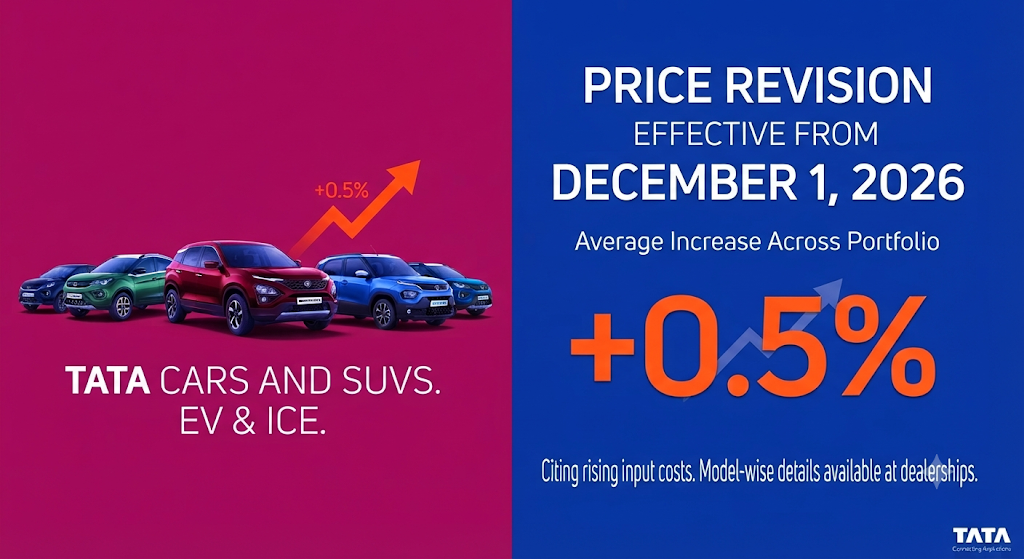
Tata Motors Passenger Vehicles Limited (TMPV) has announced a price increase across its entire range of cars and SUV cars in India, effective December 1, 2026. The company will increase vehicle prices by an average of 0.5%, covering both petrol, diesel and CNG models as well as its electric vehicle (EV) portfolio.
The latest price revision comes as automobile manufacturers continue to face higher input and manufacturing costs. Tata Motors has stated that it will continue to absorb a significant portion of these additional expenses, while passing on part of the increase to customers.
The exact price increase will vary depending on the model and variant. Tata has not yet released the revised model-wise price list, so buyers will need to check the updated prices with dealerships.
|
Particulars |
Details |
|
Company |
Tata Motors Passenger Vehicles Limited |
|
Announcement date |
24-Nov-26 |
|
Average price increase |
0.50% |
|
Effective date |
1-Dec-26 |
|
Vehicles affected |
Entire passenger vehicle portfolio |
|
Powertrains covered |
ICE and electric vehicles |
|
Reason |
Rising input costs |
|
Model-wise increase |
Varies by model and variant |
This means the increase will not be limited to petrol or diesel cars. Tata's electric vehicle range will also be covered by the December revision.
The company's passenger vehicle portfolio includes popular models such as:
Tata Tiago: A hatchback aimed at everyday city driving.
Tata Tigor: A compact sedan offering practical family transportation.
Tata Altroz: A premium hatchback.
Tata Punch: A compact SUV.
Tata Nexon: A popular sub-compact SUV.
Tata Curvv: A coupe-style SUV.
Tata Harrier: A midsize SUV.
Tata Safari: A three-row SUV.
Tata Tiago EV, Punch EV, Nexon EV and Curvv EV: Electric options in the company's portfolio.
However, Tata has not disclosed the individual price changes for these models. Their inclusion in the company's portfolio does not confirm that each model or variant will receive the same increase.
The average price increase of 0.5% gives buyers an indication of the potential additional cost.
|
Illustrative vehicle price |
0.5% increase |
New indicative price |
|
Rs 5 lakh |
Rs 2,500 |
Rs 5,02,500 |
|
Rs 7 lakh |
Rs 3,500 |
Rs 7,03,500 |
|
Rs 10 lakh |
Rs 5,000 |
Rs 10,05,000 |
|
Rs 15 lakh |
Rs 7,500 |
Rs 15,07,500 |
|
Rs 20 lakh |
Rs 10,000 |
Rs 20,10,000 |
|
Rs 25 lakh |
Rs 12,500 |
Rs 25,12,500 |
.
Tata Motors has attributed the December price revision to rising input costs, which continue to remain elevated.
Input costs are the expenses manufacturers pay to source the materials and components required to build vehicles. When these expenses increase, producing cars and SUVs becomes more expensive.
Some important factors include:
Steel and aluminium: Used in vehicle bodies, chassis and structural components.
Copper: Required for electrical wiring, motors and electronic systems.
Rubber: Used in tyres, seals and other vehicle components.
Automotive parts: Higher component prices can increase the overall manufacturing cost.
Logistics: Transportation and supply-chain expenses also affect production costs.
Tata Motors says it continues to absorb a significant portion of the rising costs through its own efforts, but a part of the additional burden will now be passed on to customers.
The December announcement follows three earlier price revisions by Tata Motors Passenger Vehicles during 2026.
|
Effective date |
Earlier price revision |
|
1-Apr-26 |
Weighted average increase of 0.5% across the ICE portfolio |
|
1-Jul-26 |
Increase of up to 1.5% across ICE and EV vehicles |
|
1-Sep-26 |
Increase of up to Rs 25,000 across the portfolio |
|
1-Dec-26 |
Average increase of 0.5% across the portfolio |
|
Manufacturer |
Announced increase |
Effective date |
|
Tata Motors Passenger Vehicles |
Average 0.5% |
1-Dec-26 |
|
Hyundai Motor India |
Up to Rs 8,000 on select models |
1-Dec-26 |
|
Maruti Suzuki |
Around 0.31% volume-weighted average |
22-Nov-26 |
|
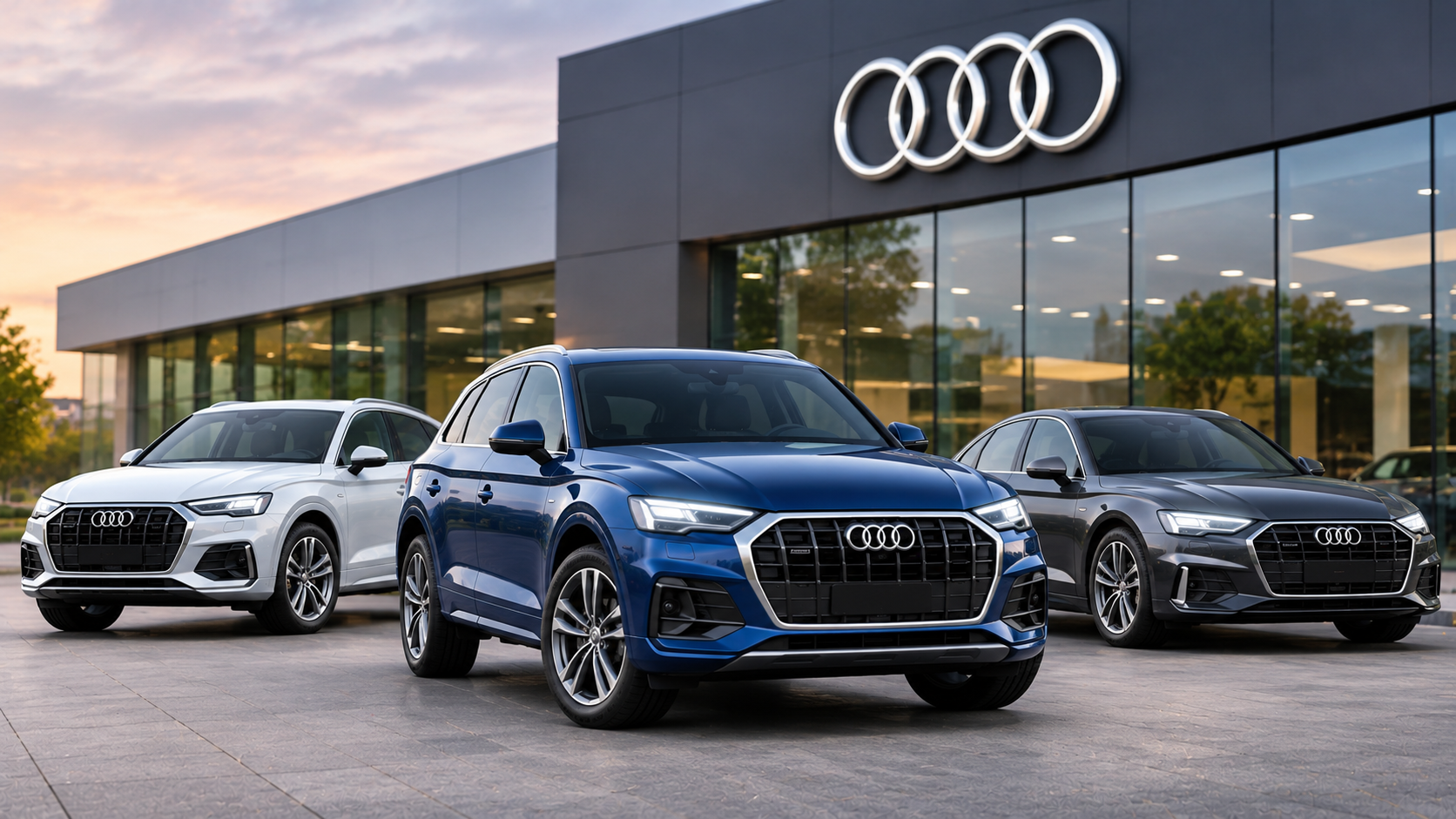
Audi India |
Up to 2% |
1-Jan-27 |
Customers planning to purchase a Tata car or SUV may want to check the current price before the new rates take effect.
However, booking a vehicle before December 1 does not automatically guarantee that the existing price will apply. The final price may depend on the dealership's billing policy, booking terms and delivery schedule.
Here are a few things buyers should check:
Get a written quotation: Ask the dealership for the current ex-showroom and on-road price.
Confirm the revised price: Check whether your selected model and variant will be affected.
Ask about price protection: Confirm in writing which price will apply to your booking.
Check available offers: Discounts, exchange bonuses and other benefits may affect the final purchase cost.
Confirm delivery timing: Ask the dealer whether the vehicle can be invoiced before the revised prices become effective.
If you are already planning to buy a Tata vehicle, comparing the November and December quotations can help you understand the financial difference.
One important detail in this announcement is that the revision covers electric vehicles as well as conventional petrol, diesel and CNG models.
Tata Motors has an established electric vehicle portfolio in India, with models such as the Tiago EV, Punch EV, Nexon EV and Curvv EV.
Since the December price increase applies to the company's full passenger vehicle portfolio, electric vehicle buyers should also check the updated prices with dealerships.
However, Tata has not announced separate EV-specific increases or individual variant-wise figures. It would therefore be incorrect to assume that every electric model will become exactly 0.5% more expensive.
Tata Motors Passenger Vehicles will increase prices across its entire car and SUV portfolio by an average of 0.5% from December 1, 2026. The revision will cover petrol, diesel, CNG and electric vehicles, with the actual increase varying across models and variants.
The company has cited rising input costs as the primary reason behind the decision, while stating that it will continue to absorb a significant portion of the additional expenses.
This is the fourth reported price revision by Tata Motors Passenger Vehicles in 2026. Customers planning to purchase models such as the Punch, Nexon, Altroz, Curvv, Harrier or Safari should check the revised price list with their dealerships before booking.








Toyota
₹18.70 - 37.71 Lakh
