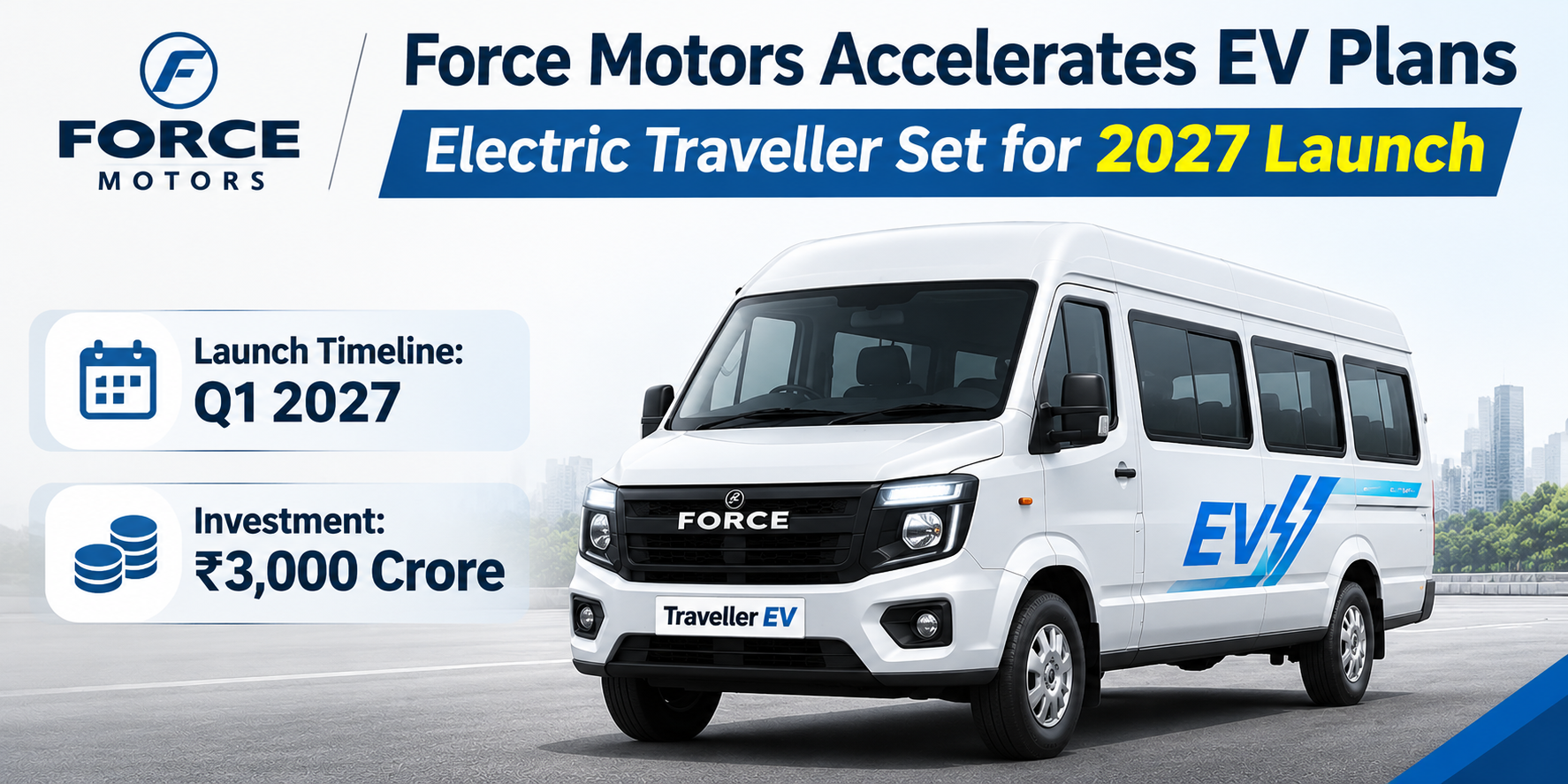
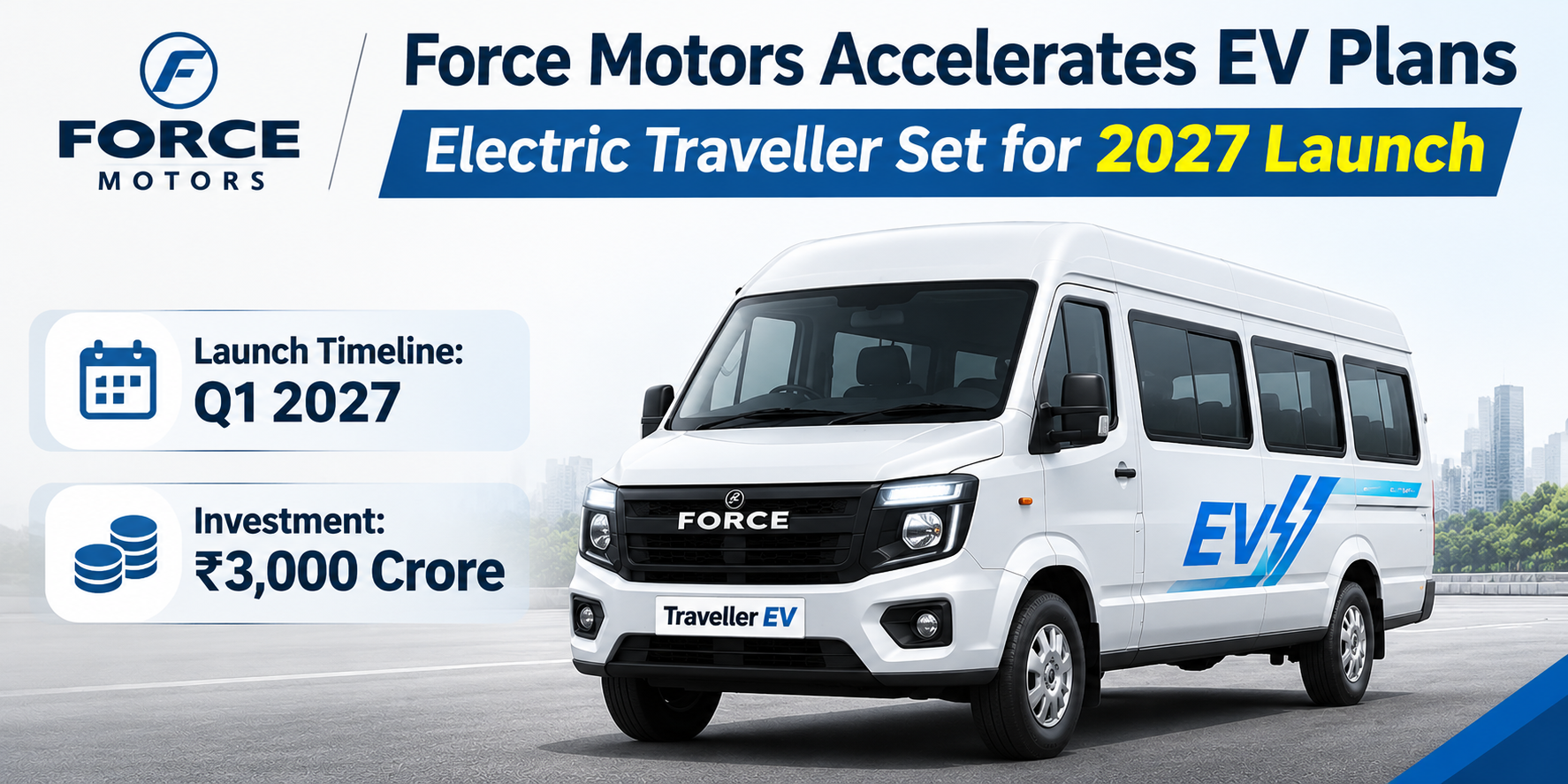
Force Motors is preparing to expand its presence in India's electric commercial vehicle market with the upcoming electric version of its popular Traveller platform. The company is targeting a launch during the first quarter of calendar year 2027, which covers January to March.
An electric ambulance is expected to be among the first vehicles introduced under the new platform. The company is also planning multiple Traveller EV variants for different commercial applications, including passenger transportation and other specialised uses.
The development comes as Force Motors increases its investment in manufacturing, engineering and electric mobility. The automaker has announced an investment of ₹3,000 crore across several business areas, including capacity expansion, electrification, hybrid driveline technology and digitisation.
According to Managing Director Prasan Firodia, the Traveller electric vehicles have already been developed and are undergoing final testing and homologation with the Automotive Research Association of India (ARAI).
Force Traveller EV Launch Planned for Q1 2027
Force Motors plans to introduce its electric Traveller models between January and March 2027.
The company has completed the development of the electric Traveller platform, while the vehicles are currently undergoing final testing and homologation. The approval process is important before the vehicles can enter commercial production and sales.
Force Motors had previously showcased an electric version of the Traveller at the Auto Expo in 2024. However, commercial sales had not started at that stage.
The upcoming launch will take the electric Traveller programme closer to the market, with multiple versions planned for different customer requirements.
The company has not yet disclosed complete production specifications, battery capacity, driving range, charging time or prices for the upcoming electric Traveller models.
These details are expected to become clearer closer to the official launch.
Electric Ambulance Expected Among Initial Offerings
One of the important applications planned for the new electric Traveller platform is an electric ambulance.
Ambulances are a potential use case for electric commercial vehicles, particularly in cities where vehicles may operate on relatively predictable routes and return to designated locations for charging.
An electric ambulance based on the Traveller platform could provide an alternative for healthcare operators looking to introduce electric vehicles into their fleets.
The Traveller platform already serves several specialised commercial applications, including healthcare transportation, school transport, employee movement, tourism and other passenger-carrying operations.
The electric platform could allow Force Motors to address different commercial requirements through multiple vehicle configurations.
However, detailed information about the upcoming electric ambulance, including its equipment, battery specifications, operating range and pricing, has not yet been announced.
Multiple Traveller EV Variants Planned
Force Motors is not planning to restrict its electric vehicle programme to a single model.
The company intends to introduce multiple electric vehicles based on the Traveller platform. This approach could help it serve different customer groups and commercial applications.
The existing Traveller range is used in several areas, including:
-
Ambulance services.
-
School transportation.
-
Employee transportation.
-
Tourism and travel operations.
-
Passenger transportation.
-
Special-purpose commercial applications.
An electric platform could offer fleet operators another option when evaluating operating costs, route requirements and charging infrastructure.
For example, school transport vehicles generally follow predictable routes and schedules. This may make it easier for operators to plan charging requirements compared with vehicles covering long-distance or frequently changing routes.
Similarly, intracity passenger transportation and ambulance operations could be potential applications for electric Traveller models.
Force Motors has not yet confirmed the complete list of variants or their individual specifications.
Force Motors Announces ₹3,000 Crore Investment
Alongside its electric vehicle plans, Force Motors has announced an investment of ₹3,000 crore across multiple business areas.
The investment will cover manufacturing capacity, engineering, electrification, hybrid driveline technology and digitisation.
This is a broader company investment programme rather than an amount allocated exclusively to the electric Traveller project.
The investment is expected to support the company's long-term development plans, including production expansion and the introduction of new technologies across its vehicle portfolio.
Force Motors is also working to increase its manufacturing capacity to 85,000 vehicles.
The expansion is intended to support future demand and provide additional production capability as the company develops new commercial vehicle products.
The investment highlights the manufacturer's efforts to prepare its business for changing mobility requirements and the gradual adoption of electric and hybrid technologies.
Force Urbania EV Also Under Development
After the Traveller EV programme, Force Motors is also working on an electric version of its Urbania people carrier.
The Urbania is a more premium passenger transportation platform used for applications such as employee transport, tourism and organised passenger movement.
According to the company, the Urbania EV remains under development and requires additional time before completing the homologation process.
The planned sequence is to introduce multiple Traveller EV variants first, followed by the electric Urbania.
This indicates that Force Motors intends to expand its electric commercial vehicle portfolio in stages rather than launching all products simultaneously.
The Urbania EV could become another important offering for fleet operators seeking electric alternatives in the passenger transportation segment.
However, its launch date, battery capacity, range and pricing have not been officially confirmed.
Why Electric Commercial Vehicles Could Gain Importance
Electric vehicles are increasingly attracting attention in India's commercial transportation industry.
For fleet operators, fuel and maintenance expenses can have a significant impact on operating costs. Electric vehicles may offer advantages in certain applications because they use electric power instead of conventional petrol or diesel engines.
However, the benefits depend on several factors, including purchase price, electricity tariffs, charging availability, daily distance and vehicle utilisation.
Commercial vehicles also operate under different conditions compared with private passenger cars.
A vehicle used for school transportation may follow a fixed daily route, while a tourism vehicle may travel across different cities and cover longer distances.
This makes it important for manufacturers to develop electric commercial vehicles according to the requirements of individual applications.
Force Motors Managing Director Prasan Firodia has indicated that the transition to electric mobility in the passenger-carrier segment is likely to be gradual.
Customer economics, driving range and charging infrastructure remain important considerations for commercial fleet operators.
School Transport Could Be an Early Opportunity
School transportation could be among the applications where electric commercial vehicles become practical earlier.
School buses and passenger carriers generally operate according to fixed schedules and predictable routes. Their daily operating distances can often be estimated in advance.
This makes it easier for fleet operators to plan charging arrangements and vehicle utilisation.
For example, an electric school transport vehicle could complete its scheduled routes and return to a designated parking location for charging.
However, the suitability of an electric vehicle will still depend on passenger capacity, route distance, charging time, electricity availability and the total cost of ownership.
Fleet operators will need to evaluate these factors before switching from conventional vehicles.
Tourism and Long-Distance Operations Face Different Challenges
Electric passenger carriers used for tourism and travel may face additional challenges.
Unlike school transport vehicles, tourism and intercity passenger vehicles can cover changing routes and unpredictable distances.
Charging infrastructure availability becomes particularly important when vehicles travel between different cities or operate on routes with limited charging facilities.
Long charging stops can also affect vehicle utilisation and fleet scheduling.
This is one reason why electric commercial vehicle adoption may progress at different speeds across various applications.
Force Motors has indicated that the economics of electric vehicles must work for customers before large-scale adoption becomes practical.
What to Expect From the Force Traveller EV
|
Particular
|
Current Information
|
|
Manufacturer
|
Force Motors
|
|
Vehicle platform
|
Traveller
|
|
Powertrain
|
Fully electric
|
|
Expected launch
|
Q1 2027
|
|
Expected initial offering
|
Electric ambulance among the first models
|
|
Development status
|
Developed; final testing and homologation underway
|
|
Homologation authority
|
ARAI
|
|
Future variants
|
Multiple Traveller EV versions planned
|
|
Other upcoming EV
|
Force Urbania EV
|
|
Company investment
|
₹3,000 crore across multiple business areas
|
|
Planned manufacturing capacity
|
85,000 vehicles
|
What This Means for India's Electric Commercial Vehicle Market
The upcoming Traveller EV could add another option to India's developing electric commercial vehicle segment.
Most attention in the Indian EV market has focused on electric cars, scooters and three-wheelers. However, electric passenger carriers and specialised commercial vehicles also have potential applications.
Vehicles used for employee transportation, school services and urban healthcare operations could provide opportunities for electric mobility where routes are predictable and charging arrangements are available.
Force Motors already has an established presence in the passenger commercial vehicle market through its Traveller and Urbania platforms. An electric version of these vehicles could help the company extend its existing product strategy into a new powertrain category.
The success of the upcoming models will depend on their final pricing, battery range, passenger capacity, charging requirements and operating costs.
Fleet operators will also need to compare the overall ownership cost of electric vehicles with existing diesel-powered alternatives.

 Khyati Sharma 2026-11-10