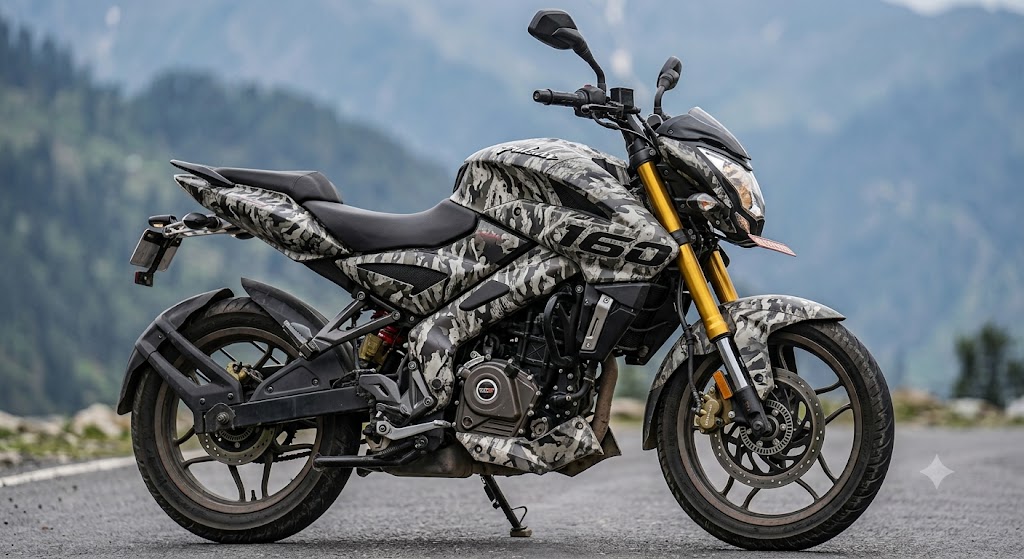
Bajaj Auto could be preparing a technology-focused update for the Pulsar NS160, with a test motorcycle reportedly spotted featuring WP-branded upside-down (USD) front forks, a TFT instrument display and revised handlebar switchgear. These changes could help the streetfighter remain competitive in India's popular 160cc motorcycle segment.
The Pulsar NS160 is known for its muscular styling, perimeter frame, oil-cooled engine and sporty riding characteristics. The reported updates suggest that Bajaj may be looking to improve its equipment package while retaining the motorcycle's established design.
However, the company has not officially confirmed the complete details of the 2026 update, including its launch date, pricing and final specifications. The reported features should therefore be treated as expected changes rather than confirmed production equipment.
2026 Bajaj Pulsar NS160: Key Highlights
-
WP-branded USD front forks reportedly seen on a test motorcycle
-
TFT instrument display expected as a potential technology upgrade
-
Revised handlebar switchgear with directional controls
-
Familiar Pulsar NS160 streetfighter design
-
Existing 160.3cc oil-cooled engine could continue
-
Smartphone connectivity and enhanced navigation features are possible
-
Launch date and updated pricing yet to be announced
WP USD Front Forks Could Improve Handling
One of the notable details reported on the test motorcycle is the presence of WP-branded upside-down front forks. The existing Pulsar NS160 already offers USD suspension on its applicable variant, making the reported development potentially an upgrade to the suspension hardware rather than the introduction of USD forks for the first time.
The new components could feature revised damping characteristics or a different suspension setup. Upside-down forks generally offer good front-end rigidity, which can help with steering precision and stability during braking and cornering.
Actual improvements will depend on the final suspension calibration, spring rates and overall chassis setup. Bajaj has not yet confirmed whether the reported WP-branded components will be fitted to the production motorcycle.
TFT Display Could Bring More Connected Features
Another anticipated change is a new TFT instrument console. The current Pulsar NS160 uses a digital instrument display with features such as a gear position indicator, distance-to-empty information and connected functionality on applicable versions.
A colour TFT display could provide a more modern interface and potentially support additional smartphone integration, navigation and ride information.
Bajaj has already introduced a 5-inch TFT console with Google Maps mirroring on selected versions of the Pulsar N160 range. This makes similar technology a possibility for future Pulsar updates, although it does not confirm that the NS160 will receive the same equipment.
The reported revised handlebar switchgear could make it easier for riders to navigate menus and control connected functions. The final feature list will need to be confirmed by Bajaj Auto.
Design: Familiar Streetfighter Styling Expected to Continue
The Pulsar NS160 is expected to retain its aggressive streetfighter design. Its muscular fuel tank, angular tank extensions, split-seat layout and sporty rear section are among the motorcycle's recognisable styling elements.
The test motorcycle reportedly retains the familiar overall silhouette, suggesting that the update may focus more on equipment than on a complete exterior redesign.
Bajaj could introduce revised graphics, colour combinations or small detailing changes as part of the updated model. However, no complete production design has been officially revealed.
Engine and Performance
The existing Bajaj Pulsar NS160 is powered by a 160.3cc, single-cylinder, oil-cooled, four-valve, fuel-injected engine. It produces 17 PS of maximum power at 9,000 rpm and 14.6 Nm of peak torque at 7,250 rpm, paired with a five-speed manual gearbox.
The engine provides a balance of everyday commuting ability and sporty performance. The motorcycle's perimeter frame, USD front forks on the applicable variant and rear monoshock are intended to support confident handling.
The 2026 update is expected to retain the existing engine unless Bajaj announces mechanical revisions. Changes to power output, torque delivery, gearbox operation or fuel efficiency remain unconfirmed.
Bajaj Pulsar NS160: Existing Specifications
|
Specification
|
Current model
|
|
Engine capacity
|
160.3cc
|
|
Engine type
|
Single-cylinder, four-valve, fuel-injected
|
|
Cooling
|
Oil-cooled
|
|
Maximum power
|
17 PS at 9,000 rpm
|
|
Maximum torque
|
14.6 Nm at 7,250 rpm
|
|
Transmission
|
5-speed manual
|
|
Front suspension
|
37mm USD forks on the applicable variant
|
|
Rear suspension
|
Nitrox monoshock
|
|
Front brake
|
300mm disc
|
|
Rear brake
|
230mm disc
|
|
ABS
|
Dual-channel
|
|
Front tyre
|
100/80-17
|
|
Rear tyre
|
130/70-17
|
|
Fuel tank
|
12 litres
|
|
Instrument console
|
Digital console on the current model
|
Expected Price and Launch Date
The current Bajaj Pulsar NS160 has a starting ex-showroom price of approximately Rs 1.26 lakh in Delhi, depending on the variant and applicable pricing updates.
If the updated motorcycle receives a TFT console, revised suspension hardware and additional connected features, Bajaj could position it at a higher price than the corresponding current variant.
The manufacturer has not confirmed the new model's price or official launch date. A test sighting indicates ongoing development but does not establish when customer deliveries will begin.
Buyers should wait for an official announcement before making a purchase decision based on the expected equipment.
Rivals in the 160cc Motorcycle Segment
The Bajaj Pulsar NS160 competes with motorcycles such as the TVS Apache RTR 160 4V and Hero Xtreme 160R 4V. These models appeal to riders seeking sporty styling, responsive performance and practical everyday usability.
A TFT display could help the NS160 improve its technology offering, while suspension refinements could strengthen its appeal to riders who prioritise handling.
Ultimately, the updated motorcycle's competitiveness will depend on its final equipment, price and real-world performance.

 Khyati Sharma 2026-10-14