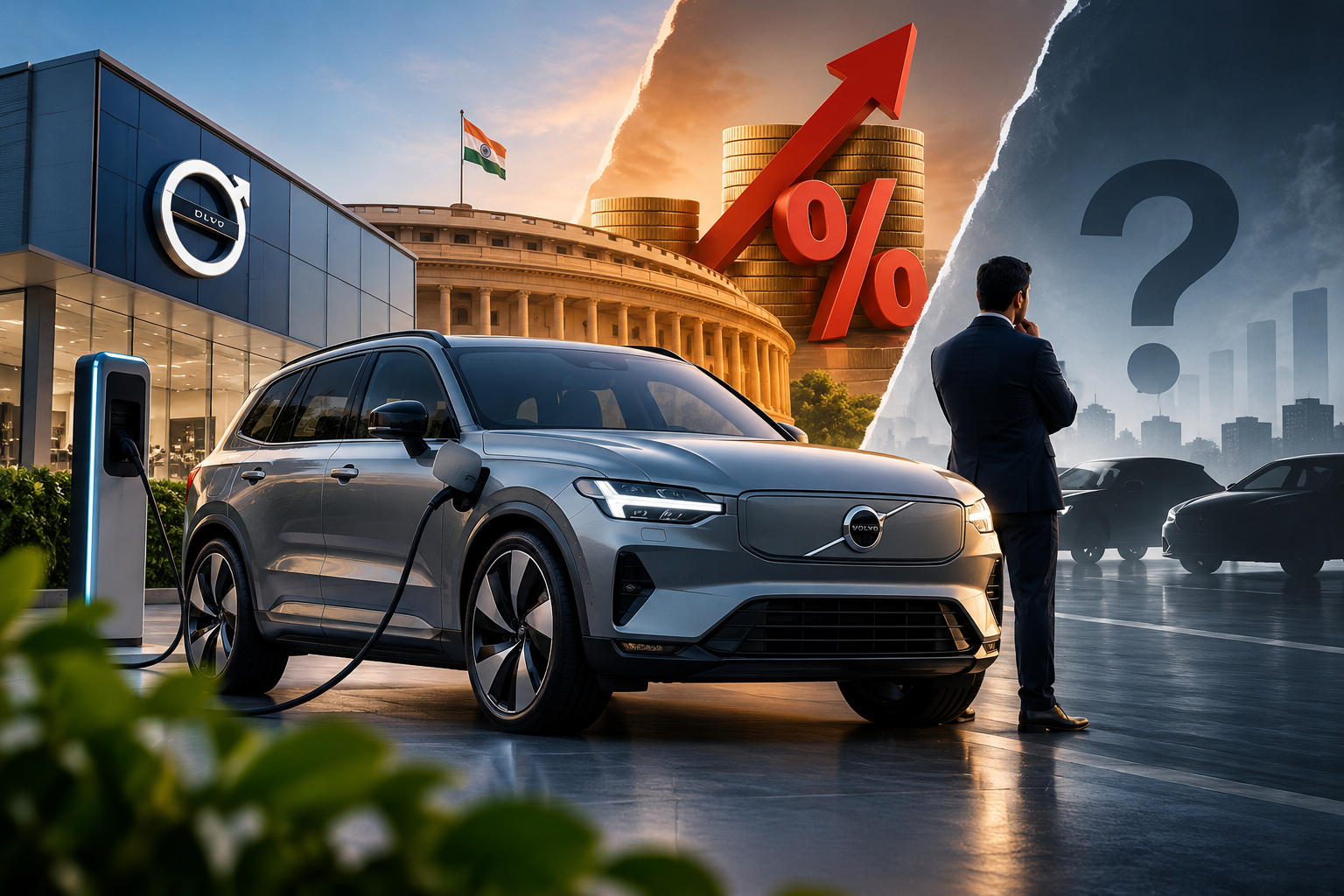
Volvo Car India is not planning to introduce plug-in hybrid electric vehicles (PHEVs) in the near future, as high taxation and uncertainty over customer demand make the technology difficult to price competitively. The Swedish luxury carmaker is currently prioritising battery-electric vehicles (BEVs) and mild-hybrid models for the Indian market.
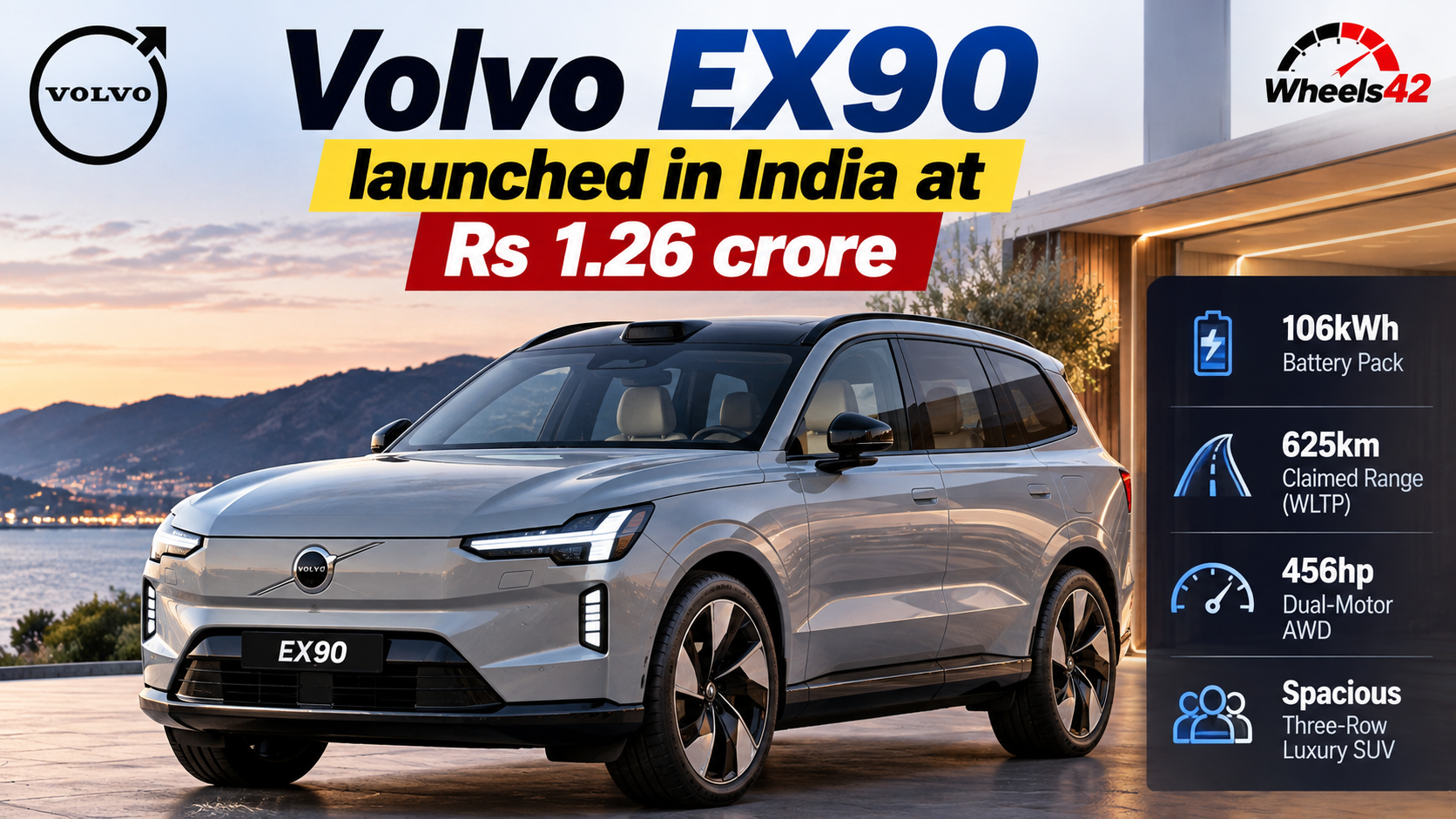
The company's position was outlined by Volvo Car India Managing Director Jyoti Malhotra around the launch of the flagship EX90 electric SUV cars in October 2026. Although Volvo offers plug-in hybrid models in international markets, their introduction in India will depend on tax policies, pricing and customers' willingness to pay a premium.
Why Volvo Is Delaying Plug-In Hybrid Cars in India
Volvo's decision reflects the challenges facing plug-in hybrid technology in India's premium car market. PHEVs combine a conventional petrol engine with an electric motor and a rechargeable battery that can be charged using an external power source. This allows drivers to complete shorter journeys using electric power while retaining an engine for longer trips.
Despite these advantages, plug-in hybrids can be more expensive to develop and manufacture because they incorporate two powertrain systems. Higher taxation further increases their price, potentially making them less attractive than conventional petrol vehicles and fully electric cars.
Volvo believes the current regulatory framework does not provide a sufficiently strong business case for introducing PHEVs in India. The company will continue monitoring market conditions before making a decision.
High Taxes Make PHEVs Less Competitive
Taxation is one of the main obstacles identified by Volvo Car India. Under the current tax structure cited by the company, larger plug-in hybrid vehicles face a 40% Goods and Services Tax (GST), with applicable compensation cess potentially increasing the overall tax burden. In comparison, fully electric vehicles attract 5% GST without compensation cess.
This difference creates a significant pricing disadvantage for plug-in hybrids. Even when a PHEV offers the convenience of electric driving alongside a petrol engine, its higher purchase price could discourage customers from choosing it over a battery-electric alternative.
For a luxury carmaker such as Volvo, pricing is particularly important because buyers compare equipment, performance, running costs and ownership benefits across several premium brands.
The company also believes that future fuel-efficiency regulations alone may not be enough to change the commercial equation. A more favourable tax structure would be a key factor in making PHEVs viable for the Indian market.
Customer Demand Remains Uncertain
Apart from taxation, Volvo is evaluating whether Indian customers are willing to pay the additional cost associated with plug-in hybrid technology.
PHEVs can appeal to buyers who want to drive on electric power for daily commuting but prefer the flexibility of a petrol engine for longer journeys. However, the purchase price, charging access and expected running costs all influence the decision.
Volvo must determine whether enough customers would choose a PHEV at its likely price point to justify introducing and supporting the model in India.
The company has not ruled out the technology permanently. Instead, it is keeping the possibility open if customer demand, commercial considerations and regulatory conditions become more favourable.
Volvo India Continues to Focus on Electric Cars and Mild Hybrids
For now, Volvo's Indian portfolio strategy centres on battery-electric vehicles and mild-hybrid models.
Its electric range includes the EX30 and EC40, alongside the flagship EX90, which was launched in India in October 2026 at a starting price of Rs 1.26 crore (ex-showroom). Customer deliveries of the EX90 are scheduled to begin in January 2027.
The company also sells the XC60 and XC90 SUVs with mild-hybrid powertrains. Unlike plug-in hybrids, these vehicles do not rely on an externally rechargeable traction battery for extended electric-only driving.
Volvo has stated that it plans to introduce three new electric cars models in India over the next three years, aiming to add one electric car annually. The strategy reflects its longer-term ambition to become an electric-car company while adapting the pace of electrification to local market conditions.
PHEVs vs Fully Electric Cars: What Is the Difference?
|
Feature
|
Plug-in hybrid (PHEV)
|
Battery-electric vehicle (BEV)
|
|
Powertrain
|
Petrol engine and electric motor
|
Electric motor
|
|
Rechargeable battery
|
Yes
|
Yes
|
|
External charging
|
Yes
|
Yes
|
|
Petrol required
|
Yes
|
No
|
|
Tailpipe emissions during electric driving
|
None while operating solely on battery power
|
None
|
|
Long-distance flexibility
|
Can use the petrol engine
|
Depends on battery range and charging access
|
|
GST cited for India
|
40% for larger PHEVs, with applicable cess
|
0.05
|
What This Means for Volvo's Future Plans in India
Volvo's cautious approach highlights the importance of pricing and government policy in determining which powertrain technologies succeed in India. Although plug-in hybrids can provide a practical transition between conventional engines and fully electric vehicles, their higher costs may limit demand in the premium segment.
The company's decision to focus on battery-electric vehicles also aligns with its announced plans to expand its EV portfolio. However, Volvo will continue assessing whether plug-in hybrids could become commercially viable if tax treatment or customer preferences change.
For Indian buyers, this means Volvo's immediate product expansion is more likely to centre on fully electric vehicles and mild hybrids than on plug-in hybrid models.

 Khyati Sharma 2026-10-14