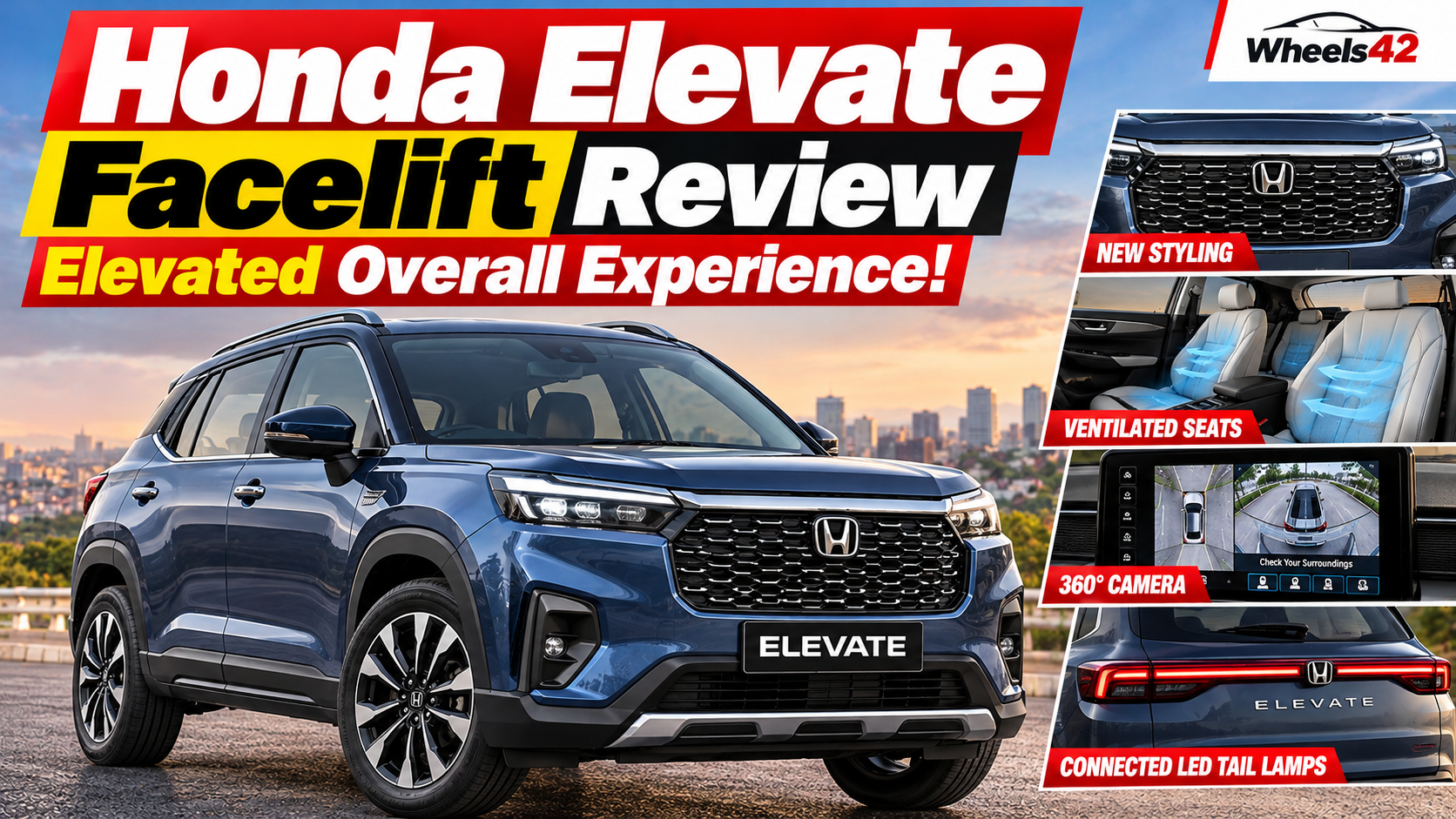
The Honda Elevate has established itself as a practical midsize SUV in India, combining a spacious cabin, a naturally aspirated petrol engine and a straightforward ownership experience. With growing competition in the segment, expectations from the Honda Elevate facelift are centred on updated styling, improved technology, enhanced comfort and a more competitive feature package.
The facelift is expected to build on the strengths of the existing SUV while addressing areas where rivals have moved ahead, particularly in infotainment, connected features and cabin equipment. For buyers considering the Hyundai Creta, Kia Seltos, Maruti Suzuki Grand Vitara and other midsize SUVs, an updated Elevate could offer an interesting alternative.
However, the exact changes, specifications and launch details of the facelift should be confirmed through an official Honda announcement. Until then, the following review examines the current Elevate's strengths and the areas where a facelift could make the overall experience better.
Honda Elevate Facelift: What's New?
A facelift generally focuses on refreshing a vehicle's appearance and equipment without completely changing its underlying platform. For the Honda Elevate, the most useful updates would be those that improve everyday convenience while retaining the SUV's practical character.
Potential areas of improvement include:
-
Exterior styling: Revised bumpers, grille detailing, lighting elements or new alloy-wheel designs could give the SUV a fresher appearance.
-
Infotainment system: A more responsive touchscreen interface and improved smartphone integration would strengthen its technology offering.
-
Cabin equipment: Additional convenience features could make the interior feel more competitive.
-
Safety technology: Improvements to driver-assistance functions and safety equipment would be valuable, depending on the variant.
-
Comfort and refinement: Better cabin insulation, updated materials or adjustments to the suspension could improve everyday driving comfort.
These are areas to watch rather than a confirmed list of facelift changes. Buyers should check Honda's official specifications before assuming any particular feature will be included.
Exterior Design: A Familiar but Rugged SUV
The existing Honda Elevate follows a conventional SUV design, with an upright front end, a prominent grille, squared-off proportions and substantial body cladding. Its styling prioritises a strong road presence rather than a coupe-like roofline or overly sporty appearance.
If Honda cars refreshes the model, subtle design revisions could help it look more contemporary while preserving its recognisable silhouette. Updated lighting signatures, revised bumper details and fresh alloy-wheel designs would be natural areas for a visual update.
The Elevate's relatively upright body also contributes to its practical appeal. Its exterior dimensions and ground clearance make it suitable for everyday city driving and occasional highway trips, although drivers should still exercise care on rough roads and steep obstacles.
Interior and Comfort: Practicality Remains Important
The Honda Elevate's cabin is designed around usability, with a straightforward dashboard layout, an elevated driving position and a practical seating arrangement. The controls are relatively easy to understand, making the SUV approachable for drivers moving from a hatchback or sedan.
A facelift could improve the cabin experience through updated upholstery, revised trim materials, a more modern infotainment interface and additional convenience features. These changes would help the Elevate compete with newer rivals that emphasise large displays and extensive cabin technology.
Rear-seat comfort, accessible door openings and usable luggage space are also important considerations for family buyers. A useful facelift should preserve these strengths instead of focusing exclusively on cosmetic upgrades.
Engine and Performance: What to Expect
The current Honda Elevate is powered by a 1.5-litre naturally aspirated i-VTEC petrol engine. It is offered with a six-speed manual gearbox or a continuously variable transmission (CVT), depending on the variant.
The engine is designed to provide smooth, predictable performance for daily commuting and regular highway use. The CVT prioritises convenience in stop-and-go traffic, while the manual gearbox gives drivers more direct control over gear selection.
|
Specification
|
Honda Elevate
|
|
Engine
|
1.5-litre naturally aspirated petrol
|
|
Engine family
|
i-VTEC
|
|
Maximum power
|
121 PS
|
|
Maximum torque
|
145 Nm
|
|
Manual gearbox
|
Six-speed manual
|
|
Automatic gearbox
|
CVT
|
|
Fuel type
|
Petrol
|
|
Seating capacity
|
Five
|
|
Drive type
|
Front-wheel drive
|
A facelift does not necessarily mean an engine upgrade. Honda could retain the existing powertrain and concentrate on styling, equipment and refinement, but no specific mechanical changes should be assumed without confirmation.
Features and Technology
Technology is an increasingly important factor in the midsize SUV segment. Buyers expect smartphone connectivity, a touchscreen infotainment system, automatic climate control, steering-mounted controls and practical charging options.
The current Elevate offers a range of convenience and infotainment features, depending on the variant. A refreshed model could become more competitive with improvements to screen responsiveness, connected functions and the overall user interface.
Other useful additions would include more convenient storage solutions, additional charging ports and improved integration between the infotainment system and the driver's smartphone.
The value of these updates will depend on which features Honda includes as standard and which are reserved for higher-spec variants.
Safety: An Important Part of the Overall Experience
Safety is one of the key considerations for families shopping for a midsize SUV. The Honda Elevate's existing safety package includes multiple airbags and electronic safety systems, with equipment varying according to specification.
Honda Sensing driver-assistance technology is available on selected Elevate variants. Depending on the version, the suite can include functions such as collision mitigation braking, adaptive cruise control, lane-related assistance and automatic high-beam support.
A facelift could provide an opportunity to improve the availability or functionality of these systems. Nevertheless, the exact safety equipment on any updated model must be confirmed through the official variant list.
Buyers should compare standard safety equipment, driver-assistance features and independent crash-test information where available rather than relying only on the number of features advertised.
Honda Elevate Facelift vs Rivals
|
Rival SUV
|
Key buying consideration
|
|
Hyundai Creta
|
Broad feature range and multiple powertrain options
|
|
Kia Seltos
|
Technology, styling and extensive variant choices
|
|
Maruti Suzuki Grand Vitara
|
Strong focus on efficiency, including hybrid options
|
|
Toyota Urban Cruiser Hyryder
|
Hybrid availability and everyday usability
|
|
Volkswagen Taigun
|
Turbo-petrol performance and driving dynamics
|
|
Honda Elevate
|
Naturally aspirated petrol engine and practical SUV design
|
Expected Price and Launch Details
Honda has not been confirmed here as having announced the final pricing, launch date or complete specifications of the facelift discussed in this review. Therefore, a reliable revised price list or launch timeline cannot be provided without official confirmation.
If the facelift introduces substantial equipment upgrades, pricing could differ from the existing model. The final value proposition will depend on the features offered across variants, the availability of dealer benefits and the total on-road cost.
Prospective buyers should wait for an official announcement before making a booking decision based on anticipated specifications.
Verdict: Could the Honda Elevate Facelift Be Worth Waiting For?
The Honda Elevate already offers a practical cabin, a naturally aspirated petrol engine and a user-friendly driving experience. A carefully executed facelift could make it more attractive by improving its technology, refreshing the exterior and adding useful convenience features.
The most important improvements would be those that make a tangible difference during daily ownership. Updated styling alone may not be enough if the SUV falls behind its competitors in cabin equipment or value.
For buyers who prioritise straightforward petrol performance, a comfortable driving position and everyday practicality, the Elevate deserves consideration. Whether the facelift becomes a stronger overall package will depend on Honda's final specification, pricing and equipment distribution.

 Khyati Sharma 2026-10-10