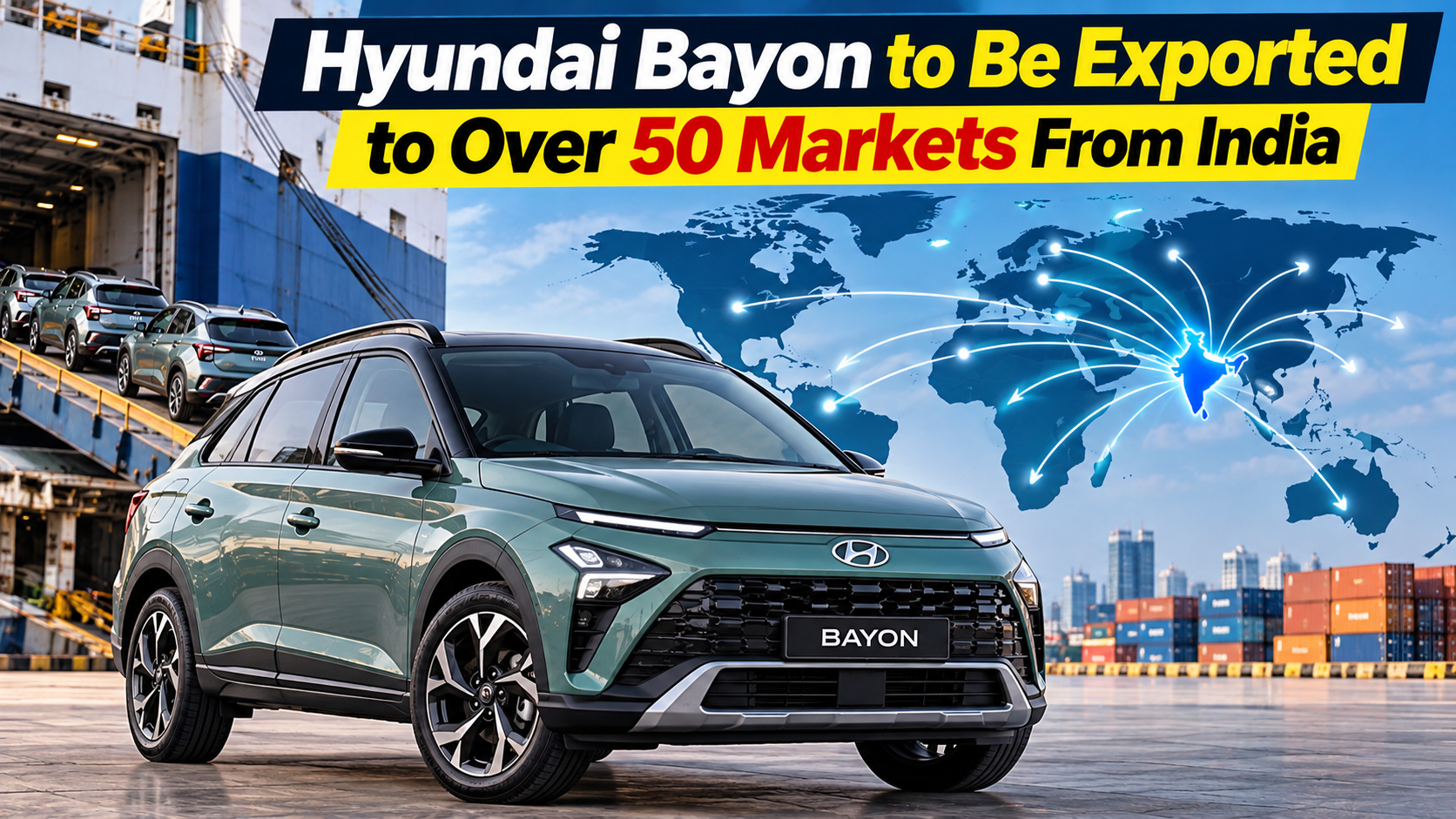
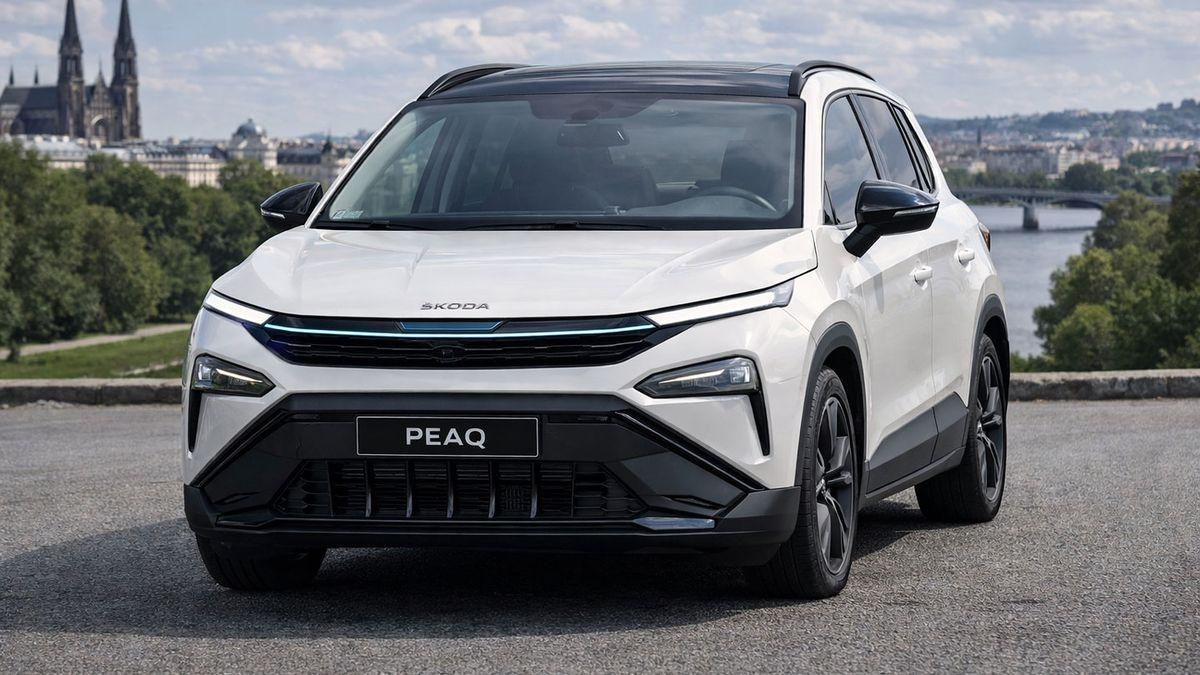
Hyundai Motor India will export the newly launched Hyundai Bayon SUV to more than 50 international markets, strengthening India's position as a global manufacturing hub. The SUV is expected to reach markets across the Gulf, Africa, Latin America and Asia-Pacific, with export shipments planned after its domestic launch.
Hyundai Motor India Limited (HMIL) has announced plans to export the Hyundai Bayon to more than 50 markets worldwide. The new SUV cars was launched in India on October 26, 2026, with an introductory starting price of ₹9.99 lakh (ex-showroom). The company plans to manufacture the Bayon in India and supply it to international markets, adding another model to its growing export portfolio.
The announcement highlights Hyundai's strategy of using India not only as a major domestic sales market but also as a manufacturing base for vehicles sold overseas. The Bayon will join the Hyundai Venue as another India-made SUV intended for international customers. According to recent reports, export destinations will include countries across the Gulf region, Africa, Latin America and Asia-Pacific.
Hyundai Bayon Export Plans: More Than 50 Markets
Hyundai has confirmed that the India-made Bayon will be exported to more than 50 global markets. The company has identified international demand for the SUV as an important part of its product strategy, although the complete list of destination countries has not yet been announced.
Reports indicate that several markets in Latin America and the Middle East have shown interest in the new SUV. Other potential destinations include countries in Africa and the Asia-Pacific region.
The export programme is expected to begin after the domestic launch, following Hyundai's established approach of introducing new products in India before expanding overseas distribution. Recent industry reports have indicated that export shipments could begin during the final quarter of FY2026–27, subject to the company's rollout plans.
The strategy could help Hyundai improve production utilisation at its Indian facilities while expanding the reach of its latest SUV.
India Strengthens Its Role in Hyundai's Global Operations
India has become an important manufacturing and export base for Hyundai Motor. Vehicles produced at the company's Indian facilities serve domestic customers as well as international markets.
The Bayon export programme is another step in this direction. By manufacturing the SUV locally, Hyundai can use its existing production infrastructure and supplier network to support both Indian sales and overseas demand.
The company already exports several India-made models. The Venue is particularly relevant to the Bayon's export strategy, as it demonstrates Hyundai's approach of producing SUVs in India for international markets.
The new model could help diversify Hyundai's export portfolio and strengthen its presence in markets where demand for compact and mid-size SUVs remains important.
Hyundai Bayon Launched in India at ₹9.99 Lakh
The Hyundai Bayon entered the Indian market with a starting price of ₹9,99,900 (ex-showroom). Hyundai positions it as an intelligent, technology-focused SUV designed for customers seeking modern styling, connected features and everyday practicality.
The Bayon sits within Hyundai's expanding SUV range and is intended to attract buyers looking for a feature-rich vehicle. Its launch also comes as competition in India's SUV market continues to intensify.
Hyundai is offering the Bayon with a 1.5-litre, four-cylinder MPi petrol engine. The engine produces 115 PS of maximum power and 143.8 Nm of torque, according to the manufacturer's official specifications.
Transmission options include a six-speed manual gearbox and Hyundai's Intelligent Variable Transmission (iVT). The automatic version is designed to provide smooth driving in traffic, while the manual option caters to buyers who prefer conventional gear changes.
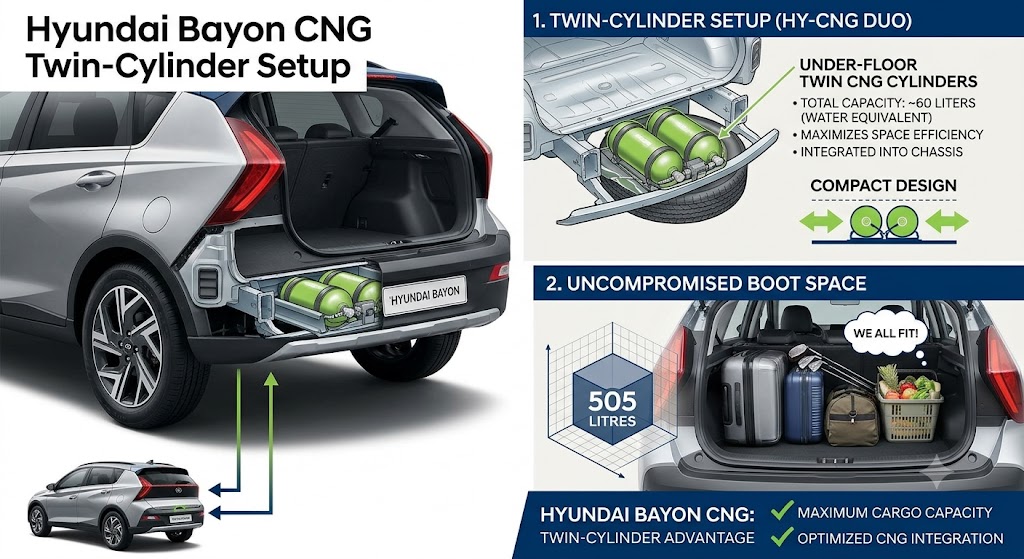
Hyundai has also announced plans to introduce a CNG-powered version of the Bayon in January 2027. More details about its availability, variants and pricing are expected closer to its launch.
Hyundai Bayon Engine and Specifications
|
Specification
|
Hyundai Bayon
|
|
Model
|
Hyundai Bayon
|
|
Launch date in India
|
26-Oct-26
|
|
Starting price
|
₹9.99 lakh, ex-showroom
|
|
Engine
|
1.5-litre, four-cylinder MPi petrol
|
|
Maximum power
|
115 PS
|
|
Maximum torque
|
143.8 Nm
|
|
Transmission
|
Six-speed manual and iVT automatic
|
|
Manufacturing location
|
India
|
|
Export markets
|
More than 50
|
|
Expected export regions
|
Gulf, Africa, Latin America and Asia-Pacific
|
|
CNG version
|
Planned for January 2027
|
Advanced Technology and Safety Features
One of the major highlights of the Hyundai Bayon is its technology package. Hyundai has introduced the model with a dual 12.3-inch curved panoramic display arrangement, combining the digital instrument cluster and infotainment functions.
The SUV also features Hyundai's Connected Car Navigation Cockpit, supported by NVIDIA technology, along with Bluelink connected-car services and over-the-air updates for compatible vehicle controllers.
Another notable feature is Hyundai Motor India's first generative AI voice assistant. The system combines technology from Perplexity and SoundHound AI to support more natural voice interactions and help drivers access selected information and vehicle functions.
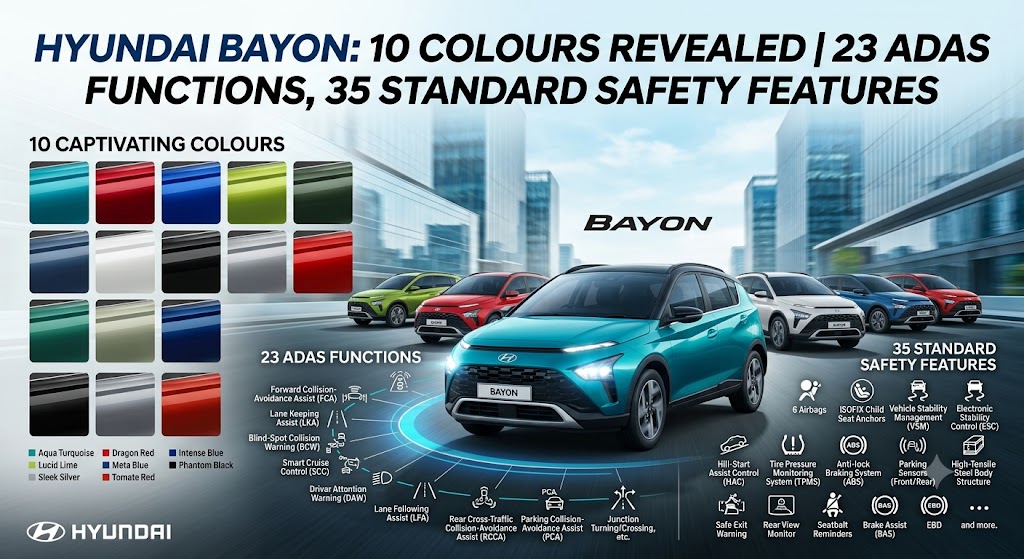
For safety, the Bayon offers Hyundai SmartSense Level 2 Pro ADAS with 23 advanced driver-assistance features, according to the manufacturer. The equipment package also includes six airbags as standard, along with additional electronic safety systems and camera-based assistance features.
The availability of individual features may vary according to the variant and market in which the SUV is sold.
Why the Hyundai Bayon Matters for India's Export Industry
The Bayon's planned exports reflect a broader trend in which automakers use Indian manufacturing facilities to supply vehicles to multiple international regions.
Manufacturing for overseas markets can help companies achieve higher production volumes, improve factory utilisation and expand their customer base. It also strengthens the role of local suppliers that provide components for vehicles assembled in India.
For Hyundai, exporting the Bayon to more than 50 markets could create additional opportunities beyond domestic sales. The programme may also help the company respond to demand in regions where its SUV portfolio has room to grow.
However, export performance will depend on market-specific demand, pricing, regulatory requirements, logistics and the timing of international launches.
What Happens Next?
The next major developments to watch are the announcement of individual export destinations, the start of overseas shipments and the rollout of the Bayon in international showrooms.
Hyundai has confirmed its intention to export the model to more than 50 markets, but detailed country-wise launch schedules and export volumes have not yet been disclosed.
The company is also expected to provide further information about the planned CNG version for India, which is scheduled for January 2027.

 Khyati Sharma 2026-10-29