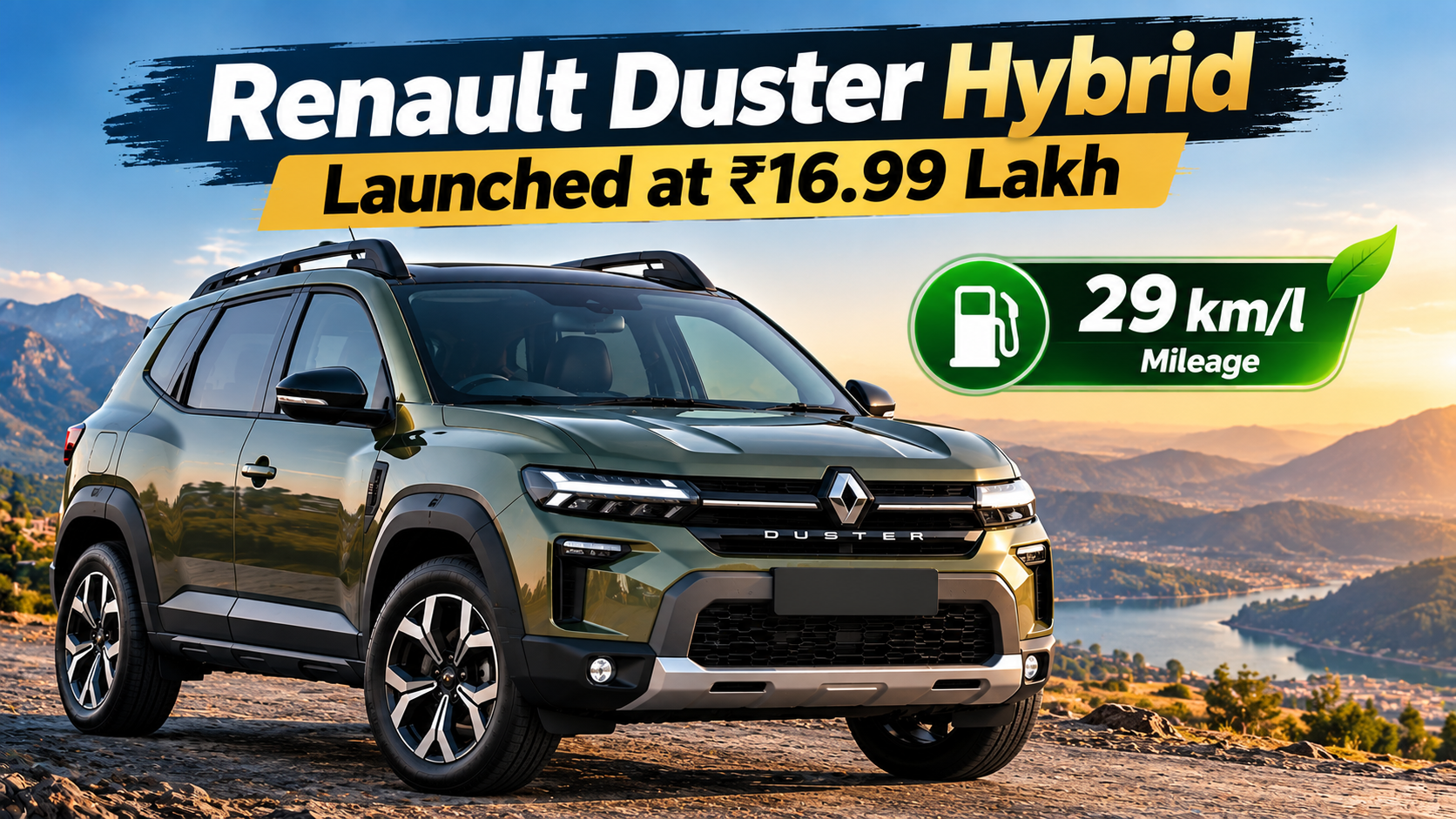
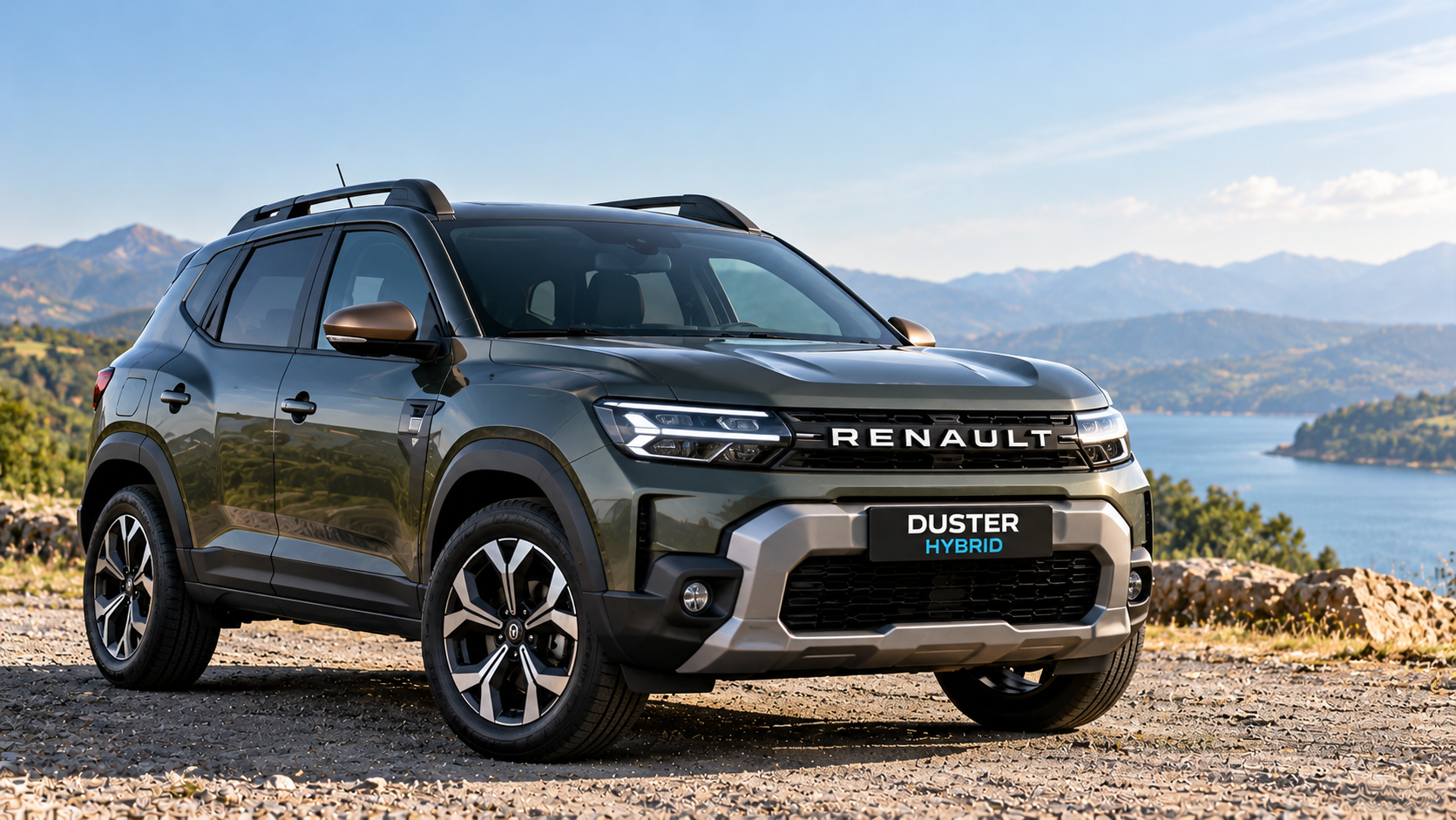
The Renault Duster has returned to the Indian SUV market with a new strong-hybrid powertrain designed to combine fuel efficiency, performance and everyday comfort. The Renault Duster Strong Hybrid E-Tech 160 introduces a 1.8-litre petrol engine paired with two electric motors and a self-charging battery, offering an alternative to buyers who want diesel-like efficiency without choosing a diesel vehicle.
Launched in India in October 2026, the Duster Hybrid is priced from ₹16.99 lakh to ₹19.49 lakh (ex-showroom). Renault claims an ARAI-certified fuel efficiency of 29 kmpl, making it an interesting option for urban commuters and long-distance drivers. But can it genuinely replace a diesel SUV? Here is what buyers should know.
Renault Duster Hybrid: Engine and Performance
The biggest highlight of the new Duster is its E-Tech 160 strong-hybrid system. It combines a 1.8-litre naturally aspirated four-cylinder petrol engine, two electric motors and a 1.4kWh battery pack.
The hybrid system produces approximately 160 PS of combined power and 208 Nm of electric motor torque. Power is delivered through a multi-mode automatic transmission that manages the petrol engine and electric motors according to driving conditions.
Unlike a conventional petrol SUV, the Duster Hybrid can start moving using electric power alone. It can operate in electric, series-hybrid and parallel-hybrid modes, allowing the system to select an appropriate combination for acceleration, cruising and energy recovery.
Renault claims a 0–100 kmph acceleration time of around 9.6 seconds. The electric motor's immediate response helps the SUV feel energetic during traffic-light starts and city overtaking. Its transmission also avoids much of the constant high-revving sensation associated with some conventional hybrid systems.
Renault Duster Hybrid Mileage
Fuel efficiency is central to Renault's diesel-replacement strategy. The company claims 29 kmpl under the ARAI test cycle, although actual mileage will depend on traffic, road conditions, driving style and air-conditioning use.
The hybrid system is particularly useful in congested cities. Regenerative braking recovers energy during deceleration, while the battery allows the SUV to travel on electric power during suitable driving conditions. Renault says the vehicle can complete up to 80% of city driving in electric mode under favourable conditions.
On highways, the petrol engine can drive the wheels directly, with electric assistance available when required. However, sustained high-speed driving generally reduces the advantage of a self-charging hybrid compared with stop-and-go urban use.
Drivers should therefore treat the 29 kmpl figure as a certified test result rather than a guaranteed everyday average.
Renault Duster Hybrid Specifications
|
Specification
|
Details
|
|
Powertrain
|
Strong-hybrid petrol-electric
|
|
Petrol engine
|
1.8-litre, four-cylinder
|
|
Electric motors
|
Two
|
|
Battery capacity
|
1.4kWh
|
|
Combined power
|
160 PS
|
|
Electric motor torque
|
208 Nm
|
|
Transmission
|
Multi-mode automatic
|
|
Claimed mileage
|
29 kmpl (ARAI)
|
|
Claimed 0–100 kmph
|
Approximately 9.6 seconds
|
|
Starting price
|
₹16.99 lakh
|
|
Top hybrid variant price
|
₹19.49 lakh
|
|
Fuel type
|
Petrol and electric hybrid
|
Ride Comfort and Driving Experience
The Duster has traditionally appealed to buyers who value its robust character and ability to handle challenging roads. The hybrid version builds on that reputation with suspension changes intended to accommodate the additional weight of its electrical components.
It uses Frequency Dependent Dampers (FDD), which are designed to balance comfort over smaller road imperfections with better body control during larger movements. The result is a more composed driving experience on uneven roads and improved stability at higher speeds.
In the city, electric assistance makes acceleration smooth and quiet when the engine is not running. On highways, the combination of petrol and electric power provides useful overtaking performance.
There are some compromises. The hybrid battery reduces luggage capacity compared with the petrol Duster, and a spare wheel is not supplied as standard. Some driver-assistance and convenience features available on certain petrol versions are also absent from the hybrid range.
Features and Practicality
The Duster Hybrid retains many of the features expected in a modern mid-size SUV. Depending on the variant, buyers can get a panoramic sunroof, a digital instrument cluster, a touchscreen infotainment system, wireless smartphone connectivity, ventilated front seats and an electrically operated tailgate.
Six airbags and other essential safety equipment are included, although equipment availability varies by trim. Buyers should check the exact variant specification before booking, particularly if features such as a 360-degree camera or advanced driver-assistance systems are priorities.
The cabin remains suitable for everyday family use, but the reduced boot space is worth considering for people who regularly travel with several suitcases or bulky luggage.
Can the Renault Duster Hybrid Replace a Diesel SUV?
The answer depends on how the vehicle will be used.
For city driving, the Duster Hybrid makes a strong case. Frequent braking, slow-moving traffic and repeated acceleration allow the electric system to contribute more often. Drivers can also benefit from quieter starts and smoother low-speed movement.
For highway commuters, the decision is less straightforward. Diesel engines traditionally offer strong low-rev torque and good efficiency during long, steady journeys. A hybrid can deliver capable highway performance, but its fuel economy advantage may narrow when driven continuously at higher speeds.

 Khyati Sharma 2026-10-28