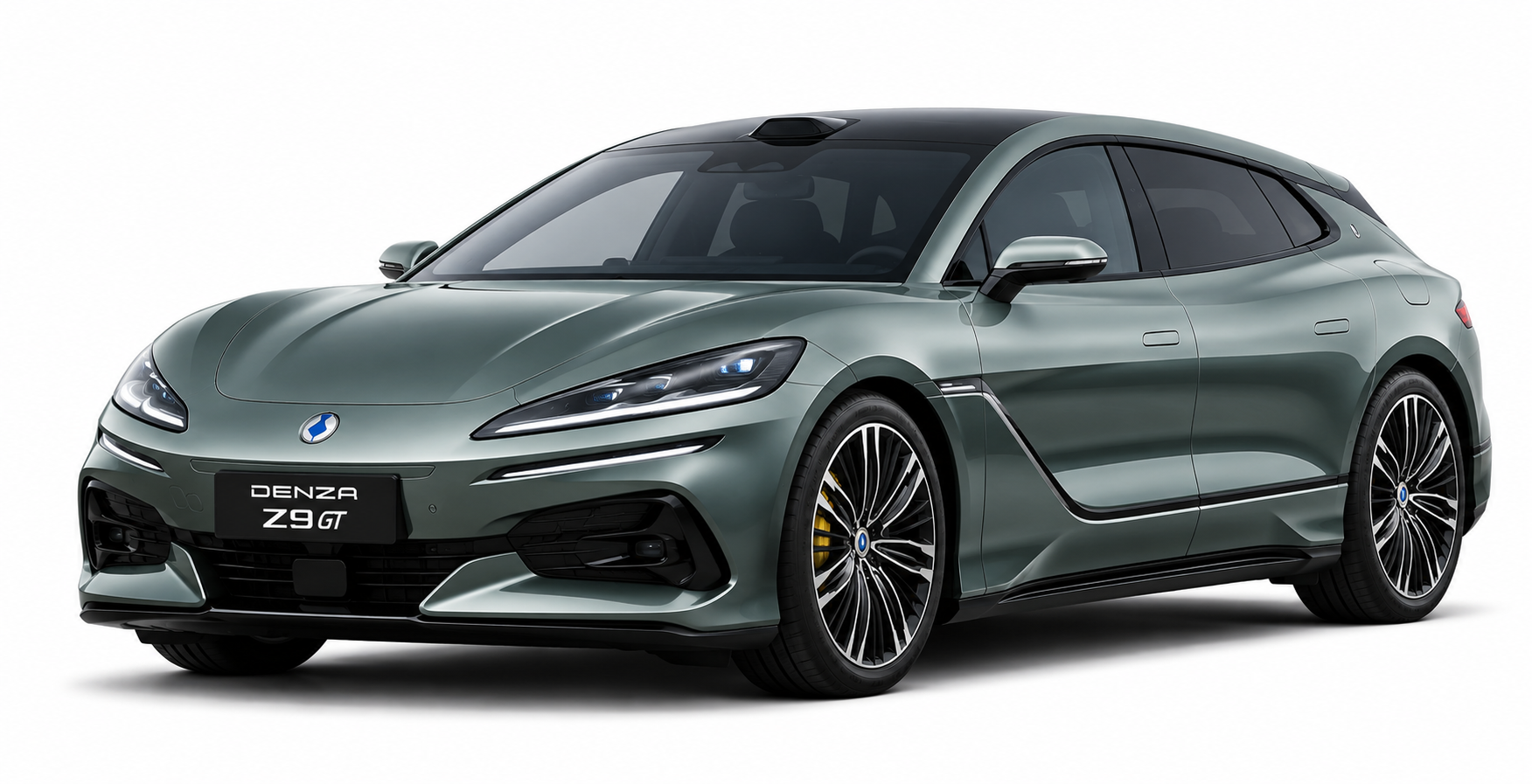
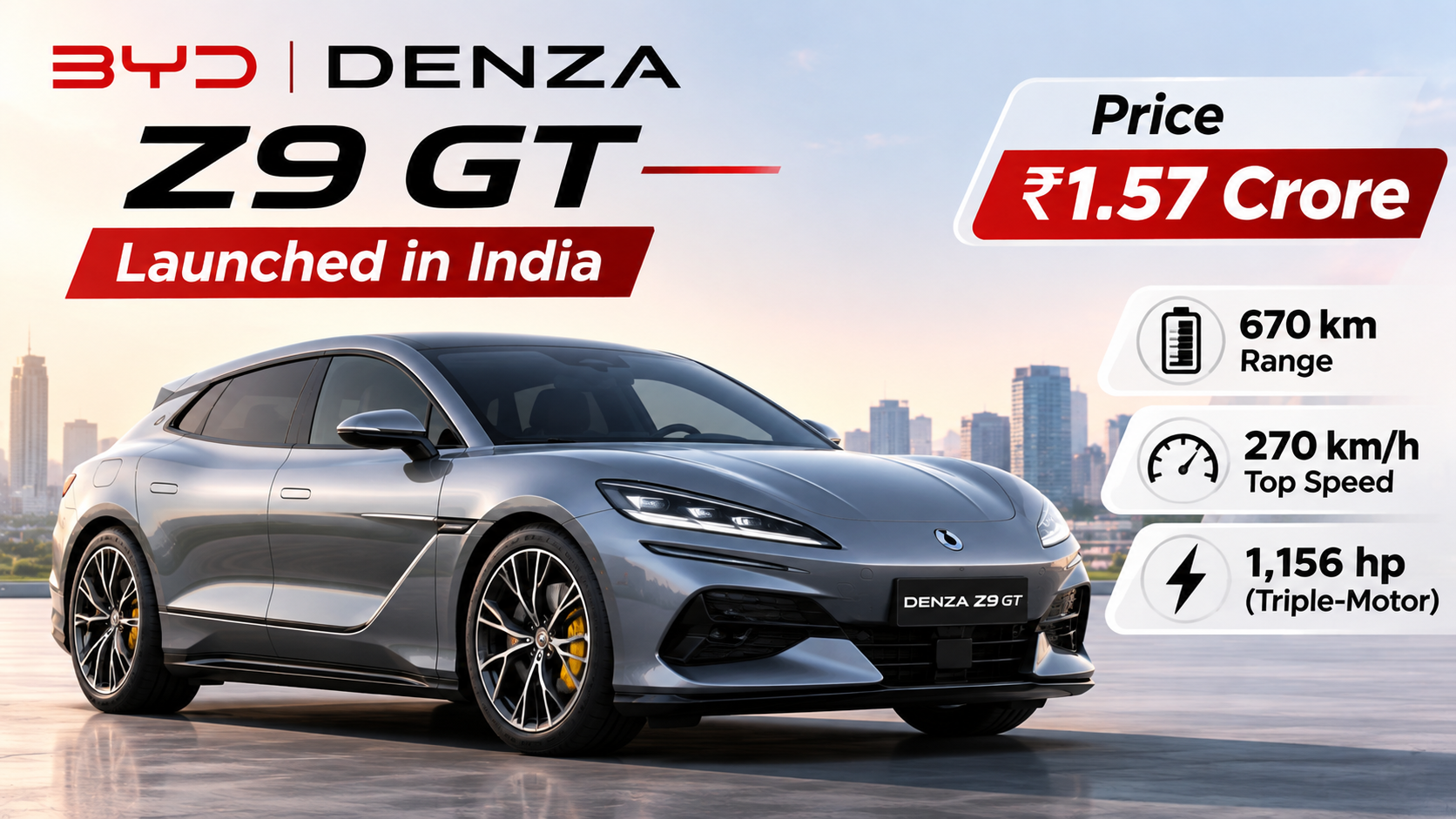
BYD Denza Z9 GT
156.8 Lakh*

 Khyati Sharma 2026-11-17

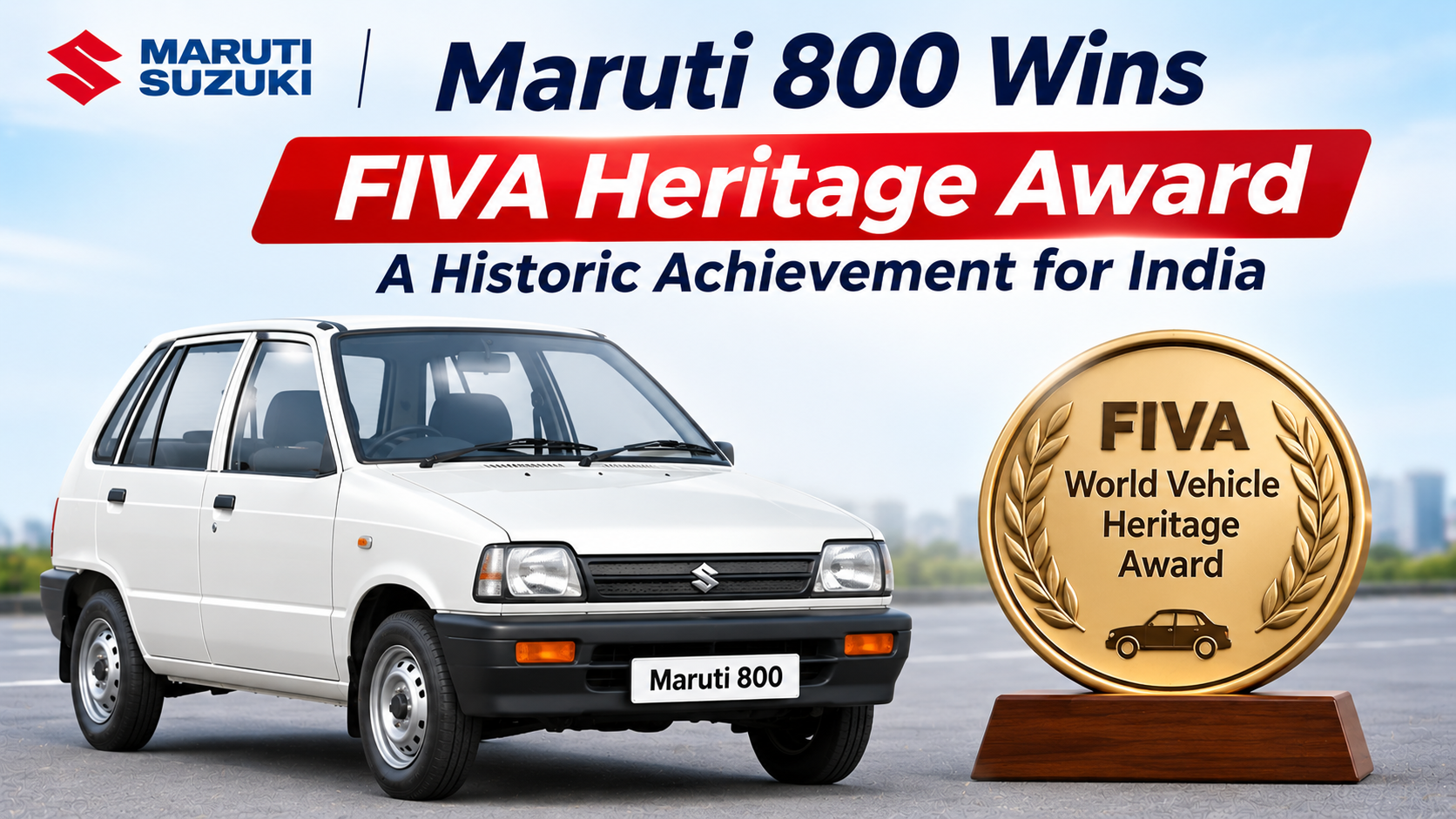
The iconic Maruti 800 has achieved international recognition by becoming the first and only Indian vehicle to receive the prestigious FIVA World Vehicle Heritage Award. The award celebrates the car's contribution to India's automotive industry, personal mobility and social development.
The recognition was announced as part of the inaugural World Vehicle Heritage Awards organised by the Fédération Internationale des Véhicules Anciens (FIVA). The Maruti 800 was selected among 21 historically and culturally significant vehicles from different countries, including the United States, Germany, France, Brazil, Austria and Slovenia.
Launched in December 1983, the Maruti 800 transformed the Indian passenger car market by making car ownership more accessible to middle-class families. Over its 30-year production journey, more than 2.9 million units were manufactured, making it one of the most influential cars in India's automotive history.
Although production ended in January 2014, the Maruti 800 continues to hold a special place among Indian car enthusiasts and families.
The Maruti 800 has become the first and only Indian vehicle to receive the FIVA World Vehicle Heritage Award.
Unlike conventional automobile awards that focus on performance, luxury, technology or design, the FIVA recognition celebrates vehicles that have made a lasting impact on society and national identity.
The award considers the historical importance of vehicles, their contribution to industrial development and their influence on everyday mobility.
The Maruti 800 earned this recognition because it played an important role in making personal transportation accessible to millions of Indian households.
Being selected alongside 21 historically significant vehicles from around the world highlights the importance of India's first mass-market modern passenger car in global automotive history.
The Maruti 800 was introduced in December 1983 through Maruti Udyog Limited, which later became Maruti Suzuki India Limited.
At that time, owning a personal car was considered a luxury for many Indian families. The Maruti 800 changed this perception by offering a compact, affordable and easy-to-drive hatchback.
The first-generation model was based on the Suzuki SS80 and featured a 796cc petrol engine.
Its compact dimensions, practical design and relatively affordable ownership costs helped it become popular across Indian cities and smaller towns.
For many families, purchasing a Maruti 800 was not just buying a car; it was their first experience of personal four-wheel mobility.
The Maruti 800 enjoyed an extraordinary production journey lasting approximately three decades.
According to Suzuki Motor Corporation, more than 2.9 million units were manufactured during its production lifetime.
|
Particulars |
Details |
|
Car Name |
Maruti 800 |
|
Manufacturer |
Maruti Suzuki |
|
First Launch |
30,651 |
|
Original Platform |
Suzuki SS80 |
|
Engine |
796cc Petrol |
|
Production Duration |
Around 30 Years |
|
Total Production |
More than 29 lakh units |
|
Production Ended |
18 January 2014 |
|
International Recognition |
FIVA World Vehicle Heritage Award |
One of the biggest reasons behind the Maruti 800's success was its ability to bring personal mobility within reach of a much larger section of Indian society.
Before its arrival, the Indian car market had limited choices, and car ownership was largely associated with higher-income households.
The Maruti 800 changed the market with its compact size, simple mechanical construction and practical everyday usability.
Some of the major reasons behind its popularity included:
Affordable pricing compared with many alternatives at the time
Compact dimensions suitable for Indian roads
Easy-to-drive manual transmission
Relatively simple maintenance
Good fuel efficiency for its era
Wide dealership and service network
The car also became a familiar sight in Indian cities, towns and villages, establishing a strong emotional connection with generations of buyers.
The contribution of the Maruti 800 was not limited to the domestic market. It also played an important role in establishing India's passenger vehicle manufacturing and export capabilities.
Maruti Suzuki cars began exporting the Maruti 800 in the 1980s, with Hungary, France and Belgium among its European destinations.
The export programme demonstrated that Indian manufacturing could produce vehicles for international markets.
The success of the Maruti 800 also supported the development of a wider automotive ecosystem, including component manufacturers, dealerships, service centres and suppliers.
This helped create employment opportunities and strengthened India's position as an important automobile manufacturing destination.
Despite its popularity, Maruti Suzuki eventually discontinued the Maruti 800 in India.
Production officially ended on January 18, 2014, after more than three decades in the market.
One of the major reasons was the introduction of stricter emission regulations, particularly Bharat Stage IV requirements in several Indian cities. The ageing model also faced increasing competition from newer hatchbacks offering better safety, comfort and technology.
The company gradually shifted its focus towards newer models, including the Alto and Alto K10.
Although the Maruti 800 is no longer available as a new car, it remains an important part of India's automobile history.
The Fédération Internationale des Véhicules Anciens (FIVA) is an international organisation dedicated to preserving and promoting historic vehicles.
Its inaugural World Vehicle Heritage Awards recognise vehicles that have made significant contributions to cultural identity, industrial development and mobility.
The award is different from regular car awards because it focuses on historical and social importance rather than only technical specifications or market performance.
The Maruti 800's selection is particularly significant because it recognises a mass-market Indian hatchback rather than an expensive luxury or limited-production collector car.
It also places India's automotive heritage among internationally recognised vehicles from different parts of the world.
The recognition of the Maruti 800 comes at an important time for Maruti Suzuki as the company continues expanding its product portfolio and manufacturing operations.
The company currently offers several popular models, including the Alto K10, WagonR, Swift, Baleno, Dzire, Fronx and Brezza.
While the Maruti 800 is unlikely to return as a production model, its legacy continues through the company's focus on affordable mobility and mass-market passenger vehicles.
The international heritage award also provides an opportunity to highlight how the Indian automobile industry has evolved over the past four decades.
The Maruti 800 winning the FIVA World Vehicle Heritage Award is a proud moment for India's automobile industry.
From its launch in 1983 to the end of production in 2014, the hatchback played a major role in changing how Indian families viewed car ownership.
With more than 2.9 million units manufactured, the Maruti 800 became much more than a successful car. It helped develop India's passenger vehicle manufacturing ecosystem and introduced personal mobility to millions of households.
Although it is no longer on sale, this international recognition confirms the Maruti 800's lasting importance in India's automotive history.

















Mercedes-Benz
₹185.00 Lakh
