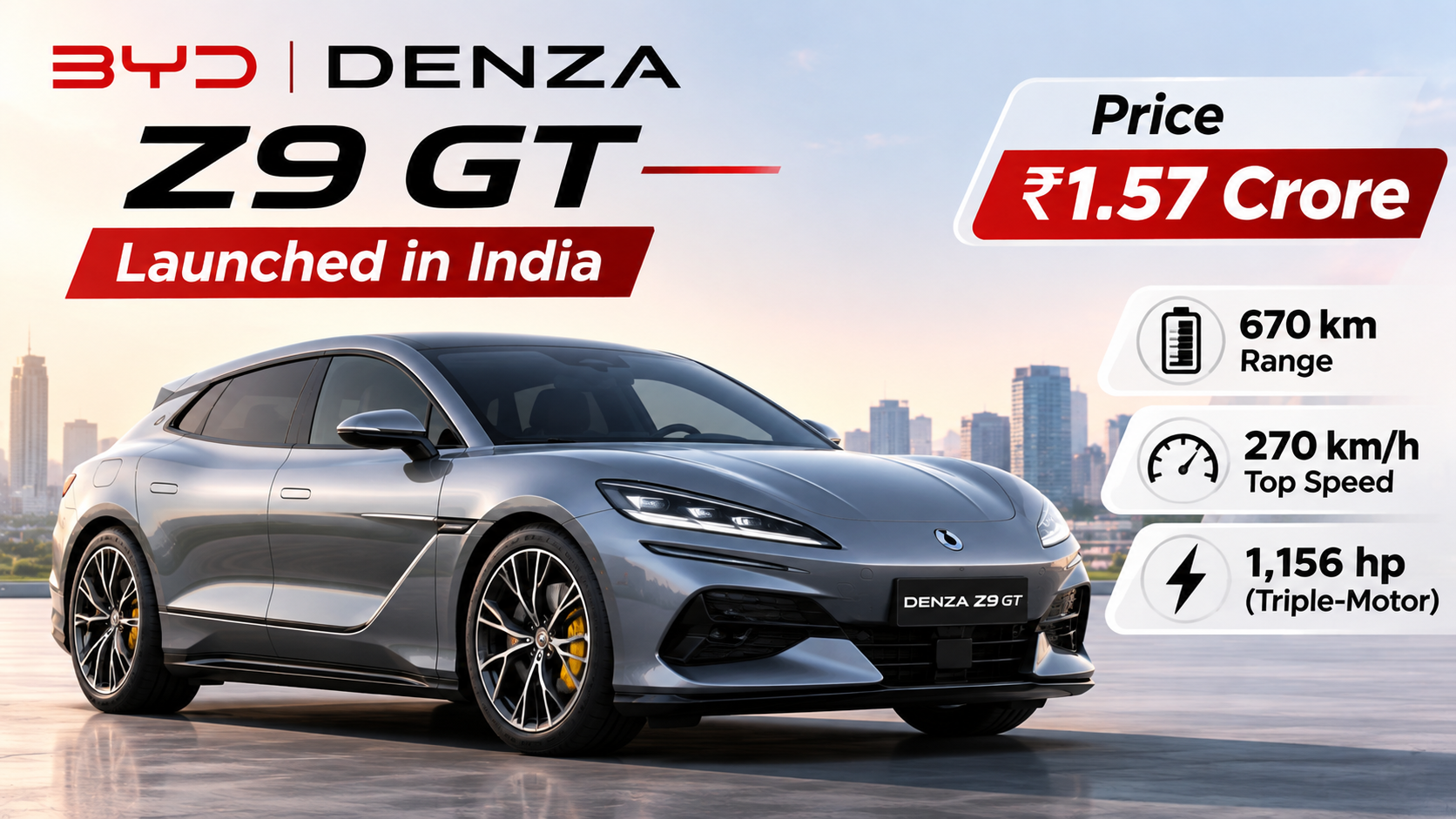
BYD Denza Z9 GT
156.8 Lakh*

 Khyati Sharma 2026-11-17

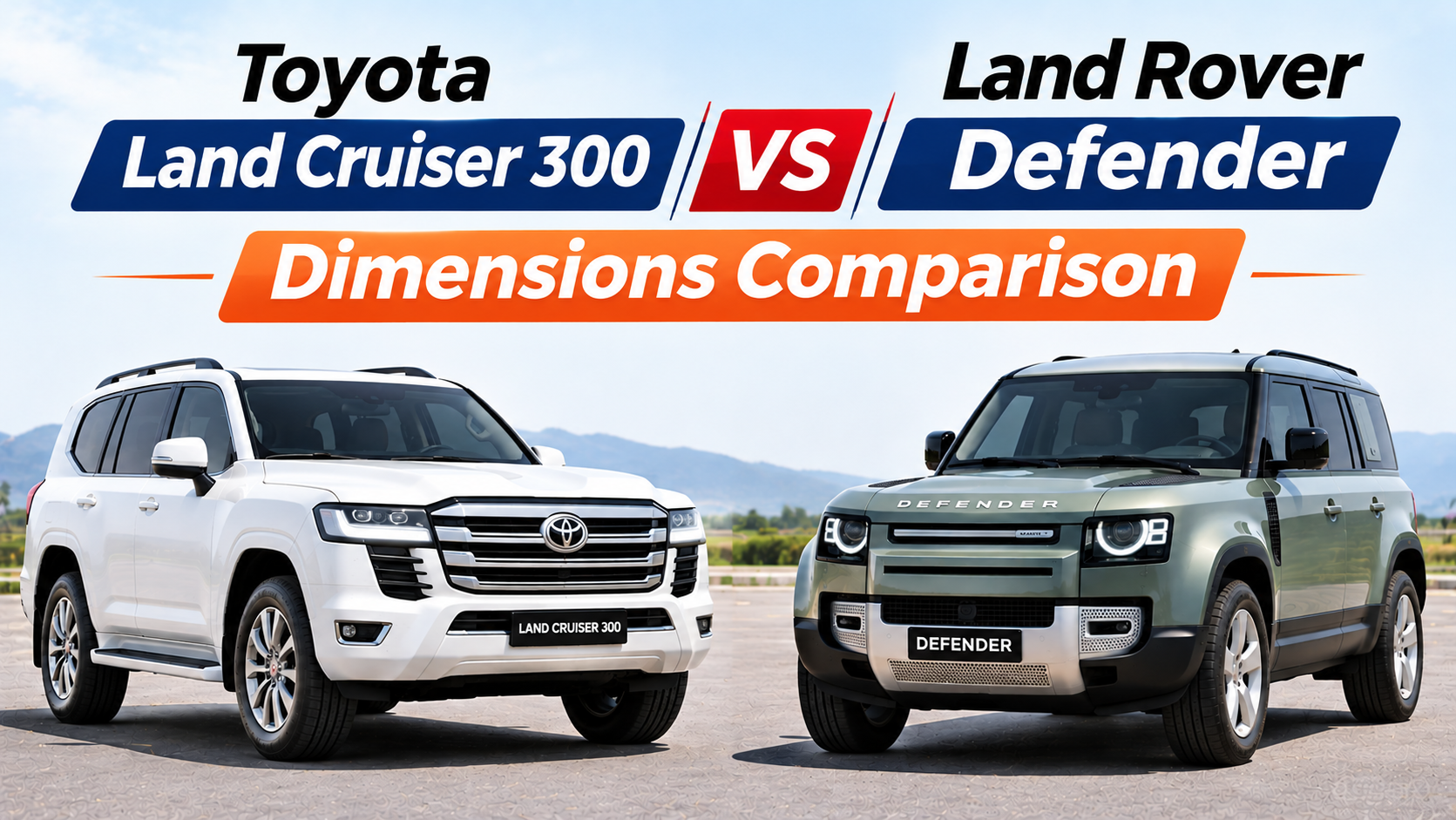
The Toyota Land Cruiser 300 and Land Rover Defender are two of the most capable luxury SUVs available in the Indian market. Both models combine powerful engines, premium interiors and advanced off-road technology with large SUV proportions. However, when it comes to exterior dimensions, cabin space and ground clearance, there are some noticeable differences.
The Toyota Land Cruiser 300 is known for its rugged construction, traditional SUV cars character and strong off-road capabilities. The Land Rover Defender 110, meanwhile, combines a modern design with a spacious cabin, advanced suspension technology and impressive off-road hardware.
For buyers considering either of these premium SUVs, dimensions play an important role in understanding their road presence, parking convenience and interior practicality.
In this comparison, we look at the Toyota Land Cruiser 300 and Land Rover Defender 110 dimensions, including length, width, height, wheelbase and ground clearance, to find out which SUV is bigger.
The Land Rover Defender 110 is longer and wider than the Toyota Land Cruiser 300. It also gets a longer wheelbase, which can help provide additional cabin space.
The Toyota Land Cruiser 300, however, has a slightly shorter overall body and a traditional body-on-frame construction.
|
Dimensions |
Toyota Land Cruiser 300 |
Land Rover Defender 110 |
|
Length |
4,965–4,985 mm |
5,003 mm |
|
Width |
1,980–1,990 mm |
2,064 mm |
|
Height |
1,955 mm |
1,995 mm |
|
Wheelbase |
2,850 mm |
3,023 mm |
|
Ground Clearance |
230 mm |
Up to 323 mm |
|
Seating Capacity |
5 |
5 or 7, depending on configuration |
The Land Rover Defender 110 measures 5,003 mm in length, making it longer than both versions of the Toyota Land Cruiser 300.
The Toyota Land Cruiser 300 ZX measures 4,985 mm, while the GR-S version measures approximately 4,965 mm.
This means the Defender 110 is:
18 mm longer than the Land Cruiser 300 ZX.
38 mm longer than the Land Cruiser 300 GR-S.
Although the difference is relatively small, the Defender's longer body contributes to its larger overall proportions.
For buyers looking for a full-size SUV with a slightly longer exterior footprint, the Defender 110 has the advantage.
Width is another important measurement when comparing large luxury SUVs.
The Land Rover Defender 110 measures 2,064 mm in width, whereas the Toyota Land Cruiser 300 measures between 1,980 mm and 1,990 mm, depending on the variant.
This makes the Defender approximately 74–84 mm wider than the Land Cruiser 300.
The additional width gives the Defender a more substantial road presence and can help provide a spacious cabin.
However, a wider body can also make parking and navigating narrow city roads more challenging.
The Land Rover Defender 110 measures approximately 1,995 mm in height, while the Toyota Land Cruiser 300 has a height of around 1,955 mm.
The Defender is therefore approximately 40 mm taller.
Its taller body, upright windscreen and boxy exterior design give it a distinctive off-road appearance.
The Land Cruiser 300 also has a commanding driving position, but its overall proportions are slightly lower than those of the Defender 110.
Wheelbase is the distance between the front and rear wheels of a vehicle. It plays an important role in cabin packaging, passenger comfort and overall vehicle stability.
The Toyota Land Cruiser 300 comes with a 2,850 mm wheelbase, while the Land Rover Defender 110 gets a longer 3,023 mm wheelbase.
This gives the Defender a 173 mm advantage.
A longer wheelbase can provide additional opportunities for passenger space, particularly in the second row. However, actual cabin comfort also depends on seat design and interior packaging.
For buyers prioritising a longer wheelbase and spacious cabin layout, the Defender 110 has the advantage.
Ground clearance is particularly important for SUVs designed to handle challenging terrain, rocky trails and uneven surfaces.
The Toyota Land Cruiser 300 offers approximately 230 mm of minimum ground clearance in its Indian specification.
The Land Rover Defender 110 can offer ground clearance of up to 323 mm with its adjustable air suspension, depending on the configuration and suspension setting.
This gives the Defender an advantage of up to 93 mm.
The higher adjustable ride height helps the Defender tackle difficult off-road conditions, although its standard ride height can be different.
The Land Cruiser 300 also offers impressive off-road hardware, including four-wheel drive, multi-terrain systems and differential-lock functionality on the GR-S variant.
Both SUVs offer premium interiors, but their cabin layouts and seating configurations differ.
The Toyota Land Cruiser 300 is available in India with a five-seat configuration. It focuses on passenger comfort, premium upholstery and long-distance touring.
The Land Rover Defender 110 offers five-seat and optional seven-seat configurations, depending on the variant and market specification.
Its longer wheelbase also provides additional flexibility for cabin packaging.
Key interior highlights include:
Toyota Land Cruiser 300
Premium leather upholstery
12.3-inch infotainment touchscreen
Four-zone automatic climate control
Powered front seats
Ventilated seating
JBL premium audio system
Multiple off-road driving modes
Land Rover Defender 110
Premium interior materials
Large touchscreen infotainment system
Panoramic sunroof
Configurable cabin layouts
Electronic air suspension on applicable variants
Advanced terrain response system
Multiple seating configurations
Both SUVs offer premium comfort, but the Defender provides greater seating flexibility in selected versions.
Boot space is another important consideration for buyers planning long journeys or family trips.
The Land Rover Defender 110 offers a reported boot capacity ranging from approximately 786 litres to 1,875 litres, depending on the seating configuration and measurement method.
The Toyota Land Cruiser 300's boot capacity varies with its market specification and luggage configuration. A directly comparable official India-market figure is not consistently published.
The Defender's flexible seating arrangements make it a practical option for buyers who need additional passenger or luggage space.
However, buyers should consider the available luggage capacity when all seats are occupied, particularly in seven-seat configurations.
The Toyota Land Cruiser 300 and Land Rover Defender follow different design philosophies.
The Land Cruiser 300 features a bold front grille, muscular body panels, LED lighting and a traditional full-size SUV appearance. Its design focuses on strength, durability and luxury.
The Defender 110 follows a more upright and boxy design approach. Its flat roofline, vertical rear section, squared-off wheel arches and large windows give it a distinctive appearance.
The wider body and taller stance of the Defender make it appear more substantial on the road, while the Land Cruiser maintains a strong and traditional luxury SUV identity.
Both SUVs are designed to handle demanding off-road conditions, but they use different engineering approaches.
The Toyota Land Cruiser 300 is built on the TNGA-F ladder-frame platform. It gets a full-time four-wheel-drive system, low-range gearing and advanced traction-control technology.
The GR-S variant also gets additional off-road equipment, including front and rear differential locks.
The Land Rover Defender 110 uses a monocoque platform and offers advanced Terrain Response technology, low-range gearing and an electronic air suspension system on applicable versions.
Its adjustable ride height and higher maximum ground clearance make it particularly capable over difficult terrain.
Both SUVs are highly capable off-roaders, and the better choice depends on the terrain, variant and equipment being considered.
The Land Rover Defender 110 is larger than the Toyota Land Cruiser 300 in most major exterior dimensions. It is longer, wider and taller, while also offering a longer wheelbase and higher maximum ground clearance with its adjustable air suspension.
The Toyota Land Cruiser 300 remains a slightly more compact alternative, with a strong body-on-frame construction and a dedicated off-road setup.
For buyers prioritising a larger body, longer wheelbase and flexible seating options, the Land Rover Defender 110 has the advantage. Those looking for a traditional luxury off-roader with proven Toyota engineering may prefer the Land Cruiser 300.