The premium scooter segment in India is becoming increasingly interesting for buyers who want more than a regular commuter bikes or scooter. Sporty styling, powerful engines, modern technology and comfortable riding positions are attracting customers towards maxi-scooters and adventure-style scooters.
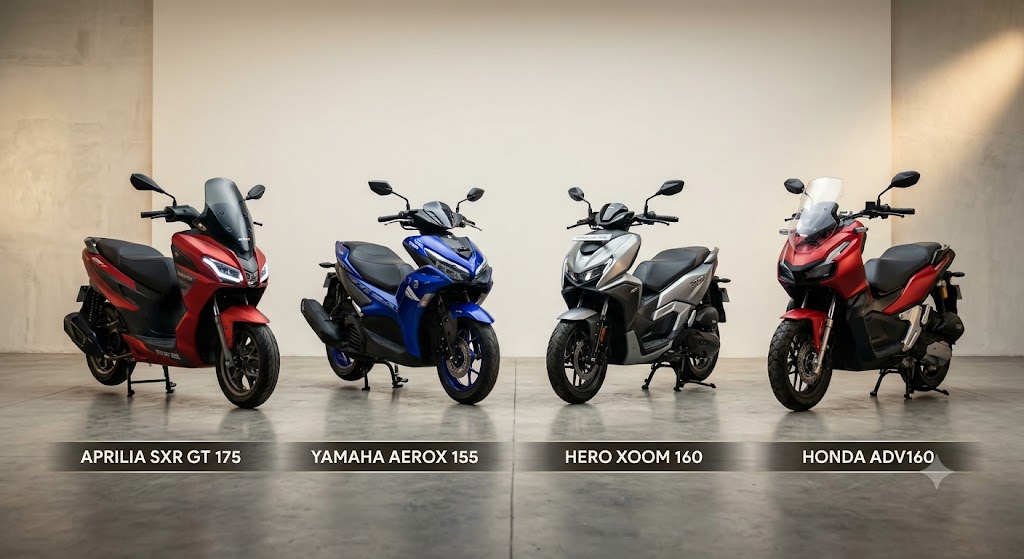
The Aprilia SXR GT 175 hp-e is the latest contender in this category, competing with models such as the Yamaha Aerox 155, Hero Xoom 160 and Honda ADV160. Each scooter follows a slightly different approach, giving buyers several options depending on their budget, performance expectations and preferred riding style.
The Aprilia SXR GT 175 stands out with its larger 174.7cc engine and competitive starting price. The Yamaha Aerox 155 focuses on sporty performance, the Hero Xoom 160 offers adventure-inspired styling, and the Honda ADV160 combines strong performance with a premium feature package.
Here is a detailed comparison of their prices, engine specifications, features, dimensions and overall value for money.
Aprilia SXR GT 175 vs Rivals: Price Comparison
Price is one of the most important factors when choosing a premium scooter. The Aprilia SXR GT 175 has a clear advantage in this area, with a reported starting ex-showroom price of ₹1.30 lakh.
The Hero Xoom 160 and Yamaha Aerox 155 occupy a higher price bracket, while the Honda ADV160 is the most expensive model in this comparison.
|
Scooter
|
Ex-showroom Price
|
|
Aprilia SXR GT 175 hp-e
|
₹1.30 lakh
|
|
Hero Xoom 160
|
₹1.45 lakh
|
|
Yamaha Aerox 155
|
₹1.46 lakh onwards
|
|
Honda ADV160
|
₹1.70 lakh
|
The Aprilia is approximately ₹15,000 cheaper than the listed starting price of the Hero Xoom 160 and around ₹16,000 cheaper than the Yamaha Aerox 155's base price.
The difference becomes more significant when compared with the Honda ADV160, which costs approximately ₹40,000 more than the Aprilia.
For buyers working with a limited budget, the SXR GT 175 offers an attractive entry point into the premium scooter segment. However, the final decision should also consider engine performance, safety equipment, convenience features and ownership costs.
Engine and Performance: Which Scooter Is More Powerful?
Although the Aprilia has the largest engine displacement among these four scooters, it does not produce the highest power. This is because engine capacity alone does not determine a vehicle's performance.
The Yamaha Aerox 155, Hero Xoom 160 and Honda ADV160 use liquid-cooled engines, while the Aprilia SXR GT 175 uses an air-cooled engine.
|
Specification
|
Aprilia SXR GT 175
|
Yamaha Aerox 155
|
Hero Xoom 160
|
Honda ADV160
|
|
Engine capacity
|
174.7cc
|
155cc
|
156cc
|
156.9cc
|
|
Cooling system
|
Air-cooled
|
Liquid-cooled
|
Liquid-cooled
|
Liquid-cooled
|
|
Maximum power
|
13.3hp
|
15hp
|
14.8hp
|
16.3hp
|
|
Peak torque
|
14.14Nm
|
13.9Nm
|
14Nm
|
14.9Nm
|
|
Transmission
|
CVT
|
CVT
|
CVT
|
CVT
|
Aprilia SXR GT 175: Bigger Engine, Practical Performance
The Aprilia SXR GT 175 uses a 174.7cc single-cylinder engine producing approximately 13.3hp and 14.14Nm of torque.
Its larger displacement does not translate into the highest power output, but the scooter focuses on its maxi-scooter design, comfort-oriented riding experience and accessible pricing.
The CVT transmission also makes it suitable for everyday riding without the need for manual gear changes.
Yamaha Aerox 155: Sporty and Lightweight
The Yamaha Aerox 155 produces 15hp and 13.9Nm from its 155cc liquid-cooled engine.
It is one of the lightest scooters in this comparison, with a reported kerb weight of 126kg. Its combination of relatively high power and low weight gives it an advantage for riders who prioritise a sporty riding experience.
The Aerox is particularly appealing to customers who prefer aggressive styling and performance-focused engineering.
Hero Xoom 160: Adventure-Inspired Character
The Hero Xoom 160 uses a 156cc liquid-cooled engine producing 14.8hp and 14Nm of torque.
It combines a sporty engine with adventure-inspired styling. Its larger proportions and higher weight give it a different character from the lighter Aerox.
At a reported 142kg, it is the heaviest scooter in this comparison, something buyers may want to consider when parking, reversing or manoeuvring at low speeds.
Honda ADV160: Highest Power Output
The Honda ADV160 leads this comparison in quoted power, producing 16.3hp and 14.9Nm from its 156.9cc liquid-cooled engine.
It also combines adventure-scooter styling with features aimed at improving convenience and riding confidence.
However, its higher price means buyers must decide whether the additional performance and equipment justify spending more.
Dimensions, Weight and Ground Clearance
|
Specification
|
Aprilia SXR GT 175
|
Yamaha Aerox 155
|
Hero Xoom 160
|
Honda ADV160
|
|
Kerb weight
|
132kg
|
126kg
|
142kg
|
137kg
|
|
Ground clearance
|
170mm
|
145mm*
|
155mm
|
175mm
|
|
Seat height
|
800mm
|
790mm
|
787mm
|
Not confirmed in comparison
|
|
Fuel tank capacity
|
7 litres
|
5.5 litres
|
7 litres
|
8.1 litres
|
|
Wheelbase
|
1,362mm
|
1,350mm
|
1,348mm
|
1,333mm
|
The Yamaha Aerox 155 is the lightest option at 126kg, while the Hero Xoom 160 is the heaviest at 142kg.
The Honda ADV160 has the highest quoted ground clearance at 175mm, followed by the Aprilia at 170mm. This could be useful on uneven roads, although actual ground clearance and suspension behaviour also affect real-world usability.
The Aprilia's 800mm seat height is the tallest quoted figure in this comparison. Shorter riders should therefore check whether they can comfortably place their feet on the ground before buying.
Features and Technology
Modern premium scooters offer much more than basic transportation. Digital instrument displays, smartphone connectivity, keyless ignition, USB charging and advanced rider aids are increasingly important in this segment.
Aprilia SXR GT 175
The Aprilia offers a modern-looking TFT instrument display and keyless functionality is not listed among its standard features in the published comparison. Buyers should confirm the exact equipment available on the variant being considered.
Its main strengths are the maxi-scooter design, larger engine capacity and lower starting price.
Yamaha Aerox 155
The Aerox offers a sporty cockpit and smartphone-related functions, including connected features and navigation on supported variants. Keyless ignition is associated with the Aerox S variant, so buyers should check the specific version.
The scooter also offers traction control, adding another layer of electronic assistance.
Hero Xoom 160
The Hero Xoom 160 combines an LCD instrument cluster with smartphone connectivity and navigation-related features. It also offers practical convenience features suited to daily use.
Its adventure-inspired styling makes it an alternative for buyers who want something different from a conventional sporty scooter.
Honda ADV160
The Honda ADV160 offers a TFT instrument display, keyless ignition, traction control and an adjustable windscreen, according to the published comparison.
Its reported E85 fuel compatibility is another distinguishing feature. However, fuel compatibility and availability should always be checked against the exact India-specification model and locally available fuel.
Overall, the Honda has a strong feature package on paper, while the Yamaha and Hero offer a combination of sporty styling and connected technology.
Braking, Tyres and Suspension
| Specification |
Aprilia SXR GT 175 |
Yamaha Aerox 155 |
Hero Xoom 160 |
Honda ADV160 |
| Front brake |
220mm disc |
230mm disc |
240mm disc |
Disc |
| Rear brake |
140mm drum |
130mm drum |
Drum |
Disc |
| ABS |
Single-channel |
Single-channel |
Single-channel |
Single-channel |
| Front suspension |
Telescopic fork |
Telescopic fork |
Telescopic fork |
Telescopic fork |
| Rear suspension |
Monoshock |
Twin shock absorbers |
Twin shock absorbers |
Twin shock absorbers |
The Honda stands out for having disc brakes at both ends in the published comparison. The other three models combine a front disc with a rear drum brake.
The Aprilia uses a monoshock rear suspension arrangement, while the Yamaha, Hero and Honda use twin rear shock absorbers.
Tyre dimensions also differ. The Aprilia features a 120/70-14 front tyre and a 120/70-14 rear tyre, while the other scooters use different front and rear tyre combinations.
These differences can influence grip, handling and ride comfort, but a larger brake disc or wider tyre does not automatically guarantee better real-world performance. Tyre quality, suspension tuning, road conditions and braking calibration also matter.
Which Scooter Offers the Best Value for Money?
The best scooter depends on what a buyer values most.
Aprilia SXR GT 175 — Best for budget-conscious buyers
The Aprilia is the least expensive scooter in this comparison. Its larger engine and maxi-scooter styling make it attractive to buyers who want a distinctive premium scooter without spending as much as they would on the Honda.
Yamaha Aerox 155 — Best for sporty riding
The Aerox combines a relatively low kerb weight with a 15hp engine. It is worth considering for buyers who prioritise a sporty design and performance-oriented riding character.
Hero Xoom 160 — Best for adventure-inspired styling
The Xoom 160 has a liquid-cooled engine, adventure-style design and a feature package aimed at modern scooter buyers. Its weight is worth considering for riders who regularly manoeuvre in congested spaces.
Honda ADV160 — Best for premium features on paper
The ADV160 offers the highest quoted power, the largest listed fuel tank and a strong selection of convenience and rider-assistance features. Its higher price may be justified for buyers who specifically want those advantages.
Should You Buy the Aprilia SXR GT 175 or Its Rivals?
The Aprilia SXR GT 175 makes a strong case for itself through its competitive price, larger engine displacement and maxi-scooter design. It is particularly attractive for buyers who want a premium-looking scooter while keeping their initial purchase cost under control.
The Yamaha Aerox 155 is a compelling alternative for those who value a lighter, sportier machine. The Hero Xoom 160 brings a different combination of performance and adventure-inspired styling, while the Honda ADV160 offers a more feature-rich package at a higher price.
Before making a decision, buyers should take test rides, compare the exact India-market variants and check local ex-showroom and on-road prices. Seat comfort, low-speed handling, braking feel, service accessibility and real-world fuel economy can be just as important as headline specifications.
Ultimately, the Aprilia is the value-focused choice on paper, the Yamaha appeals to sporty riders, the Hero offers an adventure-inspired alternative, and the Honda targets buyers looking for premium equipment and higher quoted performance.

 Khyati Sharma 2026-10-21