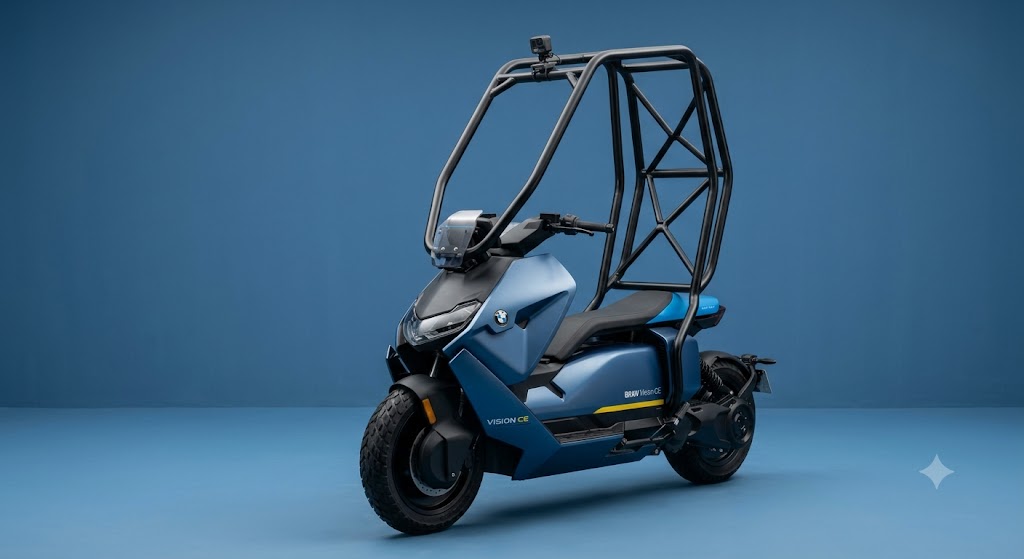
BMW Motorrad has patented the design of its futuristic Vision CE electric two-wheeler in India, bringing an unusual approach to urban mobility into the spotlight. The concept combines self-balancing technology, a protective safety cage and a four-point seatbelt, with the aim of making two-wheeler travel more convenient and potentially improving rider protection.
First showcased internationally in 2025, the BMW Vision CE looks very different from a conventional electric scooter. Its distinctive structure surrounds the rider, while its self-balancing system is designed to keep the vehicle upright even when stationary.
The concept has also attracted attention for its proposed helmet-free riding experience. However, BMW has not announced a production timeline, Indian launch date or final technical specifications. The patent protects the design; it does not confirm that the scooter will go on sale in India.
BMW Vision CE: What's New?
The BMW Vision CE represents the company's vision for a different kind of urban electric two-wheeler. Instead of relying exclusively on conventional motorcycle safety equipment, it explores the possibility of combining a compact vehicle with car-inspired occupant protection.
Its key highlights include:
-
Self-balancing technology designed to keep the vehicle upright.
-
A protective tubular frame surrounding the rider.
-
A four-point seatbelt to secure the occupant.
-
Padded structural elements intended to help reduce injuries during an impact.
-
An electric powertrain, with final specifications yet to be announced.
-
A design intended to simplify short urban journeys.
The combination of these features makes the Vision CE a distinctive concept within BMW Motorrad's electric mobility portfolio.
Self-Balancing Technology: How Does It Work?
One of the most interesting features of the BMW Vision CE is its self-balancing capability.
On a conventional scooter, riders generally need to put a foot on the ground when stopping at a traffic signal or manoeuvring at very low speeds. The Vision CE is designed to maintain its balance without requiring the rider to do this.
The system is expected to rely on sensors, electronic controls and actuators to help maintain stability. However, BMW has not published a complete technical explanation of the system or confirmed all the hardware involved.
If this technology reaches a production model, it could make frequent stops and low-speed manoeuvres easier for some riders.
The concept also includes a conventional stand for parking. Self-balancing technology is intended to improve convenience during operation, rather than eliminate every requirement associated with parking the vehicle.
Protective Safety Cage and Four-Point Seatbelt
The Vision CE's most striking design feature is its protective cage. A tubular structure surrounds the rider and is intended to provide an additional layer of protection in certain impact situations.
The design includes several elements intended to help protect the occupant:
Protective frame: The surrounding structure is designed to provide a protective space around the rider, including the upper body and legs.
Four-point seatbelt: A harness-style belt is intended to keep the rider secured to the seat during an impact or tip-over.
Padded contact points: Cushioning around parts of the frame, backrest and handlebar is intended to help reduce the risk of injury when the rider comes into contact with these components.
Side protection: Structural elements around the sides are intended to provide additional protection for areas such as the hips and shoulders.
These features reflect BMW's attempt to bring some car-like occupant-protection concepts to a two-wheeler. Their real-world effectiveness would need to be established through appropriate testing and the safety requirements applicable to any production vehicle.
Does the BMW Vision CE Really Eliminate the Need for a Helmet?
BMW has presented the Vision CE concept as a potential helmet-free riding solution because of its surrounding safety structure and occupant-restraint system.
However, the distinction between a manufacturer's design concept and road-going legal requirements is important.
The Indian patent does not give riders permission to travel without a helmet. Riders must continue to follow applicable Indian traffic laws, including helmet requirements, unless a specific lawful exemption applies.
Whether a future production version could legally operate without a helmet would depend on its final design, vehicle classification, homologation and the regulations in force. BMW has not announced any India-specific regulatory approval for helmet-free use.
Therefore, the Vision CE's helmet-free concept should be understood as a design ambition rather than a confirmed feature that Indian customers can use on public roads today.
BMW Vision CE Battery, Range and Performance
BMW has not released the final battery capacity, motor output, torque, range or top speed of the Vision CE.
The existing BMW CE 04 provides a useful reference point for understanding the company's electric two-wheeler technology, but its specifications should not be confused with those of the Vision CE.
The CE 04 figures are reference specifications for that model, not confirmed specifications for the Vision CE.
The Vision CE's protective structure and additional equipment could affect its overall weight and energy consumption. Its final range and performance would depend on the production design, battery, motor and other technical choices.
It is therefore too early to estimate the Vision CE's real-world range or charging time with confidence.
Will the BMW Vision CE Launch in India?
The Indian design patent is a noteworthy development, but it does not confirm that BMW intends to launch the Vision CE in the country.
Automotive manufacturers may register patents in markets where they want to protect a design or preserve future commercial options. A patent alone does not establish a manufacturing commitment, sales plan or launch schedule.
As of October 2026, BMW has not announced an official Indian launch date, production timeline or price for the Vision CE.
The company would also need to finalise the technical package and meet the relevant regulatory requirements before any production version could be sold for road use.
For now, the Vision CE should be treated as a futuristic electric mobility concept rather than a confirmed upcoming showroom model.
BMW Vision CE vs Conventional Electric Scooters
|
Feature
|
BMW Vision CE concept
|
Conventional electric scooter
|
|
Balancing
|
Designed for self-balancing
|
Normally relies on rider balance
|
|
Rider protection
|
Surrounding safety cage and seatbelt concept
|
Primarily relies on the scooter's design and rider protective equipment
|
|
Helmet-free concept
|
Proposed as part of its design philosophy
|
Generally subject to applicable helmet laws
|
|
Powertrain
|
Electric
|
Electric
|
|
Production status
|
No production launch confirmed
|
Depends on the individual model
|
|
India price
|
Not announced
|
Varies by model
|
What the BMW Vision CE Means for Future Electric Mobility
The Vision CE illustrates how electric two-wheeler development could extend beyond batteries, charging speeds and motor performance.
Self-balancing technology could make certain riding situations easier, while integrated protective structures could offer an alternative approach to occupant safety. Such ideas may be particularly relevant to urban travel, where riders frequently encounter traffic signals, congestion and repeated stops.
At the same time, adding a safety cage, restraint system and electronic balancing equipment introduces engineering challenges. Manufacturers would need to consider vehicle weight, cost, energy consumption, manoeuvrability and occupant protection.
The design also raises questions about how regulators classify and certify unconventional two-wheelers. A concept that looks promising in a display environment must still demonstrate that it can meet the demands of everyday road use.

 Khyati Sharma 2026-10-21