Hyundai Motor Company and TVS Motor Company have signed a joint development agreement to design and manufacture electric three-wheelers (E3Ws) for the Indian market. The announcement was made in April 2026, marking a significant push into the fast-growing electric mobility segment.
Under the partnership, Hyundai will lead design and research, while TVS Motor will handle manufacturing, sales, and distribution. The vehicles will be tailored for India’s last-mile transport needs, including passenger and cargo applications.
The move aims to accelerate electric vehicle adoption in India, the world’s largest three-wheeler market, while reducing emissions and fuel dependence. The companies may also explore exports to other emerging markets after establishing a domestic presence.
The collaboration highlights a broader trend of global and Indian automakers joining forces to expand affordable and sustainable mobility solutions.
Dive into the world of Latest Commercial Vehicles
Background of the Partnership
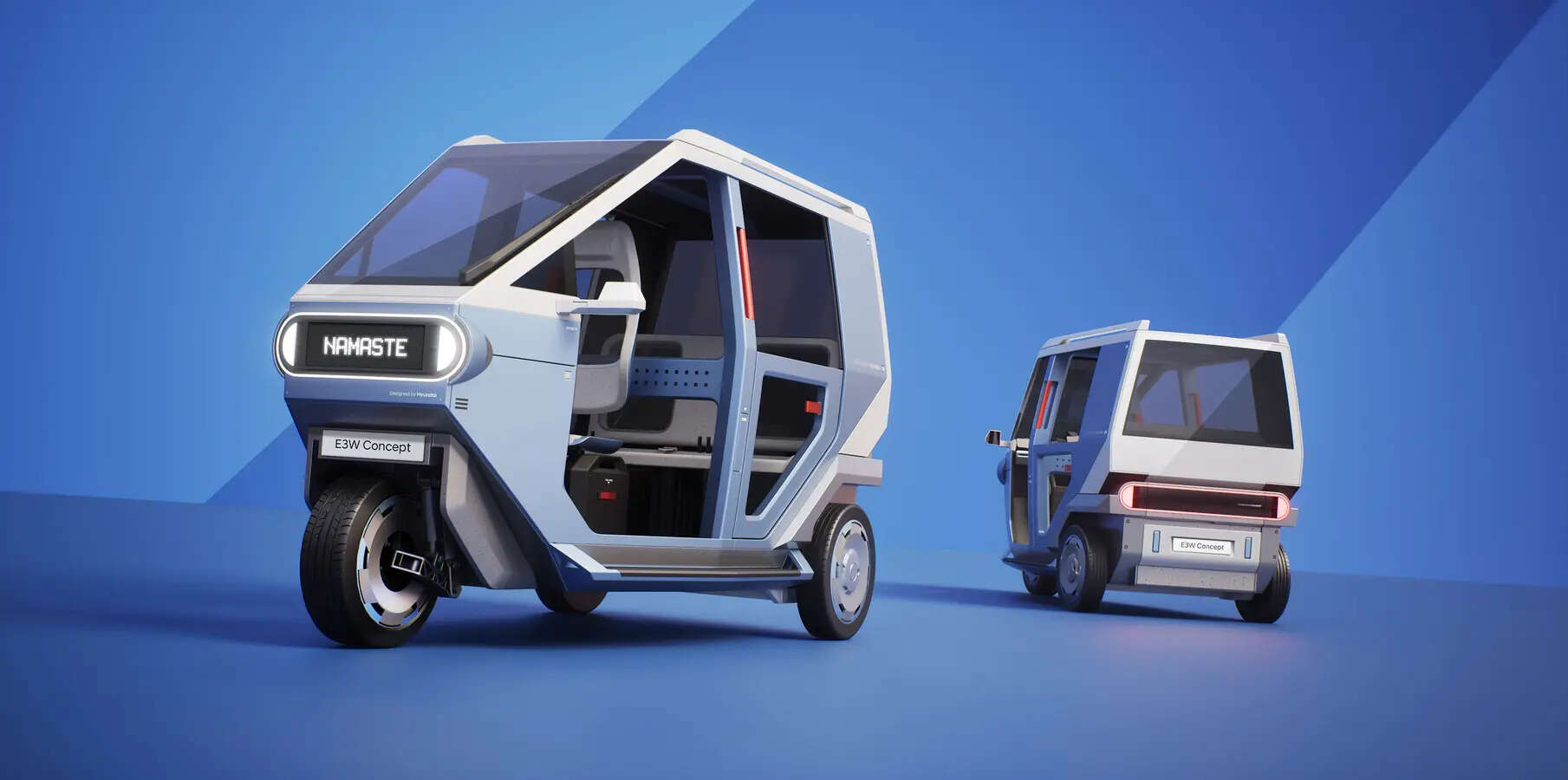
The collaboration builds on earlier discussions and concept development efforts. The idea of jointly developing electric three-wheelers dates back to 2018 and was further strengthened when a concept model was showcased at the Bharat Mobility Global Expo 2025.
The agreement was formally signed in April 2026 during the Korea–India Business Forum, signaling a move from concept to production-ready solutions.
Roles and Responsibilities
The partnership leverages the strengths of both companies:
- Hyundai Motor Company will lead design, research, and development (R&D), bringing its global expertise in advanced mobility and engineering.
- TVS Motor Company will handle engineering, manufacturing, and distribution, utilizing its deep understanding of the Indian market and strong presence in the three-wheeler segment.
This division of responsibilities ensures a balance between global innovation and local execution.
Focus on India’s Last-Mile Mobility
Electric three-wheelers are a backbone of India’s last-mile connectivity, widely used for passenger transport (auto-rickshaws) and cargo delivery. The new E3Ws will be:
- Tailored for Indian road and climate conditions, including heat, congestion, and monsoon challenges
- Designed for multiple uses such as passenger transport, cargo logistics, and even emergency services
- Built with a focus on affordability through local sourcing of components
The vehicles are expected to feature improved safety, better thermal management, ergonomic design, and flexible configurations.
The Hyundai–TVS partnership represents a strategic convergence of global technology and local expertise. By focusing on electric three-wheelers, the collaboration directly addresses India’s mobility needs—especially in urban and semi-urban areas.
If successfully executed, this initiative could reshape last-mile transportation in India, making it cleaner, more efficient, and more accessible while contributing to the country’s broader sustainability goals.
 Ishita Sharma 2026-04-25