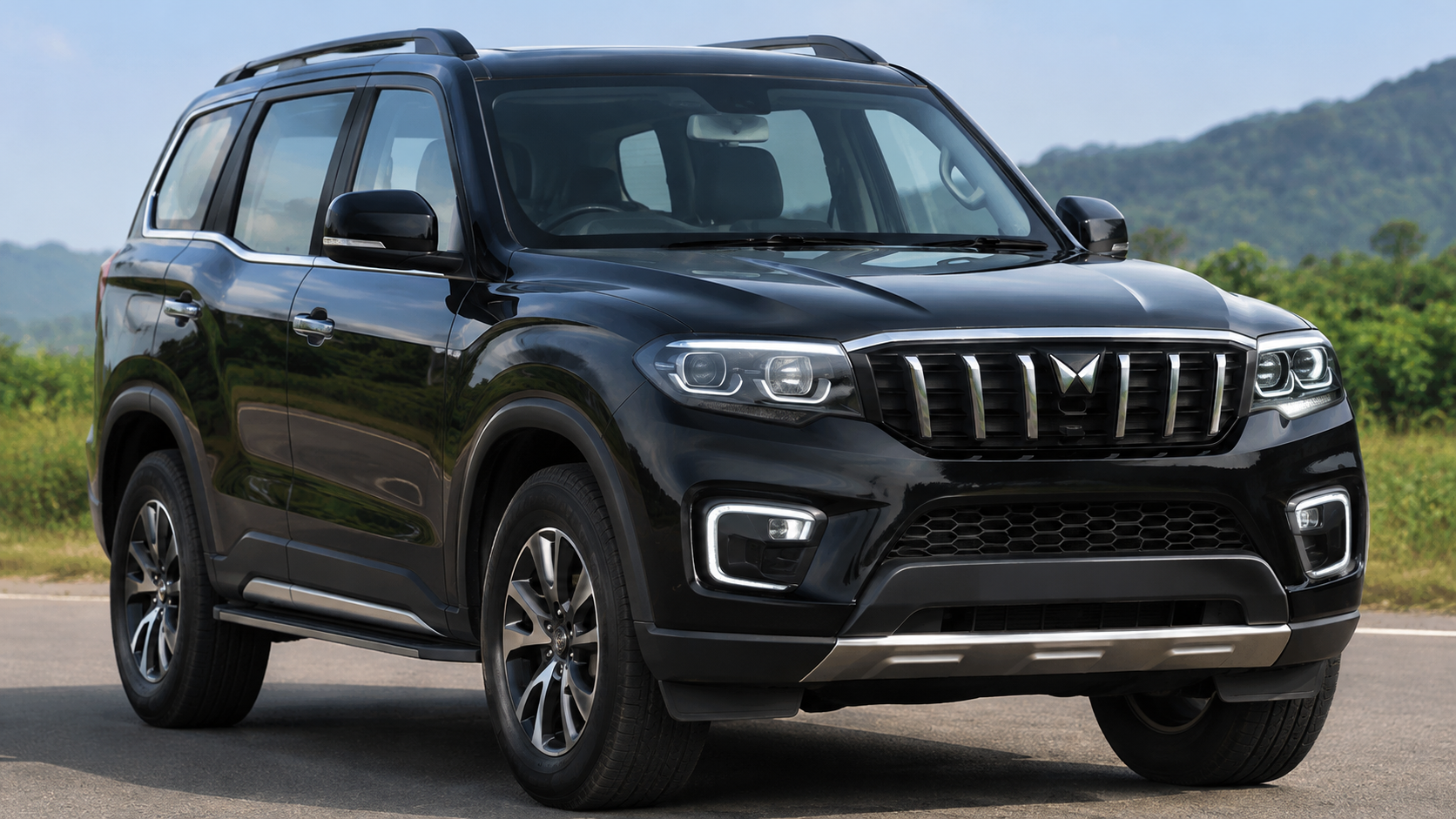
The Kia Carens Clavis and Toyota Innova Hycross are two popular three-row MPVs for buyers who need space, comfort and family-friendly practicality. However, their exterior dimensions are different. The Toyota Innova Hycross is longer, wider and taller, while the Kia Carens Clavis offers a relatively compact footprint that may be easier to manage in city traffic. Here is a detailed comparison of their length, width, height, wheelbase, seating capacity and boot space.
When choosing a family MPV, dimensions matter because they influence more than just the vehicle's appearance. Length affects parking and manoeuvrability, width influences cabin room and road presence, while wheelbase plays an important role in passenger packaging and interior space.
The Kia Carens Clavis is designed as a feature-rich family MPV with a practical three-row layout. The Toyota Innova Hycross, on the other hand, sits in a larger segment and offers a more substantial overall footprint.
Although both vehicles can accommodate up to seven passengers, the difference in their exterior measurements is noticeable. Let's compare their dimensions to understand which MPV offers the larger body and longer wheelbase.
Kia Carens Clavis vs Toyota Innova Hycross: Dimensions Compared
The Toyota Innova Hycross is considerably larger than the Kia Carens Clavis in overall length. It also has a longer wheelbase, which gives Toyota more room to work with when packaging its three-row cabin.
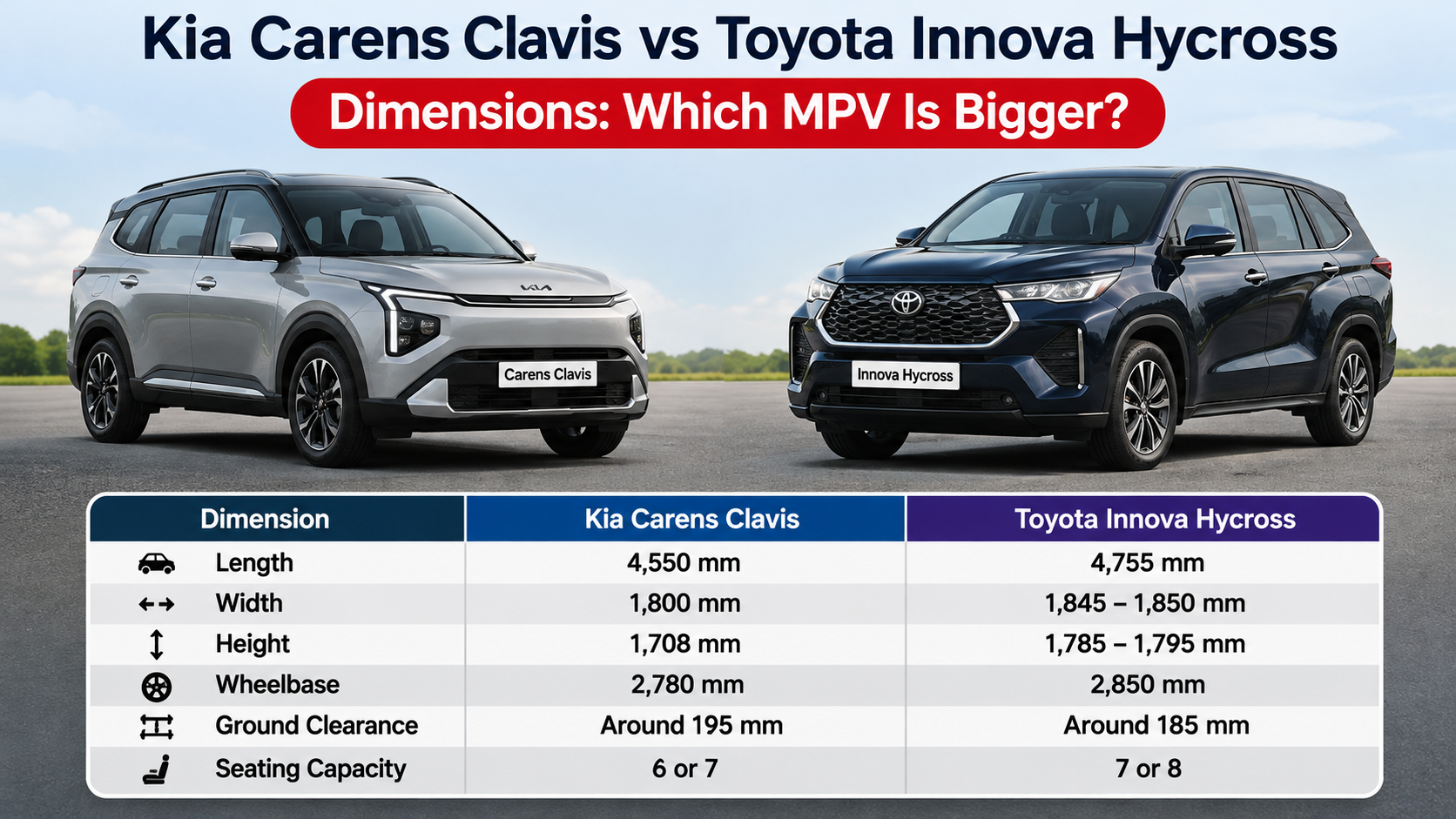
The Carens Clavis is 4,550mm long, 1,800mm wide and 1,708mm tall, with a wheelbase of 2,780mm. The Innova Hycross measures 4,755mm in length and has a 2,850mm wheelbase. Its width and height vary slightly depending on the variant.
1. Length: Innova Hycross Is 205mm Longer
The Toyota Innova Hycross measures 4,755mm in length, compared with 4,550mm for the Kia Carens Clavis. This means the Hycross is 205mm longer.
The additional length gives the Toyota a larger overall footprint and contributes to its more substantial road presence. It can also provide greater flexibility when designing the passenger cabin and luggage area.
The Carens Clavis, being shorter, may be easier to manoeuvre in crowded city streets and tighter parking spaces. Buyers who regularly drive in urban areas may appreciate its comparatively compact dimensions.
However, a longer vehicle is not automatically more comfortable in every situation. Actual passenger comfort depends on seat design, legroom, seat adjustment and cabin layout.
2. Width: Toyota Offers a Wider Body
The Kia Carens Clavis has an official overall width of 1,800mm. The Toyota Innova Hycross measures 1,845mm on several petrol variants, while selected higher variants are listed at 1,850mm.
Depending on the variant, the Toyota is therefore 45mm to 50mm wider than the Kia.
A wider body can help manufacturers provide more shoulder room for occupants, although the actual difference in cabin comfort also depends on interior design and seat dimensions.
The Hycross has a more substantial body, while the Carens Clavis offers a narrower footprint that could be useful when navigating congested roads or parking in limited spaces.
3. Height: Innova Hycross Is Taller
The Kia Carens Clavis has an overall height of 1,708mm. The Toyota Innova Hycross has a height ranging from 1,785mm to 1,795mm, depending on the variant.
This makes the Toyota approximately 77mm to 87mm taller than the Kia.
The taller body gives the Hycross a more upright MPV appearance. However, exterior height alone does not determine headroom. Roof design, seat positioning and floor height also influence how much space passengers actually get inside.
The Carens Clavis has a comparatively lower roofline, while the Innova Hycross has a taller overall profile.
4. Wheelbase: Toyota Has a 70mm Advantage
Wheelbase is the distance between the front and rear wheels. It is an important measurement because it influences vehicle stability and provides a foundation for arranging the passenger cabin.
The Kia Carens Clavis has a wheelbase of 2,780mm, whereas the Toyota Innova Hycross gets a longer 2,850mm wheelbase. The difference is 70mm in favour of the Toyota.
The longer wheelbase gives Toyota additional scope to package the three rows of seats. It can be particularly relevant for families who regularly travel with several passengers.
However, wheelbase alone cannot establish which MPV has better third-row comfort. Seat cushioning, legroom, floor height and the ability to adjust the second row are equally important.
5. Ground Clearance: What Buyers Should Know
Ground clearance is another important measurement for Indian road conditions. It determines how much space is available between the vehicle's underside and the road surface.
The Kia Carens Clavis is listed with a ground clearance figure of around 195mm by some automotive specification sources, while the Innova Hycross is commonly listed at around 185mm. These figures should be checked against the exact variant and measurement method because they are not consistently presented in the manufacturers' official dimension tables.
A higher ground clearance can be useful when driving over large speed breakers, uneven roads and rough patches. However, suspension condition, vehicle load, tyre pressure and approach angle can also affect the risk of scraping the underside.
For buyers who frequently travel on poorly maintained roads, it is worth checking the actual clearance of the selected variant rather than relying only on a general specification.
6. Boot Space: Which MPV Carries More Luggage?
Boot capacity is especially important in a three-row MPV because luggage space can become limited when all seats are occupied.
The Kia Carens Clavis offers a claimed 216 litres of boot space with all three rows in use. The third row can be folded to create additional luggage room.
Toyota's official dimension specifications do not provide a directly comparable boot-capacity figure in the same table. Therefore, it would be misleading to declare a winner using unverified or differently measured luggage-capacity figures.
Buyers should inspect both vehicles with the third row in use and check whether their regular suitcases, shopping bags or travel luggage can fit comfortably.
7. Seating Capacity and Interior Practicality
Both MPVs are designed for families who need three rows of seating. The Kia Carens Clavis is offered in six-seat and seven-seat configurations, depending on the variant. The Toyota Innova Hycross is available in seven-seat and eight-seat configurations, depending on the grade.
The Carens Clavis offers a flexible second row with sliding, reclining and tumble functions, while its third row can be folded to increase luggage space.
The Innova Hycross has the advantage of a longer wheelbase and a wider, taller body. This makes it the larger vehicle on paper, but buyers should still compare the actual seating layout and comfort of the specific variants they intend to purchase.
Kia Carens Clavis vs Toyota Innova Hycross: Complete Dimension Table
|
Dimension / Specification
|
Kia Carens Clavis
|
Toyota Innova Hycross
|
|
Overall length
|
4,550mm
|
4,755mm
|
|
Overall width
|
1,800mm
|
1,845–1,850mm
|
|
Overall height
|
1,708mm
|
1,785–1,795mm
|
|
Wheelbase
|
2,780mm
|
2,850mm
|
|
Ground clearance
|
Around 195mm*
|
Around 185mm*
|
|
Boot space (all rows up)
|
216 litres
|
Not directly comparable in official dimension data
|
|
Seating capacity
|
6 or 7
|
7 or 8
|
8. Which MPV Is Better for City Driving?
The Kia Carens Clavis has an advantage when it comes to a relatively compact exterior footprint. It is 205mm shorter and at least 45mm narrower than the Innova Hycross.
These differences can make the Kia easier to manage in tight parking spaces, narrow residential roads and crowded urban areas.
The Toyota Innova Hycross is larger, which may require more attention when parking or navigating narrow streets. However, its larger body and longer wheelbase may appeal to families who prioritise a more spacious three-row vehicle.
Neither vehicle should be judged only by its exterior dimensions. Buyers should test the turning radius, steering response, visibility and parking assistance features before making a decision.
9. Which MPV Offers Better Space for Family Travel?
For families who regularly travel with several passengers, the Toyota Innova Hycross has the advantage on paper because of its longer wheelbase, greater width and taller body.
Its 2,850mm wheelbase is 70mm longer than the Carens Clavis, while its overall length is also significantly greater. These measurements give Toyota more room for passenger-cabin packaging.
The Kia Carens Clavis remains a practical option for families who want three-row seating without moving to a larger vehicle. Its flexible seating arrangement and foldable third row also help when the vehicle needs to carry a combination of passengers and luggage.
The best choice depends on how frequently all three rows are occupied. Buyers should sit in the second and third rows of both vehicles before deciding.
10. Final Verdict: Kia Carens Clavis vs Toyota Innova Hycross Dimensions
The Toyota Innova Hycross is the larger MPV in this dimension comparison. It is longer, wider and taller than the Kia Carens Clavis, and it also has a longer wheelbase.
The Kia Carens Clavis, however, has a more compact exterior footprint, which can be useful for buyers who regularly drive in crowded cities and need a family-friendly vehicle that is easier to manoeuvre.
In simple terms, the Toyota Innova Hycross is the better choice if your priority is a larger overall vehicle, while the Kia Carens Clavis is worth considering if you prefer a comparatively compact three-row MPV.
Before making a final decision, compare the actual variants, seating layouts, luggage requirements and comfort levels. Dimensions provide a useful starting point, but a physical inspection and test drive will give you a clearer idea of which MPV suits your family.

 Khyati Sharma 2026-11-05