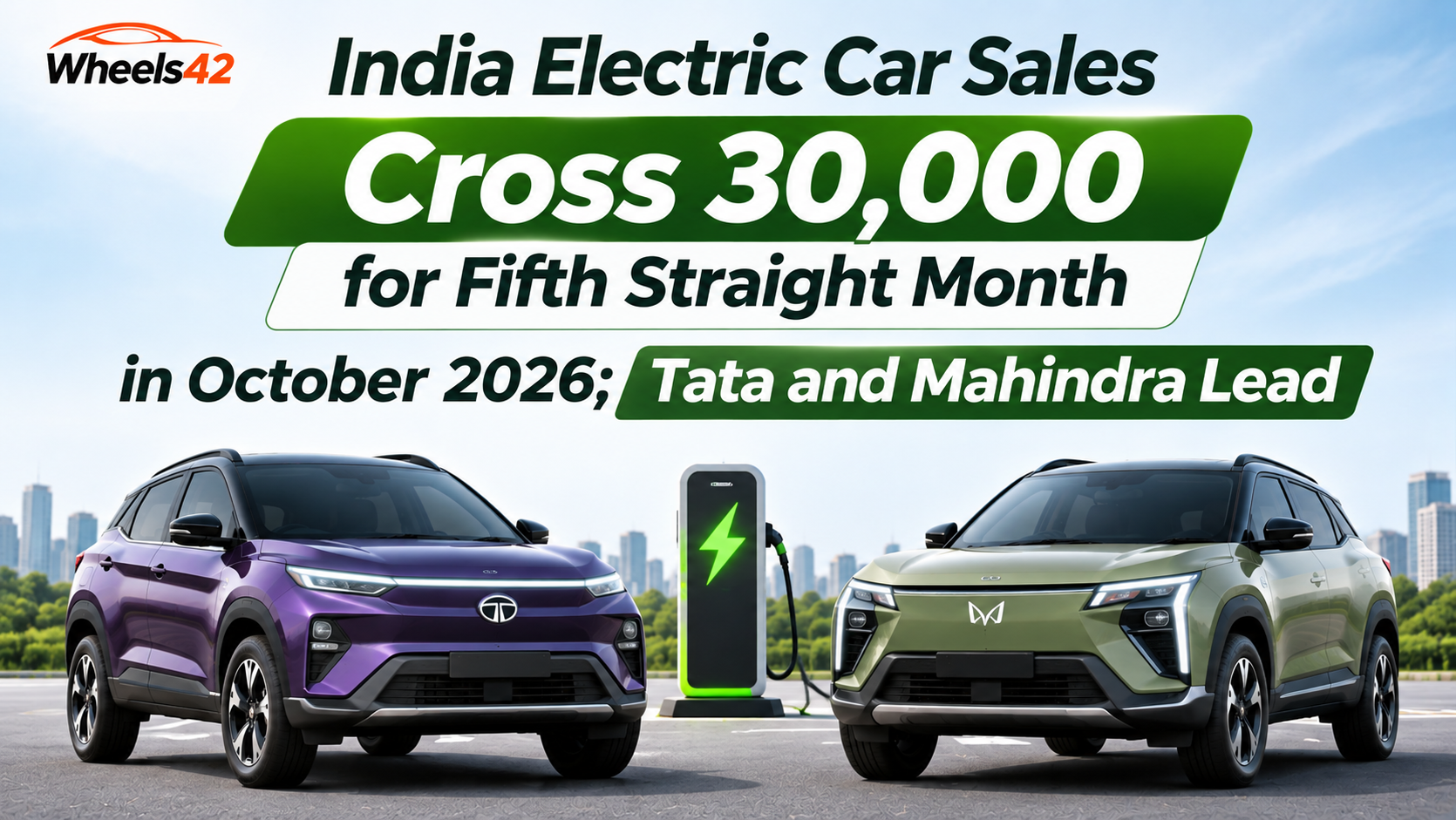
India's electric passenger vehicle market continued its strong growth in October 2026, recording more than 30,000 retail sales for the fifth consecutive month. Growing demand for electric SUVs, improved product choices and increasing customer interest in zero-emission vehicles helped the segment maintain its momentum.
According to October retail sales data , electric passenger vehicle sales reached 36,911 units, marking a 76% year-on-year increase over October 2025. This was also the second-highest monthly sales figure recorded by the segment, just below September's record performance.
The latest numbers highlight the growing acceptance of electric cars and SUVs in India, even as the wider passenger vehicle market experienced pressure during the month.
October 2026 Electric Car Sales: Tata Motors Retains the Top Spot
Tata Motors continued to lead India's electric passenger vehicle market in October, recording 14,654 units and holding approximately 40% market share, according to Autocar Professional's retail sales compilation.
The company's October performance was 78% higher than the 8,238 units recorded in the same month last year. It was also Tata's second-highest monthly electric passenger vehicle sales figure, after September 2026.
The Nexon EV remains an important volume contributor to Tata's electric portfolio, while the updated Tiago EV and Punch EV are also supporting demand. Tata has additionally expanded its Battery-as-a-Service (BaaS) offering to models including the Nexon EV, Curvv EV, Sierra EV and Harrier EV.
One notable development is the performance of the Punch EV. Tata Motors said it crossed 5,000 sales in a single month for the first time in October, highlighting the growing demand for more affordable electric SUVs.
Mahindra Records Its Best-Ever Monthly Electric SUV Sales
Mahindra & Mahindra cars delivered its strongest monthly electric SUV performance in October 2026, with 8,541 units, an 86% increase compared with 4,598 units in October 2025.
The company also improved on its previous monthly record of 8,200 units registered in September. Mahindra held approximately 23% of India's electric passenger vehicle market during October.
Its electric portfolio includes the BE 6 and XEV 9e, while the XEV 9S adds a three-row electric SUV option. The company's Battery-as-a-Service programme has also been extended to selected electric models, giving customers another way to approach EV ownership costs.
Mahindra's performance indicates that demand for electric SUVs is becoming an important part of the company's overall passenger vehicle business.
JSW MG Motor Maintains Third Position
JSW MG Motor India secured third place in October 2026 with 5,938 electric passenger vehicle sales, registering 11% year-on-year growth.
The Windsor EV continues to be a major contributor to the company's electric vehicle sales. MG's electric portfolio also includes the recently introduced Hector Tomahawk EV, along with premium electric models such as the Cyberster and M9 EV.
The company recorded approximately 16% market share in October. Although its growth rate was lower than Tata Motors and Mahindra, MG remained one of the leading manufacturers in India's electric passenger vehicle segment.
VinFast, Kia and Maruti Suzuki Among Other Key Performers
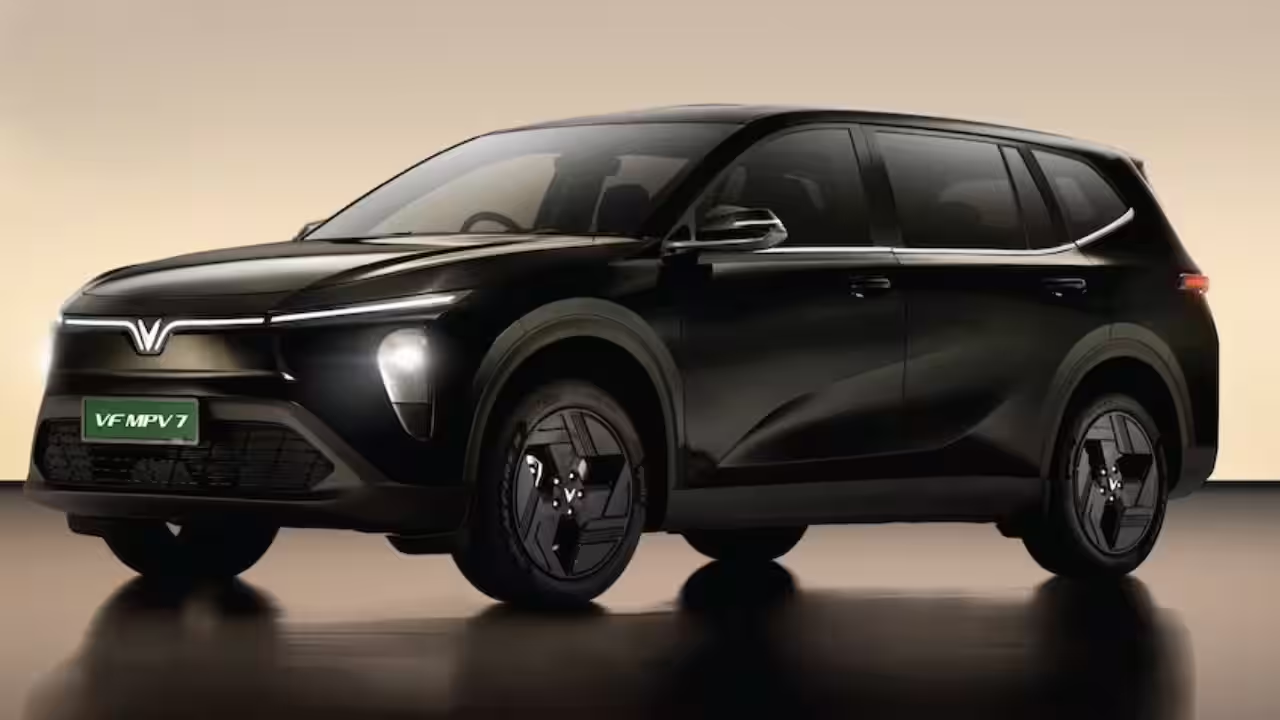
VinFast cars continued to expand its presence in India, recording 2,570 electric passenger vehicle sales in October. This represented a significant increase over its relatively small sales base in October 2025.
Kia cars retained fifth position with 1,395 electric vehicle sales, supported by its growing electric portfolio. The company sells models including the Syros EV and Carens Clavis EV, along with imported EVs such as the EV6 and EV9.
Maruti Suzuki recorded 1,199 e-Vitara sales during the month. Its domestic availability has been influenced by production allocation for exports, although the company is expected to increase domestic supply as production capacity expands.
Hyundai cars registered 759 electric vehicles, while BYD recorded 737 units. Toyota delivered 190 units of the Urban Cruiser Ebella during October.
October 2026 Electric Car Sales by Brand
|
Rank
|
Manufacturer
|
October 2026 Sales
|
YoY Growth
|
Approx. Market Share
|
|
1
|
Tata Motors
|
14,654
|
78%
|
40%
|
|
2
|
Mahindra
|
8,541
|
86%
|
23%
|
|
3
|
JSW MG Motor
|
5,938
|
11%
|
16%
|
|
4
|
VinFast
|
2,570
|
1710%
|
7%
|
|
5
|
Kia
|
1,395
|
85%
|
4%
|
|
6
|
Maruti Suzuki
|
1,199
|
Not stated
|
3%
|
|
7
|
Hyundai
|
759
|
42%
|
2%
|
|
8
|
BYD
|
737
|
4%
|
2%
|
|
9
|
Toyota
|
190
|
Not stated
|
0.51%
|
Luxury Electric Car Sales Also Increase
The premium electric vehicle segment also recorded healthy growth in October 2026. Luxury EV manufacturers together delivered 868 units, representing a 53% increase compared with 566 units in October 2025.
BMW cars remained the leading luxury EV manufacturer with 462 units, accounting for approximately 53% of the luxury EV segment. Tesla secured second position with 291 units, continuing its strong growth in India.
Mercedes-Benz cars recorded 62 electric vehicle sales, while Volvo registered 37 units. Porsche sold 15 electric vehicles during the month.
The performance suggests that demand for premium electric vehicles is also expanding, although this segment remains much smaller than the mass-market electric car category.
Electric Car Sales Cross 30,000 for Five Consecutive Months
October's performance is part of a longer growth trend in India's electric passenger vehicle market. Monthly retail sales have remained above 30,000 units for five consecutive months.
The segment's quarterly performance during 2026 also shows how demand has developed:
-
January–March 2026: 63,318 electric passenger vehicles sold.
-
April–June 2026: 88,036 units, up 97% year-on-year.
-
July–September 2026: 105,612 units, up 86% year-on-year.
-
October 2026: 36,911 units according to Autocar Professional's compilation.
During the first ten months of 2026, the segment recorded 293,877 electric passenger vehicle deliveries in the same compilation, representing approximately 50% growth over the corresponding period of 2025.
Autocar Professional estimates that if the market adds around 75,000 units in November and December, full-year 2026 sales could reach approximately 3.75 lakh electric passenger vehicles. This is an industry estimate, not a confirmed final-year figure.
EV Market Share Improves Despite a Decline in Overall Car Registrations
Another important development in October was the increase in electric vehicles' share of the passenger vehicle market.
According to JATO Dynamics data reported by Business Standard, electric passenger vehicle registrations increased 74.7% year-on-year to 36,646 units. In comparison, total passenger vehicle registrations declined 14.6% to 5,01,406 units.
Electric vehicles accounted for approximately 7.3% of passenger vehicle registrations, compared with 3.6% in October 2025.
Tata Motors and Mahindra benefited from their electric portfolios during a month when their conventional petrol and diesel vehicle registrations faced pressure. Tata's EVs accounted for around one in five of its passenger vehicle registrations, while Mahindra's electric models represented approximately one in eight.

 Khyati Sharma 2026-11-04