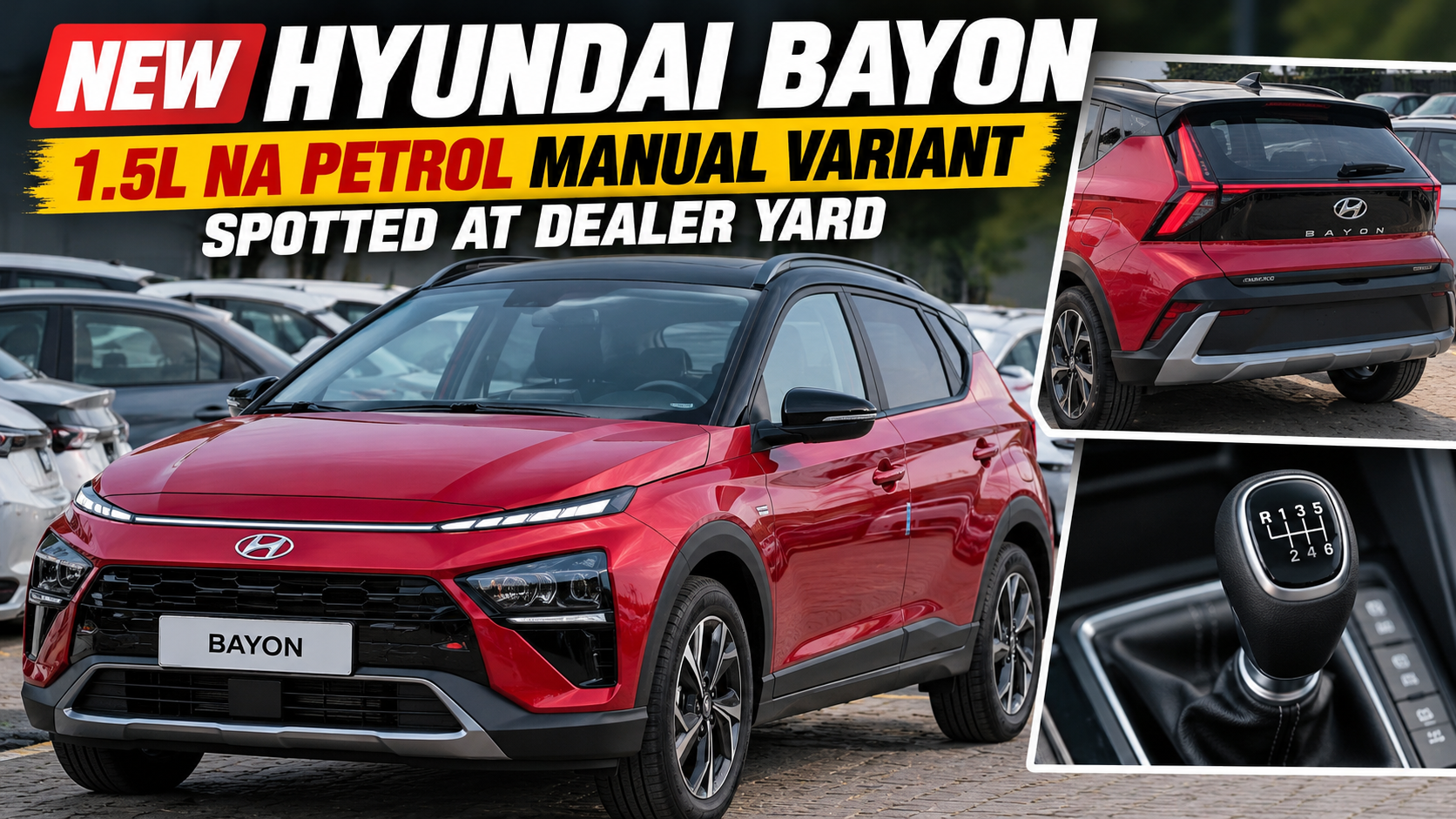
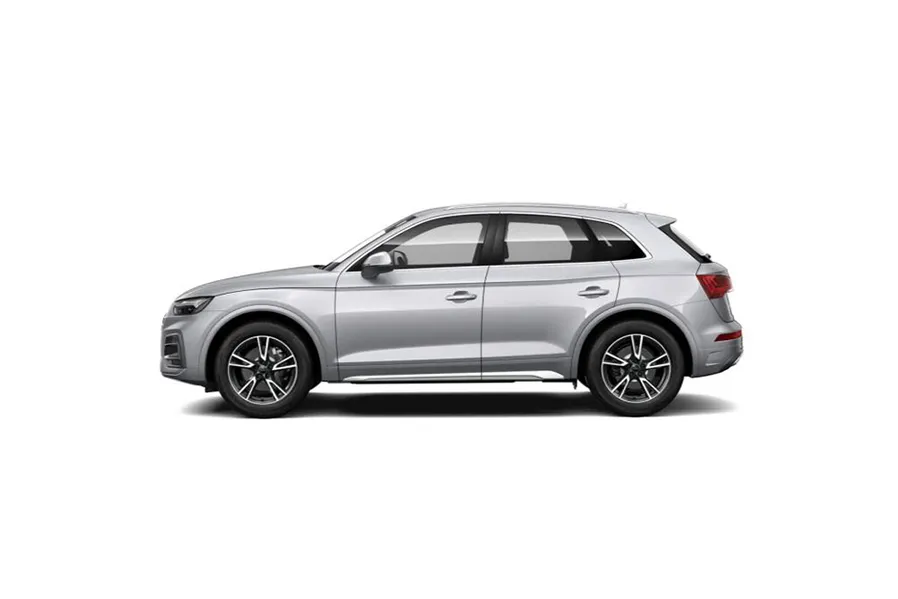
The new Hyundai Bayon has started arriving at dealership stockyards in India ahead of its scheduled launch on October 26, 2026. The upcoming SUV has been spotted in dealer-yard footage, signalling that preparations are underway for its market introduction. Hyundai cars has confirmed that the India-spec Bayon will feature a 1.5-litre naturally aspirated petrol engine, paired with either a six-speed manual gearbox or an Intelligent Variable Transmission (IVT).
The Bayon is expected to strengthen Hyundai's SUV cars portfolio and sit between the Venue and Creta in its Indian lineup. Alongside its petrol powertrain, the new model will focus on modern styling, connected-car technology and a technology-rich cabin.
Hyundai Bayon Dealer Yard Sighting: What We Know
The appearance of Bayon units at dealer stockyards is an important step ahead of the official launch. Images and videos circulating online show the SUV in its production-ready form, offering a closer look at its exterior styling and proportions.
However, the sighting of a vehicle at a dealership does not necessarily confirm its exact variant or the complete equipment list. Hyundai is expected to reveal the full variant-wise specifications and pricing at launch.
Exterior Design and Styling


The Hyundai Bayon follows the brand's contemporary design direction, with angular styling and distinctive lighting elements. Its exterior is designed to give the compact SUV a modern, urban appearance.
Key exterior highlights include:
-
Split headlamp arrangement: The main headlamps are positioned lower on the front fascia, while slim LED daytime running lights create a distinctive lighting signature.
-
Bold front grille: A broad grille and sculpted bumper give the SUV a more substantial front appearance.
-
Chunky body cladding: Black cladding around the wheel arches enhances its SUV-inspired character.
-
Distinctive rear styling: A dark connecting strip visually links the rear lighting elements, complemented by BAYON lettering on the tailgate.
-
Sporty details: A roof spoiler, shark-fin antenna, blacked-out pillars and alloy wheels add to the overall design.
The Bayon measures approximately 4.2 metres in length, placing it between the Venue and Creta in Hyundai's Indian portfolio.
1.5L Naturally Aspirated Petrol Engine and Manual Gearbox

|
Specification
|
Hyundai Bayon
|
|
Engine
|
1.5L MPi petrol
|
|
Engine type
|
Four-cylinder, naturally aspirated
|
|
Maximum power
|
115 PS
|
|
Peak torque
|
144 Nm
|
|
Manual transmission
|
6-speed manual
|
|
Automatic transmission
|
Intelligent Variable Transmission (IVT)
|
|
Fuel type
|
Petrol
|
The six-speed manual gearbox should appeal to buyers who prefer direct control over gear changes. A naturally aspirated petrol engine also offers a simpler power delivery characteristic than a turbocharged engine, although actual fuel economy and performance will depend on driving conditions and the final vehicle setup.
Hyundai has also confirmed an IVT automatic option for buyers who prefer a more convenient driving experience, particularly in urban traffic.
The company has not confirmed a diesel powertrain for the India-spec Bayon in its announcement. Official fuel-efficiency figures and detailed variant-wise powertrain availability should be checked when the full specifications are released.
Interior and Technology Features


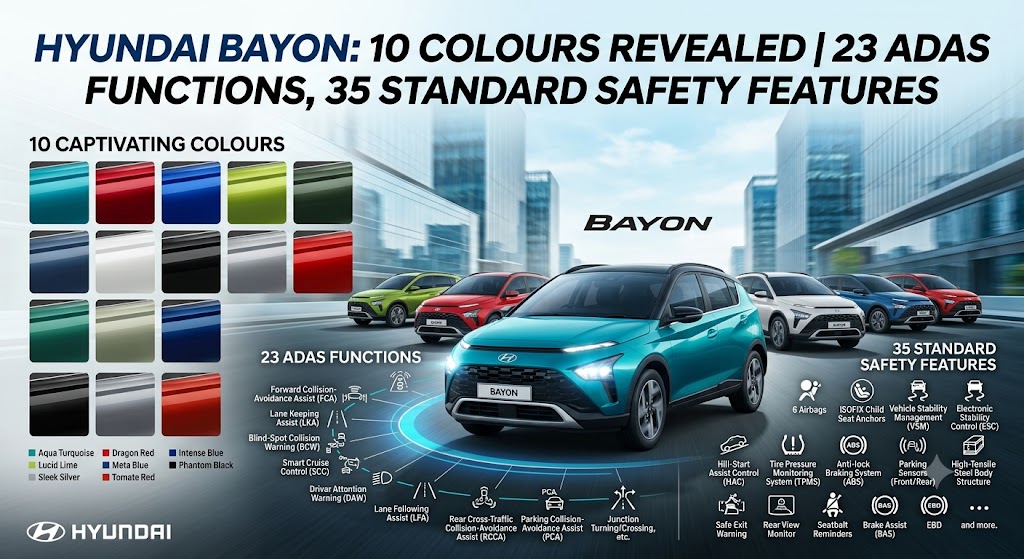
Technology is a major part of the Bayon's appeal. Hyundai has confirmed a digital cockpit featuring two 12.3-inch displays—one for the instrument cluster and another for the infotainment system. The setup is part of Hyundai's Connected Car Navigation Cockpit, accelerated by NVIDIA.
Other confirmed technology highlights include:
-
Dual 12.3-inch curved panoramic displays.
-
A generative AI voice assistant incorporating technology from Perplexity and SoundHound AI.
-
More than 70 Hyundai Bluelink connected features.
-
Over-the-air software updates for up to 19 vehicle controllers.
-
Support for 10 regional and two international languages across the infotainment and instrument-cluster interfaces.
-
More than 500 embedded voice commands supporting English, Hindi, Hinglish, Tamil, Bengali and Telugu.
These features are intended to make everyday driving more connected and convenient. However, the availability of individual features may vary by variant, and the final equipment distribution should be confirmed at launch.
Hyundai Bayon India Launch Date and Booking Details
Hyundai Motor India has officially scheduled the Bayon's launch for October 26, 2026. Bookings are open through the company's official website and authorised dealerships, with an initial booking amount of ₹11,000. Deliveries are scheduled to begin during the festive season, with detailed timelines to be communicated around the launch.
The official introductory announcement has not established the final price of the SUV. Buyers should wait for Hyundai's price announcement rather than relying on unofficial estimates.
Expected Rivals and Market Positioning
The Hyundai Bayon will enter a competitive SUV market, where buyers increasingly look for a combination of modern styling, cabin technology, practicality and manageable running costs.
Its positioning between the Venue and Creta could help Hyundai appeal to customers who want a larger-feeling SUV without moving to a higher segment. The Maruti Suzuki Victoris is among the models identified as a rival in launch coverage.
The Bayon's success will depend on its final pricing, variant-wise equipment, real-world fuel economy and the space it offers passengers and luggage. The manual version could be particularly relevant to buyers who prefer a conventional gearbox, while the IVT version may attract those prioritising convenience.

 Khyati Sharma 2026-10-23