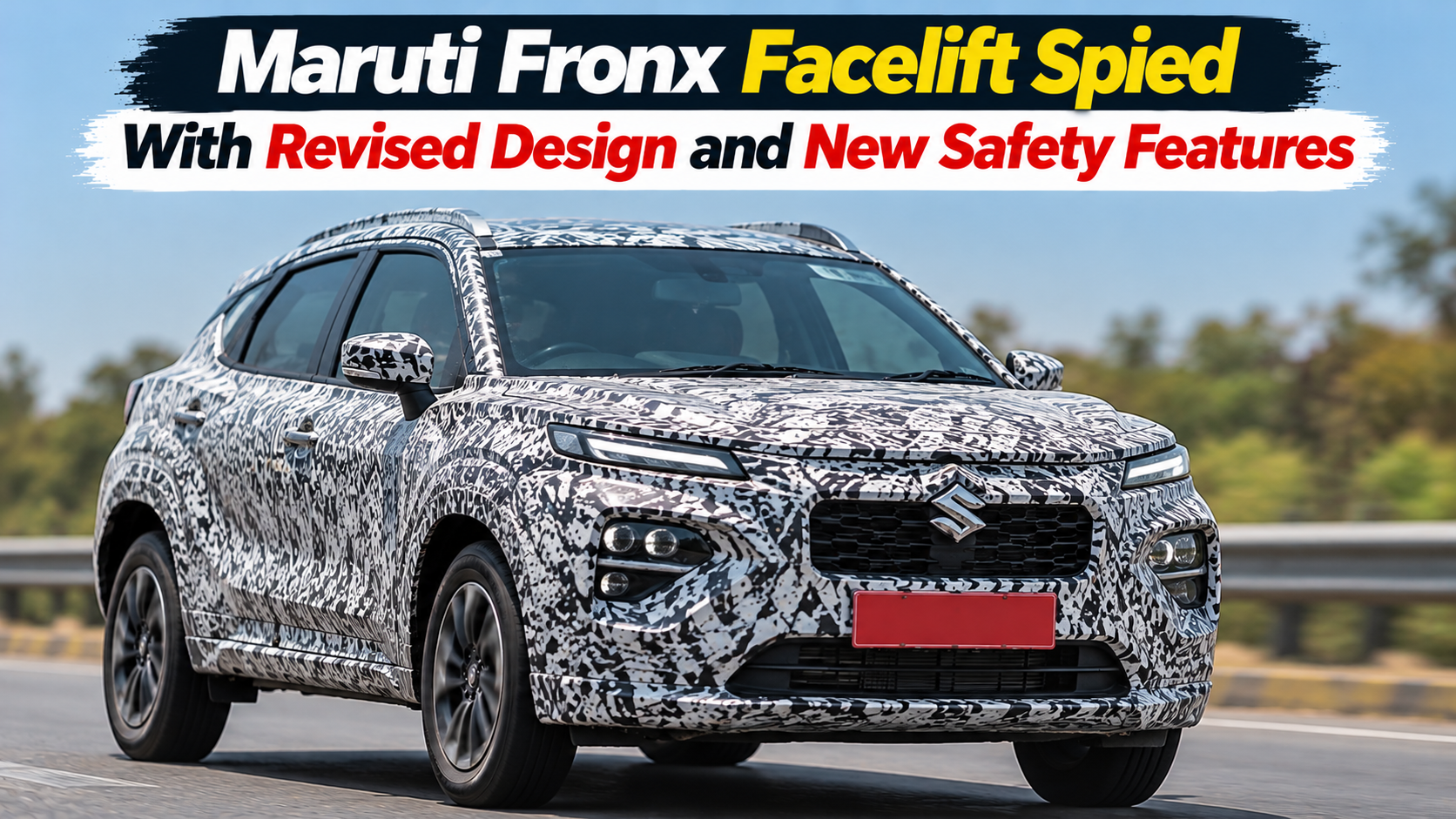
Maruti Suzuki cars is preparing an update for the Fronx, with a facelifted version of the popular compact crossover recently spotted testing in India. The latest spy shots indicate that the upcoming model could receive revised exterior styling, additional safety technology and mechanical changes as the company looks to keep the Fronx competitive in the rapidly evolving Indian car market.
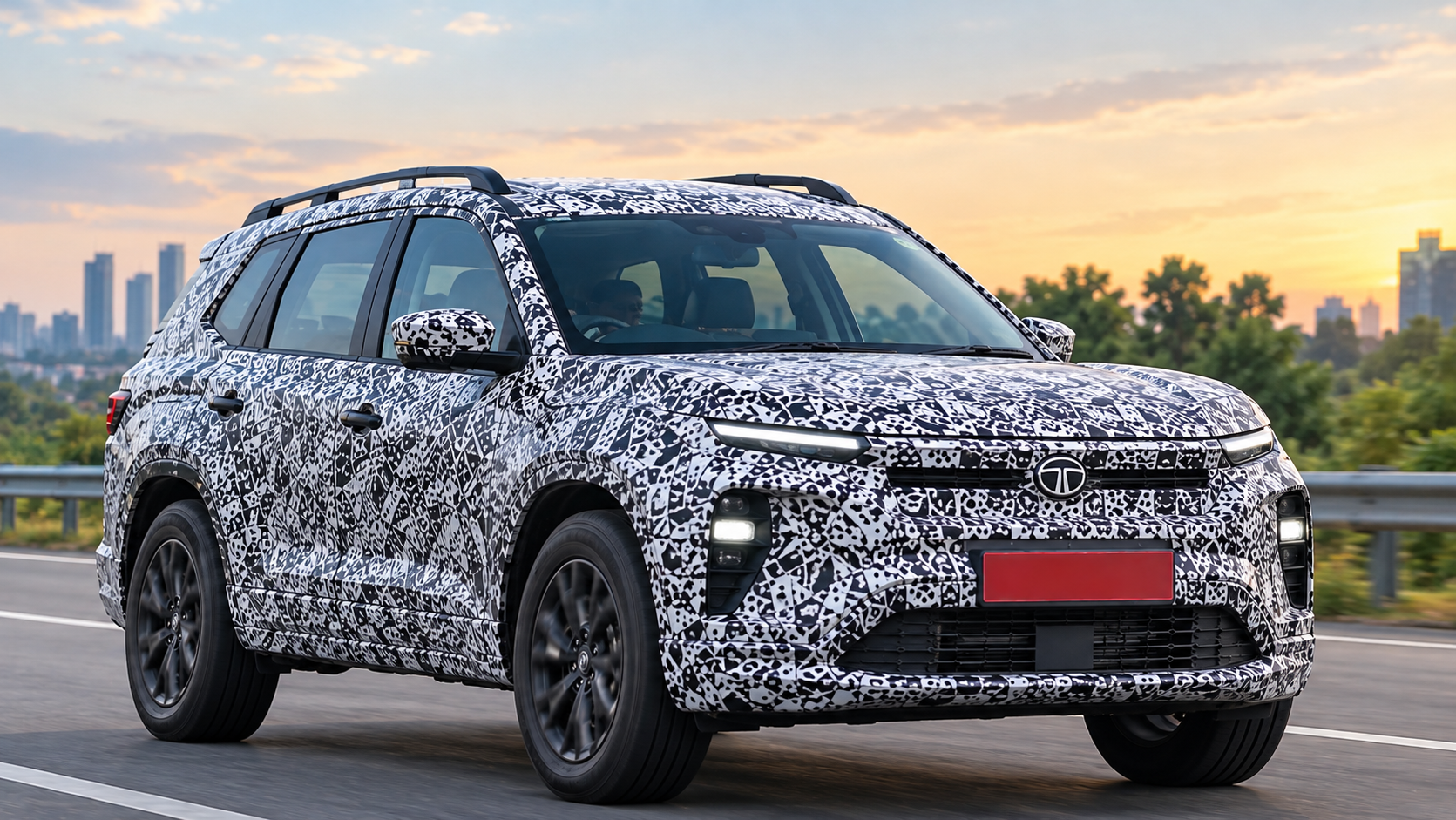
The test vehicle is heavily camouflaged, making it difficult to identify every design change. However, reports suggest that the front grille could be redesigned, while the facelift may introduce advanced driver assistance systems (ADAS) and rear disc brakes. A new 1.2-litre three-cylinder petrol engine is also expected to be considered for the updated model.
Maruti Suzuki has not officially announced the launch date, specifications or prices of the facelifted Fronx. Here is what the latest spy sightings suggest about the upcoming crossover.
Revised Front Design Expected
The Maruti Suzuki Fronx facelift is expected to retain the familiar coupe-inspired crossover silhouette of the existing model. Its sloping roofline, raised stance and split-headlamp arrangement are likely to remain key styling elements.
The most noticeable changes could appear at the front. Spy shots reportedly reveal a revised grille pattern, while the central portion of the fascia remains covered. The updated model could also receive a redesigned front bumper and revised lower styling elements to give it a fresher appearance.
The LED daytime running lights and headlamp arrangement may continue, although minor detailing changes are possible. At the rear, the overall design is expected to remain familiar, with potential revisions to the bumper and other trim elements.
The test vehicle appears to retain the existing alloy-wheel design. Whether Maruti Suzuki introduces new alloy wheels, additional exterior colours or different trim finishes will become clearer closer to the official reveal.
ADAS Could Be the Biggest Safety Upgrade
One of the major talking points surrounding the upcoming Fronx facelift is the possibility of Level 2 Advanced Driver Assistance Systems. Recent reports indicate that Maruti Suzuki may introduce a more comprehensive driver-assistance package, potentially following the approach adopted for the updated Baleno.
If included in the production model, the system could offer features such as:
-
Autonomous Emergency Braking: Can apply the brakes when the system detects a potential collision and determines that intervention is necessary.
-
Adaptive Cruise Control: Can adjust the vehicle's speed to help maintain a selected distance from the vehicle ahead.
-
Lane Keep Assist: Can provide steering assistance to help the vehicle remain within its lane under suitable conditions.
-
Lane Departure Warning: Can alert the driver when the vehicle unintentionally moves out of its lane.
-
Automatic High Beam Assist: Can adjust the high-beam headlights depending on detected traffic and lighting conditions.
-
Forward Collision Warning: Can alert the driver to a potential collision ahead.
The final list of features, if ADAS is introduced, will depend on the production specification and variant. These systems should not be treated as confirmed equipment at this stage.
ADAS can improve driver awareness and help reduce certain collision risks, but it does not make a car autonomous. Drivers must remain attentive and ready to take control at all times.
Rear Disc Brakes Could Improve Braking Hardware
Another important detail reported on the test vehicle is the apparent presence of rear disc brakes. The current India-specification Fronx uses front disc brakes and rear drum brakes, so rear discs would represent a potential hardware upgrade.
Disc brakes can offer more consistent braking performance under certain driving conditions and may help manage heat during repeated braking. However, real-world braking performance also depends on the vehicle's weight, tyres, brake calibration and electronic safety systems.
If Maruti Suzuki offers rear disc brakes on the facelift, availability could vary by variant. The company has yet to confirm whether this hardware will be introduced across the range or reserved for selected versions.
The updated Fronx is also expected to retain important existing safety equipment, with the final standard and optional feature list to be confirmed at launch.
Interior and Features: What Could Change?
The latest spy shots do not clearly reveal the cabin of the facelifted Fronx. As a result, details about the dashboard, infotainment system and seating remain uncertain.
The existing model already offers features such as a touchscreen infotainment system, wireless smartphone connectivity, a head-up display, automatic climate control and a 360-degree camera on applicable variants.
Maruti Suzuki could update the cabin with revised upholstery, new trim finishes or additional convenience features. Equipment such as ventilated front seats or improvements to the infotainment experience has also been discussed in reports, but these additions are not officially confirmed.
The company may also use the facelift to improve feature availability across the variant range. However, the final equipment package will only become clear when Maruti Suzuki releases the official specifications.
New 1.2-Litre Petrol Engine Expected
The facelift could bring a change to the naturally aspirated petrol engine lineup. Reports suggest that Maruti Suzuki may replace the existing 1.2-litre, four-cylinder K-Series petrol engine with its newer 1.2-litre, three-cylinder Z-Series unit.
This engine is already used in other Maruti Suzuki models, including the Swift, Dzire and updated Baleno. Its introduction in the Fronx could help align the crossover's powertrain with the company's newer engine family.
For reference, the Z12E engine in other applications produces around 83 PS and 112.4 Nm of torque, although output and tuning may vary depending on the model. These figures should not be considered confirmed specifications for the facelifted Fronx.
The 1.0-litre Boosterjet turbo-petrol engine is expected to continue. In the current Fronx, this engine produces approximately 100 PS and 147 Nm of torque, with manual and automatic transmission options depending on the variant.
The future of the CNG version is less certain. Some reports suggest changes to the naturally aspirated engine lineup, but Maruti Suzuki has not confirmed whether the CNG option will continue unchanged or receive a revised powertrain.
Could a Strong-Hybrid Version Arrive?
There has also been speculation about a more fuel-efficient hybrid powertrain for the Fronx. A series-hybrid setup has been discussed in reports, potentially using a petrol engine to generate electricity for a battery and electric motor.
Such a system could allow the electric motor to drive the wheels while the engine primarily generates electricity. The actual configuration would depend on the system selected by the manufacturer.
However, the reported hybrid powertrain has not been officially confirmed for the facelift. Buyers should therefore treat claims about a hybrid variant or exceptionally high fuel-efficiency figures as speculation until Maruti Suzuki announces the technical details.
The regular petrol and turbo-petrol versions are expected to remain central to the Fronx lineup.
Expected Specifications of the 2027 Maruti Fronx Facelift
|
Feature
|
Expected details
|
|
Model
|
Maruti Suzuki Fronx facelift
|
|
Body style
|
Compact crossover
|
|
Exterior changes
|
Revised grille and possible bumper updates
|
|
Headlamp design
|
Existing split-lighting layout could continue
|
|
Safety technology
|
ADAS under consideration; not confirmed
|
|
Rear brakes
|
Rear disc brakes reported on test vehicle
|
|
Naturally aspirated petrol engine
|
Possible 1.2-litre, three-cylinder Z-Series engine
|
|
Turbo-petrol engine
|
1.0-litre Boosterjet expected to continue
|
|
CNG variant
|
Final details unconfirmed
|
|
Hybrid powertrain
|
Speculative; no official confirmation
|
|
Transmission options
|
Final combinations yet to be announced
|
|
India launch
|
Expected in 2027, not officially confirmed
|
|
Expected price
|
Not announced
|
Expected Price and Launch Timeline
Maruti Suzuki has not announced the launch date or pricing for the Fronx facelift. Based on the recent test sightings, the updated crossover could arrive in India during 2027, although the exact timing remains uncertain.
The facelift is likely to retain the current model's position in the compact crossover segment. Revised styling and additional technology could lead to a price increase on selected variants, especially if advanced driver-assistance systems or upgraded braking hardware are introduced.
The final price will depend on the engine options, transmission combinations and equipment offered in each variant. No official price estimate is available yet.
Rivals in the Indian Market
The updated Fronx will continue to compete in India's crowded compact SUV and crossover market. Depending on price and variant, its alternatives include the Tata Nexon, Hyundai Venue, Kia Sonet, Mahindra XUV 3XO, Toyota Urban Cruiser Taisor and other similarly positioned models.
Adding ADAS and rear disc brakes could help the Fronx strengthen its appeal among buyers who prioritise safety and technology. A revised petrol engine could also help the company align the model with its wider powertrain strategy.
The success of the facelift will ultimately depend on the final pricing, real-world fuel efficiency, equipment availability and the balance between performance and running costs.

 Khyati Sharma 2026-10-29