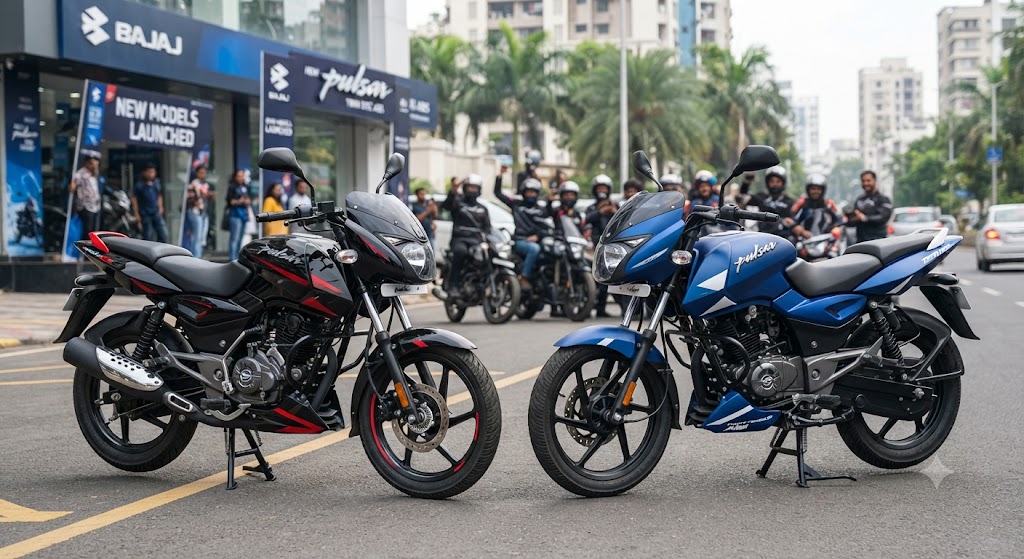
Bajaj Auto has given its popular Classic Pulsar range a major overhaul with the launch of the new-generation Pulsar 125 and Pulsar 150 in India. The updated motorcycles retain the familiar Pulsar design and road presence but receive significant changes to their engines, chassis, suspension, technology and features.
The new Pulsar 125 and Pulsar 150 were introduced on 24 August 2026 as part of the Pulsar brand's 25th-anniversary celebrations. The introductory prices start at ₹92,900 for the Pulsar 125 and ₹1,15,233 for the Pulsar 150, ex-showroom Delhi.
New Bajaj Pulsar 125 and 150: What's Changed?
The latest Pulsar models are not just cosmetic updates. Bajaj has developed a new platform for the motorcycles, including a diamond-type frame and rear monoshock suspension. This represents a major departure from the previous-generation Classic Pulsar setup.
Both motorcycles also receive new-generation engines, updated gearboxes, modern instrumentation and additional electronic features.
Bajaj Pulsar 125 and 150 Specifications
| Specification |
New Pulsar 125 |
New Pulsar 150 |
| Engine |
124.58cc, single-cylinder |
149.5cc, single-cylinder |
| Max Power |
Up to 12.1 PS |
Up to 14 PS |
| Max Torque |
Up to 11.4 Nm |
Up to 13.7 Nm |
| Gearbox |
5-speed |
5-speed |
| Frame |
Diamond-type |
Diamond-type |
| Front Suspension |
Telescopic fork |
Telescopic fork |
| Rear Suspension |
Monoshock |
Monoshock |
| Instrument Cluster |
Digital/TFT depending on variant |
Digital/TFT depending on variant |
| Start/Stop System |
Yes, on select variants |
Yes, on select variants |
| Navigation |
Google Maps on equipped variants |
Google Maps on equipped variants |
Specifications can vary by variant.
New Engine and Performance
The Pulsar 125 gets a new 124.58cc single-cylinder engine, while the Pulsar 150 is powered by a new 149.5cc single-cylinder motor. Bajaj says the new engines are designed to deliver a smoother and more refined riding experience while retaining the characteristic Pulsar performance.
The Pulsar 150 produces up to 14 PS and 13.7 Nm, while the Pulsar 125 develops up to 12.1 PS and 11.4 Nm, according to Bajaj's launch information.
The motorcycles continue to use a 5-speed gearbox.
New Diamond-Type Frame and Monoshock
One of the biggest mechanical changes is the adoption of a diamond-type frame. The new chassis has allowed Bajaj to introduce a rear monoshock on both motorcycles.
The updated suspension setup is expected to improve handling and overall ride dynamics compared with the older Classic Pulsar architecture. Reviews of the new motorcycles have also highlighted their more agile handling and improved cornering character.
Updated Design
Although the new Pulsars remain instantly recognisable, the design has been refreshed with sharper details.
The motorcycles feature a redesigned Wolf-Eye headlamp, revised body elements and updated graphics while retaining the muscular fuel-tank design that has been associated with the Pulsar brand for years.
Bajaj has therefore taken a relatively conservative approach to the styling, keeping the classic Pulsar identity while modernising the motorcycle.
New TFT Display and Connected Features
Technology is another major area of improvement.
Higher variants of the new Pulsar 125 and Pulsar 150 feature a 5-inch TFT instrument console. The system supports features such as Google Maps navigation and screen mirroring, bringing the Classic Pulsar range closer to newer-generation motorcycles in terms of onboard technology.
The motorcycles also get a USB Type-C charging port, adding convenience for riders who use smartphones for navigation and connectivity.
Idle Start-Stop and Silent Start
The new Pulsar range also introduces an ISG-based silent start system on selected variants.
The automatic start-stop function is designed to reduce unnecessary engine idling and can help improve fuel efficiency in stop-and-go traffic. Bajaj says the system also contributes to a smoother starting experience.
Ride and Handling
The revised chassis and monoshock suspension give the new Classic Pulsars a more modern dynamic character.
A review of the new Pulsar 125 and Pulsar 150 found that both motorcycles retain familiar ergonomics while offering a more playful and agile riding experience. The Pulsar 150's new engine was also noted for its refinement and low vibration levels.
This should make the updated motorcycles suitable for both everyday commuting and occasional enthusiastic riding.
Price
Bajaj has positioned the new Pulsar models competitively in India's commuter and entry-level performance motorcycle segments.
| Model |
Starting Price* |
| Bajaj Pulsar 125 |
₹92,900 |
| Bajaj Pulsar 150 |
₹1,15,233 |
*Introductory ex-showroom Delhi prices announced by Bajaj Auto.
The Pulsar 150 is available in multiple variants, with higher versions adding features such as the TFT display and twin-disc setup.
What Makes the New Pulsars Important?
The 2026 update is significant because Bajaj has changed the fundamental mechanical package of two of its longest-running motorcycles.
Instead of simply adding new graphics or features, the company has introduced a new frame, new suspension arrangement, new engines, updated gearbox and modern electronic technology.
At the same time, Bajaj has retained the signature Pulsar silhouette, muscular fuel tank and sporty riding position, giving the new motorcycles a familiar appearance despite the extensive changes underneath.

 Khyati Sharma 2026-09-13