India's SUV market remained one of the biggest growth engines for the passenger vehicle industry in August 2026. Strong demand for compact SUVs, mid-size SUVs, three-row SUVs and electric SUVs helped several manufacturers post healthy sales during the month.
The overall Indian passenger vehicle market recorded 4,48,319 wholesale units in August 2026, marking a strong 35.7% year-on-year growth. Among the major manufacturers, Maruti Suzuki, Tata Motors, Mahindra, Hyundai and Kia reported particularly strong performances.
But which brands emerged as the biggest winners in the SUV space?
August 2026 SUV Sales: Top Brands at a Glance
The table below compares the domestic passenger vehicle sales of major SUV-focused manufacturers. These figures represent the brands' total domestic passenger vehicle sales, not SUV-only volumes.
| Rank |
Brand |
August 2026 Sales |
August 2025 Sales |
YoY Growth |
| 1 |
Maruti Suzuki |
1,76,971 |
1,31,278 |
34.8% |
| 2 |
Tata Motors |
65,253 |
41,001 |
59.1% |
| 3 |
Mahindra |
59,257 |
39,399 |
50.4% |
| 4 |
Hyundai |
54,396 |
43,966 |
23.6% |
| 5 |
Kia |
29,042 |
19,608 |
48.1% |
| 6 |
Toyota |
28,410 |
29,302 |
-3.0% |
| 7 |
MG Motor |
7,508 |
6,687 |
12.3% |
| 8 |
Honda |
5,385 |
3,850 |
39.9% |
| 9 |
Nissan |
3,426 |
1,384 |
147% |
| 10 |
Renault |
2,842 |
3,015 |
-5.7% |
The figures show that Tata Motors, Mahindra and Kia delivered some of the strongest year-on-year growth among the major brands, while Maruti Suzuki remained the volume leader.
Maruti Suzuki Remains the Volume Leader
Maruti Suzuki continued to dominate the Indian passenger vehicle market in August with 1,76,971 domestic passenger vehicle sales, registering 34.8% growth over August 2025.
Its utility vehicle portfolio contributed 79,045 units during the month. This category includes SUVs and SUV-oriented models such as the Brezza, Fronx, Grand Vitara, Victoris, Jimny and e Vitara, along with MPVs such as the Ertiga, XL6 and Invicto.
The strong performance of Maruti's utility vehicle portfolio highlights how quickly the company has expanded its SUV presence in recent years.
Tata Motors Records Strongest Growth Among Major SUV Players
Tata Motors recorded 65,253 domestic passenger vehicle sales in August 2026, registering an impressive 59.1% year-on-year increase.
The company's SUV portfolio includes popular models such as the Punch, Nexon, Curvv, Harrier and Safari, along with newer products such as the Sierra range.
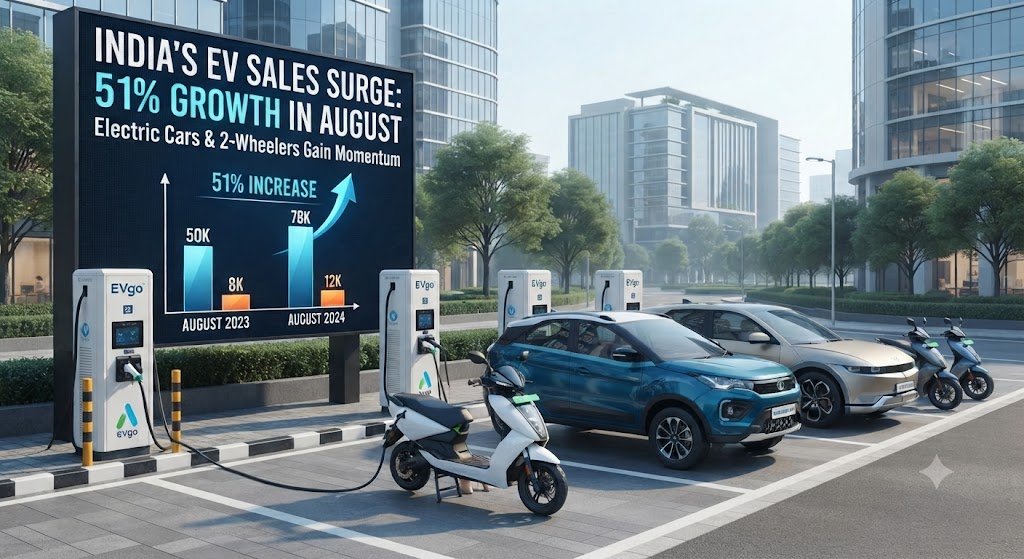
Tata's electric SUV portfolio is also becoming increasingly important. The company recorded 16,549 EV sales including domestic and international volumes in August, almost twice the 8,540 units recorded in August 2025.
This combination of ICE and electric SUVs has helped Tata strengthen its position in India's rapidly expanding utility vehicle market.
Mahindra Strengthens Its SUV Position
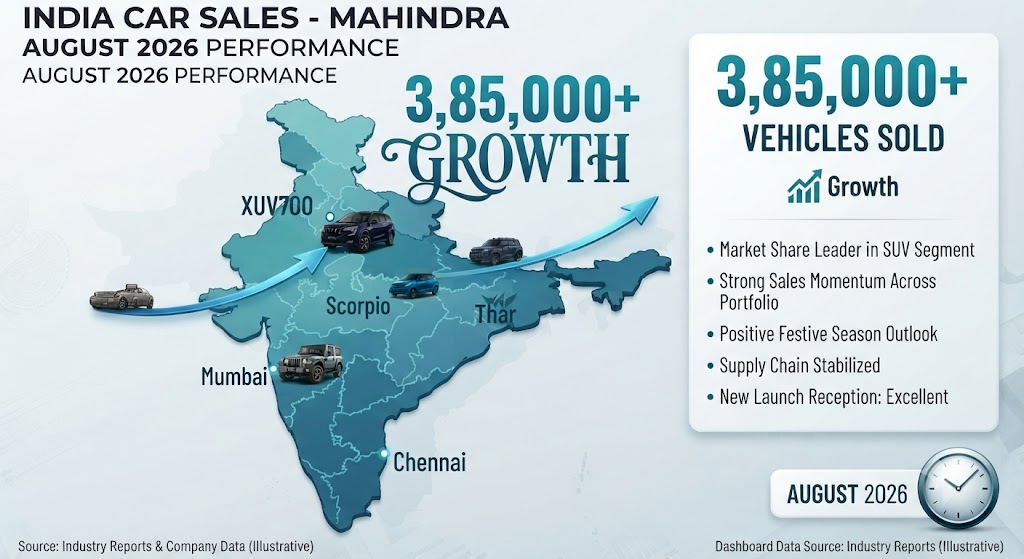
Mahindra remains one of India's most SUV-focused manufacturers and recorded 59,257 domestic sales in August 2026, up 50% year on year.
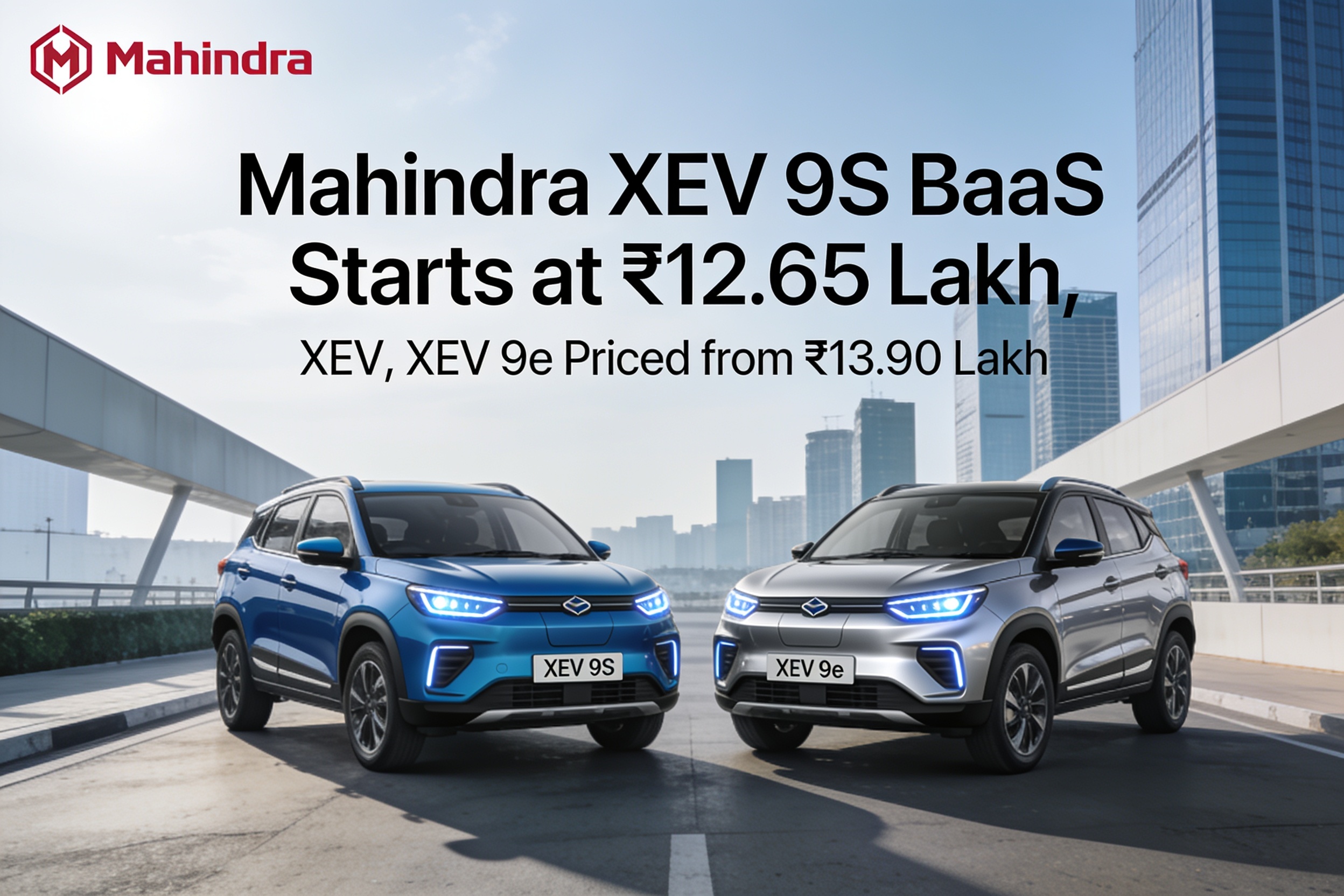
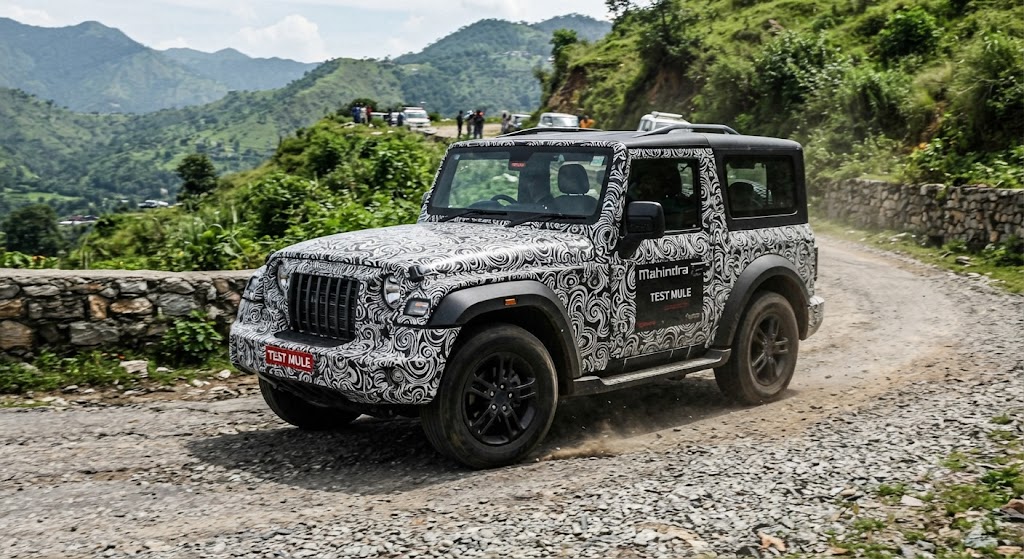
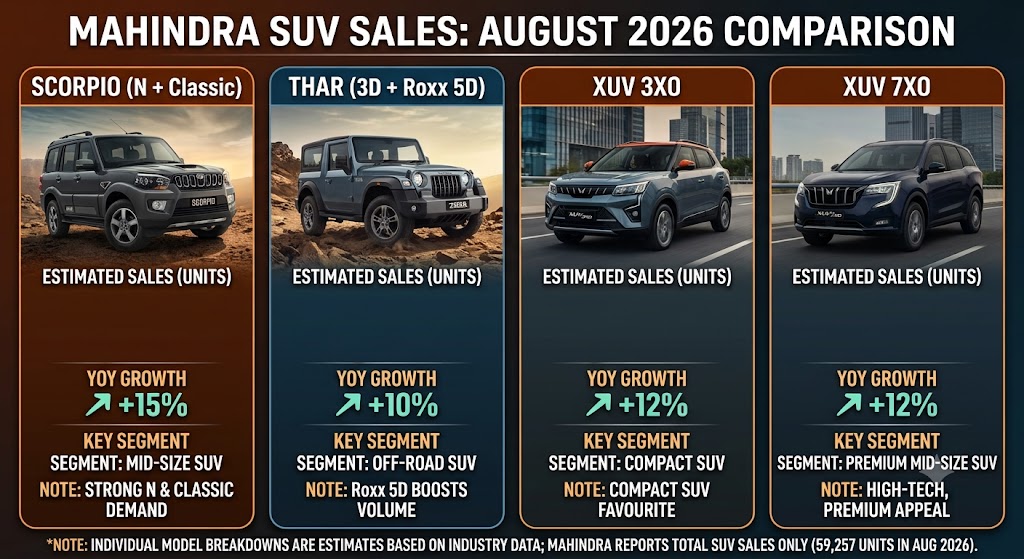
Its portfolio includes the Scorpio-N, Scorpio Classic, Thar, Thar Roxx, XUV 3XO, XUV 7XO, BE 6, XEV 9e and XEV 9S.
Mahindra's strong SUV portfolio has helped the company remain firmly among India's top three passenger vehicle manufacturers. The company also introduced updates and new offerings during August, further strengthening its SUV range.
Hyundai Maintains Strong SUV Momentum
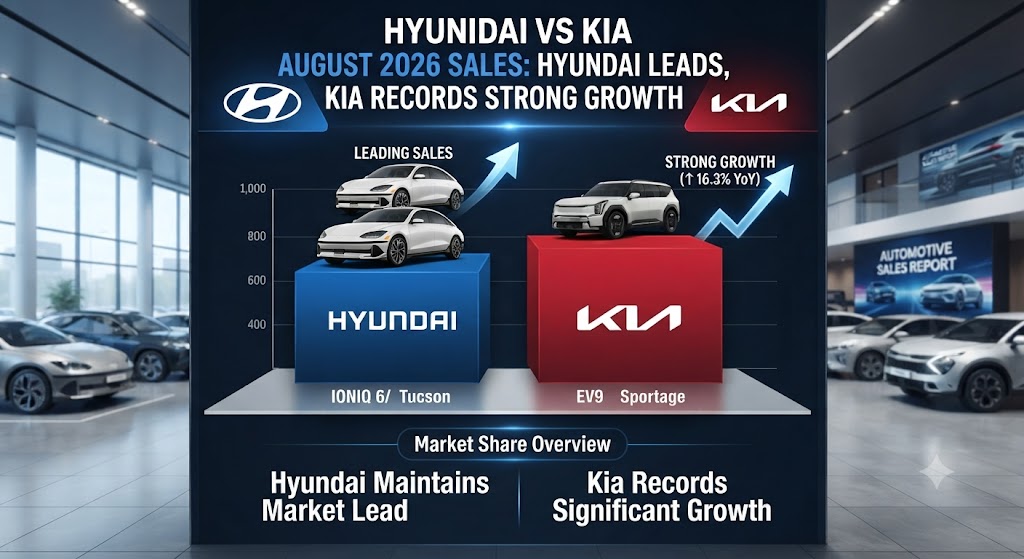
Hyundai registered 54,396 domestic sales in August 2026, an increase of 23.6% over the same month last year.
The company's SUV portfolio continues to be led by the Creta, while the Venue, Exter, Alcazar and Creta Electric also play important roles.
Wheels42's July 2026 SUV sales data showed the Creta at the top of the mid-size SUV segment with 18,088 units, ahead of the Kia Seltos and Maruti Victoris.
Hyundai's strong SUV portfolio therefore remains a key reason behind its position among India's leading passenger vehicle manufacturers.
Kia Posts One of Its Strongest Growth Rates
Kia recorded 29,042 domestic sales in August 2026, representing a substantial 48.1% year-on-year increase.
The Seltos remains one of Kia's biggest volume contributors, while the Sonet, Carens, Syros and newer electric products add further breadth to the lineup.
Wheels42's July SUV data showed the Seltos recording 12,541 units, making it the second-best-selling model in the 4.2m–4.5m SUV segment behind the Hyundai Creta.
Kia's 48.1% annual growth in August indicates that the brand is gaining considerable momentum in the Indian market.
Toyota Sees a Slight Decline
Toyota recorded 28,410 domestic sales in August 2026, down around 3% compared with 29,302 units in August 2025.
The company's SUV and utility vehicle portfolio includes the Urban Cruiser Hyryder, Fortuner, Land Cruiser range and Innova Hycross, with the Hyryder and Innova Hycross continuing to play an important role in the mass-market utility vehicle space.
Wheels42's July SUV report recorded 7,187 units for the Toyota Hyryder, placing it fifth in the mid-size SUV segment.
Which SUV Brand Was the Biggest Winner?
Looking at August's numbers, there are different winners depending on the criteria.
Highest Sales Volume: Maruti Suzuki
Maruti Suzuki was the clear volume leader with 1,76,971 domestic passenger vehicle sales.
Its rapidly expanding utility vehicle range has made the company a major player in India's SUV market.
Highest Growth Among Major Brands: Tata Motors
Tata Motors posted 59.1% YoY growth, making it one of the strongest performers among the country's major passenger vehicle manufacturers.
Strongest SUV-Focused Brand: Mahindra
Mahindra's 59,257-unit performance is particularly significant because the company's passenger vehicle portfolio is heavily concentrated around SUVs.
Fastest Growing Established SUV Rival: Kia
Kia's 48.1% growth shows strong momentum, particularly with the Seltos and Sonet continuing to support the brand's volumes.
August 2026 SUV Market: Key Highlights
- Maruti Suzuki remained India's biggest passenger vehicle manufacturer by volume.
- Tata Motors recorded 59.1% year-on-year growth.
- Mahindra posted 50.4% growth and continued to strengthen its SUV leadership.
- Hyundai recorded 54,396 domestic units.
- Kia achieved 48.1% annual growth.
- Toyota recorded a 3% decline compared with August 2025.
- SUVs and utility vehicles remained among the biggest growth drivers of India's passenger vehicle market.
- Electric SUVs are becoming increasingly important, with Tata and Mahindra posting strong EV volumes.
What the August Sales Numbers Tell Us
August 2026 clearly demonstrated that India's SUV demand remains strong. Manufacturers with broad SUV portfolios benefited from growing consumer preference for higher-riding vehicles, while electric SUVs added another layer of competition.
Maruti Suzuki has strengthened its SUV portfolio with models such as the Fronx, Brezza, Grand Vitara, Victoris and e Vitara. Tata Motors is expanding through the Punch, Nexon, Curvv, Harrier, Safari and Sierra families, while Mahindra continues to focus heavily on SUVs across both ICE and EV segments.
Hyundai and Kia are also maintaining strong positions through models such as the Creta, Venue, Seltos and Sonet.
With the festive season approaching, the competition between these manufacturers is expected to become even stronger. New launches, discounts, updated models and increasing EV adoption could significantly influence the SUV sales rankings in the coming months.
 Khyati Sharma 2026-09-04