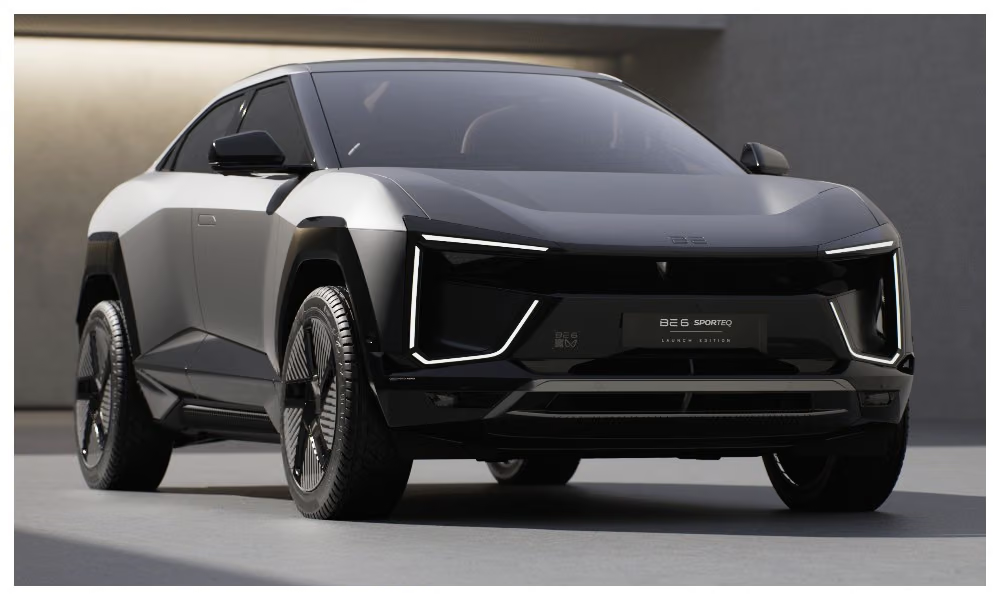
Mahindra & Mahindra cars has reported a 25% year-on-year increase in consolidated profit for Q2 FY27, supported by strong SUV cars demand, higher automotive revenue and growth across several group businesses. The company is also working to expand its vehicle production capacity to meet future demand.
Mahindra & Mahindra (M&M) has announced a strong financial performance for the second quarter of FY2027, with its consolidated profit after tax (PAT) increasing by 25% year-on-year to Rs 4,588 crore. The company had recorded a consolidated PAT of Rs 3,673 crore in the corresponding quarter of the previous financial year.
The results cover the July–September 2026 period and highlight the growing contribution of Mahindra's automotive business. Strong demand for SUVs, electric vehicles and commercial vehicles helped the company improve its overall performance, even as its farm equipment business experienced a decline.
Mahindra's consolidated revenue also increased by 25% to Rs 57,553 crore, compared with Rs 46,106 crore in Q2 FY26. The performance reflects the contribution of its automotive, financial services, technology and other businesses.
Mahindra Q2 FY27 Financial Results
The automotive business remained the biggest growth driver during the quarter. Mahindra reported a 55% increase in consolidated profit after tax from its auto business, while revenue from the segment increased by 39%.
|
Financial Parameter
|
Q2 FY27
|
Q2 FY26
|
Year-on-Year Growth
|
|
Consolidated Revenue
|
Rs 57,553 crore
|
Rs 46,106 crore
|
0.25
|
|
Consolidated PAT
|
Rs 4,588 crore
|
Rs 3,673 crore
|
0.25
|
|
Automotive Revenue
|
Rs 37,756 crore
|
Rs 27,171 crore
|
0.39
|
|
Automotive PAT
|
Rs 2,388 crore
|
Rs 1,545 crore
|
0.55
|
|
Farm Business Revenue
|
Rs 9,572 crore
|
Rs 10,225 crore
|
Down 6%
|
|
Farm Business PAT
|
Rs 1,053 crore
|
Rs 1,157 crore
|
Down 9%
|
SUV Business Leads Mahindra's Automotive Growth
Mahindra's SUV portfolio continued to attract strong customer demand during Q2 FY27. The company recorded SUV volumes of approximately 1.83 lakh units, representing a 26% increase compared with the same quarter last year.
The strong performance helped Mahindra maintain its leadership position in India's SUV market, with a revenue market share of 24.3%.
The company's electric SUV portfolio also continued to gain ground. Mahindra reported a revenue market share of 30.1% in the electric SUV segment during the quarter.
The growing interest in electric SUVs is an important part of the company's long-term automotive strategy. Models under its electric vehicle portfolio are helping Mahindra strengthen its position in India's expanding electric mobility market.
Overall automotive volumes reached approximately 3.31 lakh units during the quarter, including sales from group subsidiaries. This represented a 26% year-on-year increase.
Automotive Profitability Improves
Mahindra's automotive business reported consolidated revenue of Rs 37,756 crore in Q2 FY27, up from Rs 27,171 crore in Q2 FY26. Consolidated profit after tax increased to Rs 2,388 crore, registering growth of 55%.
The company's standalone automotive business recorded a profit before interest and tax (PBIT) of Rs 2,614 crore, up 15% year-on-year.
The standalone automotive PBIT margin stood at 7.7%. However, the consolidated automotive PBIT margin improved to 8.8%, increasing by 110 basis points compared with the previous quarter.
The company continues to face pressure from higher commodity prices and other operating costs. Nevertheless, stronger vehicle volumes and a favourable product mix supported the automotive business during the quarter.
Mahindra Plans to Expand Production Capacity
Alongside its strong financial performance, Mahindra is preparing to increase its vehicle production capacity to support future demand and upcoming product launches.
According to reports on the company's capacity roadmap, Mahindra is targeting total automotive production capacity of approximately 82,000 units per month by the end of FY2027. This compares with around 64,500 units per month at the end of the previous financial year.
The planned expansion is particularly important for the company's SUV and electric vehicle portfolios, where demand has been increasing.
Mahindra is also planning a new manufacturing facility in Nagpur to support its future vehicle launches. The longer-term plan is aimed at significantly increasing production capacity by 2031.
Expanding manufacturing infrastructure will help the company manage higher order volumes, improve production flexibility and prepare for a broader range of future vehicles.
Farm Equipment Business Faces a Difficult Quarter
While the automotive business delivered strong growth, Mahindra's farm equipment division reported a decline in revenue and profitability.
The company's consolidated farm business revenue fell 6% year-on-year to Rs 9,572 crore. Consolidated profit after tax declined 9% to Rs 1,053 crore.
Tractor volumes stood at 1,16,027 units during Q2 FY27, compared with 1,22,936 units in the same quarter last year, representing a decline of 6%.
Mahindra retained its leadership position in the tractor market, with a market share of 41.5%.
The company attributed the weaker performance partly to a shift in the festive season. Management also highlighted higher commodity prices and an uneven macroeconomic environment as factors affecting business performance.
Despite the decline, the farm business remains an important part of Mahindra's overall operations.
Financial Services and Technology Businesses Add Support
Mahindra's performance was not limited to its automotive division. Its financial services and technology businesses also contributed positively to the group's consolidated results.
Mahindra Finance reported 15% growth in assets under management (AUM), while its profit contribution increased by 61%. Its gross Stage 3 assets stood at 3.42%.
Tech Mahindra also continued its profitability improvement, reporting a 33% increase in profit attributable to Mahindra. Its EBIT margin reached 14.8%, improving by 260 basis points year-on-year.
The group's services business recorded consolidated revenue of Rs 11,821 crore, an increase of 18%. Its consolidated PAT also increased by 18% to Rs 1,147 crore.
These results demonstrate the contribution of Mahindra's diversified business portfolio beyond vehicle manufacturing.
What Mahindra's Q2 Results Mean for the Indian Automobile Industry
Mahindra's latest financial performance highlights the continued importance of SUVs and electric vehicles in India's passenger vehicle market.
The company's SUV volumes increased by 26%, while its electric SUV revenue market share reached 30.1%. These figures indicate that the company's investment in new vehicle platforms and electric mobility is contributing to its business growth.
Production capacity will also play an important role in the next phase of expansion. Increasing monthly manufacturing capacity should help Mahindra prepare for future launches and respond to customer demand across different vehicle categories.
However, higher commodity costs, competition and fluctuations in rural demand remain important factors to watch. The decline in tractor sales during the quarter shows that growth across Mahindra's business divisions is not uniform.

 Khyati Sharma 2026-11-05