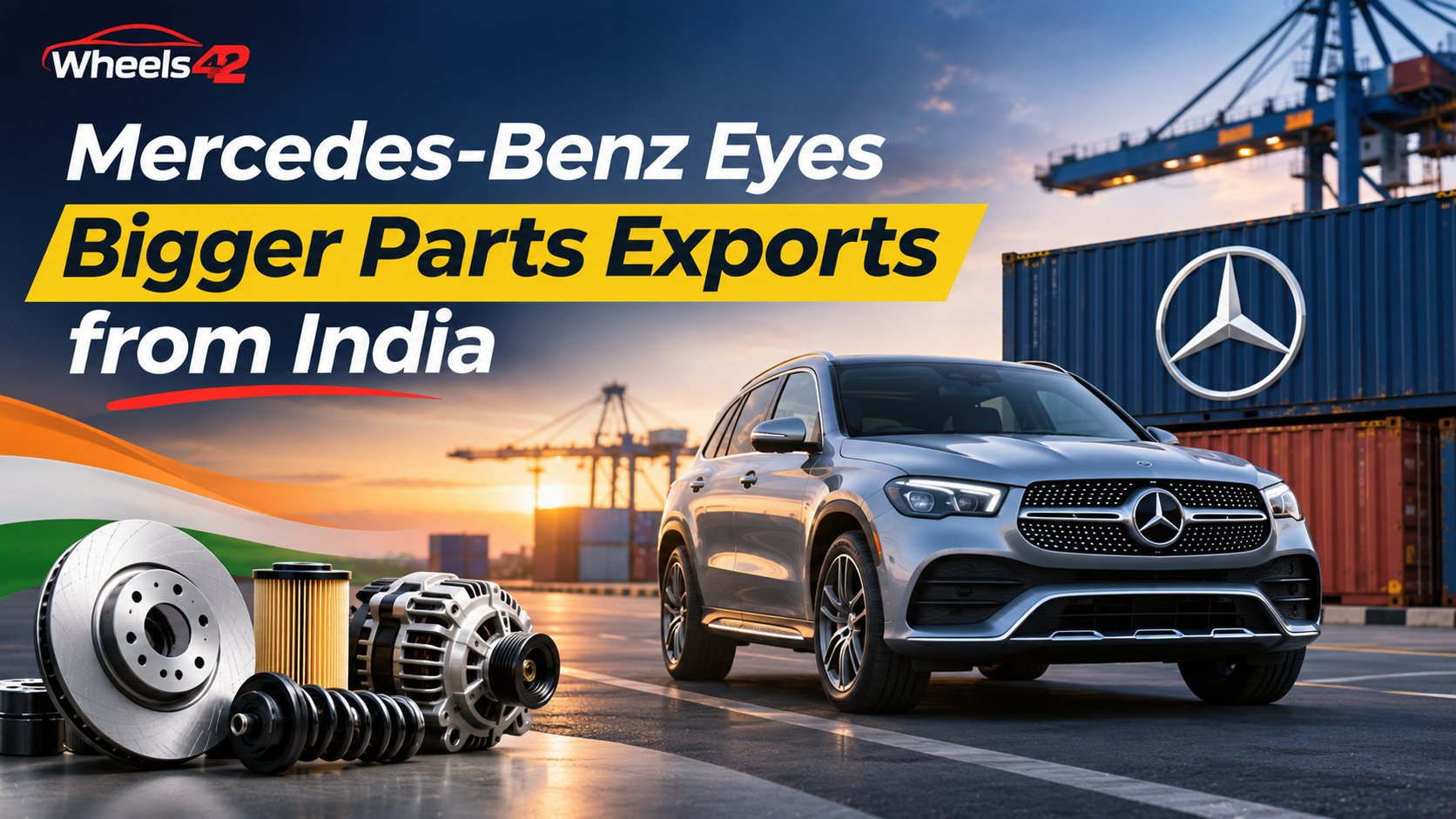
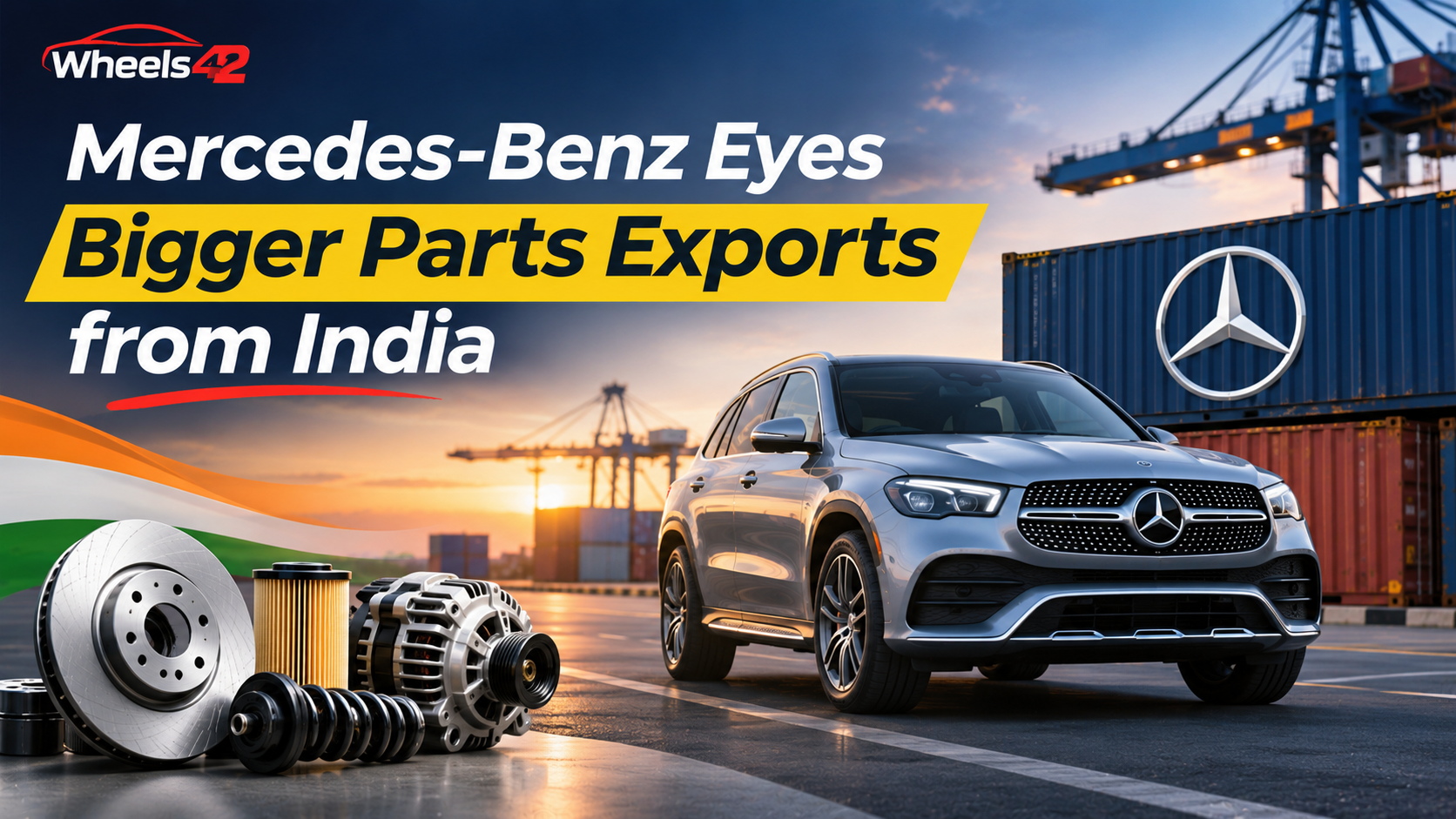
Mercedes-Benz cars is evaluating opportunities to increase automotive component exports from India as it strengthens its local supplier network. The German luxury carmaker sees Indian suppliers and engineering capabilities playing a bigger role in its global operations, with parts exports potentially coming before any large-scale export programme for complete vehicles.
Mercedes-Benz is looking to expand India's role in its global automotive business by increasing its reliance on locally sourced components and technology. The company's global chairman, Ola Källenius, has indicated that India could become an important sourcing base for its international operations.
The development comes as the German luxury carmaker continues to strengthen its manufacturing, engineering and supplier relationships in India. Rather than focusing only on assembling vehicles for domestic customers, Mercedes-Benz is exploring opportunities to connect Indian suppliers with its worldwide production network.
An important part of this strategy could involve exporting automotive components manufactured by Indian suppliers to other international markets.
However, the company has not yet announced a confirmed component-export target or a specific timeline for a large-scale export programme involving complete vehicles.
Mercedes-Benz Sees Potential in Indian Component Exports
Mercedes-Benz believes India's automotive supplier ecosystem has the capabilities to support its international operations. The company is already working with Indian vendors that supply components for locally assembled vehicles.
According to Ola Källenius, component exports from India could become an opportunity before the company considers a larger programme involving exports of complete vehicles.
The company is strengthening technology and supply partnerships with Indian businesses, and these relationships are not necessarily limited to supplying the domestic market.
Indian suppliers could gradually become part of Mercedes-Benz's wider global procurement network, supporting manufacturing operations in different regions.
This approach would also create opportunities for Indian automotive component manufacturers to work with a premium global carmaker and potentially expand their international business.
India Could Become a Bigger Manufacturing and Sourcing Hub
India has developed a strong automotive manufacturing ecosystem over the years, supported by component suppliers, engineering companies and technology businesses.
Mercedes-Benz already has an established manufacturing presence in the country through its facility in Chakan, Pune, Maharashtra.
The company currently assembles more than 11 models at its Indian manufacturing facility using completely knocked-down (CKD) kits. It also sources several components locally, including engines and axles.
Increasing the use of Indian suppliers for international operations could be the next step in expanding the country's importance within Mercedes-Benz's global manufacturing strategy.
The company's approach is not limited to vehicle production. It also wants to strengthen its presence in engineering, software development, technology partnerships and procurement.
Mercedes-Benz India Business: Key Details
|
Particulars
|
Details
|
|
Company
|
Mercedes-Benz
|
|
Global Chairman
|
Ola Källenius
|
|
Indian manufacturing location
|
Chakan, Pune
|
|
Models assembled in India
|
More than 11
|
|
Cumulative India investment
|
Rs 3,200 crore
|
|
Additional investment announced in 2026
|
Rs 200 crore
|
|
India sales, January–September 2026
|
15,190 units
|
|
Sales growth, January–September 2026
|
8%
|
|
Q3 2026 sales
|
5,422 units
|
|
Q3 year-on-year sales growth
|
6%
|
|
Potential export opportunity
|
Automotive components and technology
|
|
Complete vehicle export programme
|
No new decision announced
|
Mercedes-Benz Has Invested Rs 3,200 Crore in India
Mercedes-Benz continues to strengthen its long-term presence in the Indian luxury car market.
The company has announced an additional investment of Rs 200 crore in India during 2026, taking its cumulative investment in the country to Rs 3,200 crore.
The investment supports manufacturing operations, new product introductions and digitisation.
Mercedes-Benz has also highlighted the potential for further manufacturing commitments as India's economy grows and demand for luxury vehicles increases.
The company currently sells around 20,000 vehicles annually in India, according to remarks by its global chairman. With rising purchasing power and a growing premium customer base, Mercedes-Benz expects India to become increasingly important over the next five to seven years.
However, the company has not committed to a specific new manufacturing investment or export-production plan beyond its announced investments.
Mercedes-Benz India Records Strong Sales Growth
Mercedes-Benz has also reported strong sales performance in India during 2026.
The company sold 15,190 vehicles between January and September 2026, registering an 8% increase compared with the same period last year.
Its July–September quarter performance was also encouraging, with sales reaching 5,422 units. This represented 6% year-on-year growth and a 17% increase compared with the previous quarter.
The company said it recorded its strongest-ever September quarter in India.
Demand across its core luxury, top-end and entry-luxury portfolios contributed to the performance.
Mercedes-Benz believes that continued economic growth and rising wealth creation could support further expansion of India's luxury vehicle market.
The company also sees considerable potential in the Indian market because luxury vehicles currently represent only a small portion of the country's overall passenger vehicle industry.
Indian Suppliers Could Support Global Mercedes-Benz Operations
One of the most important aspects of Mercedes-Benz's strategy is its intention to build stronger relationships with Indian component manufacturers.
The company already works with local vendors for parts used in vehicles assembled in India. These relationships could gradually expand to include supply requirements for Mercedes-Benz operations in other countries.
Indian manufacturers have developed capabilities in several automotive categories, including mechanical components, electrical systems, powertrain technologies and precision engineering.
Mercedes-Benz could benefit from these capabilities by sourcing suitable components from India for its international production programmes.
For Indian suppliers, this could create opportunities to increase production, improve manufacturing standards and participate in global automotive supply chains.
However, component selection, quality requirements, pricing and international certification would determine which Indian suppliers could participate in such programmes.
Mercedes-Benz Research and Development India to Gain Importance
Engineering and research capabilities are another important part of Mercedes-Benz's India strategy.
Mercedes-Benz Research and Development India (MBRDI) has become one of the company's most important engineering centres outside Germany.
The centre contributes to several areas of automotive development, including mechanical engineering, electrical systems, powertrain development, software and artificial intelligence.
The company expects India's engineering capabilities to become increasingly important within its global research and development network.
Indian engineers are already contributing to technologies used across Mercedes-Benz's international operations.
The growing importance of MBRDI could help the company strengthen its technology partnerships in India while creating more opportunities for local engineering talent.
Could Mercedes-Benz Export Complete Cars from India?
While the immediate opportunity involves automotive component exports, Mercedes-Benz has also acknowledged the longer-term potential for India to become a manufacturing base for complete vehicles intended for international markets.
However, the company has not made a final decision regarding a large-scale vehicle-export programme.
Ola Källenius indicated that such a move would depend on several factors, including the growth of the Indian market, the availability of suitable products and the right price positioning.
Mercedes-Benz has previously exported limited quantities of locally manufactured vehicles from its Chakan facility. However, the plant has primarily focused on serving Indian customers.
The company's future decision could depend on whether India becomes commercially competitive as a production and export base for particular models.
For now, increasing component sourcing and technology partnerships appears to be the more immediate opportunity.

 Khyati Sharma 2026-11-05