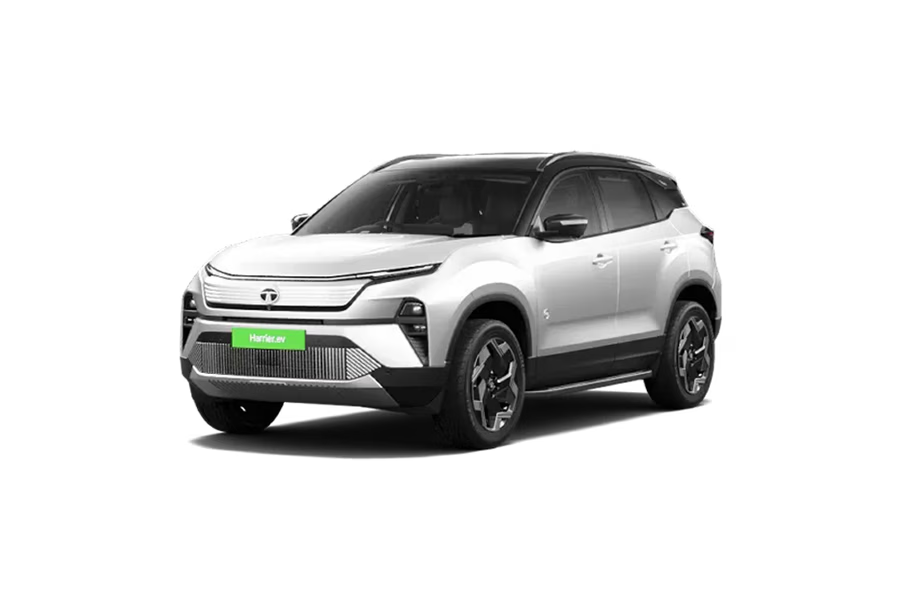
TATA Harrier EV
21.69 Lakh*
 Khyati Sharma 2026-08-17

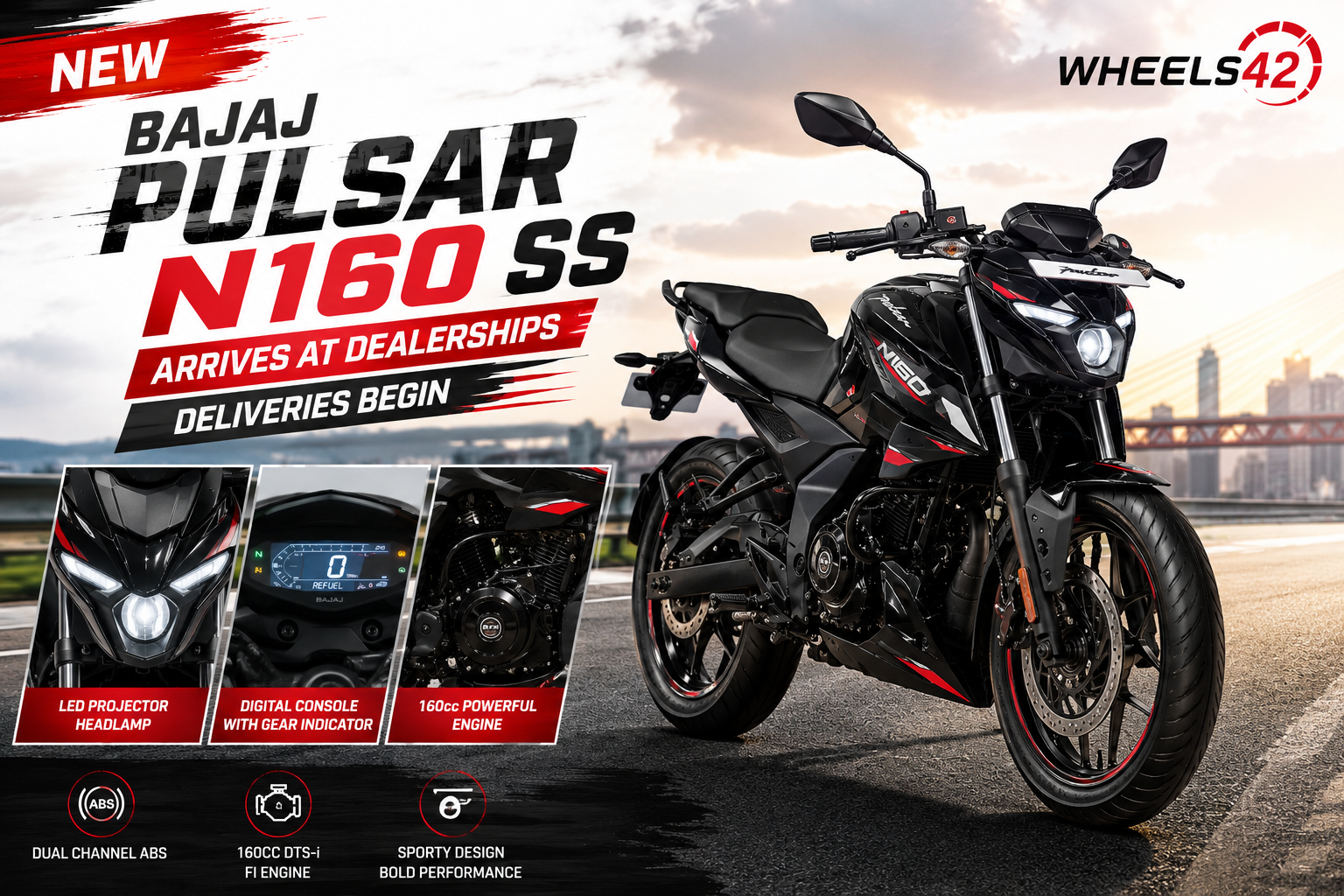
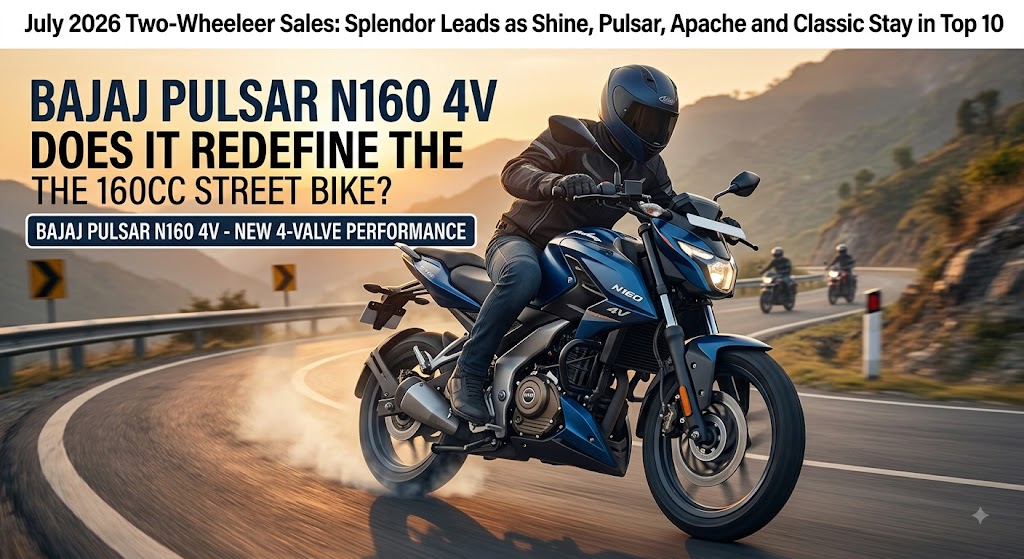
Bajaj Auto has given the Pulsar N160 its first major update with the introduction of the new N160 4V. Prices start at ₹1,33,511 (ex-showroom) for the S variant and go up to ₹1,42,585 for the top-spec SS variant.
The existing N160 2V continues alongside the new 4V, giving buyers a total of five variants. The 4V version is offered in three colour options, although pricing for the blue-and-orange combination has not yet been announced. During the media ride in Pune, the Black and White versions were available, and we spent time riding the White variant across different conditions.
So, does the new 4V engine and technology package make the Pulsar N160 a more compelling choice in the 160cc segment? Here is our detailed review.
Bajaj has retained the core styling of the Pulsar N160, so the 4V version is immediately recognisable. The major differences are concentrated around the colour schemes and equipment rather than a complete redesign.
The White shade gives the motorcycle a clean and premium appearance, while the Black version looks sportier thanks to its red alloy wheels and red highlights on the 3D Pulsar logo. The graphics also vary slightly between the colour options.
The motorcycle continues to feature a muscular streetfighter-inspired design, along with LED lighting, a wide handlebar and a compact overall stance.
The most important mechanical change is the new 164.9cc, four-valve engine.
Bajaj has added a 4V cylinder head and an oil cooler, allowing the engine to produce:
|
Specification |
Pulsar N160 2V |
Pulsar N160 4V |
|
Engine |
164.9cc, 2V |
164.9cc, 4V |
|
Maximum Power |
16 PS |
18.5 PS |
|
Maximum Torque |
14.65 Nm |
14.4 Nm |
|
Gearbox |
5-speed |
5-speed |
The increase from 16 PS to 18.5 PS is noticeable, particularly when accelerating through the mid-range. Although peak torque has marginally decreased, the 4V head allows the engine to breathe better and the overall power delivery feels stronger.
An oil cooler should also help maintain engine temperatures during extended riding, particularly when the motorcycle is being ridden hard.
A sixth gear would have been a welcome addition, especially considering the increase in performance.
Another major addition is electronic throttle control with ride-by-wire technology.
This brings smoother throttle response and allows Bajaj to introduce features that were not possible with the earlier setup. One of them is the Crawl function, designed to help the motorcycle move smoothly through slow-moving traffic.
Throttle response at low speeds and in higher gears feels more controlled. Bajaj says its ride-by-wire system can perform around three million calculations per second to manage power delivery.
During our ride, the engine felt responsive in everyday conditions, while vibrations remained well controlled. The exhaust note also has a distinctive bass-heavy character.
The top-spec SS variant gets a particularly impressive technology package for a motorcycle in this displacement category.
The system provides five riding modes:
Traction control can also be switched on or off, allowing riders to alter the motorcycle’s behaviour according to the riding conditions.
During wet-road riding, the traction control system provided an additional layer of confidence and helped maintain control when accelerating.
Perhaps the biggest talking point is the new TFT instrument cluster, which makes the Pulsar N160 4V the first Bajaj motorcycle to feature this type of display.
However, the TFT is reserved for the top-spec SS variant.
The display offers a surprisingly extensive list of functions, including:
The display uses Bluetooth for basic connectivity, while Wi-Fi handles more advanced functions.
One particularly useful feature is Google Maps mirroring. Android users can mirror navigation even when their phone screen is switched off. On iPhones, the phone display needs to remain active.
Bajaj is also introducing an updated version of its Ride Connect app to support these functions. The new application is expected to become available to customers soon.
The level of technology offered here is impressive for a 160cc motorcycle and even puts the N160 4V in competition with considerably larger motorcycles when it comes to connected features.
The additional power is one of the most obvious improvements over the N160 2V.
During our ride, the motorcycle managed approximately 16–17 seconds for the 0–100 km/h run in wet conditions. With a dry road, the figure could potentially improve by a couple of seconds.
The clutch is light, making the motorcycle easy to use in traffic. The engine feels lively during normal riding, and the additional power makes overtaking and highway cruising more effortless.
The oil cooler should also benefit riders who regularly spend longer periods at higher speeds, although our relatively short media ride did not allow us to evaluate long-distance thermal performance in detail.
The basic riding position remains largely unchanged. The wide handlebar provides an upright stance, making the N160 4V comfortable for everyday use.
The seat has been slightly redesigned, but the overall ergonomics remain familiar.
The radial rear tyre offers strong grip, particularly while cornering. Combined with the updated power delivery and traction control, the motorcycle feels confident when pushed through corners.
The dual-channel ABS works smoothly without becoming intrusive. However, we would have preferred stronger braking performance from the motorcycle.
Strong points of the Pulsar N160 4V:
There are still a few areas where the N160 4V could improve:
The Pulsar N160 4V is not a complete transformation of the N160, but it successfully addresses one of the earlier motorcycle’s biggest weaknesses: performance.
The jump to 18.5 PS, combined with ride-by-wire technology, makes the motorcycle more responsive and refined. The top-spec SS variant takes things further with a TFT display, five riding modes, traction control and advanced smartphone connectivity.
Existing N160 2V owners may not find enough reason to upgrade immediately. However, buyers looking for a new sporty 160cc motorcycle get a considerably more capable package with the 4V.
The N160 4V still has room for improvement in braking performance and highway gearing, but its combination of performance, technology, refinement and everyday usability makes it one of the more compelling options in the 160cc motorcycle segment.