(1).avif)

 Khyati Sharma 2026-10-17
Many drivers believe that filling their car's fuel tank early in the morning gives them more petrol or diesel for the same amount of money. The idea sounds logical: fuel becomes denser when it is cold, so buying it during cooler morning hours should mean getting more fuel for every litre purchased.
But is this really true? Can you save money simply by visiting a petrol pump before sunrise instead of filling up during the afternoon?
The answer is more complicated than it appears. Temperature does affect the density of petrol and diesel, but the amount of extra fuel you might receive depends on how the fuel is stored, the temperature underground, the type of fuel and the conditions at the station.
For most Indian motorists, filling up early in the morning is unlikely to provide a noticeable saving. Understanding fuel temperature, density and how petrol pumps measure fuel can help separate the science from the myth.
The belief comes from a genuine scientific principle: liquids generally expand when heated and contract when cooled.
When petrol or diesel becomes warmer, its volume increases slightly. When it cools, its volume decreases. This means that a litre of colder fuel can contain marginally more mass than a litre of warmer fuel.
Since fuel provides energy when burned in an engine, the mass of fuel matters, not just the volume displayed on the pump.
For example, imagine two containers that each hold exactly one litre of the same fuel. If one contains cooler fuel and the other contains warmer fuel, the cooler fuel will generally have a slightly greater mass.
This is the basis of the early-morning refuelling theory.
However, there is an important distinction between fuel temperature and outdoor air temperature. Petrol stations do not necessarily store their fuel in tanks that warm up and cool down as quickly as the surrounding air.
Best Time of the Year to Buy a New Car in India
Yes, petrol generally becomes denser when its temperature falls. Diesel behaves similarly, although the exact temperature response differs between fuels.
The relationship between temperature and density is important in fuel storage, transport and commercial measurement. In many bulk-fuel transactions, volume may be corrected to a reference temperature to ensure fair comparisons.
For ordinary motorists, however, the benefit of cooler fuel depends on how much its actual temperature changes between the morning and afternoon.
Underground storage tanks at petrol stations are insulated by the surrounding soil. As a result, their temperature tends to change more slowly than the air temperature above ground. Even when afternoon temperatures rise significantly, the fuel underground may remain comparatively stable.
Consequently, a cool morning does not automatically mean that the petrol being dispensed is substantially colder than it would be later in the day.
The potential difference depends on the temperature change in the fuel itself, not simply the difference in outdoor temperature.
As a simplified illustration, petrol's volumetric expansion coefficient is approximately 0.0009–0.001 per degree Celsius, although the precise value varies with fuel composition and temperature. This means that a temperature difference of 10°C could correspond to roughly a 0.9–1% volume difference for the same mass of fuel.
Consider a hypothetical example involving 40 litres of fuel:
At a 1% difference, the volume-equivalent difference would be around 0.4 litres.
At a 0.5% difference, it would be around 0.2 litres.
If the fuel temperature barely changes, the difference would also be very small.
These figures illustrate the underlying physics; they are not a prediction of how much extra fuel you will receive at a petrol station in the morning. The actual temperature difference in underground tanks may be much smaller than the difference between morning and afternoon air temperatures.
Car Waiting Period: How to Get Your New Car Faster
Most petrol stations store fuel in large underground tanks. The soil surrounding these tanks helps limit rapid temperature changes, keeping the stored fuel more stable than the air above the ground.
A useful real-world example comes from Consumer Reports, which tested fuel temperatures at an underground tank. During its tests, outdoor air temperatures changed by as much as 12°F, while the stored fuel remained close to 62°F. The findings support the conclusion that the time of day alone is not a reliable way to get more fuel.
There can still be variations. Fuel delivery schedules, the temperature of incoming fuel, local weather and the design of a station's storage system can all influence fuel temperature. The fuel sitting in a dispenser or pipe exposed to sunlight may also be warmer than the fuel deeper underground.
But these variations do not mean that filling up at 6 AM will consistently provide more petrol than filling up at 2 PM.
|
Factor |
Early-morning refuelling |
Afternoon refuelling |
|
Outside air temperature |
Usually cooler |
Usually warmer |
|
Underground fuel temperature |
Often relatively stable |
Often relatively stable |
|
Fuel density |
Depends on actual fuel temperature |
Depends on actual fuel temperature |
|
Extra fuel received |
No guaranteed advantage |
No guaranteed disadvantage |
|
Potential financial saving |
Usually negligible from timing alone |
Usually negligible from timing alone |
|
Main practical benefit |
Cooler conditions and potentially shorter queues |
Convenient if you need fuel during the day |
Yes, the basic principle applies to diesel too. Diesel expands when heated and contracts when cooled, so its density changes with temperature.
However, the real-world benefit of choosing a particular refuelling time still depends on the actual temperature of the fuel being dispensed. Diesel stored underground is also less exposed to rapid outdoor temperature swings than fuel stored in an exposed container.
For owners of diesel cars, SUV cars and commercial vehicles, choosing a reliable fuel station and maintaining the vehicle properly are generally more useful habits than changing refuelling times.
If you drive a commercial vehicle, you may also find it helpful to understand [diesel mileage and fuel efficiency] when comparing operating costs.

There is no universally best time of day to refuel for better value. Instead of planning every visit around sunrise, focus on fuel quality, accurate dispensing and your driving needs.
Here are five practical tips to help you get better value from every refill.
1. Choose a Reliable Petrol Pump
Use a reputable fuel station with well-maintained dispensing equipment. If you suspect a measurement problem, ask the station staff to demonstrate the authorised five-litre measure check where available.
2. Check the Quantity Display
Before fuelling begins, make sure the meter is reset to zero. Check the displayed amount and price while the attendant fills your vehicle.
3. Avoid Unnecessary Refuelling Trips
You do not need to drive across town just to find a supposedly better time to buy fuel. The extra distance can consume fuel and cancel out any theoretical benefit.
4. Maintain Your Vehicle Properly
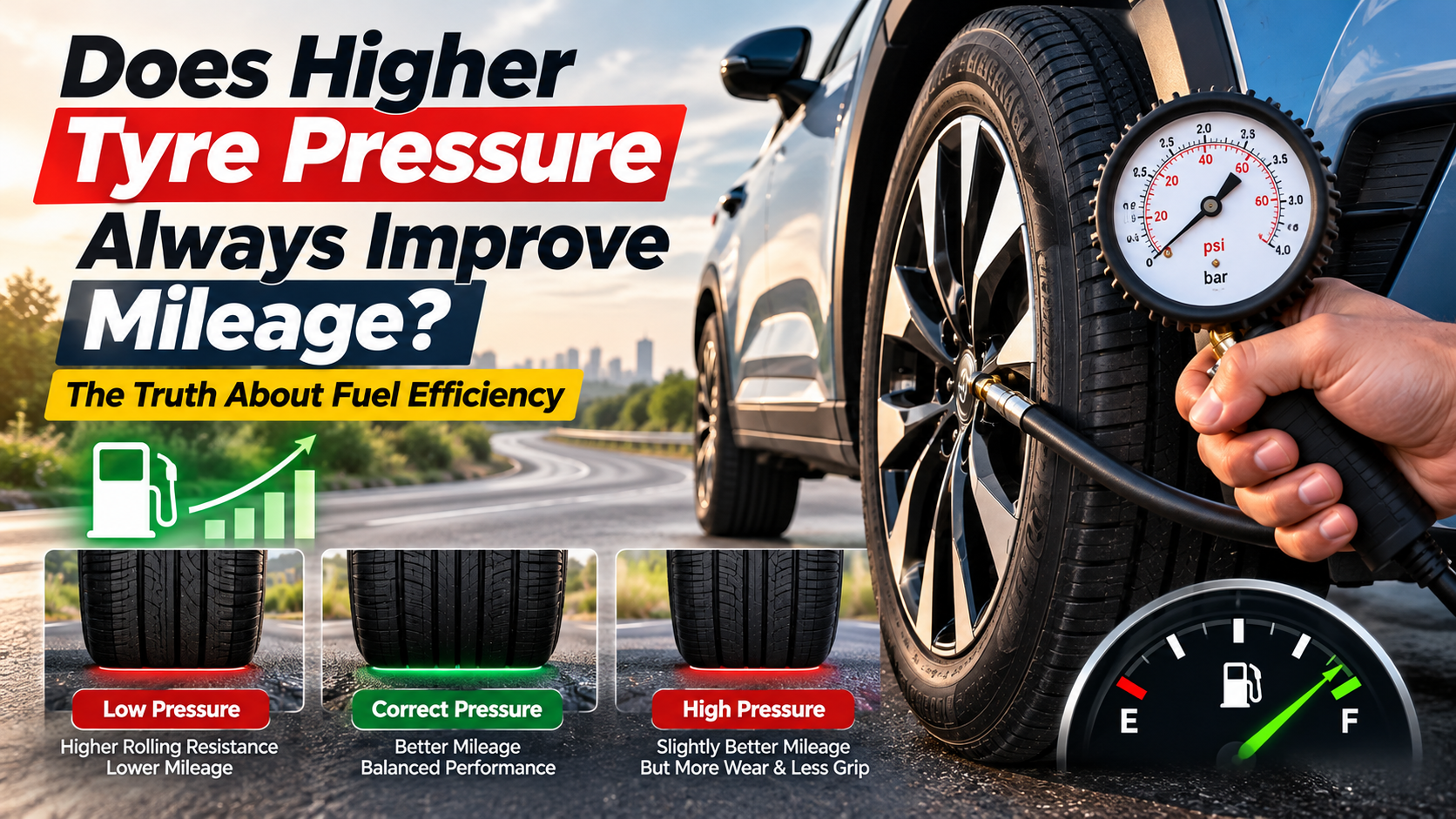
Correct tyre pressure, timely servicing, clean air filters and sensible driving habits can help improve fuel economy. Read our guide to [car maintenance tips] for more ways to keep your vehicle running efficiently.
5. Focus on Driving Habits
Rapid acceleration, frequent hard braking and unnecessarily high speeds can increase fuel consumption. Smooth acceleration and a steady pace are often more useful for improving mileage than changing the time of refuelling.
New Car vs Used Car: Which One Should You Buy?
Another common belief is that squeezing the fuel nozzle slowly results in more petrol entering the tank because less fuel evaporates.
Although fuel vapour and dispensing conditions can affect the refuelling process, there is no strong reason to assume that using the slowest nozzle setting will consistently deliver a noticeable extra quantity. Use the dispenser normally and follow the attendant's instructions.
More importantly, never continue filling after the nozzle automatically clicks off. Overfilling can cause fuel spillage and interfere with the vehicle's evaporative-emissions system.
The claim that filling your tank early in the morning gets you noticeably more fuel is mostly a myth in everyday driving conditions.
The science behind the claim is correct: colder petrol and diesel are denser than warmer fuel. But petrol stations generally store fuel underground, where temperatures change much more slowly than outdoor air temperatures. This makes the difference between morning and afternoon refuelling small in many real-world situations.
For Indian motorists, there is little reason to wake up early just to refuel. Fill your car when it is convenient, choose a trustworthy petrol pump, check the meter and maintain your vehicle properly.
If your goal is to save money on fuel, focus on driving efficiently, maintaining correct tyre pressure and keeping your vehicle in good condition. These habits are more practical than relying on the clock to decide when to visit a petrol station.













_A_Checklist_Before_You_Take_Delivery.jpeg)