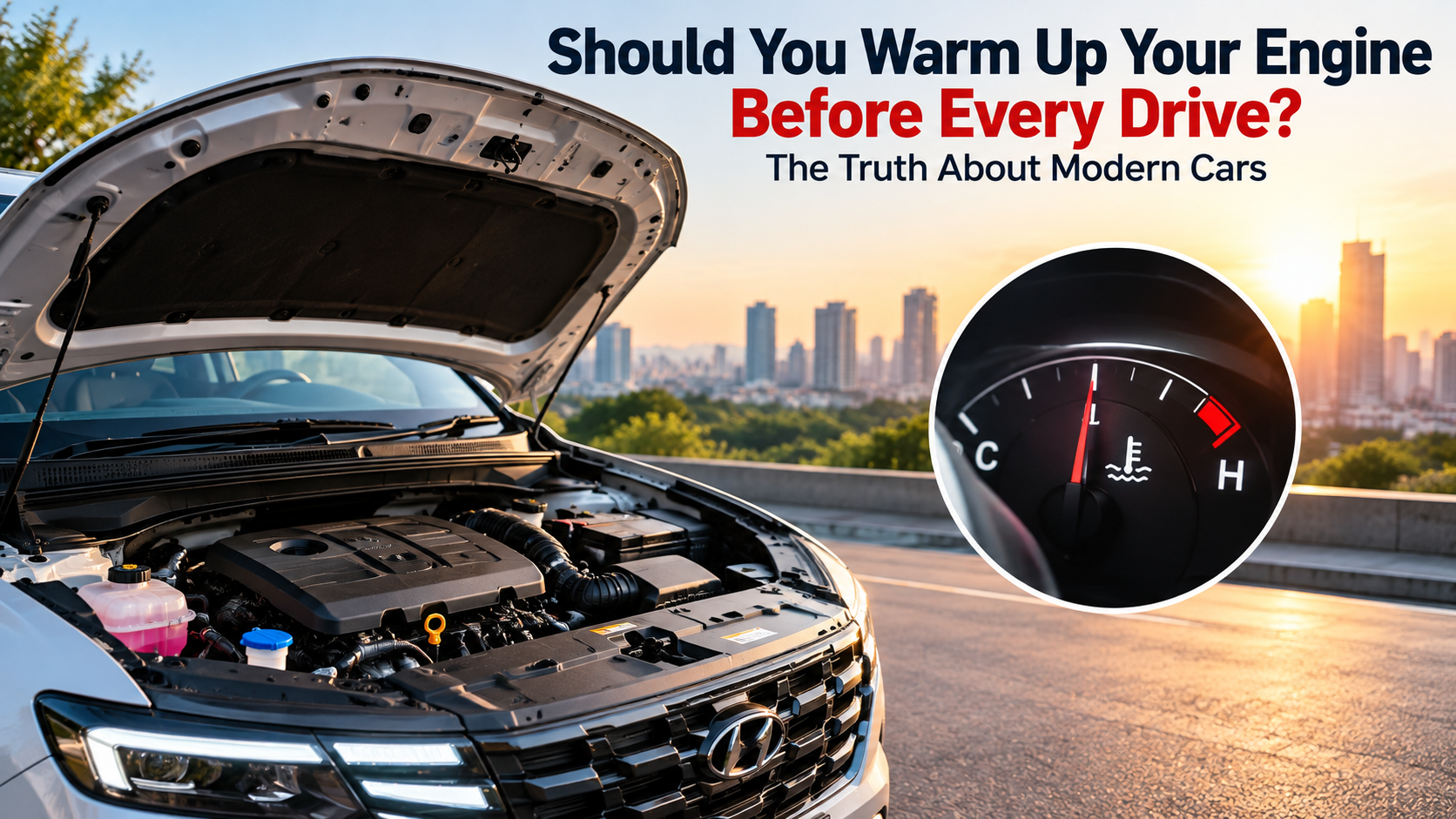
Starting your car on a cold morning and letting the engine idle for several minutes has been a common driving habit for decades. Many drivers believe that warming up the engine before every journey improves performance, protects internal components and increases engine life. However, modern cars are designed differently from older vehicles, and the traditional warm-up routine is no longer necessary in most situations.
So, should you warm up your engine before every drive? For most modern petrol and diesel cars, the answer is no: start the engine, allow a few seconds for the oil to circulate, and drive gently until the engine reaches its normal operating temperature.
This approach helps reduce unnecessary idling, saves fuel and allows the engine and other vehicle components to warm up under light operating conditions. However, cold weather, extreme temperatures, older vehicles and manufacturer-specific recommendations can change the advice.
In this Wheels42 guide, we explain how engine warm-up works, when you should wait before driving, how long it takes an engine to reach operating temperature, and the common mistakes drivers should avoid.
Best Time of the Year to Buy a New Car in India
1. Why Did Drivers Traditionally Warm Up Their Engines?

Warming up a car before driving was much more important in older vehicles, particularly those equipped with carburettors rather than modern electronic fuel injection.
A carburettor mixes fuel and air mechanically. When an engine is cold, fuel does not vaporise as easily, which can make starting and running smoothly more difficult. Older vehicles often required a manual choke or a period of idling to maintain a stable engine speed.
Engine oil also behaved differently in cold conditions. Older lubricants could become significantly thicker at low temperatures, making it harder for oil to flow quickly through the engine after starting.
As a result, drivers commonly allowed older vehicles to idle until the engine began running smoothly and reached a more suitable temperature.
Modern cars, however, use electronic engine management systems that adjust fuel delivery, ignition timing and idle speed according to engine temperature and operating conditions. Modern engine oils are also designed to provide suitable lubrication across a wider range of temperatures.
This means most newer vehicles can be driven shortly after starting, provided the driver avoids heavy acceleration and follows the manufacturer's instructions.
Hatchback vs Sedan vs SUV: Which Car Type Suits You Best?
2. What Happens Inside Your Engine When You Start It Cold?
When you start a cold engine, several processes take place before the engine reaches its ideal operating temperature.
Engine oil begins circulating
The oil pump starts moving engine oil through lubrication passages to protect components such as bearings, camshafts and other moving parts. Oil pressure generally builds quickly, although the exact time depends on the engine, oil viscosity, temperature and condition.
This is why it is sensible to wait briefly after starting and check that the oil-pressure warning light goes out. If the warning remains illuminated, stop the engine safely and investigate the problem rather than continuing to drive.
Fuel delivery is adjusted
A modern engine control unit adjusts the air-fuel mixture and ignition timing to help the engine run properly when cold. Depending on the vehicle, the engine may initially idle at a higher speed.
This behaviour is generally normal and does not mean the car needs to sit stationary until the idle speed falls completely.
Engine components gradually expand
Metal components contract as they cool and expand as they warm. Engines are engineered to operate within specific temperature ranges, and gentle driving allows them to warm up progressively.
Moisture and combustion by-products accumulate
Short journeys and repeated cold starts can allow moisture and combustion by-products to accumulate in engine oil and exhaust systems. Longer journeys, when appropriate, help the vehicle reach normal operating temperature and evaporate moisture from the oil.
Therefore, the goal is not simply to warm the engine as quickly as possible. It is to allow the entire powertrain to reach suitable operating conditions without unnecessary stress.
3. Should You Warm Up a Modern Car Before Driving?

For most modern cars with petrol or diesel engines, extended stationary warm-up is unnecessary. Once the engine starts smoothly and the dashboard shows no warning that requires attention, you can generally begin driving gently after a brief pause.
The important distinction is between warming up the engine and driving the engine hard while it is cold.
When the engine is cold, avoid sudden acceleration, high engine speeds, heavy loads and aggressive driving. Engine oil, transmission fluid and other fluids may not yet have reached their normal operating temperatures.
A gentle start allows these systems to warm up progressively. It also helps reduce fuel consumption compared with leaving the engine running at idle for several minutes.
However, always follow your vehicle's owner's manual. Some specialist vehicles, older models and engines operating in extreme conditions may have specific warm-up requirements.
Company-Fitted vs Aftermarket Accessories: Which Is Better?
Recommended warm-up approach by vehicle type
-
Modern petrol cars: Start, wait briefly for stable operation and drive gently.
-
Modern diesel cars: Follow the glow-plug indicator and starting instructions, then drive gently once the engine starts normally.
-
Older carburetted cars: A longer warm-up may be necessary, depending on the design and weather.
-
Hybrid cars: Follow the vehicle's instructions; the combustion engine may start and stop automatically.
-
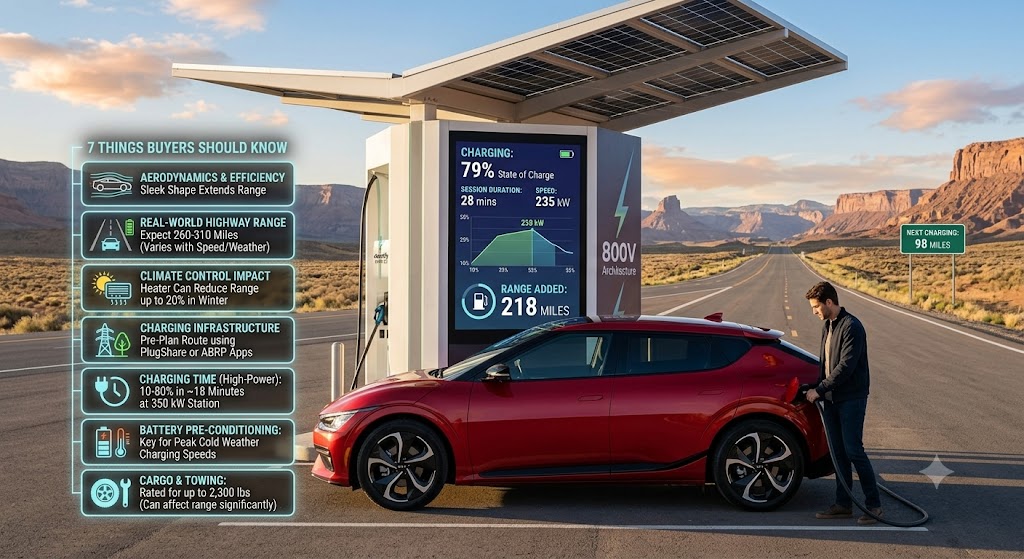
Electric cars: They do not have a combustion engine to warm up, although the battery and cabin may benefit from preconditioning in cold weather.
4. How Long Should You Warm Up Your Engine?
There is no single warm-up time that applies to every car. The required time depends on outside temperature, engine design, oil viscosity, vehicle condition and the manufacturer's recommendations.
For many modern vehicles in mild weather, a brief pause of around 10–30 seconds is a practical general guideline, rather than a strict technical requirement. You do not need to wait until the temperature gauge reaches its normal position before moving off.
In very cold conditions, you may need to wait longer for stable operation, clear visibility and any manufacturer-specified starting procedure. Remember that clearing the windscreen completely is a safety requirement before driving, regardless of how quickly the engine warms up.
|
Driving condition
|
Recommended approach
|
|
Mild weather
|
Start the engine, check warning lights and drive gently after a brief pause.
|
|
Cold winter morning
|
Follow the manual, allow stable operation and avoid hard acceleration.
|
|
Extreme cold
|
Follow the manufacturer's cold-start instructions and use the recommended oil grade.
|
|
Older carburetted car
|
Allow the engine to run smoothly before setting off, as required by its design.
|
|
Diesel with glow plugs
|
Wait for the glow-plug indicator or starting instructions before cranking.
|
|
Windscreen covered in frost or fog
|
Clear all windows and mirrors before driving; do not rely on engine heat alone.
|
|
Hybrid vehicle
|
Follow the vehicle's operating instructions; the engine may not need to run continuously.
|
5. Does Warming Up Save Fuel?
In most modern cars, extended idling consumes fuel without covering any distance. The engine is running, but the vehicle is not moving towards its destination.
Cold engines can also use more fuel than warm engines because their control systems may temporarily enrich the fuel mixture or adjust operation to reach suitable temperatures. Therefore, some additional fuel consumption during the warm-up phase is normal.
However, leaving the engine idling for five or ten minutes does not automatically improve fuel economy. In many cases, driving gently allows the engine to warm up more efficiently than prolonged stationary idling.

For example, a car that idles for several minutes before a short journey may spend a substantial part of its running time stationary. Repeating this routine every morning can increase fuel use over time.
To reduce unnecessary consumption:
-
Avoid extended idling when it is not required.
-
Accelerate smoothly after starting.
-
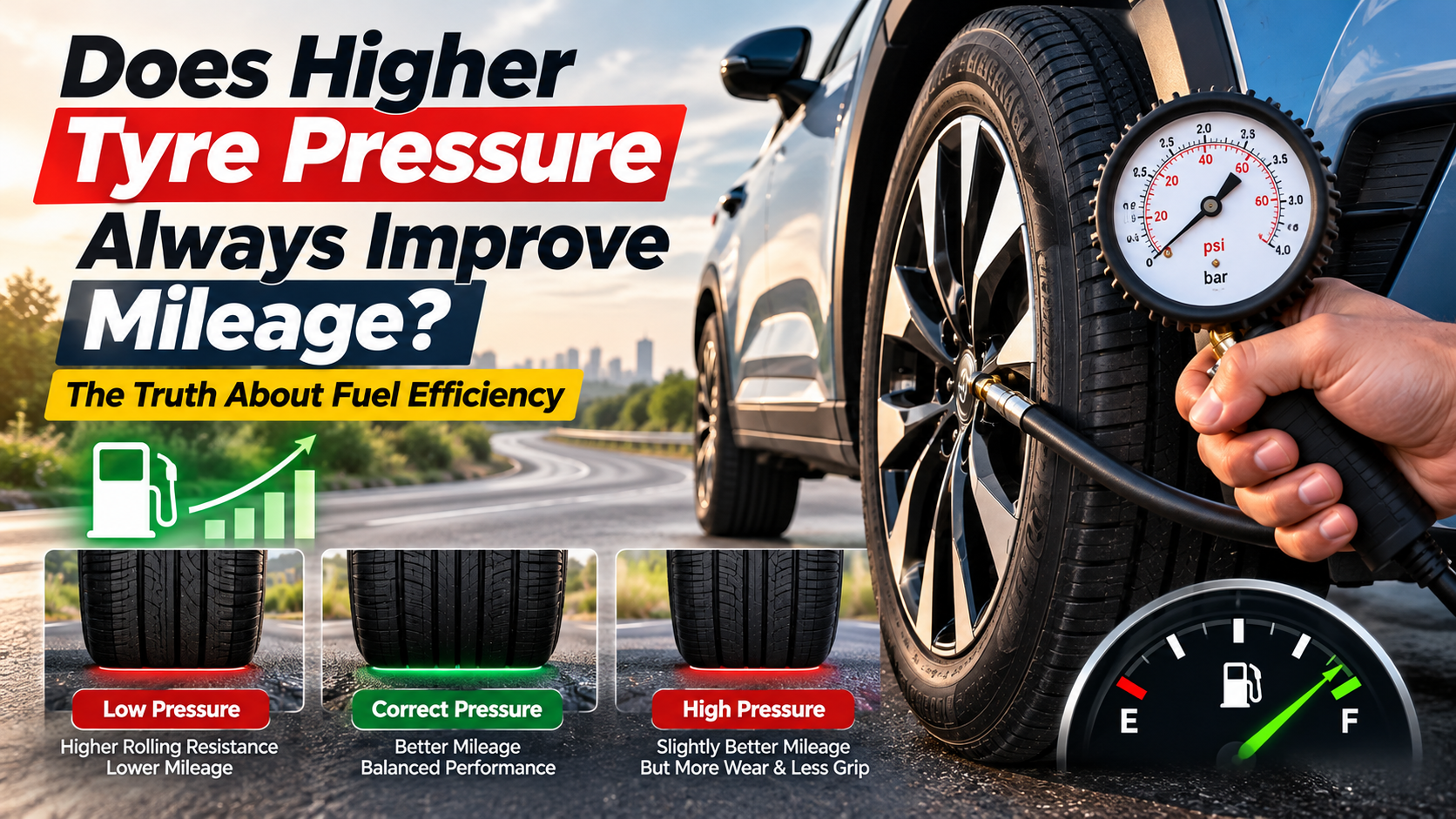
Maintain appropriate tyre pressure.
-
Remove unnecessary loads from the vehicle.
-
Combine short errands where practical.
-
Use the recommended engine oil grade.
Cold-weather fuel consumption will still vary with temperature, traffic, journey length and vehicle design.
How Many Airbags Do You Really Need? A Safety Primer
6. What Happens If You Drive Immediately After Starting?
Driving immediately after starting is not inherently harmful to most modern cars, provided you begin gently and the vehicle's starting procedure has been completed.
The potential problem is not moving the car while it is cold; it is demanding too much performance before the engine and transmission have warmed up.
Hard acceleration, high engine speeds and heavy loads can increase stress on components that have not yet reached their intended operating conditions. Cold transmission fluid can also affect shifting behaviour, depending on the type of transmission.
A sensible approach is to use moderate engine speeds, accelerate progressively and avoid towing heavy loads or climbing steep inclines aggressively immediately after a cold start.
Also remember that the engine temperature gauge may rise before the transmission, differential or other drivetrain components have fully warmed up. A normal coolant reading does not necessarily mean every component is at its ideal temperature.
7. Common Engine Warm-Up Mistakes to Avoid
Many drivers follow habits that are unnecessary for modern cars or can create avoidable problems.
Leaving the engine idling for 10–15 minutes every morning: Unless the owner's manual or specific conditions require it, extended idling is usually unnecessary and wastes fuel.
Revving the engine to warm it faster: High engine speeds when the oil and other components are cold can increase mechanical stress. Allow the engine to warm naturally.
Ignoring warning lights: A persistent oil-pressure warning, overheating warning or other serious fault should never be ignored simply because the engine has started.
Using the wrong engine oil: Oil viscosity and specification matter, particularly in extreme temperatures. Use the grade and specification recommended by the manufacturer.
Driving with frosted windows: Never set off until the windscreen, side windows, mirrors and other necessary viewing areas are clear.
Assuming every vehicle follows the same procedure: Older vehicles, specialist engines, hybrids and cars operating in severe weather may require different steps.
8. Does Cold Weather Change the Answer?
Yes. Cold weather makes engine warm-up more important, but it does not necessarily mean you should idle for a long time.
At low temperatures, engine oil becomes more viscous, batteries deliver less starting power and fuel may vaporise less readily. Diesel engines can be particularly sensitive to cold-start conditions, which is why glow plugs are used in many diesel vehicles.
If you regularly drive in cold regions, use the manufacturer-recommended oil grade and ensure your battery, coolant and other fluids are in good condition. In extremely cold climates, an approved engine block heater may help where the manufacturer supports its use.
In hot Indian cities, a lengthy engine warm-up is generally unnecessary. During winter in northern India or at high-altitude locations, cold starts may require additional care, but the vehicle's handbook remains the best guide.
Conclusion: Should You Warm Up Your Engine Before Every Drive?
For most modern petrol and diesel cars, you do not need to warm up the engine for several minutes before every drive. Start the car, allow a brief pause for the engine to settle and check that the dashboard shows no unresolved warnings. Then drive gently until the engine and drivetrain reach their normal operating conditions.
Avoid aggressive acceleration, high engine speeds and heavy loads when the vehicle is cold. In severe weather, follow the manufacturer's cold-start instructions and make sure your windows are completely clear before moving.
The key takeaway is simple: warm up your engine through gentle driving, not prolonged idling. This approach is generally more practical, can save fuel and helps your vehicle reach operating temperature without unnecessary stationary running.

 Khyati Sharma 2026-10-16