

2026-09-19
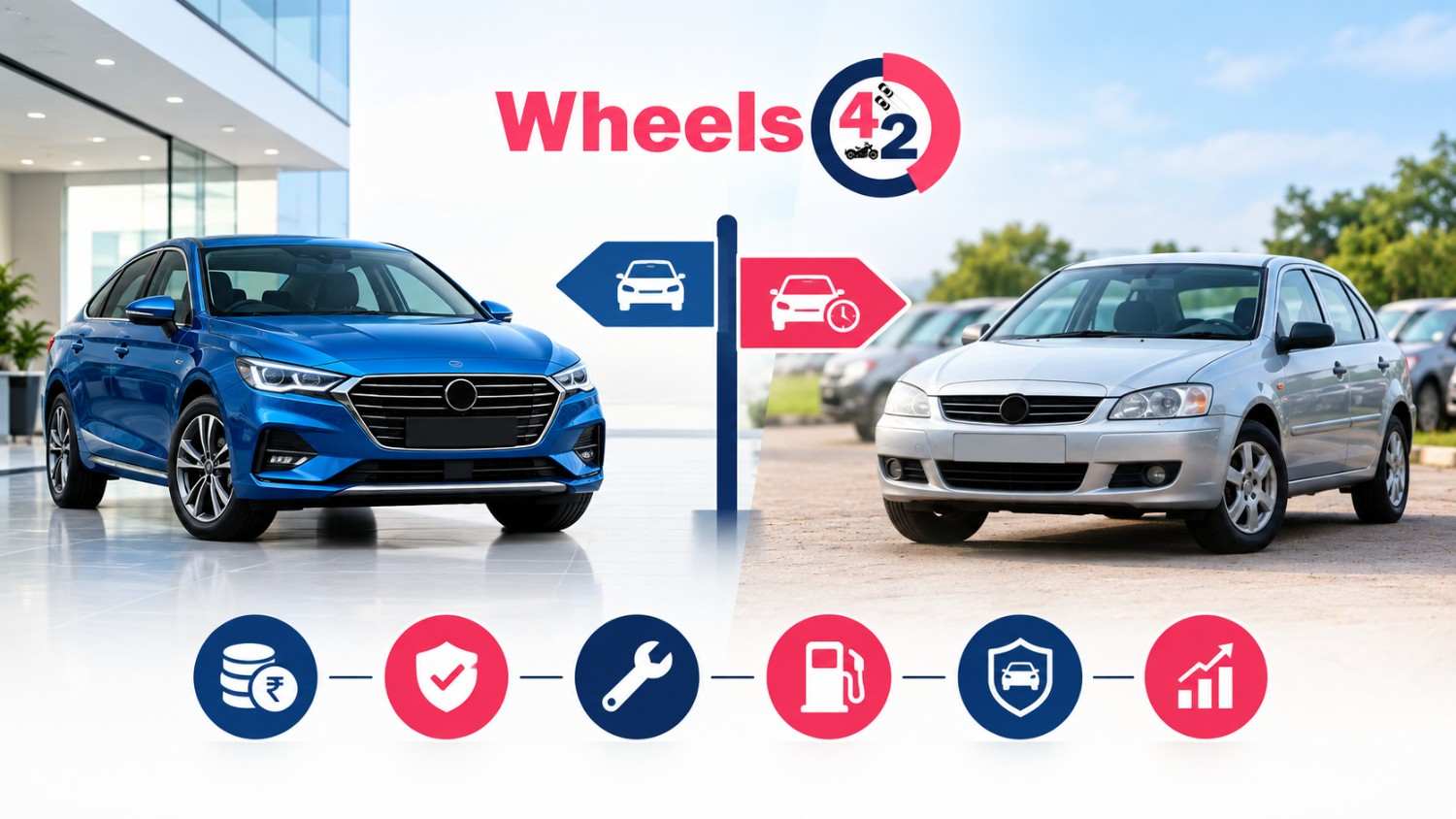
The short version: If you can comfortably afford the new car without squeezing your monthly finances, and you plan to keep it for several years, buying new can make sense. You get manufacturer warranty coverage, a known history, and the latest safety and technology on the specific model you choose. If your budget is tighter, or you want to avoid taking the steepest part of a car’s depreciation yourself, a well-inspected used car - often around two to four years old - can be the smarter buy. The important part is not to decide by instinct. Compare the total cost and the risks that come with each option.
The basic question is not “Which is cheaper?” It is “Which option gives me the better combination of cost, certainty and usefulness for the years I will own it?” That is the question this guide is built to answer.
The real cost is not the price tag
A new car and a used car at similar monthly EMIs can still cost very different amounts. Purchase price is only the first line. You also have depreciation, loan interest, insurance, maintenance, fuel and - with a used car - the chance of deferred repairs or other ownership surprises.
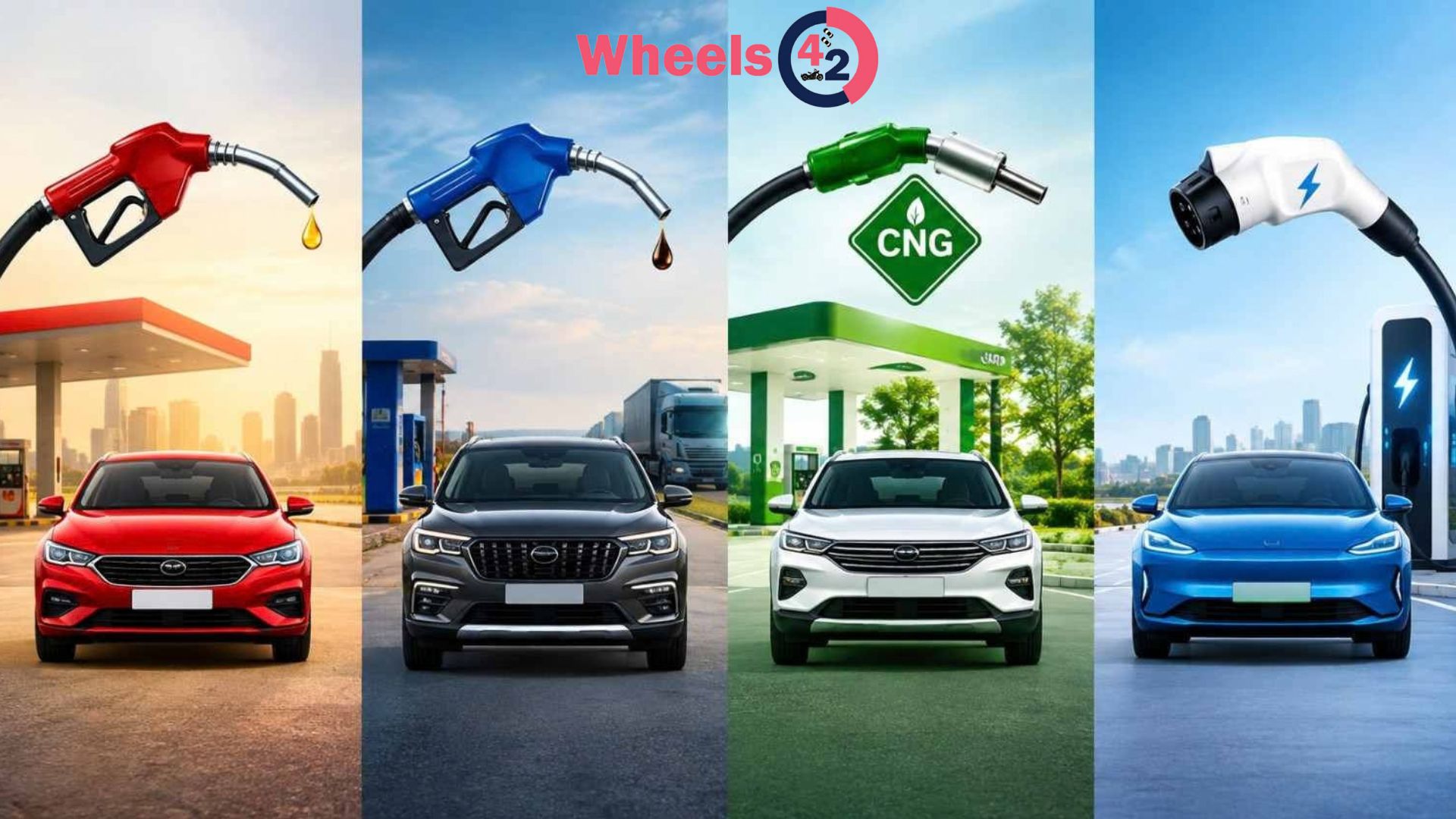
New-car depreciation is usually steepest in the early years, but the exact rate varies by model, brand, fuel type whether it's petrol, diesel, CNG or electric, condition and resale demand. That is why a generic “new cars lose X%” rule should be treated as an illustration, not a promise.
The same caution applies to finance. Used-car loans can come with higher interest rates or different down-payment requirements depending on the lender, vehicle age and borrower profile.
A simple way to compare the two
Take the same ownership period for both options and calculate the money that actually leaves your pocket.
| Cost to compare | New car | Used car |
|---|---|---|
| Purchase price | On-road price | Purchase price + transfer costs |
| Loan cost | Interest paid on your new-car loan | Interest paid on your used-car loan |
| Depreciation | Purchase price minus expected resale value | Purchase price minus expected resale value |
| Insurance | Premium based on the car and its insured value | Usually lower, but depends on vehicle and policy |
| Maintenance | Routine service + consumables | Routine service + possible age-related repairs |
| Unexpected repairs | Usually lower in the early warranty period | Potentially higher, depending on history and condition |
| Fuel | Based on your actual running | Based on your actual running |
The most useful number is your net cost of ownership: (purchase price + financing + insurance + maintenance + other ownership costs - expected resale value). Divide that by the number of years you expect to keep the car. Now you are comparing what the two cars actually cost you, not what they cost on day one.
Example: when the cheaper car is not always the cheaper choice
Imagine a new hatchback costs ₹8 lakh on-road and a similar three-year-old used car costs ₹5 lakh. The used car starts ₹3 lakh cheaper, but the gap is not the final answer.
|
|
|
|
|
|
|
|
|
|
|
|
|
|
|
|
|
|
|
|
|
|
|
|
Do not fill these numbers with guesses just to make one side win. Use the actual loan quote, insurance quote, service estimate and a realistic resale estimate for the exact cars you are comparing. An ₹8 lakh new car versus a ₹5 lakh used car is only an illustration; the result can change completely when the price gap changes.
The Wheels42 New vs Used Decision Test
Before choosing, score these five questions. They force you to look at the variables that actually change the answer.
|
|
|
|
|
|
|
|
|
|
|
|
|
|
|
|
|
|
|
|
|
|
|
|
There is no magic score. If four of the five answers lean one way, that is a strong signal. If they are split, go back to the three-year or five-year ownership calculation and use real numbers.
When buying new car makes more sense
You plan to keep the car for several years. A longer ownership period can make the initial depreciation easier to live with, while you get the benefit of starting with a new vehicle and its warranty period.
You want predictable ownership. A new car has a known history, no previous accident or modification decisions to investigate, and manufacturer warranty coverage whose duration and kilometre limit depend on the brand and model.
Safety is a high priority. Compare the actual safety performance and equipment of the cars you are considering. Newer models often have an advantage in available safety technology, but age alone does not make one car safer than another.
You need the latest technology or a specific configuration. If a feature, powertrain, ADAS package or seating configuration is important, buying new gives you more control over exactly what you get.
The used-car discount is too small. A two- or three-year-old car priced only slightly below a new equivalent may not compensate you enough for the age, remaining warranty, financing differences and potential repair risk.
When buying used makes more sense
Your budget is the main constraint. A well-priced used car can put a higher segment, better-equipped variant or more proven model within reach without forcing the EMI to dominate your monthly budget.
You want to avoid the steepest depreciation. Someone else has already absorbed the earliest depreciation, so your remaining depreciation can be gentler - although the exact amount still depends on the model and market.
You are not sure how long you will keep the car. If this is your first car or you expect your needs to change, taking on a lower purchase price can reduce the financial hit if you sell sooner than planned.
You can inspect the car properly. A clean service history, independent inspection, clear ownership paperwork and a sensible price can turn a used car into a very rational purchase.
You are considering certified pre-owned. Dealer-backed certified cars can offer an intermediate option: more reassurance than a random private sale, while still avoiding the full price of a new vehicle.
When you should not buy used
The seller refuses an independent inspection or will not let you verify the service history.
The ownership, registration, loan-closure or transfer paperwork is unclear.
The price is too close to a comparable new car to justify the extra age and uncertainty.
You do not have a financial buffer for an unexpected repair after purchase.
The car has inconsistent mileage, unexplained gaps in its history, accident concerns or signs of major modification.
You need maximum reliability because downtime would seriously affect your work or daily responsibilities.
A cheap used car is not automatically a good deal. The right used car is one where the discount is large enough, the history is trustworthy enough, and the condition is good enough to justify taking on more uncertainty than you would with a new car.
The hidden costs of buying used that people discover too late
Pending challans and ownership records. Verify the registration, ownership and outstanding obligations before the transfer is completed. Do not assume that a seller saying “everything is clear” is enough.
Loan closure. If the car was financed, make sure the previous loan has been properly closed and the required bank/NBFC documentation for removing the hypothecation is available.
Transfer costs and paperwork. Budget for the ownership-transfer process and check what documents and fees apply in your state.
Deferred maintenance. A car can drive normally while quietly approaching an expensive service milestone. Ask about tyres, brakes, clutch, battery, suspension and scheduled major maintenance items.
Tyres and wear items. A low asking price becomes less attractive when you discover that four tyres, a battery and a brake job are due immediately.
Age versus mileage: look at both
Do not judge a used car only by its registration year. A five-year-old car with 40,000 km may be an attractive proposition, but mileage alone does not tell the full story. How those kilometres were accumulated, how the car was maintained, where it was driven and whether it has been accident-damaged all matter.
Ask for the service history, not just the odometer reading. A consistent maintenance trail is usually more informative than a seller simply telling you that the car was “driven very carefully.”
How big should the used-car discount be?
There is no universal percentage because the right discount depends on the exact model, age, kilometres, condition, remaining warranty, ownership history and market demand. But the principle is simple:
The larger the age and uncertainty, the more meaningful the price advantage should be.
A three-year-old car that is only slightly cheaper than a comparable new car may not make sense. A clean, well-maintained three-year-old car at a substantial discount can be a very different proposition.
Your ownership period can change the answer
|
|
|
|
|
|
|
|
|
|
|
|
This is why “always buy new” or “always buy used” is poor advice. The same car can be a sensible choice for one ownership plan and a poor choice for another.
Use this before you decide
Fill this out for both the new and used car you are considering. Use actual quotes wherever possible.
|
|
|
|
|
|
|
|
|
|
|
|
|
|
|
|
|
|
|
|
|
|
|
|
|
|
|
|
|
|
|
|
|
|
|
|
|
|
|
|
|
|
|
|
|
|
|
|
Then divide the estimated net ownership cost by the number of years you expect to keep the car. That annual figure gives you a much clearer comparison than the EMI alone.
If you choose used, the inspection is non-negotiable
The biggest risk in a used-car purchase is not that the car is old. It is that you do not know what you are buying. Get an independent inspection before paying a non-refundable amount wherever possible.
Verify the VIN/chassis number and registration details.
Review the service history and previous ownership records.
Look for accident repair, repainting, panel mismatch and structural damage.
Inspect tyres, brakes, suspension, battery and other wear items.
Check for warning lights and test the AC, infotainment, windows, central locking and other electrical functions.
Confirm there are no unresolved finance or transfer issues.
Take a proper test drive in traffic, at low speed and at highway speed where safe to do so.
So, which one should you buy?
Buy new when the price fits comfortably into your finances, you want predictable ownership, you plan to keep the car for several years, or the used alternative does not offer a meaningful enough discount.
Buy used when the budget advantage is substantial, the car has a trustworthy history, you can get it independently inspected, and you are comfortable taking on some additional uncertainty in exchange for a lower purchase price and potentially slower depreciation from this point forward.
And do not ignore the middle ground. A good certified or carefully inspected one- to three-year-old car can sit between the two extremes, especially when it still has meaningful warranty coverage and the price gap versus new is large enough.
What to do next
Start with your real budget, not the maximum EMI a lender says you qualify for. Then compare the new and used options using the ownership-cost worksheet, apply the Wheels42 New vs Used Decision Test, and inspect the exact car before you commit.
If the new-car math wins, your next step is to choose the right model and variant, compare the on-road price, calculate the EMI and negotiate the deal.
If the used-car math wins, spend as much attention on history, inspection and transfer paperwork as you do on the asking price.
There is no single right answer. There is your budget, your ownership plan, your tolerance for risk - and the numbers that connect them