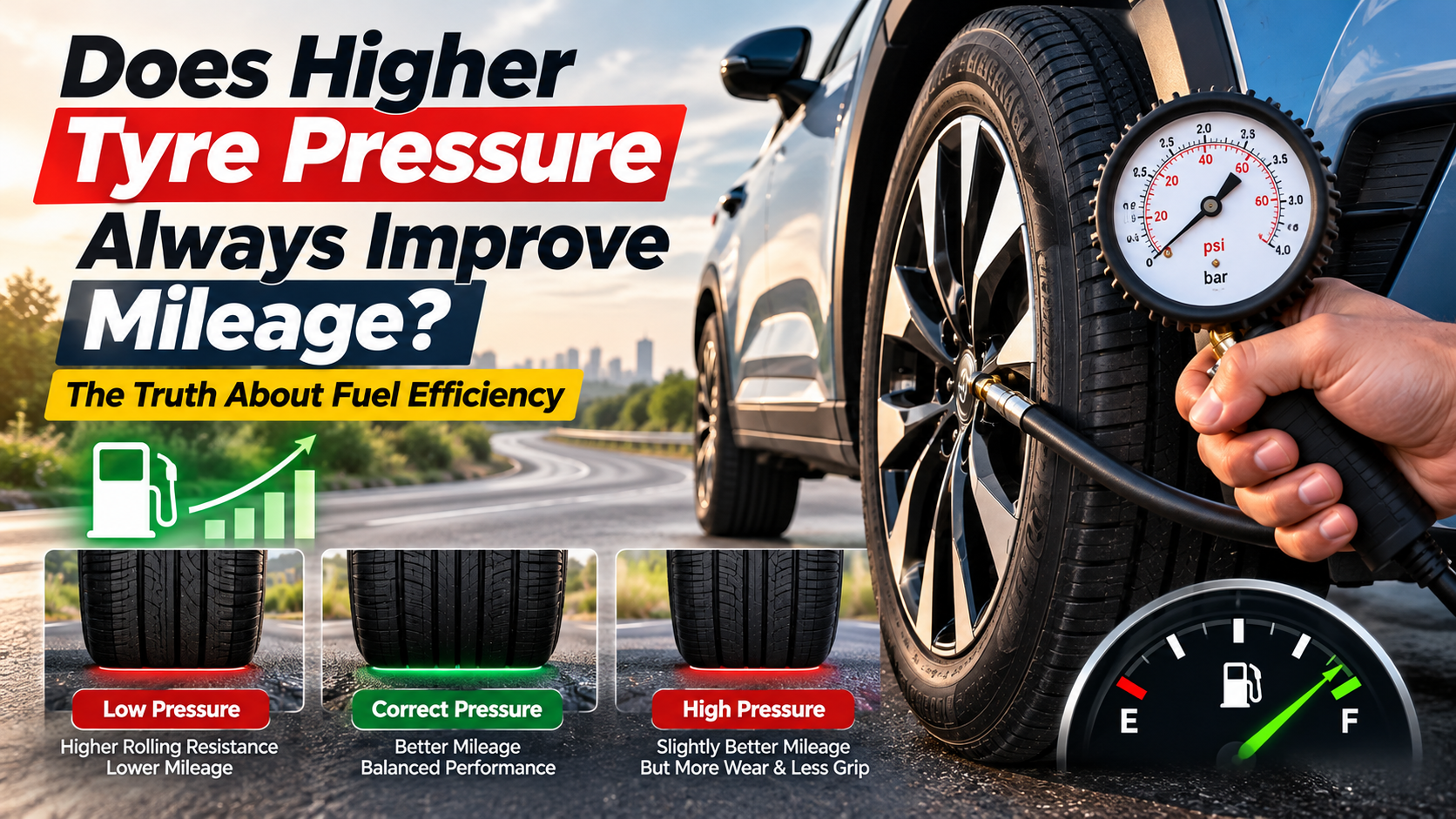
Higher tyre pressure is often associated with better fuel efficiency because properly inflated tyres reduce rolling resistance. However, increasing tyre pressure beyond the vehicle manufacturer's recommendation does not automatically improve mileage. In fact, overinflated tyres can reduce grip, affect braking performance, increase uneven tyre wear and make the ride less comfortable.
The right approach is to maintain the recommended cold tyre pressure specified by the vehicle manufacturer. This helps balance fuel economy, handling, braking, comfort and tyre life.
For Indian drivers dealing with busy city traffic, hot weather, highways and changing road conditions, tyre pressure is an important part of routine vehicle maintenance. Checking it regularly can help avoid unnecessary fuel consumption without compromising safety.
New Car Booking Process Explained Step by Step
1. How Does Tyre Pressure Affect Mileage?
Tyres are the only parts of a car that remain in direct contact with the road. As they rotate, they deform slightly under the vehicle's weight. This deformation creates resistance, known as rolling resistance.
When tyre pressure is too low, the tyre flexes more than intended. This increases energy loss, generates additional heat and forces the engine to use more energy to keep the vehicle moving. As a result, fuel consumption can increase.
When the tyres are inflated to the manufacturer's recommended pressure, they maintain their intended shape and operate more efficiently. This helps reduce unnecessary rolling resistance while preserving the grip and handling characteristics the vehicle was designed to deliver.
However, increasing pressure beyond the recommended level does not guarantee a meaningful improvement. Any reduction in rolling resistance must be considered alongside tyre grip, braking performance, ride comfort and wear.
The important point: Correct inflation can help improve mileage when tyres are underinflated. Deliberately overinflating them is not a reliable fuel-saving strategy.
2. Does Higher Tyre Pressure Always Improve Fuel Efficiency?
No. Higher pressure can reduce rolling resistance in some circumstances, but there is a limit to its usefulness.
Consider three situations:
-
Underinflated tyres: These can increase rolling resistance and fuel consumption. Correcting the pressure may improve mileage.
-
Correctly inflated tyres: The car is operating within its recommended setup. Raising the pressure further may offer little benefit and can compromise other performance characteristics.
-
Overinflated tyres: The contact pattern and tyre behaviour can change, potentially reducing grip and comfort and causing uneven tread wear.
There is no universal tyre pressure that maximises mileage for every car. The correct figure depends on the vehicle, tyre size, load and driving conditions.
For example, a small hatchback cars, a compact SUV cars and a fully loaded seven-seater may have different recommended pressures. Even different variants of the same model can use different tyre sizes and pressure specifications.
Drivers should therefore avoid copying the pressure used by another car simply because it appears to deliver better mileage.
3. What Happens When Tyres Are Overinflated?
Overinflation means the tyre pressure exceeds the vehicle manufacturer's recommended setting for the relevant load and conditions. It is not the same as the maximum pressure printed on the tyre sidewall.
Excessively high pressure can create several problems.

Reduced grip and braking confidence
Tyres are designed to work within a specified pressure range. Overinflation can change the tyre's contact patch and how it responds to road surfaces. This may reduce grip in some conditions, particularly on uneven or slippery roads.
Braking depends on several factors, including tyre condition, road surface, temperature, vehicle speed and the braking system. It is therefore not accurate to assume that higher pressure always causes a specific increase in stopping distance, but deliberately exceeding the recommended pressure can compromise predictable handling.
Uneven tyre wear
Incorrect pressure can change how the tread contacts the road. Excessive inflation can contribute to greater wear around the centre of the tread, while underinflation commonly causes increased wear at the shoulders.
Actual wear patterns can also be influenced by wheel alignment, suspension condition, tyre rotation and driving habits. If the tyres are wearing unevenly, pressure should be checked along with these other factors.
A harsher ride
Overinflated tyres can feel firmer because they deform less over bumps and road imperfections. On India's uneven urban streets, potholes and rough patches, this can reduce comfort for occupants.
The firmer response can also make the vehicle feel less settled on certain road surfaces.
Greater vulnerability on rough roads
A tyre's ability to absorb road impacts depends on its construction, pressure, load and the obstacle involved. Running the wrong pressure can affect how it handles sharp bumps and potholes.
For Indian driving conditions, it is better to follow the manufacturer's guidance than to increase pressure in the hope of saving fuel.
4. Tyre Pressure vs Mileage: A Practical Comparison
|
Tyre pressure condition
|
Effect on mileage
|
Tyre wear and comfort
|
Safety considerations
|
|
Below recommended pressure
|
Can reduce mileage due to higher rolling resistance
|
More heat, possible shoulder wear and a softer feel
|
Can affect handling and increase tyre damage risk
|
|
Manufacturer-recommended pressure
|
Helps balance fuel efficiency and performance
|
More even wear and intended ride comfort
|
Designed to support predictable handling and braking
|
|
Slightly above recommended pressure
|
May reduce rolling resistance in some conditions, but gains are not guaranteed
|
Firmer ride; wear pattern may change
|
Can alter grip and handling
|
|
Excessively high pressure
|
Little dependable additional benefit
|
Possible centre wear and reduced comfort
|
May compromise grip and impact performance
|
5. What Is the Correct Tyre Pressure for Your Car?
The correct tyre pressure is the value specified by the vehicle manufacturer for your particular car, tyre size and load condition.
You can normally find the recommended pressure in one or more of these places:
-
A sticker on the driver's door frame or door pillar.
-
The owner's manual.
-
The fuel-filler flap, where the manufacturer provides the information.
-
The manufacturer's official service documentation.
Do not use the maximum pressure printed on the tyre sidewall as your everyday target. That marking relates to the tyre's specified limit and is not necessarily the recommended operating pressure for your vehicle.
Some cars specify different pressures for the front and rear tyres. Others provide separate recommendations for normal driving and a fully loaded vehicle. Follow the correct entry for your circumstances.
If your car regularly carries several passengers or luggage, check the manufacturer's loaded-vehicle recommendation rather than guessing how much extra pressure to add.
How to Compare Car Variants: Base vs Mid vs Top Trim
6. How to Check Tyre Pressure Correctly
Checking tyre pressure takes only a few minutes, but the method matters.
Step 1: Check when the tyres are cold.
Measure the pressure before driving or after the vehicle has been parked for several hours. Driving heats the tyres and increases the pressure reading.
Step 2: Use a reliable gauge.
A digital or good-quality manual pressure gauge can provide a more dependable reading than judging a tyre by appearance. If possible, use the same gauge for routine checks.
Step 3: Check every tyre.
Measure all four road tyres, not just the front pair. Check the spare tyre as well if your vehicle has one, following the manufacturer's instructions.
Step 4: Adjust to the specified figure.
Add air if the pressure is low or release air if it is above the correct cold setting. Follow the vehicle's recommended pressure for the current load.
Step 5: Recheck the reading.
After adjusting the pressure, measure it again to make sure it is correct. Replace the valve caps and check for any obvious damage or persistent pressure loss.
A tyre-pressure monitoring system, if fitted, is useful, but drivers should still follow the owner's manual for pressure checks and warnings. Some systems may not provide a precise live pressure reading for every tyre.
7. How Often Should You Check Tyre Pressure in India?
For regular use, checking tyre pressure at least once a month and before long journeys is a sensible habit. Check it sooner if the vehicle has been driven over a pothole, a tyre looks low or the car displays a pressure warning.
India's temperature variations can affect tyre pressure. Air pressure generally rises as the tyre warms up and falls as it cools. Seasonal temperature changes can also affect cold readings.
Do not release air from a hot tyre simply to bring its reading back to the cold-pressure figure. Let the tyre cool and check it again according to the manufacturer's guidance.
If one tyre repeatedly loses pressure, do not keep topping it up without investigating the cause. A puncture, damaged valve, wheel leak or damaged rim could be responsible and may require professional inspection.
8. Other Ways to Improve Car Mileage
Tyre pressure is only one part of fuel efficiency. Drivers can also improve mileage through everyday maintenance and driving habits.
-
Maintain steady speeds: Frequent hard acceleration and sudden braking can increase fuel consumption.
-
Avoid unnecessary idling: Switch off the engine during extended stops when it is safe and appropriate to do so.
-
Remove unnecessary weight: Carrying heavy items that are not needed adds to the vehicle's workload.
-
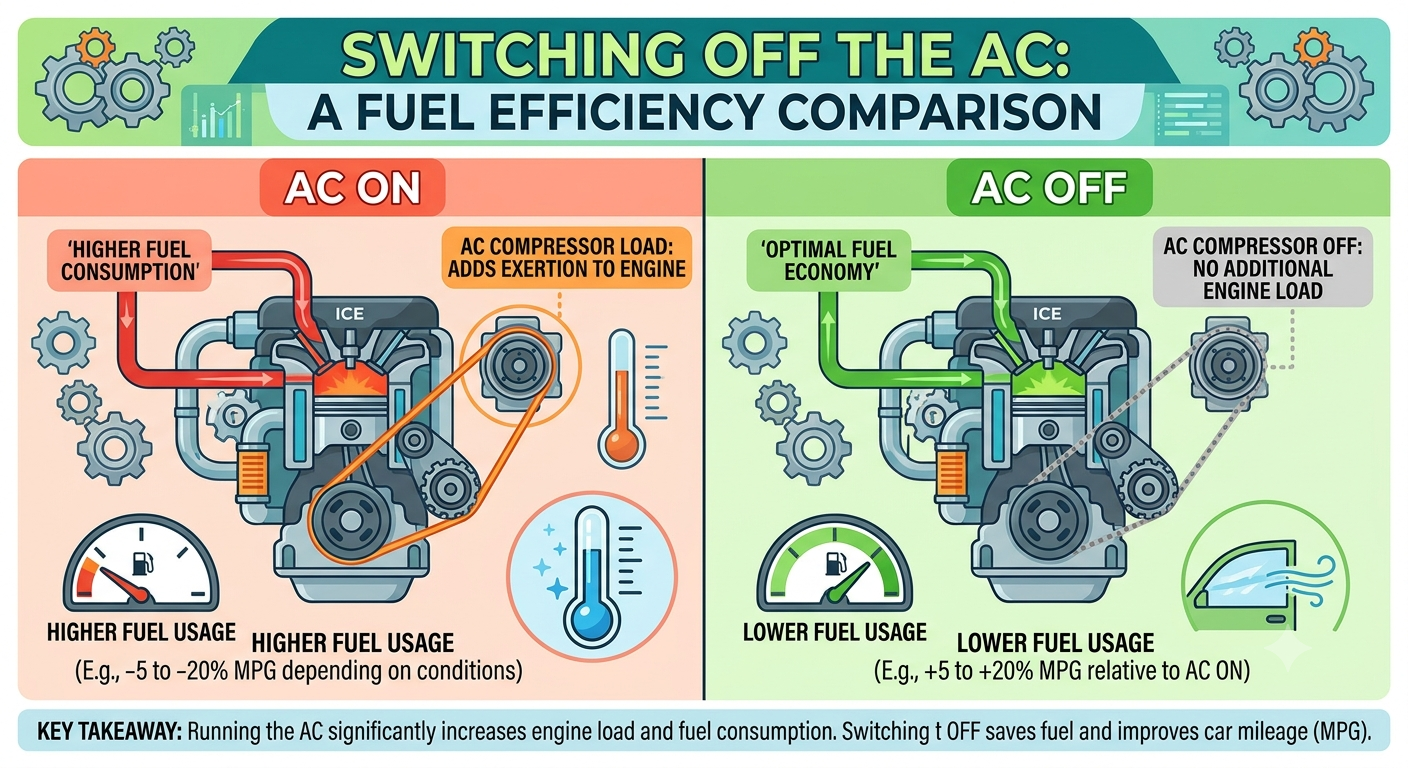
Use air conditioning sensibly: The impact varies with weather, speed and the vehicle's climate-control system. Comfort and visibility should never be compromised.
-
Maintain wheel alignment: Incorrect alignment can increase tyre wear and rolling resistance.
-
Service the vehicle on schedule: Proper engine maintenance, suitable lubricants and healthy filters help the vehicle operate as intended.
-
Check tyre condition: Worn, damaged or unsuitable tyres can affect handling, comfort and efficiency.
The biggest improvements often come from combining sensible driving with regular maintenance instead of relying on one adjustment.

9. Common Myths About Tyre Pressure and Mileage
Myth 1: Higher pressure always means better mileage.
False. Correcting underinflation can improve efficiency, but exceeding the recommended pressure does not guarantee further savings.
Myth 2: The tyre sidewall pressure is the ideal setting.
False. Use the vehicle manufacturer's recommended cold pressure for the tyre and load.
Myth 3: A tyre that looks fine must have the right pressure.
False. A tyre can be underinflated without looking obviously flat. Use a pressure gauge.
Myth 4: Tyre pressure only matters before highway trips.
False. Correct pressure matters during everyday city driving as well as long journeys.
Myth 5: You should release air when tyres get hot.
False. Pressure naturally rises as tyres warm up. Check the cold setting rather than adjusting a hot tyre to the cold-pressure specification.
Conclusion: Should You Increase Tyre Pressure to Save Fuel?
Higher tyre pressure does not always improve mileage. Maintaining the manufacturer's recommended pressure is the best starting point for balancing fuel efficiency, handling, braking, comfort and tyre life.
If your tyres are underinflated, correcting them can reduce rolling resistance and help your car use fuel more efficiently. But deliberately overinflating them for a possible mileage gain is not worth the potential trade-offs in grip, wear and ride quality.
For Indian motorists, the simplest approach is to check cold tyre pressure regularly, follow the vehicle's load-specific recommendations and keep tyres in good condition.

 Khyati Sharma 2026-10-13