

2026-09-20
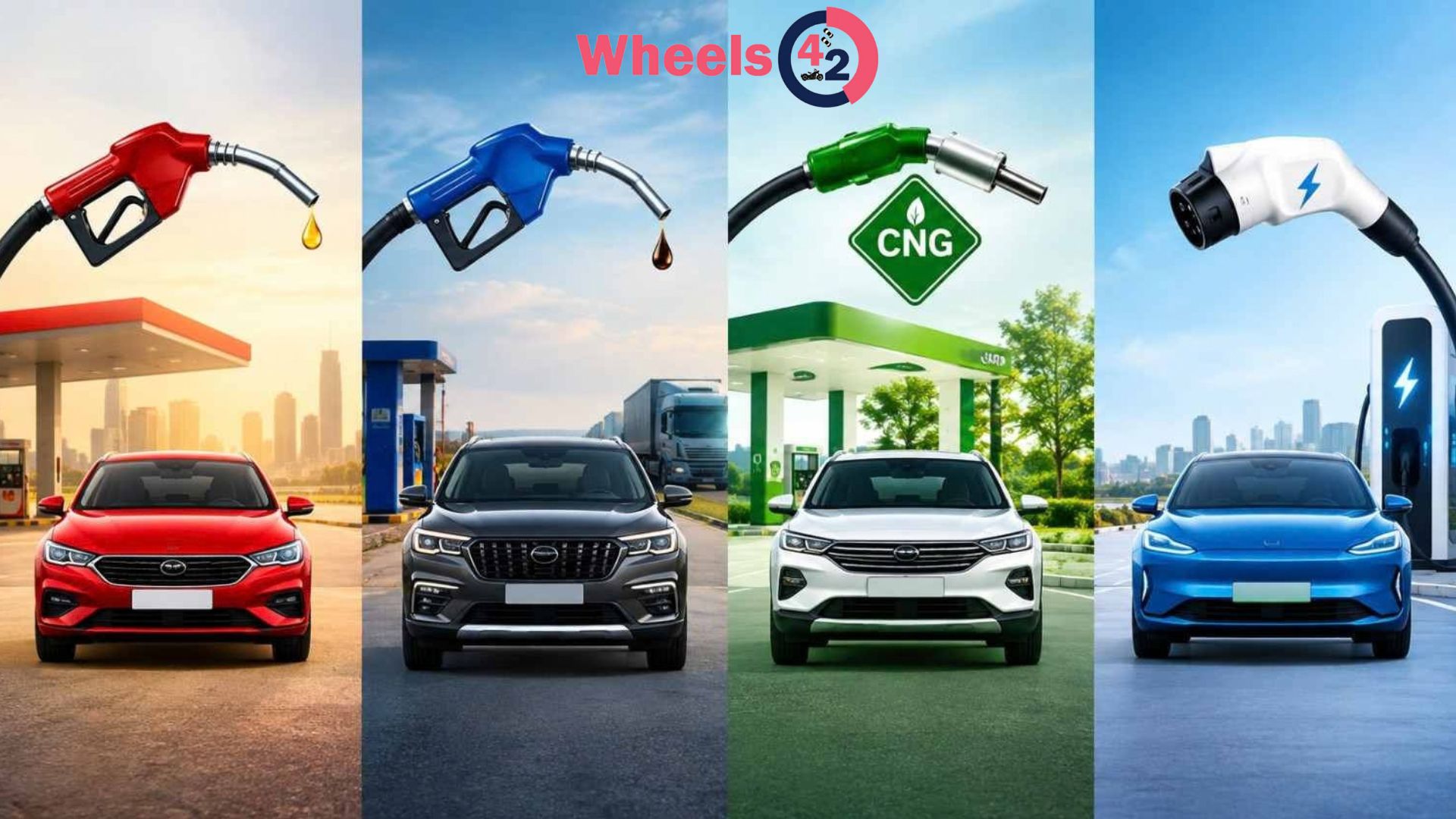
The short version: if you drive under 1,000 km a month, mostly in the city, petrol usually wins, it's simple and the upfront cost stays lowest. Cross that regularly, and diesel or CNG start earning back their extra cost. Electric makes sense once home charging is realistic for you and most of your driving is predictable daily use. The number that actually decides this for you is your breakeven point, how many kilometres you need to drive before the cheaper-to-run option pays back what it cost extra upfront. Here's how to work that out, plus what the spec sheet won't tell you about each fuel type.
Here's the thing nobody explains simply: comparing petrol, diesel, CNG and electric on price alone tells you almost nothing. What you actually want is the total cost of ownership by fuel type, not the number on the brochure, and that comes down to how many kilometres you drive. That's what decides whether the cheaper-to-run option ever earns back its higher price tag.
The formula is short.
Breakeven distance (km) = Extra amount you pay upfront ÷ Amount you save per km on fuel
Once you know that number, compare it to how much you'll actually drive before you sell or trade the car in. If you won't cross it, the expensive-to-buy option probably isn't worth it for you, however good its running cost looks on the brochure.
Here's roughly how that plays out for each pair, using illustrative numbers, plug in your own before you decide anything.
| Comparison | Typical extra upfront cost | Typical saving per km | Rough breakeven distance |
|---|---|---|---|
| Diesel vs petrol | Roughly ₹1 to 1.5 lakh | Roughly ₹1.5 to 2.5 per km | 50,000 to 70,000 km |
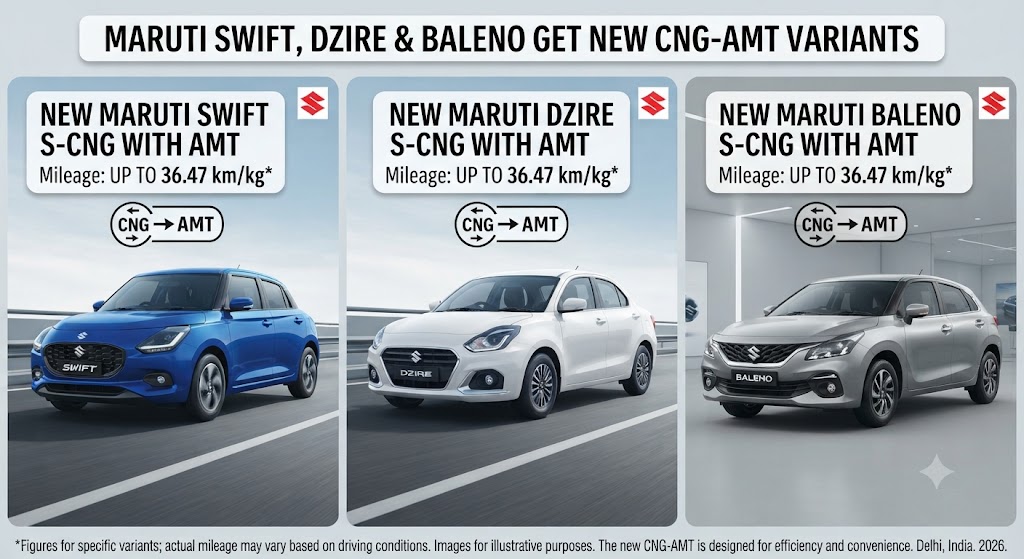
| CNG vs petrol | Roughly ₹90,000 to 1.1 lakh | Roughly ₹3 to 4 per km | 25,000 to 35,000 km |
| Electric vs petrol | Roughly ₹3 to 6 lakh, depending on segment | Roughly ₹5 to 7 per km on home charging | Often 60,000 km or more |
Is diesel cheaper to run than petrol? Almost always, per kilometre. Whether it's cheaper overall depends entirely on whether you clear that breakeven number before you sell the car. The same logic applies to CNG and electric, just with different numbers.
Cost is half the story. The rest is what each fuel type is actually like to live with day to day.
Diesel engines still make more torque low in the rev range than most petrol engines of the same size, which is why they feel stronger on highway overtakes or with a full car and luggage. That advantage shrinks fast in city traffic, where you're rarely near the torque band anyway, so a diesel bought purely for city driving is often wasted potential.
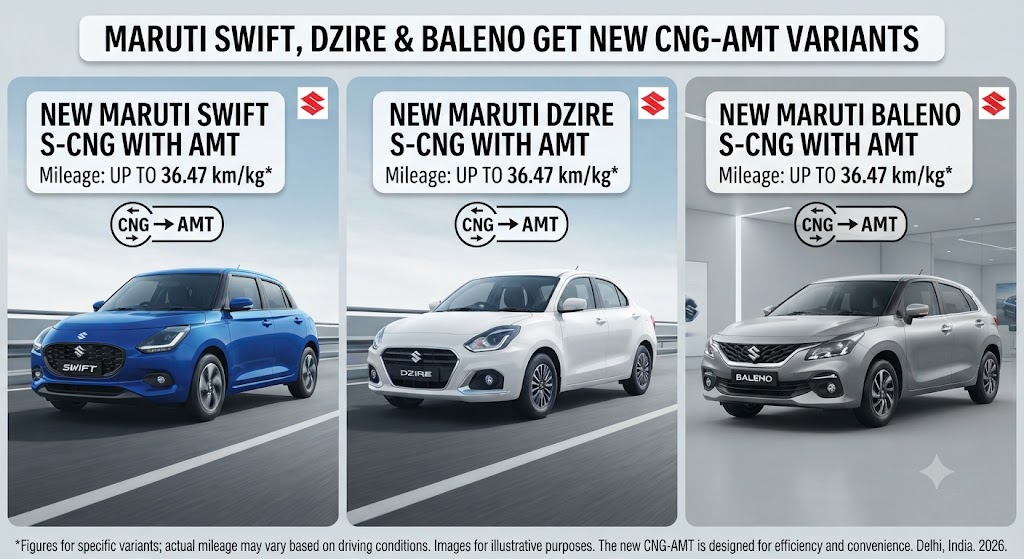
CNG solves your running cost problem but creates a few smaller ones. Factory-fitted kits cost a bit more than aftermarket ones but are genuinely safer, and even a factory kit shaves off some power compared to running on pure petrol. CNG car maintenance cost runs a little higher than petrol too, since the cylinder needs periodic testing and certification on top of your regular service. The cylinder also eats into your boot space, so if you're often loading luggage for four, test that before you commit, not after.
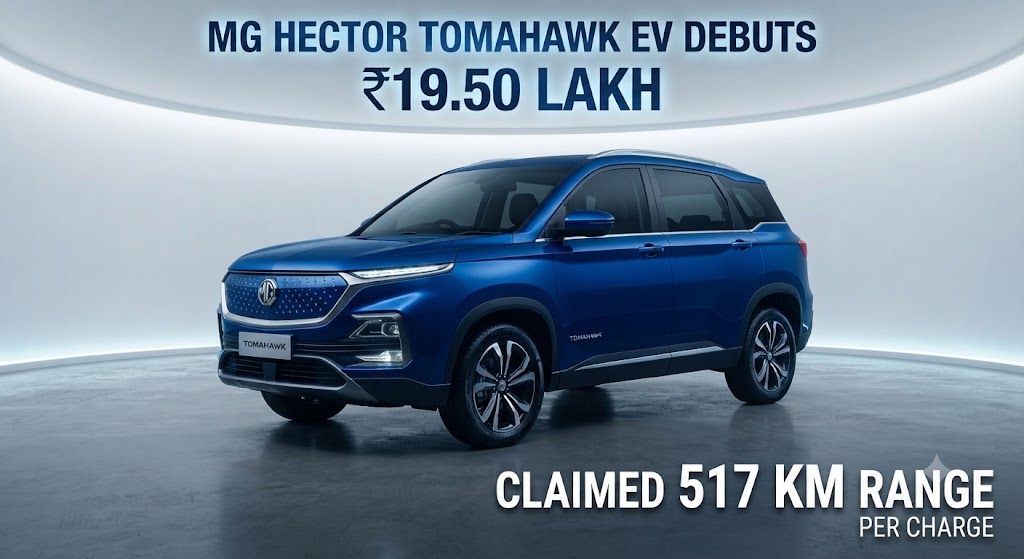
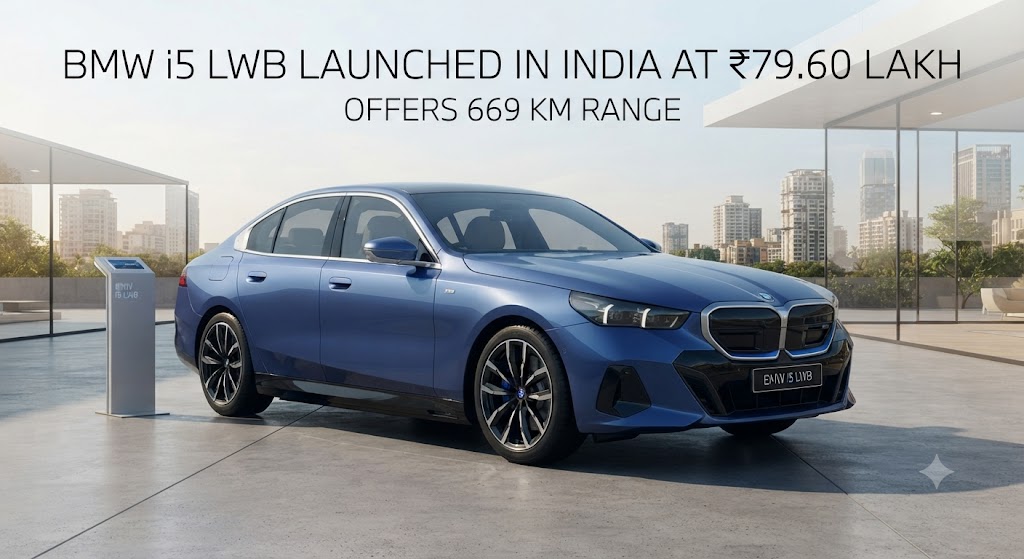
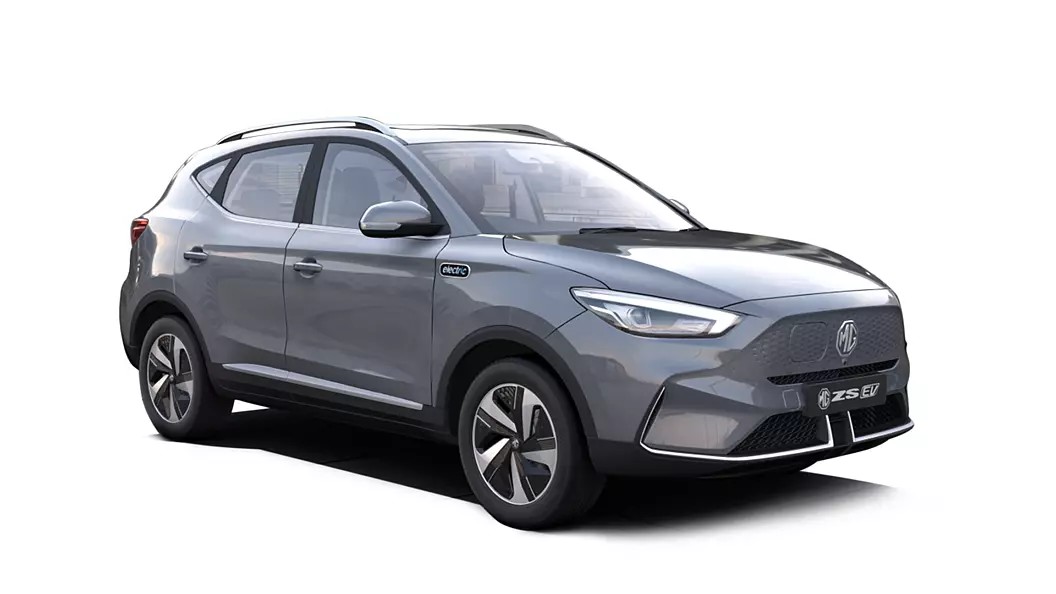
Electric range anxiety is real, but it's mostly a charging problem, not a car problem. If you can charge overnight at home or at work, most range anxiety disappears, because you start every day full instead of hunting for a station. It only becomes a genuine issue on long, unplanned trips where fast chargers are still thin on the ground. And EV battery life matters more than people realise. Most manufacturers guarantee a chunk of capacity for around eight years, but replacement cost once you're past that window is a real number worth knowing before you buy, not after.
Since April 2026, every petrol pump in India sells E20, ordinary petrol blended with 20% ethanol, whether your car was built for it or not. Automakers say the mileage hit is small, somewhere around 2 to 6%, worse in older engines than newer ones, and not a safety risk. Plenty of owners of pre-2023 cars have reported more than that in practice, so if you're buying an older petrol car, budget for slightly higher fuel costs than the brochure numbers ever promised.
Diesel owners in Delhi-NCR should know the rules here have gone back and forth for years now. Vehicles past 10 years for diesel, or 15 years for petrol, have faced deregistration and fuel-refusal orders that got enforced, paused after public pushback, and challenged in court more than once. If you're buying in that region, check the current enforcement status rather than assuming your car is safe from it for good.
Most states also charge a green tax when you renew registration on an older vehicle, one more cost that quietly builds up the longer you keep a petrol or diesel car around. Meanwhile, EV public charging infrastructure keeps expanding but stays patchy outside the bigger cities, and strong hybrid vs EV is becoming a real question in its own right, for buyers who want lower running costs without fully committing to home charging just yet, a strong hybrid needs no charger at all.
Everything above assumes a new car, and buying used shifts the math in a few ways. The upfront gap between petrol and diesel or CNG usually narrows, so your breakeven distance comes down, but you also have fewer years and kilometres left to reach it. Age-based rules hit older cars hardest: under the 10-year diesel rule, a six-year-old car has only about four years before it hits that limit in Delhi-NCR. E20 mileage loss and, for EVs, battery health matter more too. If you haven't yet settled whether a new or used car makes more sense for your budget, sort that out first, because it changes which fuel type is worth paying extra for.
If you're a low-mileage city driver, petrol keeps things simple and cheap to buy, and honestly, for a lot of people that's the right call and nothing more needs to be said about it. If you drive long distances often, diesel's torque and running cost start making real sense. If your driving is heavy and mostly local, daily long commutes or a lot of stop-start traffic, CNG usually pays back the fastest of the three. And if home charging is genuinely available to you, electric is worth serious thought once you've run the breakeven math on your own numbers.
Whichever way you lean, the rest of the new car buying process, setting your budget, comparing variants, the paperwork, stays exactly the same. Get your realistic budget sorted first either way. Fuel type also changes your ongoing maintenance and service costs more than most first-time buyers expect, and if electric is even a little tempting, our complete EV buying guide covers charging, range and everything else to check before you commit