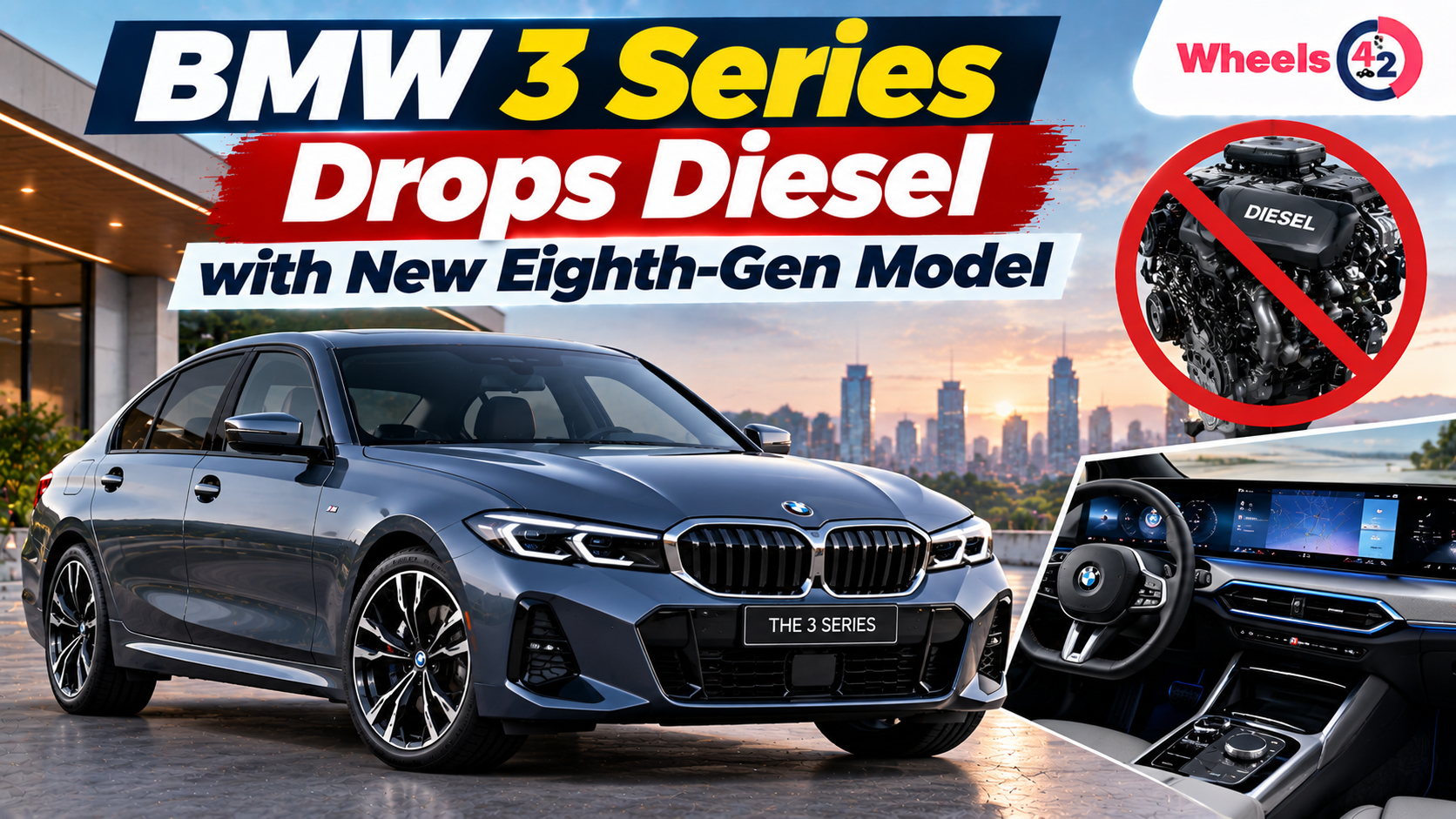
BMW car has taken a major step in the evolution of its iconic 3 Series with the launch of the eighth-generation model, and one of the biggest changes is the decision to drop diesel power from the new generation.
The new 3 Series, internally known as the G50, moves into BMW's Neue Klasse design and technology era. It will initially be offered with petrol engines featuring 48V mild-hybrid technology, while the fully electric BMW i3 sits alongside it as part of the wider 3 Series family. A plug-in hybrid version is also planned for the coming year.
The move marks a significant change for a nameplate that has traditionally been closely associated with diesel-powered variants in several international markets.
BMW 3 Series Diesel Era Comes to an End
The eighth-generation BMW 3 Series becomes the first generation since the early history of the nameplate to launch without a diesel engine. BMW has confirmed that the new G50 range will focus on petrol-powered models, electrification and the fully electric i3 rather than offering a diesel option.
The decision reflects changing customer demand in major markets and BMW's broader strategy of offering different powertrain technologies rather than relying on one fuel type.
Importantly, BMW has not announced a complete withdrawal from diesel technology across its entire portfolio. The company continues to offer diesel engines in other models where demand remains strong.
New BMW 3 Series Gets Petrol Mild-Hybrid Engines
At launch, the combustion-powered 3 Series will be available with four-cylinder petrol engines and a six-cylinder petrol engine at the top of the range.
The entry-level BMW 318 develops 156 hp and 250 Nm, while the BMW 320 produces 211 hp and 330 Nm. Both use a 2.0-litre four-cylinder turbocharged petrol engine combined with a 48V mild-hybrid system.
The range-topping BMW M350 xDrive gets a 3.0-litre turbocharged inline-six with 48V mild-hybrid assistance. BMW quotes 443 hp and 580 Nm, with power sent to all four wheels through the xDrive system.
The M350 xDrive can accelerate from 0-100 km/h in approximately 4.1 seconds, while its electronically limited top speed is 250 km/h.
Plug-In Hybrid Version Coming Later
BMW's strategy does not end with petrol and fully electric models.
The company has confirmed that a plug-in hybrid powertrain will join the eighth-generation 3 Series family in the coming year. This gives customers another option between a conventional petrol model and the fully electric i3.
The move is significant because plug-in hybrids can provide electric driving for shorter journeys while retaining a combustion engine for longer trips.
For buyers who are not yet ready to move completely to an EV, a plug-in hybrid could therefore become an important part of the new 3 Series range.
BMW i3 Becomes Part of the 3 Series Family
One of the most interesting aspects of the new generation is the relationship between the petrol-powered 3 Series and the electric i3.
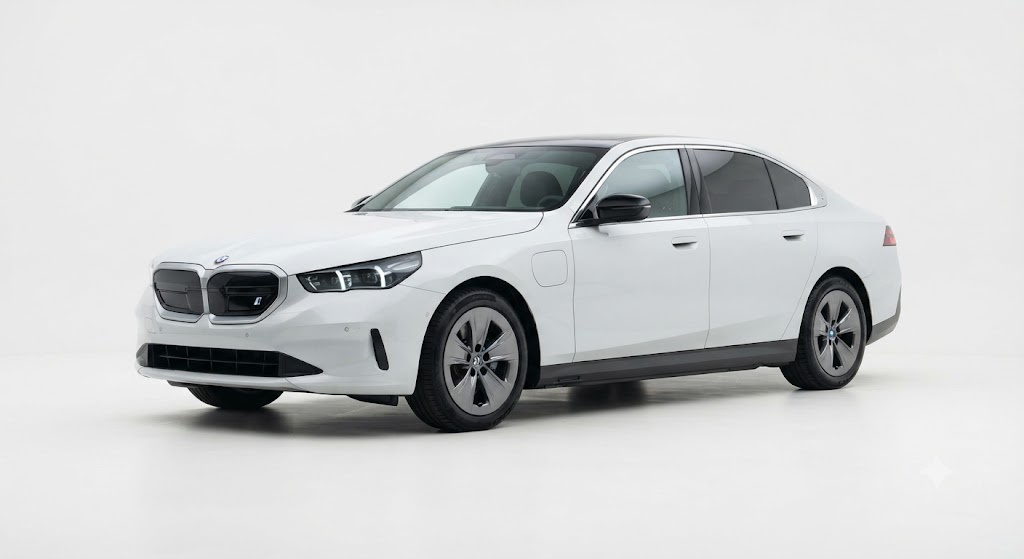
The new BMW i3 uses the Neue Klasse architecture and shares the broader design language and digital philosophy of the new 3 Series. BMW says the electric i3 is the first fully electric BMW 3 Series built around the Neue Klasse approach.
The i3 50 xDrive produces 469 hp, while BMW claims a WLTP range of up to 912 km. The model also supports charging at up to 400 kW, depending on configuration and market.
This effectively gives BMW customers two different approaches to the new 3 Series formula: petrol-powered performance or fully electric driving.
New Neue Klasse-Inspired Design
The eighth-generation 3 Series receives a major exterior redesign.
BMW has moved away from the styling of the outgoing G20 and brought the sedan cars closer to the visual identity introduced by its latest Neue Klasse models.
The new car features a more streamlined front end, redesigned lighting elements, flush-fitting door handles and a wider-looking stance. The overall silhouette still retains the traditional three-box sedan proportions that have defined the 3 Series for decades.
The new design is therefore not simply a facelift. It represents a major generational change for BMW's core sedan.
Interior Gets a Complete Technology Overhaul
The cabin has also been redesigned from the ground up.
One of the biggest changes is BMW's new Panoramic iDrive interface. The system combines the panoramic display arrangement with a large central touchscreen and BMW's latest operating system.
The central display measures 17.9 inches, while the dashboard also incorporates BMW Panoramic Vision technology. A 3D Head-Up Display is available depending on specification.
The new 3 Series also introduces a significantly simplified dashboard layout compared with the outgoing model.
BMW is moving towards a more screen-focused interface, reducing the number of traditional physical controls.

More Driver Assistance Technology
The new 3 Series also gains a more advanced suite of driver-assistance technologies.
BMW says the car can be equipped with SAE Level 2 driving assistance, including hands-free highway assistance in markets where the relevant systems are approved.
Additional automated driving functions are also planned for the future as BMW expands the technology across its Neue Klasse-based models.
This represents another major difference between the new G50 and the outgoing generation.
New 3 Series Is Larger Than Before
The new BMW 3 Series has also grown in size.
It measures approximately 4,765 mm in length, 1,850 mm in width and 1,455 mm in height, while the wheelbase has increased to around 2,860 mm.
The longer wheelbase should help BMW provide additional cabin space while also contributing to high-speed stability.
Boot capacity is reported at 450 litres, keeping the new sedan practical enough for everyday family and business use.
What Does the Diesel Exit Mean for Buyers?
The removal of diesel is likely to be one of the most discussed aspects of the new 3 Series.
Diesel engines traditionally offered strong low-end torque and excellent highway efficiency, making them particularly popular with buyers who covered high annual kilometres.
BMW is now replacing that traditional formula with a combination of 48V mild-hybrid petrol engines, plug-in hybrid technology and fully electric powertrains.
For urban users, the petrol mild-hybrid versions could provide a smoother and more modern ownership experience. For buyers seeking maximum efficiency and zero tailpipe emissions, the i3 provides the electric alternative.
The upcoming plug-in hybrid should appeal to customers who want the ability to drive on electric power for shorter trips without giving up the flexibility of a combustion engine.
Will the New BMW 3 Series Come to India?
The new eighth-generation 3 Series is expected to reach global markets from 2027, but BMW has not yet confirmed the exact Indian launch timeline for the G50.
India currently receives the 3 Series with a range that has included petrol and diesel powertrains, so the removal of diesel from the new generation could have a direct impact on the future Indian line-up.
BMW's final India specifications, variants and powertrain strategy will need to be confirmed closer to the local launch.
Production and Launch Timeline
Production of the combustion-powered G50 3 Series is scheduled to begin at BMW's Dingolfing plant in Germany in November 2026. The electric i3 is being produced at BMW's Munich facility.
Global deliveries of the new-generation 3 Series are expected to begin around the turn of 2026/2027, depending on market.
Final Verdict
The new BMW 3 Series represents a major turning point for one of BMW's most important models.
The biggest headline is undoubtedly the end of diesel power, but the changes go much further. The eighth-generation model introduces Neue Klasse-inspired styling, a completely redesigned interior, advanced digital technology, 48V mild-hybrid petrol engines, a future plug-in hybrid and the fully electric BMW i3.
For traditional BMW fans, the absence of a diesel 3 Series may take some getting used to. However, the new generation shows where the company sees the premium sedan market heading: petrol electrification for performance and flexibility, plug-in hybrid technology for transition buyers, and full electrification for customers ready to make the switch.
The new G50 therefore isn't just another 3 Series update—it is the beginning of a substantially different chapter for BMW's iconic sports sedan.

 Khyati Sharma 2026-10-05