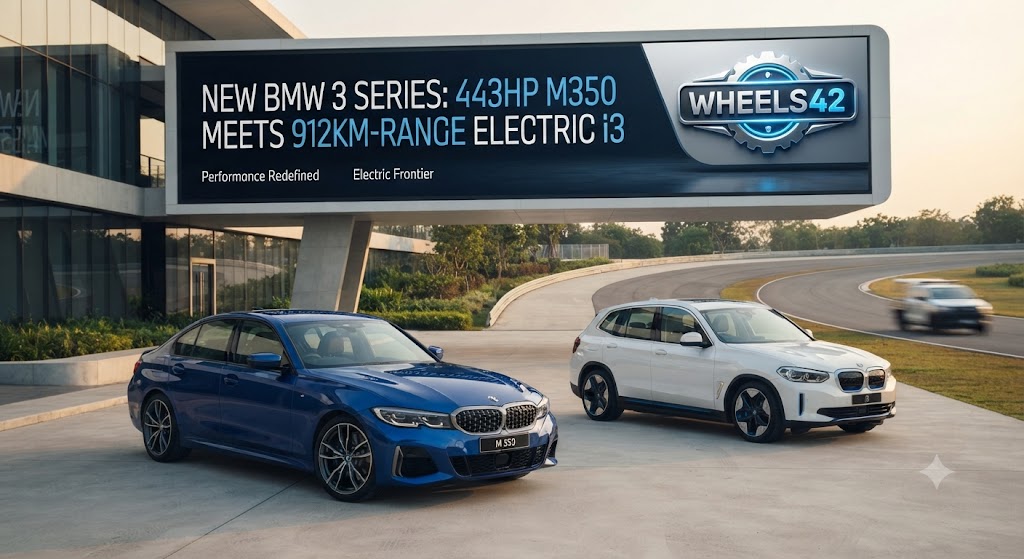
BMW car has officially unveiled the eighth-generation 3 Series, marking a major technological step forward for one of the brand’s most important models. The new generation brings the Neue Klasse design and technology philosophy to the 3 Series family and, for the first time, introduces a fully electric version carrying the BMW i3 nameplate.
The new 3 Series range combines petrol engines with 48V mild-hybrid technology and fully electric powertrains. At the top of the combustion-engine range is the BMW M350 xDrive, producing 443hp, while the flagship electric model, the BMW i3 50 xDrive, offers a claimed WLTP range of up to 912km.
Eighth-Generation BMW 3 Series Gets a Major Redesign
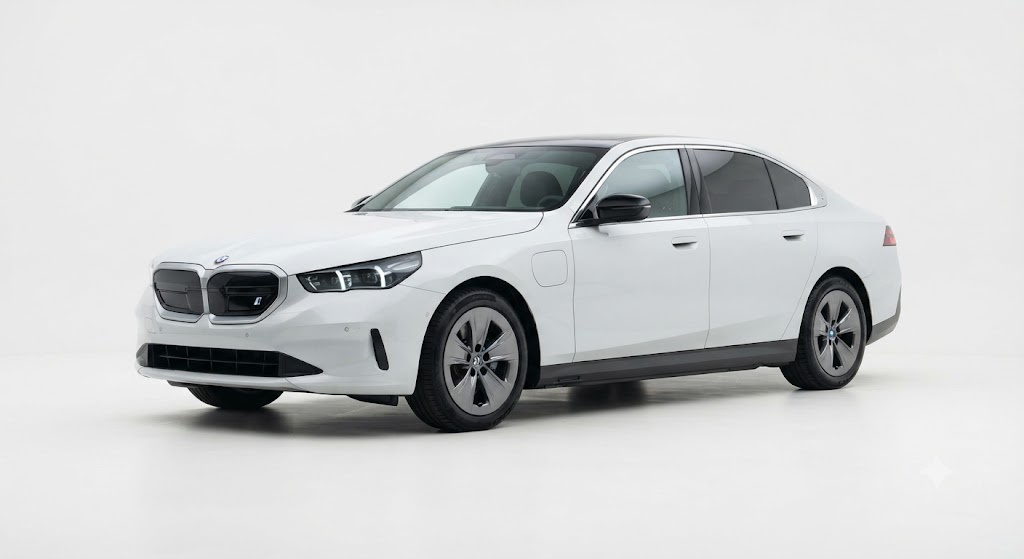
The new BMW 3 Series adopts a cleaner and more modern interpretation of BMW's design language while retaining the proportions associated with the sedan.
The front-end design features a newly interpreted kidney grille positioned between vertically oriented lighting elements. BMW has integrated the grille and headlight graphics into a more unified visual theme, giving the car a distinctive appearance.
The sedan cars continues with a long wheelbase, short overhangs and a set-back passenger compartment. Flush-fitting door handles, sculpted wheel arches and a horizontal rear-light design further differentiate the new generation.
BMW is also maintaining a common design philosophy between the combustion-powered 3 Series and the electric i3. This means customers get broadly the same visual identity regardless of the powertrain selected.
BMW M350 xDrive Produces 443hp
The biggest performance highlight among the petrol-powered models is the new BMW M350 xDrive.
It uses a 3.0-litre six-cylinder inline petrol engine supported by a 48V mild-hybrid system. The combined output stands at 443hp and 580Nm of torque.
BMW claims a 0-100km/h acceleration time of just 4.1 seconds, while the electronically limited top speed is 250km/h.
The M350 xDrive also represents the entry point into BMW's M performance range within the new 3 Series family. Adaptive M Suspension is standard on this version, while BMW has further enhanced the car's chassis and steering systems to improve agility.
BMW will also introduce a new Drift Moment function for the M350 xDrive. The feature can direct engine power entirely to the rear wheels and is scheduled to become available during 2027 through a software update.
New BMW i3 50 xDrive Offers Up to 912km Range
The biggest change to the 3 Series family is the arrival of the fully electric BMW i3.
The i3 50 xDrive becomes the range-topping electric version and produces 469hp from its dual-motor all-wheel-drive system. BMW claims a 0-100km/h time of 4.7 seconds.
More importantly, the i3 50 xDrive offers a claimed WLTP range of up to 912km, making it one of the longest-range electric sedans in its segment.
The entry electric model is the BMW i3 40 xDrive, which develops 374hp and has a claimed range of up to 710km on the WLTP cycle.
BMW says a higher-performance i3 M60 xDrive will join the range at a later stage.
The Complete Guide to Buying a New Car in India: The Wheels42 7-Step Framework
800V Technology Enables Faster Charging
The new i3 is based on BMW's Neue Klasse architecture and uses the company's sixth-generation eDrive technology.
Both electric variants feature an 800V electrical architecture, allowing significantly higher charging speeds than many previous BMW EVs.
The i3 50 xDrive supports DC charging at up to 400kW, while the i3 40 xDrive can charge at up to 300kW.
BMW says the i3 50 xDrive can add up to 423km of WLTP range in 10 minutes under suitable high-power charging conditions. The i3 40 xDrive can add up to 337km during the same period. Actual charging performance will depend on factors such as battery temperature, state of charge and the capability of the charging station.
The new battery technology also supports bidirectional charging, adding another layer of functionality to the electric 3 Series.
Petrol Engines Get 48V Mild-Hybrid Technology
The new-generation petrol range is not limited to the performance-focused M350.
BMW will offer four-cylinder petrol engines with 48V mild-hybrid assistance, designed to improve efficiency while maintaining the driving characteristics expected from the 3 Series.
The BMW 318 produces 156hp, while the BMW 320 develops 211hp. Both use BMW TwinPower Turbo technology and the latest generation of the company's efficiency-focused combustion technology.
BMW says the new petrol engines use the Miller combustion cycle and an updated Valvetronic system. Energy recovered during braking can be stored in the 48V battery and used to provide additional assistance during acceleration and low-load driving.
A plug-in hybrid version is also planned to join the 3 Series family during the coming year.
New Panoramic iDrive Interior
The interior of the new 3 Series receives an extensive technology upgrade.
Both petrol-powered 3 Series models and the electric i3 feature the new BMW Panoramic iDrive system and BMW Operating System X.
The digital interface combines the central display with BMW's latest software and voice-assistance technology. BMW says its Intelligent Personal Assistant now incorporates Alexa+ technology.
The new generation also introduces BMW's latest driver-assistance technology, including the Motorway Assistant, which can support hands-free driving at speeds of up to 130km/h in markets where the system is approved.
The interior architecture remains largely consistent across petrol and electric versions, with only limited differences required by the respective powertrains.
Updated Chassis and Driving Technology
BMW has also focused heavily on the driving dynamics of the new 3 Series.
The latest generation gets wider tracks and revised steering calibration, while adaptive suspension technology is available across the range. The M350 xDrive receives Adaptive M Suspension as standard.
For the electric i3, BMW's Heart of Joy control system forms part of the Neue Klasse electronic architecture. BMW says the system coordinates key vehicle functions at a significantly faster rate than previous-generation systems.
This approach allows BMW to offer different powertrains while maintaining a consistent driving philosophy across the 3 Series family.
Wheel Options and Exterior Details
The new BMW i3 will be available with wheel sizes ranging from 19 to 21 inches, depending on the variant and equipment.
The combustion-engine 3 Series models will receive wheels ranging from 18 to 20 inches.
The overall design is intended to give the new generation a stronger road presence without abandoning the traditional proportions of the 3 Series sedan.
When Will the New BMW 3 Series Arrive?
BMW opened orders for the new 3 Series on September 30, 2026. The first deliveries are expected around the turn of 2026 and 2027, depending on market and variant.
The electric BMW i3 is being built at BMW Group Plant Munich, while the combustion-powered 3 Series models are produced at BMW's Dingolfing plant in Germany.
For now, BMW has not announced detailed India-specific pricing, variant availability or launch timelines for this new-generation 3 Series family. Therefore, Indian prices and specifications should not be assumed from the European specifications.
The eighth-generation BMW 3 Series represents a significant transformation for the iconic sedan. Instead of separating electric and combustion-powered models through completely different designs, BMW has brought them together under a common architecture and design philosophy.
The 443hp M350 xDrive provides a strong performance option for buyers who still prefer a petrol-powered sports sedan, while the 469hp i3 50 xDrive pushes the electric version into a new category with its claimed 912km WLTP range and 400kW charging capability.
With Neue Klasse technology, a redesigned interior, improved driver assistance and multiple powertrain choices, the new BMW 3 Series is positioned as a major step forward for the nameplate.
 Khyati Sharma 2026-10-04