Many drivers believe that switching off the car’s air conditioner and opening the windows is the best way to save fuel. The logic seems simple: the AC puts an extra load on the engine, so turning it off should improve mileage. However, there is another factor to consider — air resistance.
When you drive with the windows open, outside air enters the cabin and disrupts the vehicle’s aerodynamics. At higher speeds, this can increase drag and force the engine to work harder. Meanwhile, using the air conditioner consumes additional energy to cool the cabin.
Manual vs Automatic Car: Pros and Cons Explained
So, which option actually saves more fuel: driving with the windows open or using the AC?
The answer depends mainly on your driving speed, vehicle design, outside temperature and how efficiently the air-conditioning system operates. Let’s understand the difference and find out when each option makes more sense.

Does Driving With the Windows Open Save More Fuel?
No, not always. Driving with the windows open can help reduce fuel consumption in some situations, particularly at lower speeds. However, at higher speeds, the additional aerodynamic drag caused by open windows may reduce or even eliminate the fuel savings from switching off the AC.
Two major factors influence fuel consumption:
-
Air-conditioning load: The AC system uses engine power in petrol and diesel cars, or electricity in electric vehicles, to cool the cabin.
-
Aerodynamic drag: Air resistance increases as a vehicle moves faster. Open windows can disturb airflow around the car, increasing the energy needed to maintain speed.
The balance between these two factors changes depending on how fast you are driving. This is why neither option is automatically the most fuel-efficient in every situation.
How Does a Car's AC Affect Fuel Economy?
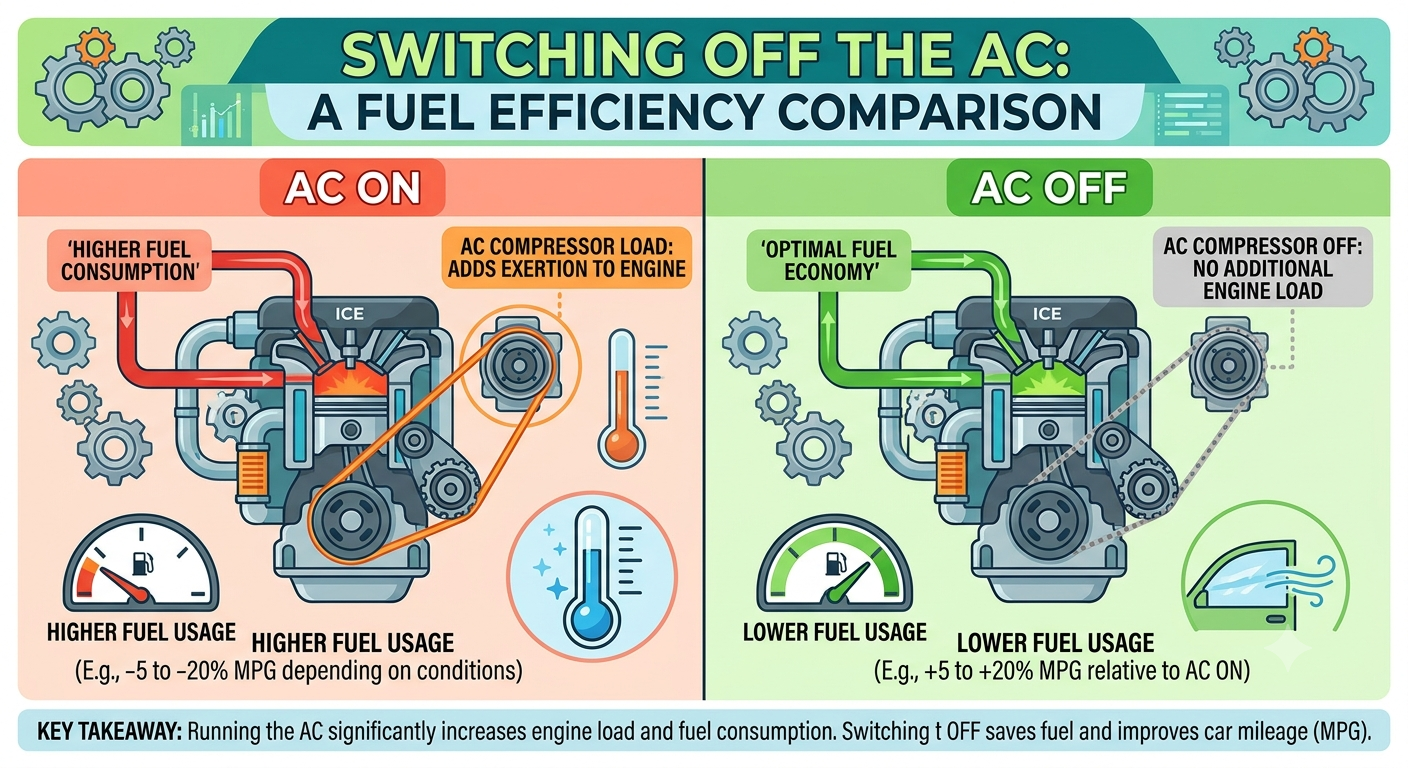
A car’s air conditioner is designed to remove heat and humidity from the cabin. Its compressor circulates refrigerant through the cooling system, allowing the vehicle to deliver cool air through the vents.
In conventional petrol and diesel vehicles, operating the AC generally increases the engine’s workload. The engine must provide additional power to operate the compressor and related systems, which can increase fuel consumption.
The impact varies according to several factors:
-
Outside temperature and humidity.
-
The temperature selected inside the cabin.
-
The cooling capacity and efficiency of the AC system.
-
Whether the car is moving in traffic or cruising at a steady speed.
-
The vehicle’s engine size and overall efficiency.
For example, cooling a car that has been parked in direct sunlight on a hot afternoon may require substantially more energy initially than maintaining a comfortable temperature inside an already-cooled cabin.
However, the AC does not consume the same amount of energy continuously under every condition. Modern climate-control systems can adjust compressor operation according to cooling demand.
How Do Open Windows Affect a Car’s Aerodynamics?
Aerodynamics refers to how air flows around a moving vehicle. Car manufacturers spend considerable time designing body shapes that reduce air resistance and improve efficiency.
When all windows are closed, air generally flows more smoothly around the vehicle. Opening the windows changes this airflow, allowing air to enter the cabin and creating additional turbulence.

The effect becomes more noticeable as speed increases. At higher speeds, the engine must work harder to overcome air resistance, and the extra drag caused by open windows can increase fuel consumption.
This does not mean that opening a window always wastes more fuel than running the AC. Research conducted by Oak Ridge National Laboratory compared air-conditioning use with open windows in a Ford Explorer and Toyota Corolla. The results showed that the more efficient option varied with the vehicle and driving speed. In the Corolla, open-window fuel consumption matched the maximum-AC case at approximately 121 km/h and became higher at approximately 129 km/h.
These findings demonstrate why there is no single speed threshold that applies to every car.
Open Windows vs AC: Which Is Better at Different Speeds?
|
Driving condition
|
Better option to consider
|
Why
|
|
Slow city traffic
|
Windows open when comfortable
|
Reduces AC energy use
|
|
Low-speed neighbourhood driving
|
Windows open
|
Aerodynamic drag is generally less significant
|
|
Moderate-speed driving
|
Depends on the car and conditions
|
AC load and aerodynamic drag both matter
|
|
High-speed highway driving
|
AC with windows closed
|
Helps maintain smoother airflow
|
|
Very hot weather
|
AC at a comfortable setting
|
Provides better comfort and helps reduce heat exposure
|
|
Short drive in mild weather
|
Windows open if safe
|
Avoids unnecessary cooling demand
|
What Happens When You Drive With the AC On?
Using the AC has a cost in terms of energy, but the amount varies.
In a petrol or diesel car, the air-conditioning compressor usually draws power from the engine. When cooling demand is high, the compressor can increase the engine's workload and fuel consumption.
The effect may be greater when:
-
The cabin has become extremely hot after parking in the sun.
-
The AC is set to maximum cooling.
-
The vehicle is idling or moving slowly in heavy traffic.
-
The outside temperature is high.
-
The cooling system needs to remove a large amount of heat and humidity.
However, modern cars may use variable-capacity compressors or electronic climate controls that adjust cooling output as conditions change.
A practical way to reduce unnecessary AC load is to choose a comfortable temperature rather than leaving the system at maximum cooling throughout the journey. Keep the cabin filter clean and ensure the AC system is maintained according to the manufacturer's recommendations.
Pre-Delivery Inspection (PDI): A Checklist Before You Take Delivery
Does Opening the Windows Before Turning On the AC Help?
Yes, it can help when the cabin is very hot.
A car parked under direct sunlight can become significantly hotter than the outside air. Turning on the AC immediately forces the cooling system to remove the accumulated heat.
Instead, follow these steps:
-
Park in a shaded area whenever possible.
-
Open the windows briefly before starting your journey, where it is safe to do so.
-
Allow some of the trapped hot air to escape.
-
Close the windows and switch on the AC.
-
Use a comfortable temperature and adjust the fan as the cabin cools.
This method can reduce the initial cooling demand and help the cabin become comfortable more quickly. The US Department of Energy also recommends briefly ventilating the cabin before using the AC in hot weather.
Do not leave windows open unattended, and always close them before entering high-speed traffic or driving through dusty or polluted areas.

Does This Rule Apply to Electric Cars?
The same basic principle applies, but the energy source is different.
In a petrol or diesel car, the AC generally increases fuel consumption because it requires engine power. In an electric vehicle (EV), the air-conditioning system uses electricity from the battery, reducing the energy available for driving.
Opening the windows may reduce the demand for cooling, but increased aerodynamic drag can also reduce an EV's driving range. At highway speeds, that extra resistance can become important.
Therefore, Electric car and other vehicle drivers should not assume that opening the windows will always extend their range. The outcome depends on vehicle aerodynamics, speed, outside temperature and the AC system's energy use.
Hatchback vs Sedan vs SUV: Which Car Type Suits You Best?
Five Practical Tips to Improve Fuel Economy
You do not need to sacrifice comfort completely to improve mileage. A few sensible driving habits can make a meaningful difference.
1. Maintain a Steady Speed
Avoid unnecessary acceleration and hard braking. Smooth driving helps reduce wasted energy, especially in traffic.
2. Avoid Excessive Highway Speeds
Air resistance rises substantially as speed increases. Research covering 74 different vehicles found that fuel economy generally declined noticeably above 50 mph, or approximately 80 km/h, although the most efficient speed varies by vehicle.
3. Use the AC Sensibly
Choose a comfortable temperature and avoid unnecessary maximum cooling. The right setting depends on the weather and the vehicle.
4. Keep Tyres Properly Inflated
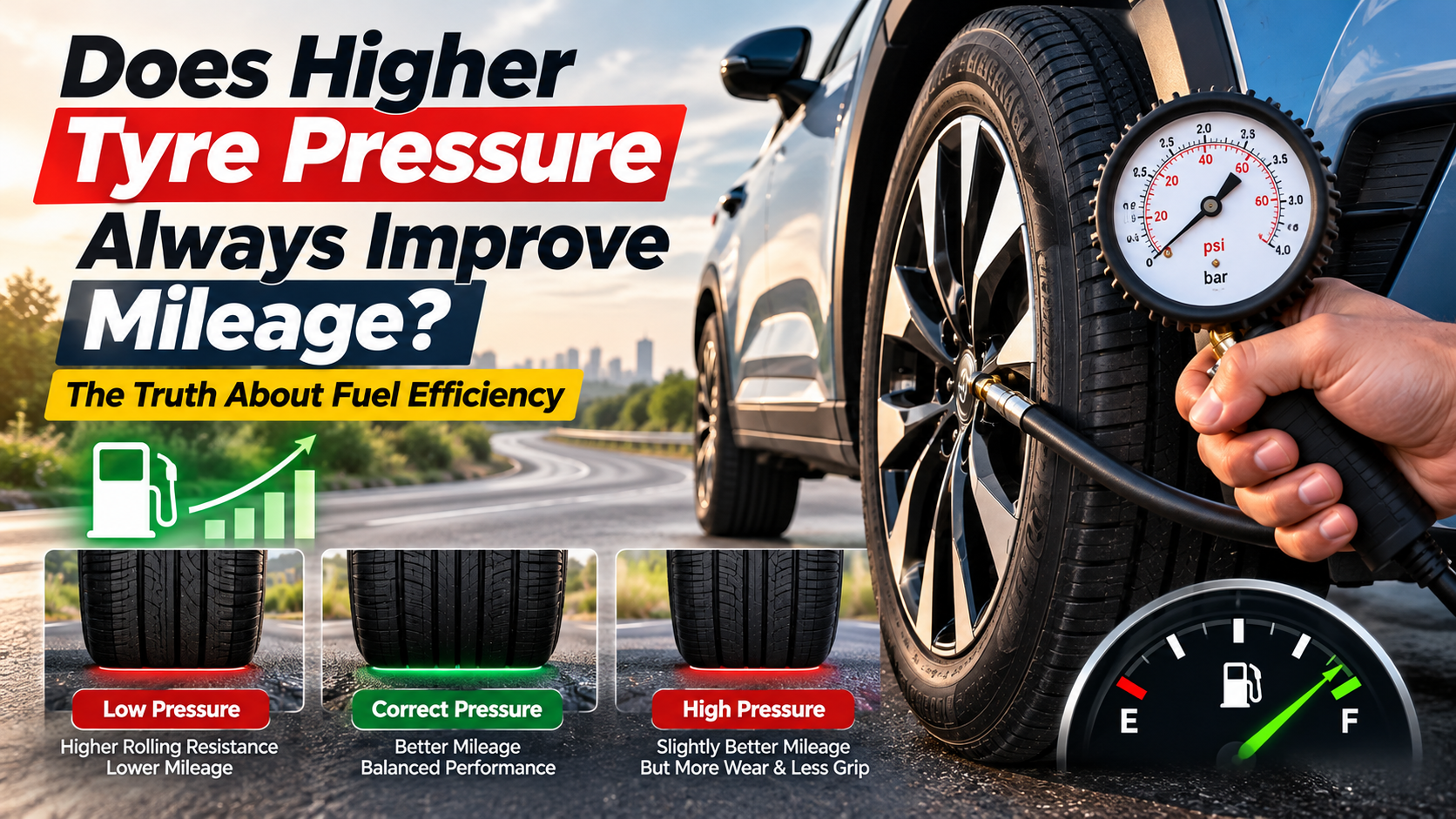
Check tyre pressures regularly and follow the manufacturer's recommended figures. Underinflated tyres increase rolling resistance and can reduce fuel economy.
5. Remove Unnecessary Weight
Carrying heavy items that you do not need increases the energy required to move the vehicle. Roof-mounted accessories can also increase aerodynamic drag, especially at higher speeds.
Common Myths About Windows and AC
|
Myth
|
Reality
|
|
Open windows always save more fuel
|
Not true; the result depends on speed and vehicle design
|
|
Using the AC always causes a major mileage drop
|
The effect varies with cooling demand and system efficiency
|
|
Closing the windows guarantees better mileage
|
Closed windows help aerodynamics, but AC still uses energy
|
|
The same speed rule applies to every car
|
Different vehicles have different aerodynamic characteristics
|
|
Turning off the AC is the only way to improve mileage
|
Smooth driving, sensible speeds and proper maintenance also matter
|
Final Verdict: Should You Drive With Windows Open or AC On?
The claim that driving with the windows open always saves more fuel than using the AC is a myth.
At lower speeds, opening the windows can be an efficient choice when the weather is comfortable. At higher speeds, aerodynamic drag may make open windows less efficient than using the AC with the windows closed. However, the exact crossover point varies between vehicles and operating conditions.
For everyday driving in India, a sensible approach is to use the windows when moving slowly in pleasant weather and switch to the AC with the windows closed for faster roads or when the cabin becomes uncomfortable. Avoid excessive speeds, maintain your vehicle and use the cooling system efficiently.
The best fuel-saving strategy is not to avoid the AC at all costs. It is to balance comfort, driving speed and energy use according to the conditions.

 Khyati Sharma 2026-10-09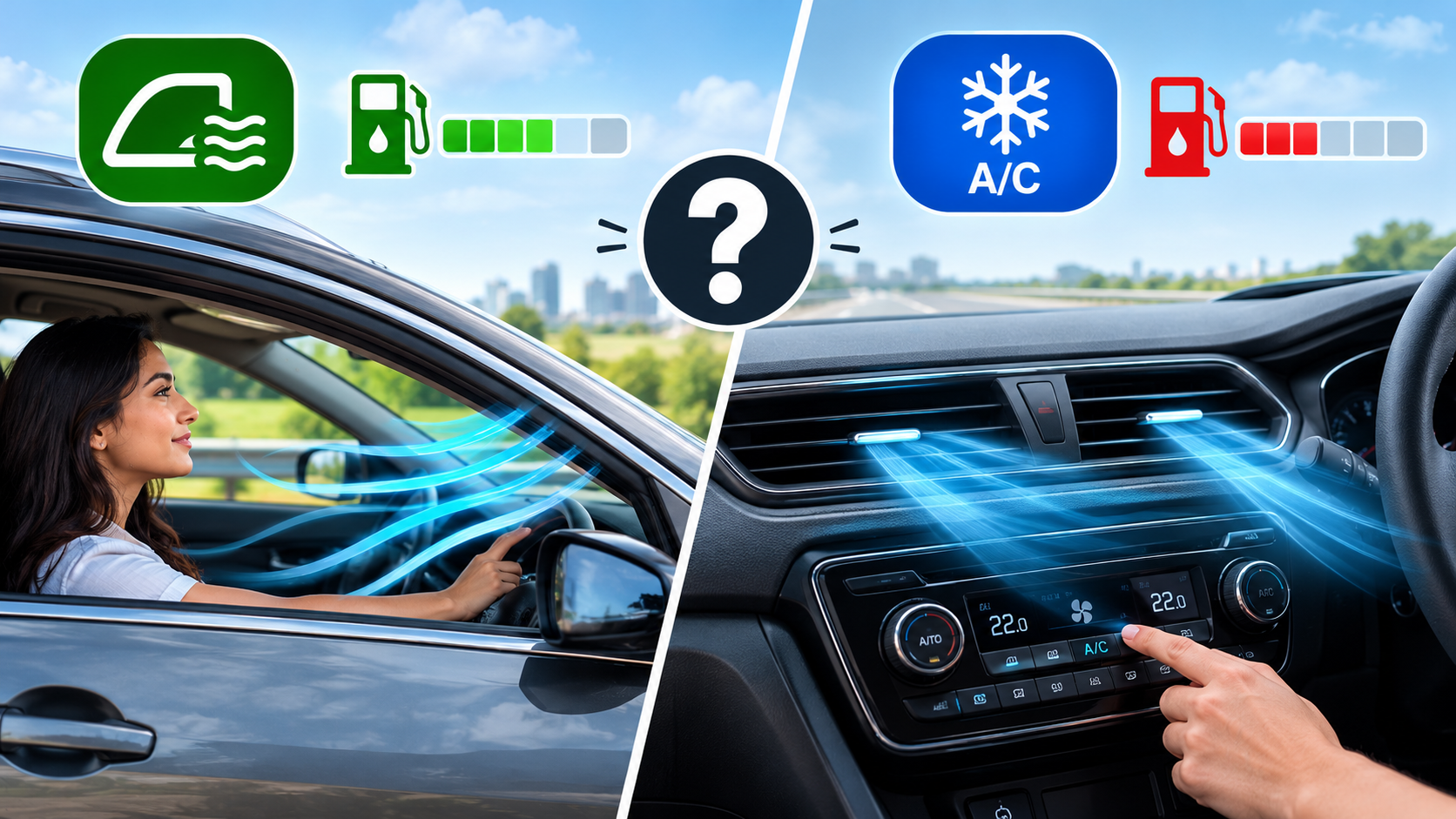












_A_Checklist_Before_You_Take_Delivery.jpeg)