
 Khyati Sharma 2026-10-10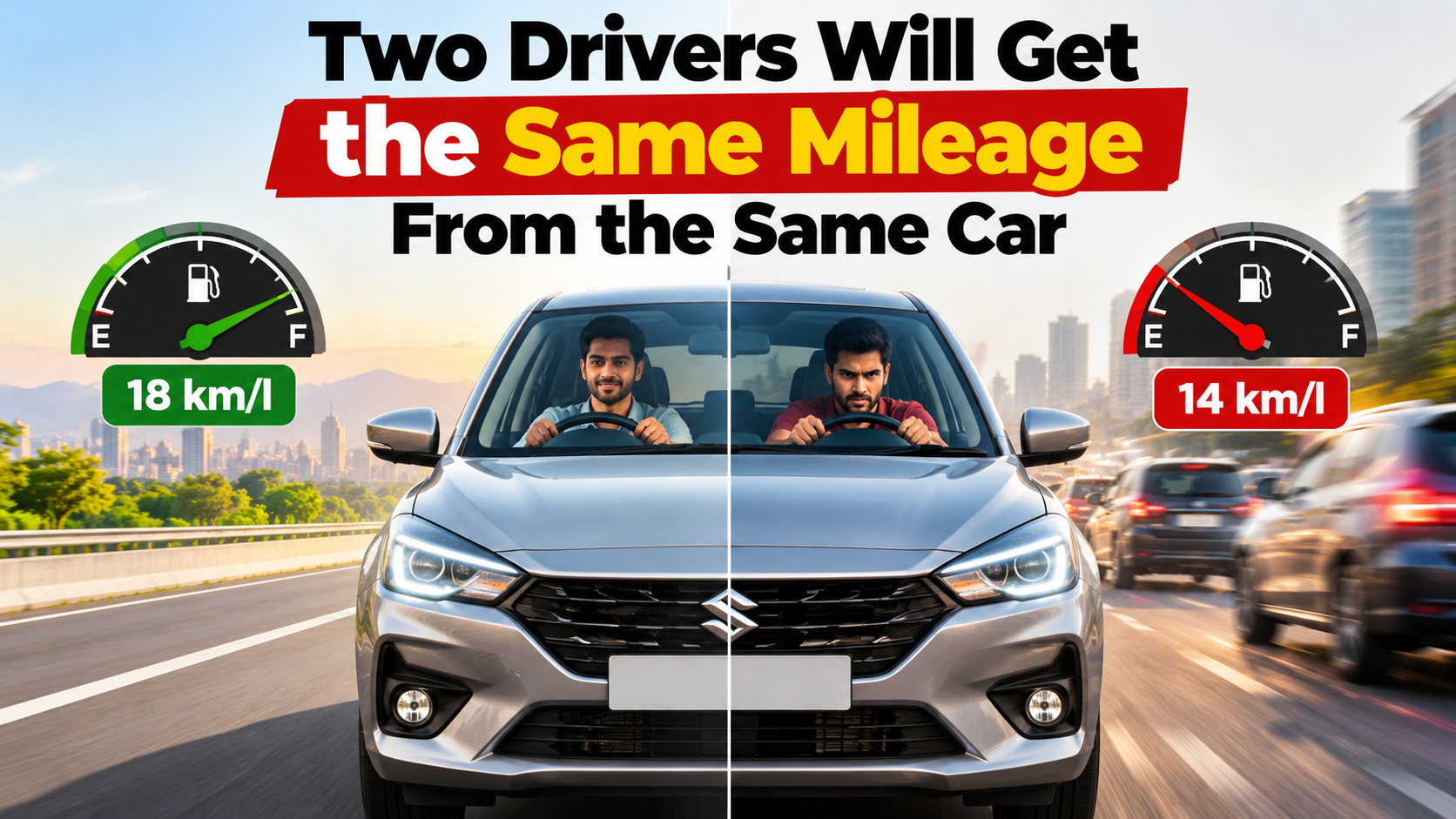
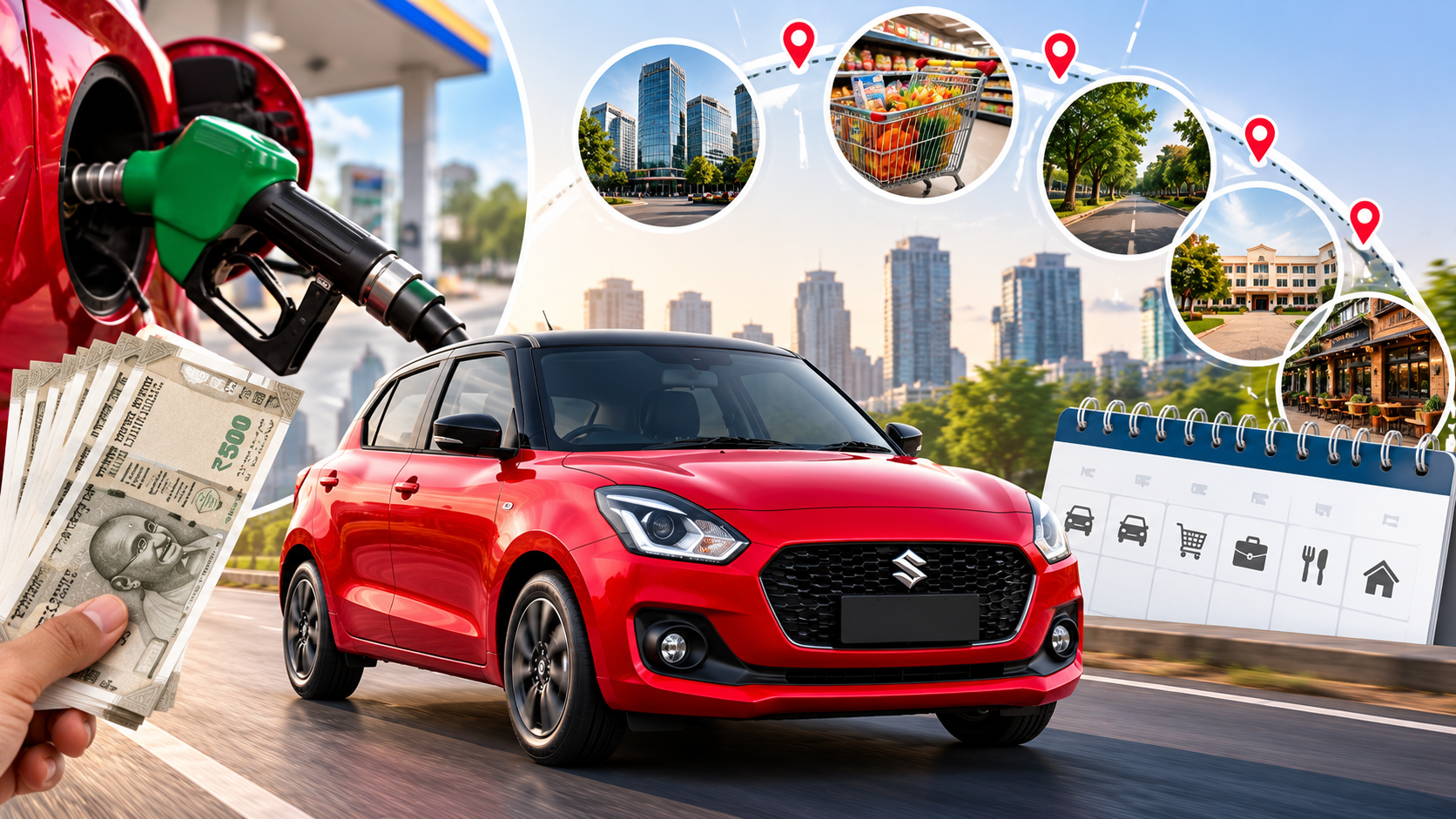
Many car buyers believe that if two people drive the same car, they should get almost identical fuel mileage. After all, the vehicle, engine, fuel tank and mechanical components are the same. However, real-world driving tells a different story.
Two drivers will not necessarily get the same mileage from the same car. Fuel efficiency depends on several factors, including driving habits, acceleration, braking, speed, traffic conditions, tyre pressure, air-conditioning usage and vehicle maintenance.
For example, one driver might achieve 18 km/l from a petrol car, while another driver using the same model on similar roads may get only 14 km/l. This difference does not automatically mean that the car has a problem. It may simply reflect differences in driving style and operating conditions.
Understanding these factors can help drivers improve fuel economy, reduce running costs and get more kilometres from every litre of petrol or diesel.
How Many Airbags Do You Really Need? A Safety Primer
Even when two people drive identical vehicles, their fuel consumption can vary significantly. The engine responds to how the accelerator is used, how frequently the vehicle slows down, how quickly it reaches cruising speed and how long it spends idling.
Let's understand the major reasons behind these differences.
Driving habits are among the most important factors affecting fuel efficiency.
Some drivers accelerate gently and maintain a steady speed. Others press the accelerator hard, overtake frequently and brake suddenly. These differences influence how much fuel the engine consumes.
When a driver accelerates aggressively, the engine generally needs to produce more power, which increases fuel consumption. Frequent hard braking also wastes energy that was used to accelerate the vehicle.
On the other hand, smooth acceleration and gradual braking can help reduce unnecessary fuel use.
For example, consider two drivers travelling in the same petrol SUV. The first driver accelerates progressively and anticipates traffic, while the second frequently speeds up and slows down. Even if both cover the same distance, the first driver may achieve better mileage.
This is why learning fuel-efficient driving techniques can be more useful than simply choosing a car with a higher claimed mileage figure.
Driving at a suitable speed can help a vehicle achieve better fuel efficiency.
Most petrol and diesel cars have a speed range in which the engine operates relatively efficiently. Driving too slowly in an inappropriate gear or maintaining very high highway speeds can increase fuel consumption.
At higher speeds, aerodynamic drag increases considerably. The engine must work harder to overcome air resistance, particularly when the vehicle is travelling well above typical highway cruising speeds.
Gear selection also matters. Driving in a low gear at unnecessarily high engine speeds can waste fuel. Similarly, using a high gear at very low speeds when the engine is struggling can cause inefficient operation.
Drivers should change gears according to road conditions and the manufacturer's recommendations.
For manual cars, shifting smoothly at appropriate engine speeds helps. Automatic cars manage gear changes themselves, but driving behaviour still influences their fuel consumption.
Manual vs Automatic Car: Pros and Cons Explained
Two drivers may use the same car but travel through very different traffic conditions.
One person might drive mostly on open highways, where the vehicle can maintain a relatively consistent speed. Another might travel through congested city roads, where traffic signals, queues and frequent stops are unavoidable.
Stop-and-go traffic often reduces fuel economy because the vehicle repeatedly accelerates from a standstill. During prolonged idling, the engine continues consuming fuel without covering any distance.
Short journeys can also be less efficient because the engine may spend a larger proportion of the trip warming up.
Therefore, a driver who regularly travels through crowded urban areas may obtain lower mileage than someone who uses the same car primarily for longer highway journeys.
This difference is related to the driving environment rather than necessarily indicating a mechanical problem.
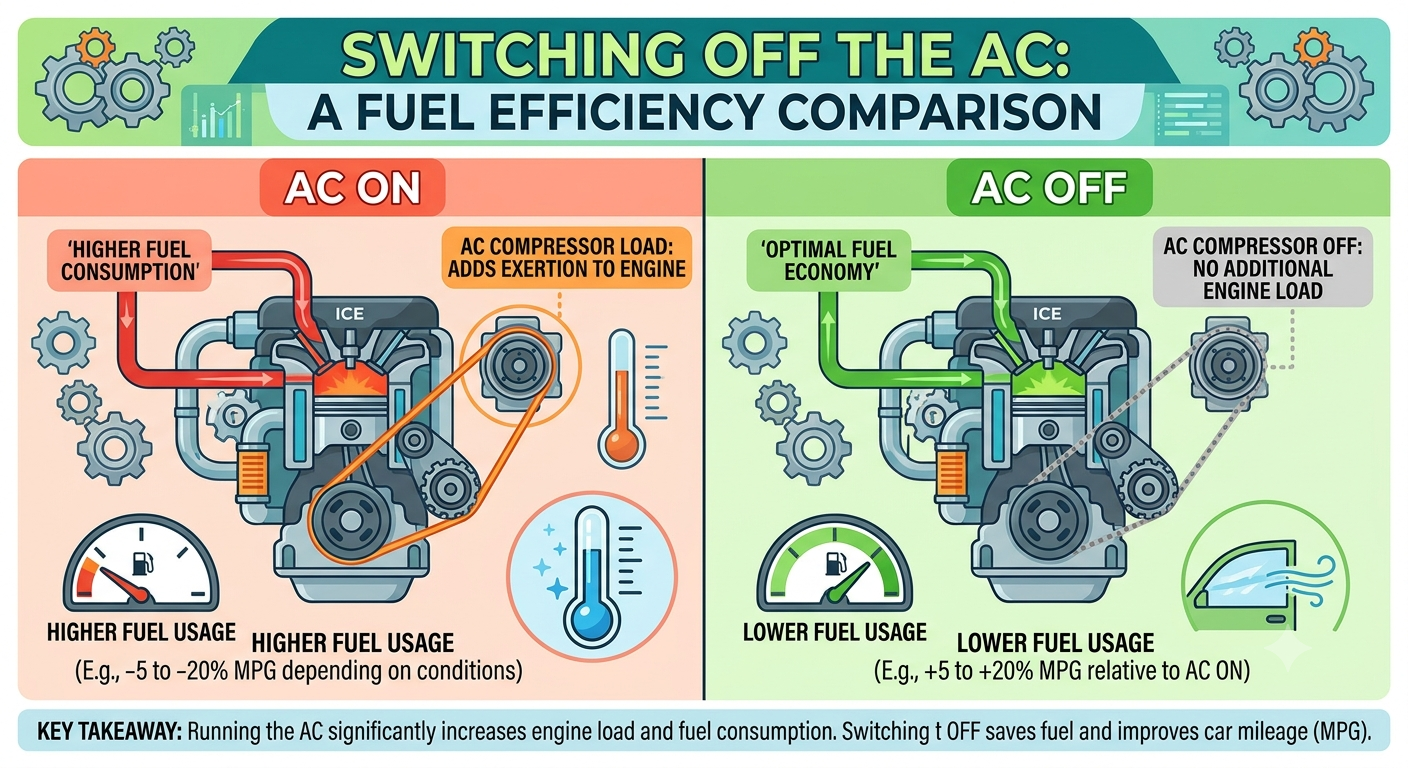
Air-conditioning is another factor that can affect fuel consumption, particularly in petrol and diesel cars.
In conventional vehicles, the air-conditioning compressor requires engine power. When the cooling system operates under heavy demand, the engine may consume additional fuel to supply that power.
The actual effect depends on several factors, including outside temperature, cabin temperature, compressor design, fan settings and driving conditions.
For example, a driver travelling during a hot afternoon with the air-conditioner working continuously may achieve different mileage from someone driving in mild weather with less cooling demand.
However, switching off the air-conditioner is not always the best solution. In hot weather, comfort and driver alertness are important. At highway speeds, opening the windows can also increase aerodynamic drag.
A sensible approach is to park in the shade when possible, ventilate a very hot cabin before starting the journey and use a comfortable temperature setting.
Tyres influence how easily a car moves along the road.
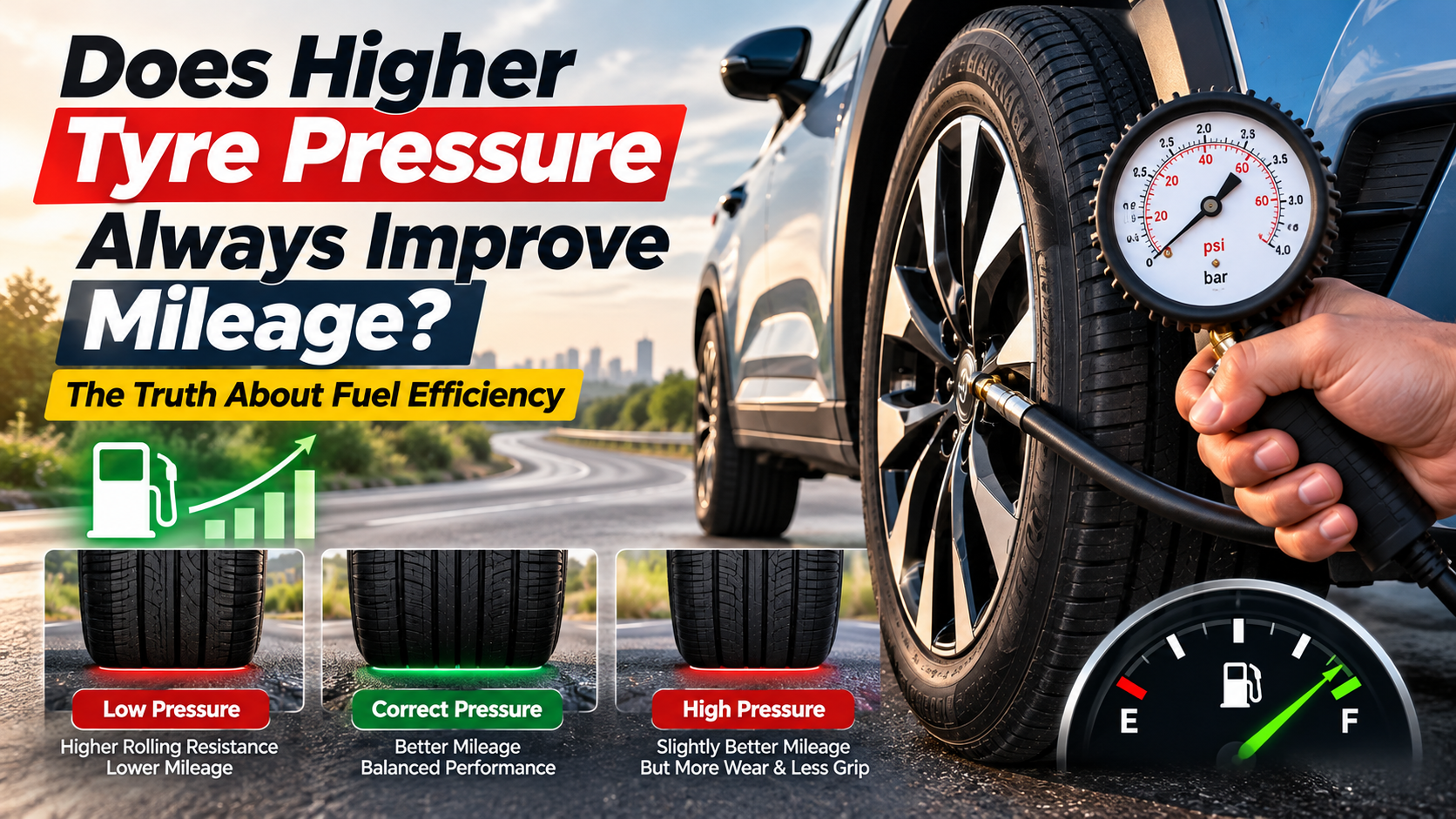
When tyre pressure is significantly below the recommended level, rolling resistance increases. The engine then needs to use more energy to move the vehicle, potentially reducing mileage.
Incorrect wheel alignment can also increase rolling resistance and cause uneven tyre wear. If the car pulls to one side or the steering wheel is off-centre, a professional alignment check may be necessary.
Two drivers using the same car can therefore record different fuel economy if one consistently maintains the correct tyre pressure while the other drives with underinflated tyres.
Check tyre pressure when the tyres are cold and follow the manufacturer's recommended figures, usually provided on the driver's door placard or in the owner's manual.
Do not inflate tyres beyond the recommended pressure in an attempt to improve mileage. Excessive pressure can compromise ride comfort and tyre performance.

A well-maintained car is more likely to operate as intended.
Engine oil, air filters, spark plugs in petrol vehicles, fuel-system components and other mechanical parts can influence performance and fuel consumption when they are worn, dirty or malfunctioning.
For example, a severely restricted air filter or a faulty engine sensor may affect engine operation. Incorrect engine oil or overdue maintenance can also create problems, depending on the vehicle.
Brake drag is another possible cause of poor mileage. If a brake component does not release properly, the vehicle may experience additional resistance.
Imagine two drivers using the same model of car. One vehicle receives regular servicing and has correctly inflated tyres, while the other has overdue maintenance and a mechanical issue. The second car may consume more fuel despite being the same model.
Regular servicing helps identify such issues before they become more serious.
The amount of weight carried by a car can also affect fuel economy.
A vehicle carrying five passengers and heavy luggage generally requires more energy to accelerate than the same vehicle carrying only a driver.
The effect is often more noticeable in city traffic, where the car repeatedly starts and stops. On long, steady journeys, the impact of additional weight may be less pronounced, although it still depends on the vehicle and conditions.
Unnecessary luggage, heavy objects left in the boot and equipment that is not needed for the journey can add weight.
Roof racks and roof boxes can also increase aerodynamic drag, particularly at highway speeds.
Drivers who want to improve mileage should carry only what they need and remove unused external accessories when appropriate.
New Car Booking Process Explained Step by Step
Fuel quality and the type of fuel used can influence engine performance, but the relationship is not always straightforward.
Modern vehicles are designed to operate with fuel that meets the manufacturer's specifications. Using the recommended fuel grade is important for proper performance and reliability.
A higher-octane petrol does not automatically improve mileage in every car. Its benefits depend on whether the engine is designed to take advantage of the higher octane rating.
Similarly, differences in fuel composition and energy content can influence the distance travelled per litre. However, drivers should avoid assuming that every difference in mileage is caused by fuel quality.
If mileage suddenly falls after refuelling, check other factors as well, including traffic, weather, tyre pressure and the accuracy of the fuel-consumption measurement.
Weather can affect how efficiently a vehicle operates.
Very cold conditions can increase fuel consumption because the engine takes longer to reach its normal operating temperature. Rain, standing water and strong headwinds can also increase the energy needed to move a vehicle.
Driving uphill generally requires more engine power than travelling on level roads. Rough surfaces and winding roads may also require frequent acceleration and braking.
Consequently, two drivers travelling the same distance may record different mileage if one takes a flat highway route while the other travels through hilly terrain.
These differences are normal and should be considered before comparing fuel economy figures.

Sometimes, two drivers appear to get different mileage simply because they calculate it differently.
The dashboard's average fuel economy reading may not match the actual distance covered per litre. Some systems estimate fuel consumption, and their readings can differ from calculations based on refuelling.
The most practical method for measuring real-world mileage is the full-tank method:
Fill the fuel tank and record the odometer reading.
Drive normally for a reasonable distance.
Refill the tank, preferably under similar conditions.
Record the litres required to refill it and the distance travelled.
Divide the distance travelled by the litres consumed.
For example, if a car travels 420 km and uses 30 litres of fuel, its mileage is 14 km/l.
Repeat the calculation over several refuelling cycles for a more reliable estimate. A single reading may be affected by differences in how the tank is filled, pump shut-off and driving conditions.
|
Factor |
Driver A |
Driver B |
|
Driving style |
Smooth acceleration |
Frequent hard acceleration |
|
Speed |
Steady cruising |
Frequent speed changes |
|
Traffic exposure |
Mostly open roads |
Heavy stop-and-go traffic |
|
Tyre pressure |
Checked regularly |
Often below recommendation |
|
Air-conditioning |
Moderate, comfortable setting |
Heavy cooling demand |
|
Vehicle maintenance |
Up to date |
Service overdue |
|
Illustrative mileage |
18 km/l |
14 km/l |
|
Fuel used over 500 km |
27.8 litres |
35.7 litres |
If your car is delivering lower mileage than expected, you can make several practical changes.
Drive smoothly
Accelerate progressively, maintain a safe following distance and anticipate traffic signals. Avoid unnecessary hard braking and rapid acceleration.
Maintain a consistent speed
On suitable roads, maintain a legal and steady cruising speed. Use cruise control where appropriate and safe, following the manufacturer's instructions.
Check tyre pressure regularly
Use the recommended cold tyre pressure. Check it periodically, especially before long journeys.
Avoid unnecessary idling
If you expect to be stopped for a prolonged period, follow the vehicle manufacturer's guidance on switching off the engine or using its automatic stop-start system. Never switch off the engine in situations where doing so could compromise safety.
Reduce unnecessary weight
Remove unused luggage and roof accessories. Keep the vehicle within its permitted load limits.
Service the vehicle on time
Follow the recommended maintenance schedule and investigate sudden changes in fuel consumption.
Combine short trips when practical
Combining errands can reduce repeated cold starts and unnecessary driving. Choose routes based on traffic and road conditions rather than distance alone.
Measure mileage correctly
Use the full-tank method over multiple refuelling cycles instead of relying entirely on one dashboard reading.
No. A car's mileage is not a fixed number that remains identical in every situation.
Manufacturers publish fuel-economy figures under specified test procedures. These provide a standardised basis for comparing vehicles, but actual mileage depends on how and where a car is driven.
Even the same driver can achieve different mileage on different days. A journey in heavy traffic on a hot afternoon may produce a different result from a relaxed highway drive in mild weather.
The engine's condition, vehicle load, road gradient and tyre pressure can all affect the final figure.
For this reason, buyers should treat claimed mileage as a useful reference rather than a guarantee of the exact fuel economy they will experience.










_11zon.webp)

_A_Checklist_Before_You_Take_Delivery.jpeg)