E85 Fuel, A alternative of Patrol
India's transition toward cleaner and more sustainable transportation has taken a significant step forward with the launch of Delhi's first E85 fuel station. The new fuel, priced at approximately ₹82 per litre, is nearly ₹20 cheaper than regular petrol in the national capital, immediately attracting the attention of motorists looking to reduce fuel expenses.
But while the lower price tag is appealing, an important question remains: Is E85 fuel really better than petrol?
The answer is more complex than a simple yes or no. E85 offers environmental and economic advantages, but it also comes with certain limitations that vehicle owners must understand before making the switch.

What is the 20/4-10 rule to buy a car? Car Loan Guide, Car Buying Rule
What Exactly Is E85 Fuel?
E85 is a blend consisting of:
- 85% ethanol
- 15% petrol (gasoline)
Ethanol is a renewable biofuel typically produced from agricultural feedstocks such as sugarcane, corn, and other biomass materials. Since India is one of the world's largest sugarcane producers, ethanol production has become a key component of the government's strategy to reduce crude oil imports and promote cleaner mobility.
The fuel is part of India's broader ethanol-blending program aimed at increasing the use of domestically produced biofuels.
Delhi's First E85 Fuel Station: Why It Matters
The inauguration of Delhi's first E85 fuel station marks an important milestone in India's alternative fuel ecosystem.
The station offers E85 at around ₹82 per litre, substantially lower than conventional petrol prices. The move aligns with national efforts to:
- Reduce dependence on imported crude oil
- Support Indian farmers through increased ethanol demand
- Lower vehicular carbon emissions
- Improve energy security
- Promote sustainable transportation
As fuel prices continue to impact household budgets, the availability of a lower-cost alternative could encourage greater adoption among compatible vehicle owners.
Top 10 Cars with ADAS in India 2026
Why Is E85 Cheaper Than Petrol?
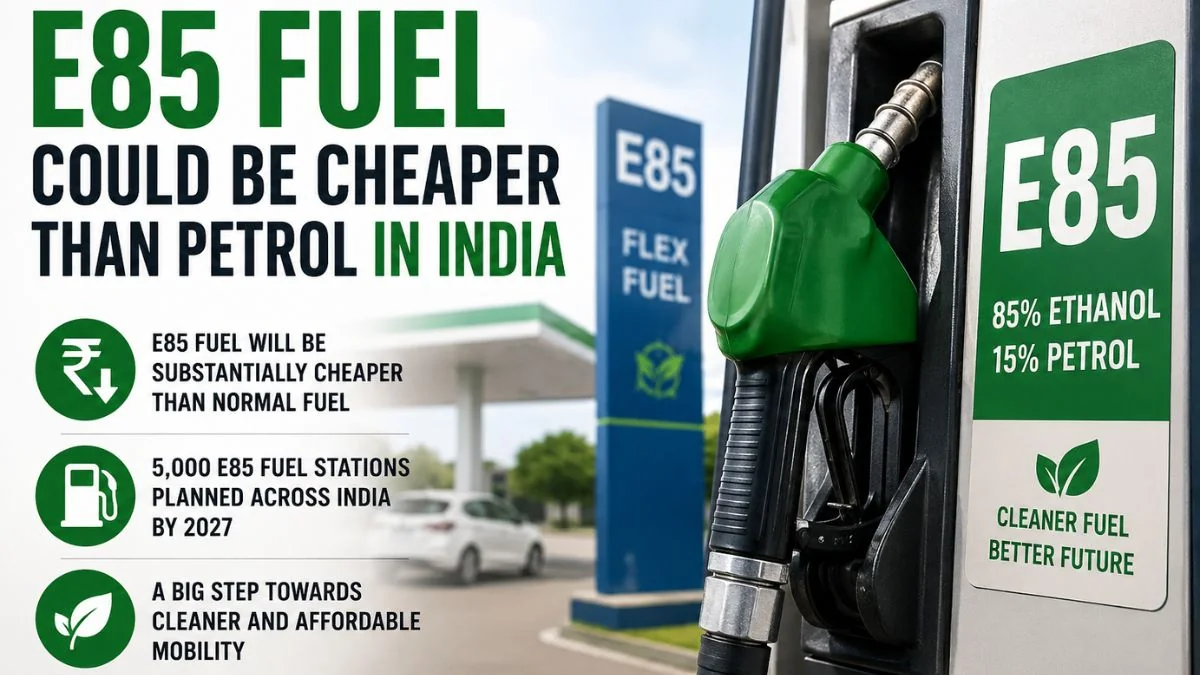
Several factors contribute to E85's lower retail price:
1. Domestic Production
Unlike petrol, which depends heavily on imported crude oil, ethanol can be produced locally from agricultural crops.
2. Reduced Import Dependency
India spends billions of dollars annually on crude oil imports. Increasing ethanol usage reduces foreign exchange outflows.
3. Government Incentives
The government actively promotes ethanol blending through supportive policies and pricing mechanisms, helping keep E85 competitive.
4. Agricultural Value Creation
Ethanol production creates additional demand for sugarcane and agricultural by-products, benefiting rural economies.
Environmental Benefits of E85
One of the strongest arguments in favor of E85 is its environmental impact.
Lower Carbon Emissions
Because ethanol is derived from plants, the carbon released during combustion is partially offset by the carbon absorbed during crop growth.
Studies worldwide have shown that high-ethanol blends can significantly reduce greenhouse gas emissions compared to conventional gasoline.
Cleaner Combustion
Ethanol contains oxygen, allowing fuel to burn more completely. This can reduce:
- Carbon monoxide emissions
- Certain harmful hydrocarbons
- Toxic pollutants associated with fossil fuels
Reduced Fossil Fuel Dependence
By replacing a large portion of petroleum with renewable ethanol, E85 supports long-term sustainability goals.
Is E85 Better for Engine Performance?
The answer depends on the vehicle.
Advantages
Ethanol has a higher octane rating than petrol, which can provide:
- Better resistance to engine knocking
- Improved combustion efficiency
- Potential performance gains in engines specifically designed for ethanol blends
High-performance flex-fuel engines often benefit from ethanol's superior octane characteristics.
14 Tips to Buy a New Car and Mistakes to Avoid in 2026
Limitations
Ethanol contains less energy per litre than petrol.
This means vehicles running on E85 generally experience:
- Lower fuel economy
- Reduced driving range per tank
- More frequent refueling
In many cases, drivers may see fuel efficiency decline by 20% to 30% compared to pure petrol.
The Hidden Cost: Fuel Efficiency
While E85 may be ₹20 cheaper per litre, the lower energy content means the actual savings may not be as large as they initially appear.
For example:
- Petrol vehicle mileage: 15 km/litre
- Equivalent E85 mileage: 11–12 km/litre
Although the fuel costs less, drivers consume more of it over the same distance.
Therefore, consumers should evaluate:
- Cost per kilometre rather than cost per litre
- Vehicle compatibility
- Driving habits
- Availability of E85 stations
In some situations, E85 still delivers meaningful savings, but the difference is not always as dramatic as the pump price suggests.
How Long Do Electric Car Batteries Last
Can Every Car Use E85?
No.
This is perhaps the most important factor for consumers.
E85 Requires Flex-Fuel Vehicles
Vehicles must be specifically designed or certified to handle high ethanol concentrations.
Flex-fuel vehicles use:
- Ethanol-compatible fuel lines
- Corrosion-resistant materials
- Engine management systems calibrated for varying ethanol levels
Using E85 in a non-compatible vehicle can lead to:
- Fuel system damage
- Corrosion
- Reduced engine life
- Performance issues
- Warranty complications
Drivers should always consult their vehicle manufacturer before using E85.
India's Growing Flex-Fuel Ecosystem
Several automobile manufacturers are already working on flex-fuel technology for the Indian market.
Government agencies have encouraged automakers to develop vehicles capable of operating on:
- E20 (20% ethanol blend)
- E85 (85% ethanol blend)
- 100% ethanol in certain applications
As more flex-fuel models enter the market, demand for dedicated E85 infrastructure is expected to grow rapidly.
Benefits for India's Economy
Beyond environmental advantages, E85 has strategic economic significance.
Reduced Oil Import Bill
India imports over 80% of its crude oil requirements. Increasing ethanol usage can substantially reduce this dependence.
Support for Farmers
Greater ethanol production creates additional revenue streams for:
- Sugarcane farmers
- Agricultural cooperatives
- Biofuel producers
Rural Employment
The biofuel industry generates jobs in:
- Agriculture
- Transportation
- Processing facilities
- Distribution networks
Enhanced Energy Security
Diversifying fuel sources makes the economy less vulnerable to global oil price shocks and geopolitical disruptions.
2026 Top 5 Safest Cars in India
Challenges That Remain
Despite its promise, E85 adoption faces several hurdles.
Limited Infrastructure
Delhi's first E85 station is a symbolic beginning, but widespread adoption requires thousands of fuel outlets nationwide.
Vehicle Compatibility
The number of flex-fuel vehicles on Indian roads remains relatively small.
Ethanol Supply Stability
Maintaining adequate ethanol production while balancing food and agricultural priorities will be critical.
Consumer Awareness
Many drivers are unfamiliar with ethanol fuels and may not understand vehicle compatibility requirements.
So, Is E85 Really Better Than Petrol?
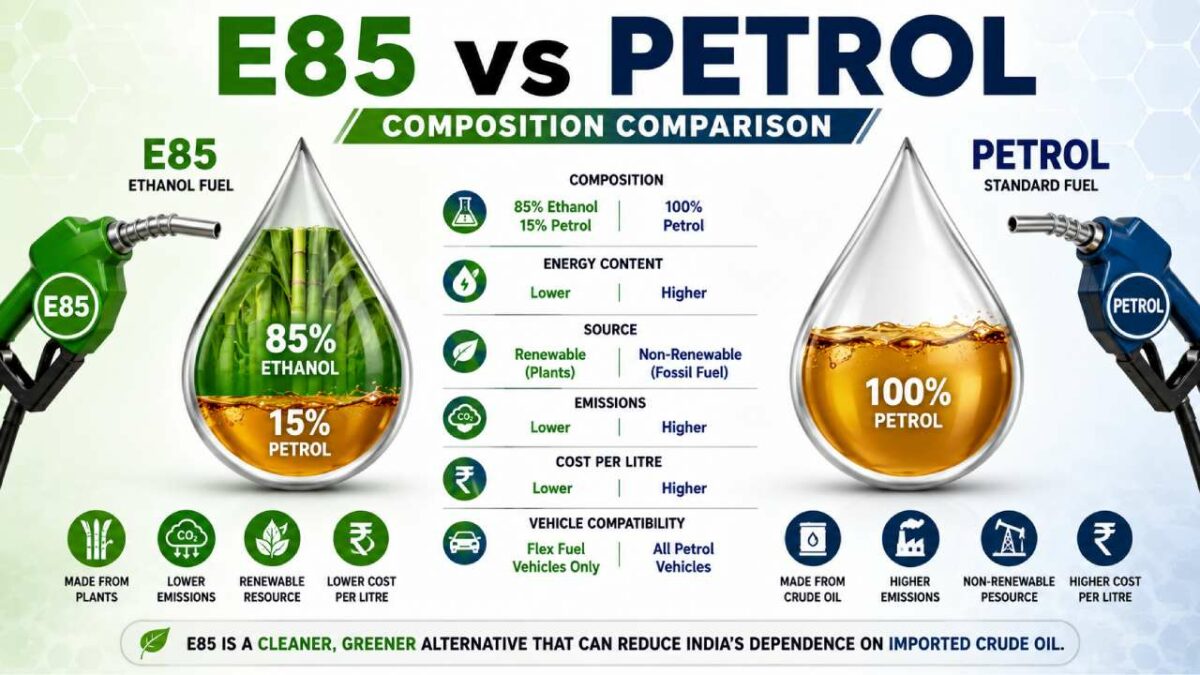
E85 is not universally better than petrol—it is better in specific ways.
E85 Wins On:
✓ Lower pump price
✓ Reduced carbon emissions
✓ Renewable energy source
✓ Lower dependence on imported oil
✓ Support for Indian agriculture
Petrol Still Leads In:
✓ Higher fuel efficiency
✓ Longer driving range
✓ Universal vehicle compatibility
✓ Extensive fueling infrastructure
For owners of flex-fuel vehicles, E85 can offer a compelling combination of lower fuel costs and environmental benefits. However, for drivers of conventional petrol cars, switching is not currently an option without proper vehicle compatibility.
Top 10 Selling Cars in India FY 2026
The Road Ahead
Delhi's first E85 fuel station represents more than just another fuel pump—it signals India's growing commitment to cleaner and domestically produced energy sources. As flex-fuel vehicles become more common and fuel infrastructure expands, E85 could play an increasingly important role in the country's transportation future.
Whether it ultimately becomes a mainstream alternative to petrol will depend on three factors: vehicle adoption, nationwide fuel availability, and the real-world economics of cost versus mileage.
For now, E85 offers a glimpse into a future where cleaner, locally produced fuels may help reshape India's automotive landscape while reducing both emissions and oil dependency.

 Ishita Sharma 2026-06-16