2026-11-28
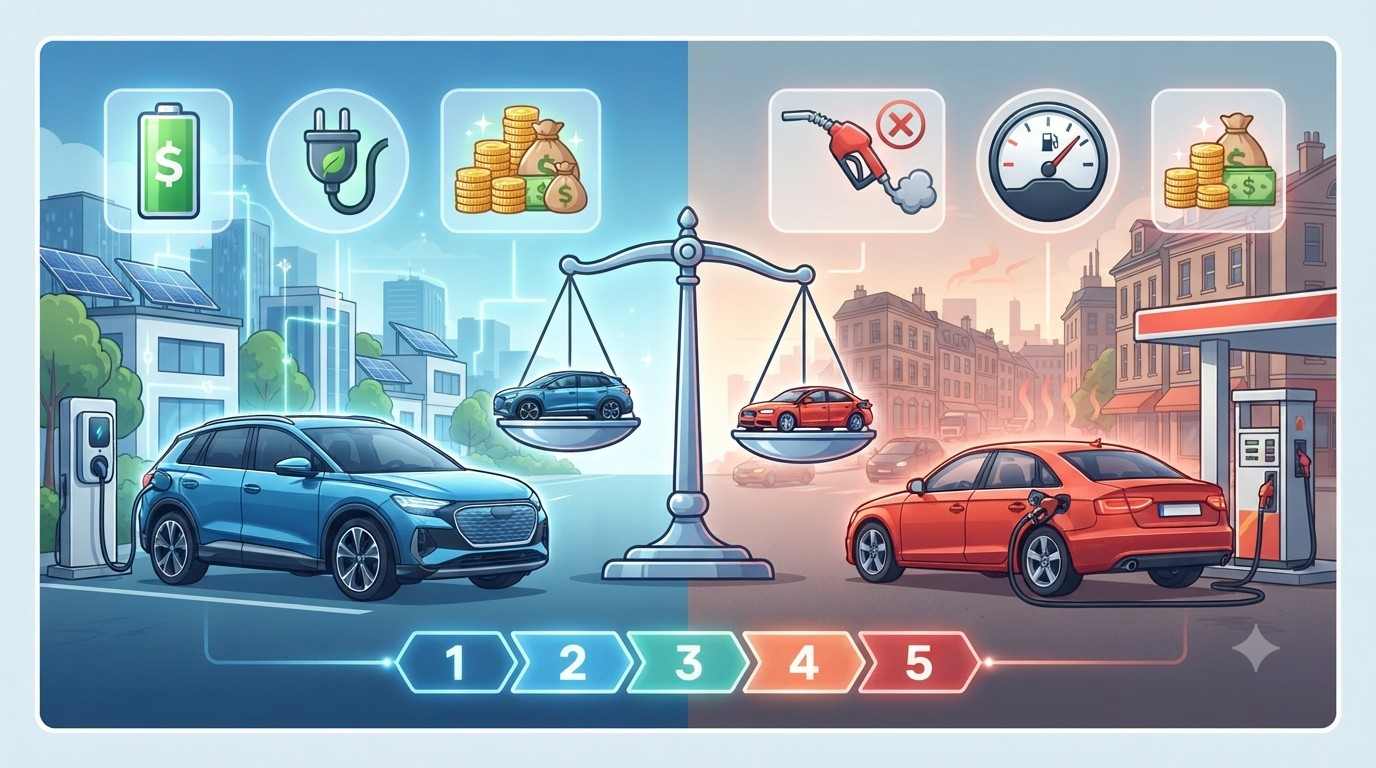
Quick answer: An electric car is considerably cheaper to run than a petrol car in India, especially when you charge at home. However, the higher purchase price can take several years to recover. For drivers covering around 10,000–12,000 km annually, a petrol car can still cost less over the first five years. An EV becomes financially more attractive when annual driving reaches 15,000–20,000 km or more, depending on the purchase price and electricity cost.
Let's take the Tata Nexon Petrol and Nexon EV as an example.
At 12,000 km per year, our five-year calculation shows approximately ₹4 lakh in energy savings with the EV. But its higher purchase price and home charging setup can still leave it more expensive initially.
So, which one should you buy? Let's compare the actual expenses.
An EV is cheaper to run because electricity generally costs less per kilometre than petrol. It also has fewer engine-related components that need routine servicing.
But an electric car usually costs more to purchase than its petrol counterpart.
Here's the difference:
| Expense | Electric car | Petrol car |
| Initial purchase | Generally higher | Generally lower |
| Fuel or energy | Lower with home charging | Higher |
| Routine servicing | Fewer engine-related jobs |
Engine oil, filters, spark plugs and other items |
| Insurance | Can be higher due to vehicle value | Depends on vehicle value and coverage |
| Battery | Expensive component, covered by applicable warranty | No traction battery |
| Home charging setup | May require additional expense | Not required |
| Resale | Depends on battery health and market demand |
Depends on age, condition and fuel preference |
The biggest difference appears in everyday running costs.
A petrol car needs regular refuelling, while an EV can recover much of its daily energy overnight at home. But that saving needs to be compared with the additional money paid when buying the car.
Let's calculate this using the Tata Nexon as an example.
We'll use these assumptions:
| Parameter | Tata Nexon Petrol | Tata Nexon EV 45 |
| Petrol price | ₹101.83/litre | Not applicable |
| Electricity cost | Not applicable | ₹8/kWh |
| Real-world mileage / efficiency | 13 km/litre | 7.79 km/kWh |
| Charging losses | Not applicable | 10% |
| Location for fuel-price example | Ahmedabad | Ahmedabad |
The petrol price is the published Ahmedabad rate on 27 November 2026. The ₹8 electricity cost is an illustrative all-in household charging rate, not a fixed national tariff.
The EV efficiency comes from Autocar India's independent Nexon EV 45 range test. The petrol efficiency of 13 km/litre is a city-heavy planning assumption, not a claimed Autocar test result. Actual mileage will vary.
The formula is:
Petrol cost per km = Petrol price ÷ Real-world mileage
₹101.83 ÷ 13 = ₹7.83 per km
For every 100 km, the petrol Nexon costs approximately ₹783 in fuel.
The formula is:
EV cost per km = Electricity cost ÷ (Real-world efficiency × Charging efficiency)
₹8 ÷ (7.79 × 0.90) = ₹1.14 per km
The 10% allowance accounts for electricity lost during charging.
For every 100 km, the Nexon EV costs approximately ₹114 in electricity.
| Distance | Petrol car | Electric car |
| 100 km | ₹783 | ₹114 |
| 500 km | ₹3,917 | ₹571 |
| 1,000 km | ₹7,833 | ₹1,141 |
| 5,000 km | ₹39,165 | ₹5,705 |
The difference is significant. Under these assumptions, the EV saves approximately ₹6.69 for every kilometre driven.
But remember, this comparison assumes home charging at ₹8 per unit. Regular public DC fast charging can make the EV more expensive to run.
Now let's assume you drive 12,000 km every year.
Over five years:
12,000 × 5 = 60,000 km
Here's how much you'll spend.
60,000 ÷ 13 km/litre = 4,615 litres
4,615 × ₹101.83 = ₹4,69,985
Your petrol expense would be approximately ₹4.70 lakh over five years.
60,000 ÷ 7.79 km/kWh = 7,702 kWh
After accounting for 10% charging losses:
7,702 ÷ 0.90 = 8,558 units
8,558 × ₹8 = ₹68,464
Your five-year home charging expense would be approximately ₹68,500.
| Expense | Five-year cost |
|---|---|
| Petrol Nexon | ₹4,69,985 |
| Nexon EV | ₹68,464 |
| Estimated EV saving | ₹4,01,521 |
The EV saves approximately ₹4 lakh on fuel and electricity alone.
That's a substantial difference. But it doesn't mean the EV is automatically ₹4 lakh cheaper to own.
We still need to consider its purchase price.
This is where many EV comparisons become misleading.
Some articles calculate only fuel savings and conclude that an EV is cheaper. But buyers must first pay the higher amount required to purchase the vehicle.
Let's compare the entry-level Nexon Petrol and Nexon EV prices.
| Vehicle | Variant | Ex-showroom price |
|---|---|---|
| Tata Nexon Petrol | Pure+ MT | Approximately ₹9.07 lakh |
| Tata Nexon EV | Creative 45 | Approximately ₹14.34 lakh |
Initial price difference: approximately ₹5.27 lakh.
These are different powertrain variants, not perfectly equipment-matched versions. Their features, transmissions and battery capacity differ. The comparison is intended to show the approximate purchase-price gap, not an exact like-for-like dealer quotation.
Now consider the five-year costs.
| Cost | Petrol Nexon | Nexon EV |
| Ex-showroom purchase price | ₹9.07 lakh | ₹14.34 lakh |
| Five-year fuel/electricity | ₹4.70 lakh | ₹0.68 lakh |
| Additional home charger setup | Not required | ₹0.50 lakh |
| Illustrative total | ₹13.77 lakh | ₹15.52 lakh |
In this example, the EV costs approximately ₹1.75 lakh more over five years before insurance, maintenance, financing and resale.
This is the important part of the comparison.
The EV saves money every time you drive, but a lower electricity bill doesn't immediately recover its higher purchase price.
Some manufacturers include a home charger or offer installation as part of the purchase package.
If you don't need to spend the additional ₹50,000 assumed above, the EV's five-year cost falls to approximately ₹15.02 lakh.
Always check the dealer's quotation before adding a separate charger expense.
Your annual driving distance can change the entire calculation.
Someone driving 8,000 km annually saves much less on fuel than someone covering 20,000 km.
Using the same assumptions, here's how the five-year energy savings change.
| Annual driving | Five-year distance | Estimated EV energy saving |
| 8,000 km | 40,000 km | ₹2.68 lakh |
| 10,000 km | 50,000 km | ₹3.35 lakh |
| 12,000 km | 60,000 km | ₹4.02 lakh |
| 15,000 km | 75,000 km | ₹5.02 lakh |
| 18,000 km | 90,000 km | ₹6.02 lakh |
| 20,000 km | 1,00,000 km | ₹6.69 lakh |
These savings represent fuel and electricity differences only. The estimated ₹5.27 lakh vehicle-price gap and ₹50,000 charger setup are additional costs.
In our example:
Additional EV purchase price: ₹5.27 lakh.
Home charger setup: ₹50,000.
Total extra initial expense: ₹5.77 lakh.
Energy saving per kilometre: approximately ₹6.69.
At around 17,250 km of annual driving, the five-year energy savings can roughly recover the initial price difference and assumed home charger cost.
This is before differences in insurance, scheduled servicing, repairs, financing and resale.
If the petrol car delivers closer to 16 km/litre instead of our city-heavy 13 km/litre assumption, the EV will take longer to recover its purchase premium.
So, don't use a single break-even number for every buyer.
An EV generally has fewer moving parts in its powertrain.
It doesn't need engine oil, spark plugs, engine air filters, an exhaust system or routine engine servicing. Regenerative braking can also reduce brake-pad wear in some driving conditions.
A petrol car has more regular engine-related maintenance.
However, an EV isn't maintenance-free.
You still need to spend money on:
Tyre replacement and rotation.
Brake fluid and brake inspections.
Cabin filters.
Coolant, where specified.
Suspension and steering components.
The 12V auxiliary battery.
Scheduled inspections and software updates.
The battery and electric drivetrain also need specialist support if a fault develops.
Don't assume that every EV saves 50–60% on maintenance.
The actual bill depends on the manufacturer, service schedule, labour rates, replacement parts and the number of kilometres covered.
For example, V3Cars publishes an estimated ₹33,099 in routine periodic maintenance for the Nexon EV over its first five years or 50,000–75,000 km. Other petrol and EV service estimates vary by variant and workshop.
Use the manufacturer's service schedule and request a five-year service estimate for both exact variants.
The difference in servicing can help the EV, but in this comparison, electricity savings are the much bigger financial factor.
It can.
An EV may have a higher insured declared value (IDV) because of its purchase price. Battery and high-voltage component repair costs can also affect the insurer's pricing.
For example, one Policybazaar illustration comparing a ₹10 lakh Nexon Petrol with a ₹15 lakh Nexon EV showed comprehensive premiums of ₹22,116 and ₹31,504 respectively.
That's a difference of ₹9,388 in that particular quote example.
It isn't a fixed annual EV premium difference. Your actual quote will depend on the variant, location, IDV, insurer, no-claim bonus and chosen add-ons.
Pay attention to:
Battery protection and damage coverage.
Charging cable and home charger coverage, where available.
Roadside assistance.
Water-ingress protection and related exclusions.
Battery-related depreciation conditions.
Repair network and authorised workshop access.
Get insurance quotations for both vehicles before deciding. A lower electricity bill doesn't help much if you overlook a substantially higher insurance expense.
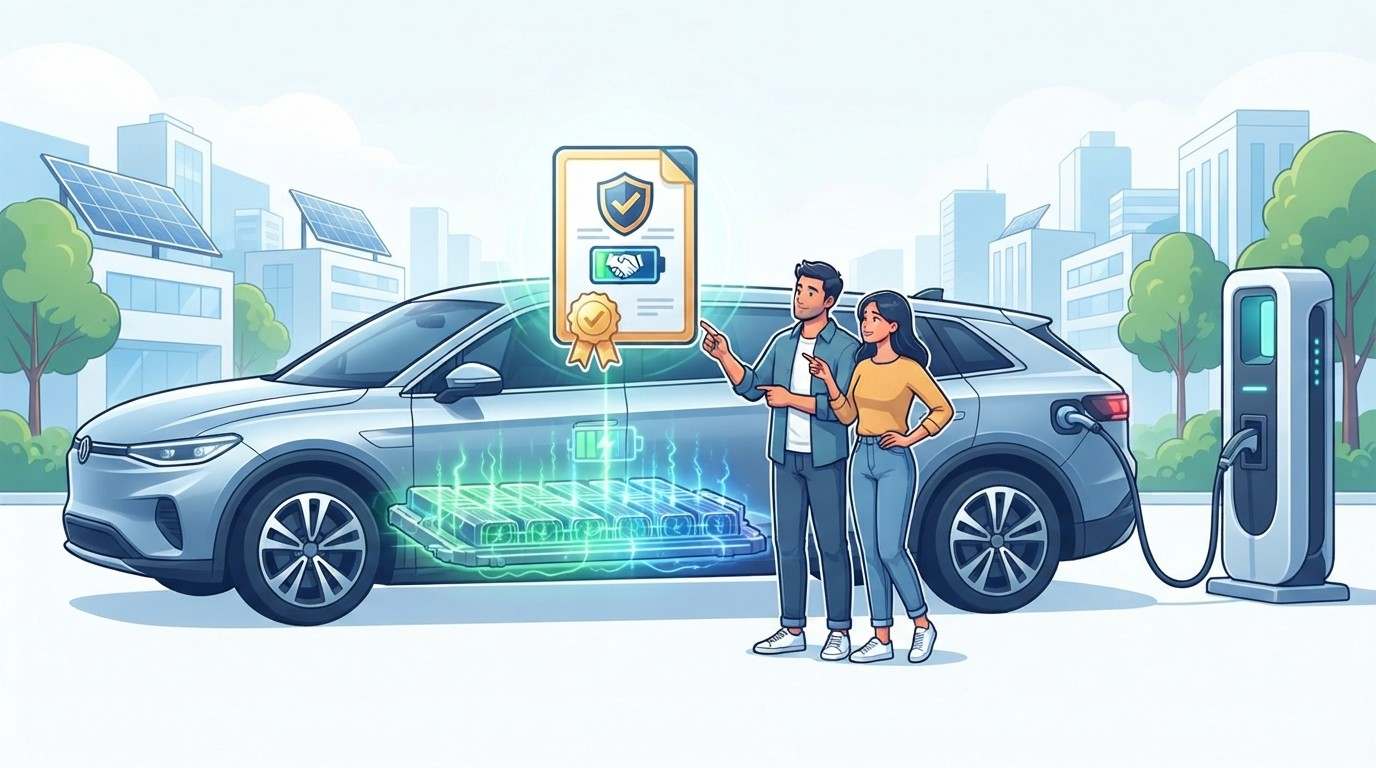
For a new EV under its applicable battery warranty, you generally shouldn't include the full cost of a battery replacement as a routine five-year expense.
That doesn't mean the battery can never develop a problem.
Modern manufacturers provide battery warranties covering specified defects and, in some cases, excessive capacity degradation below a stated threshold.
For example, Tata publishes lifetime HV battery coverage for eligible first registered private owners of certain models, with lifetime defined as 15 years. Other models and ownership situations have different terms.
Before purchasing, check:
Battery warranty duration.
Kilometre limit.
Minimum State of Health (SoH), where specified.
Repair versus replacement conditions.
Ownership-transfer rules.
Read our guide on what an EV battery warranty actually covers and what happens when you sell the car.
Don't add a hypothetical full battery replacement cost to every five-year EV ownership calculation. At the same time, don't assume that all battery problems will automatically qualify for a free replacement.
Yes. This is one of the biggest factors in the Indian market.
An EV charged mainly at home can have a much lower running cost than a petrol car. But someone depending on public fast charging will pay more per unit and spend additional time at charging stations.
According to the Ministry of Heavy Industries, the BHEL portal reported 52,718 public EV charging stations on 21 July 2026. Of these, 16,561 were equipped with fast chargers for cars.
The government is also supporting further development through PM E-DRIVE.
As of 28 September 2026:
₹2,000 crore had been allocated for nationwide public EV charging infrastructure.
₹851 crore had been approved for deploying 8,147 chargers through three oil marketing companies and ten states.
Approved deployment does not mean every charger is already installed and operational.
India's charging infrastructure is expanding through government support, private charging operators, oil marketing companies and automobile manufacturers.
More reliable highway chargers, city charging points, apartment charging and faster payment options should make EV ownership easier over time.
But don't purchase an EV assuming a charging station announced for your highway will be operational when you need it.
Check your regular routes and confirm charger availability through the operator's app.
Electricity tariffs differ by distribution company and consumption slab.
For example, Torrent Power's Ahmedabad FY 2026–27 residential tariff order lists energy charges of ₹3.20 for the first 50 units, ₹3.95 for the next 150 units and ₹5 for additional units, before applicable FPPPA, electricity duty and other billing items.
This is why our calculation uses ₹8 per grid unit as a simple planning assumption, rather than pretending every EV owner pays the same tariff.
For buyers in other states, use the marginal cost shown on your actual electricity bill. Also compare the cost of public DC charging if you cannot charge at home.
Let's consider a family in Ahmedabad that drives 18,000 km annually.
They use the car for office travel, school runs, shopping and regular intercity visits. They have dedicated home parking and can install an AC charger.
We'll use the same price, fuel and efficiency assumptions explained earlier.
| Particulars | Value |
| Annual driving | 18,000 km |
| Five-year driving | 90,000 km |
| Petrol price | ₹101.83/litre |
| Petrol planning mileage | 13 km/litre |
| EV tested efficiency | 7.79 km/kWh |
| Home electricity assumption | ₹8/kWh |
| Charging losses | 10% |
Petrol Nexon
90,000 ÷ 13 × ₹101.83 = approximately ₹7.05 lakh
Nexon EV
90,000 ÷ (7.79 × 0.90) × ₹8 = approximately ₹1.03 lakh
Energy saving with the EV: approximately ₹6.02 lakh.
| Particulars | Amount |
| Additional EV purchase price | ₹5.27 lakh |
| Home charging setup | ₹0.50 lakh |
| Total additional expense | ₹5.77 lakh |
| Five-year energy saving | ₹6.02 lakh |
Under this scenario, the EV is slightly ahead after five years on purchase price, energy and assumed charger cost.
But the difference is only around ₹25,000. Insurance, financing, servicing and resale can easily change the result.
If the family plans to keep the car for seven or eight years, drives around 18,000 km annually and charges at home, the EV becomes financially attractive.
If the same family drives only 8,000 km annually, the petrol car is likely to remain financially better over the first five years under these assumptions.
That's the actual decision. Annual usage matters more than the excitement of buying an electric car.
This is a calculated ownership scenario using published prices, independent EV efficiency testing and stated assumptions. It is not an actual Wheels42 customer case or a claim of independently tested lifetime ownership costs.
The cheaper option depends on how you use the vehicle.
| Buyer profile | More suitable choice |
| Drives under 8,000 km annually | Petrol often makes more financial sense |
| Drives 10,000–12,000 km annually |
Compare purchase premium and home charging access |
| Drives 15,000–20,000 km annually | EV can become financially attractive |
| Has dedicated home charging |
EV has a stronger running-cost advantage |
| Depends mainly on public DC charging |
Recalculate EV energy costs before buying |
| Frequently travels to areas without charging facilities | Petrol may be more practical |
| Plans to keep the vehicle for 7–10 years |
EV savings have more time to recover the initial premium |
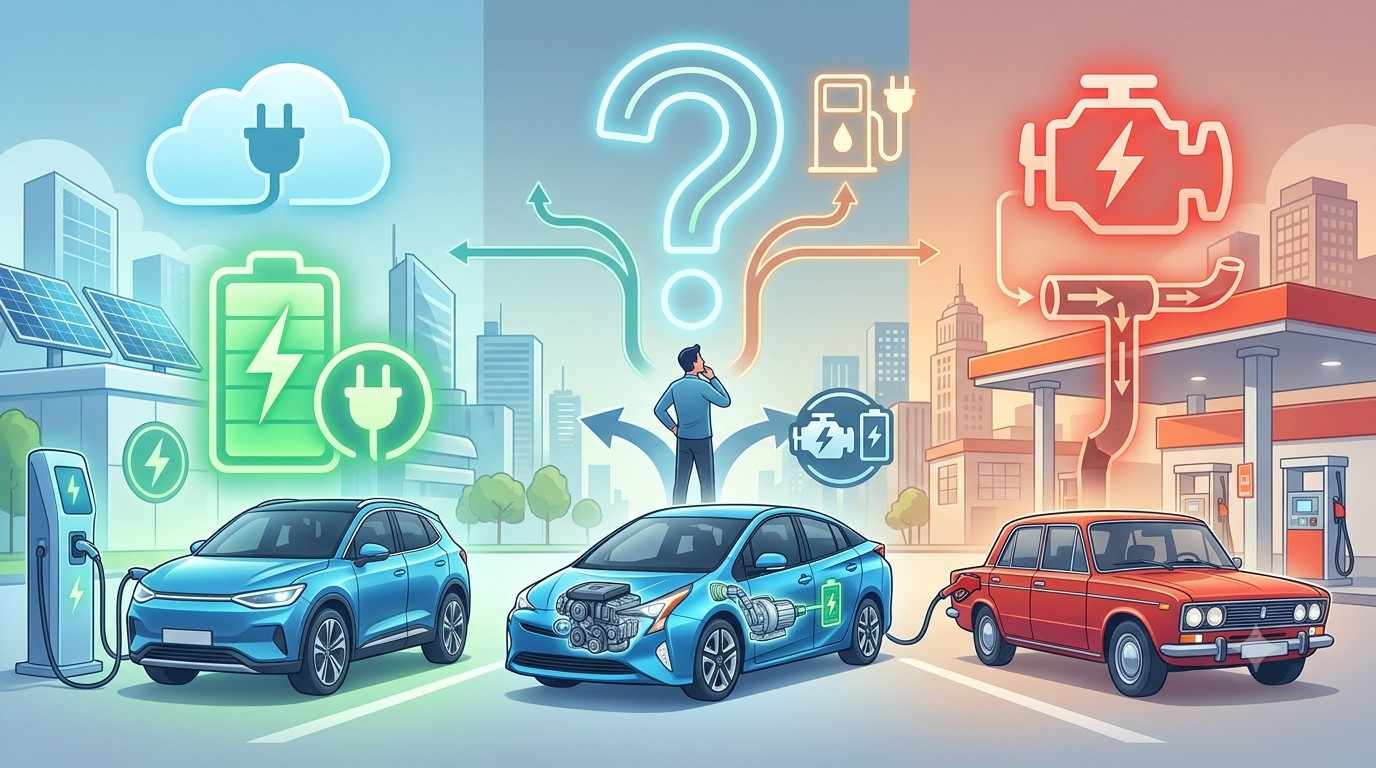
If you are still deciding between the two technologies, read our comparison of electric, hybrid and petrol cars for different driving requirements.
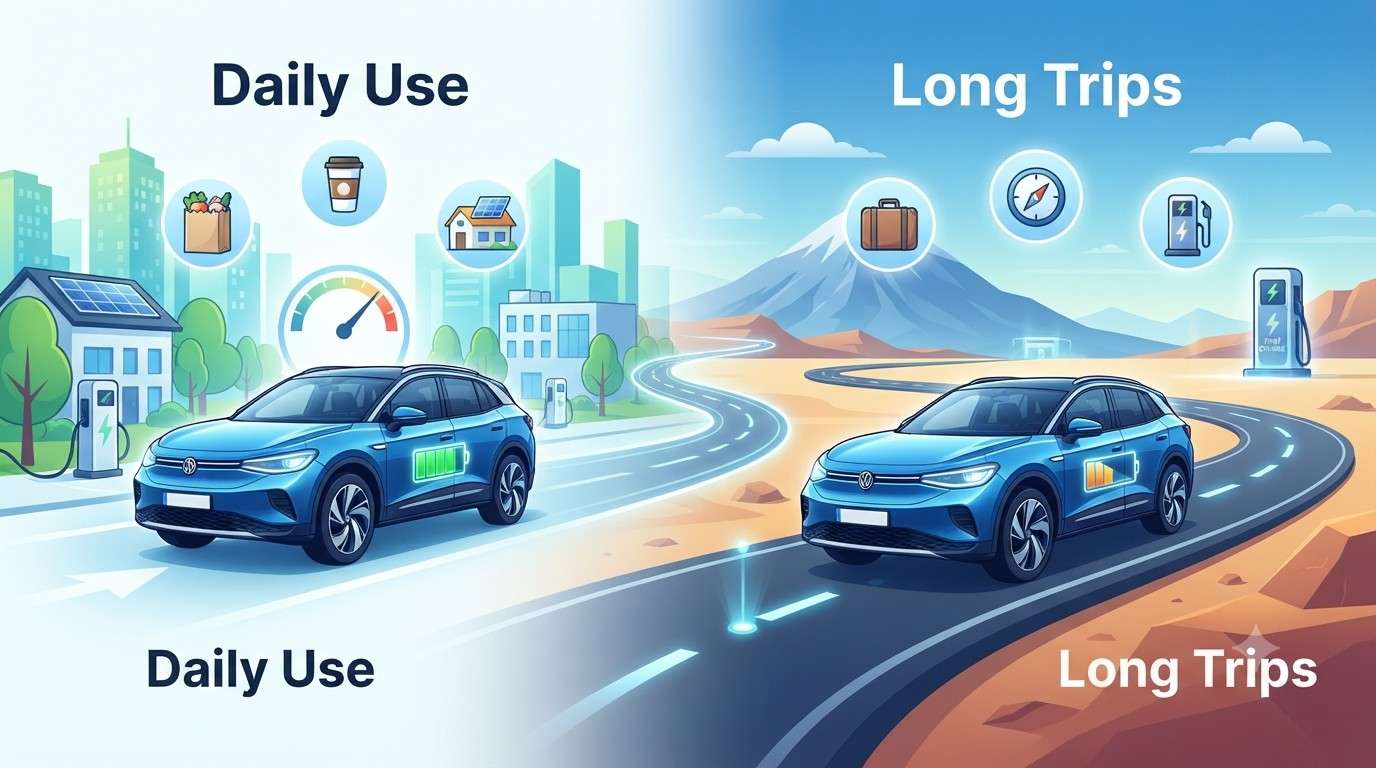
You should also calculate how much real-world range your daily commute needs before choosing an EV variant. Our guide on EV range for daily use and long trips explains the calculation.
Before booking either car, calculate these expenses for your exact variants:
Ex-showroom and on-road purchase price.
Annual kilometres driven.
Real-world petrol mileage or EV efficiency.
Local petrol price.
Electricity tariff and charging losses.
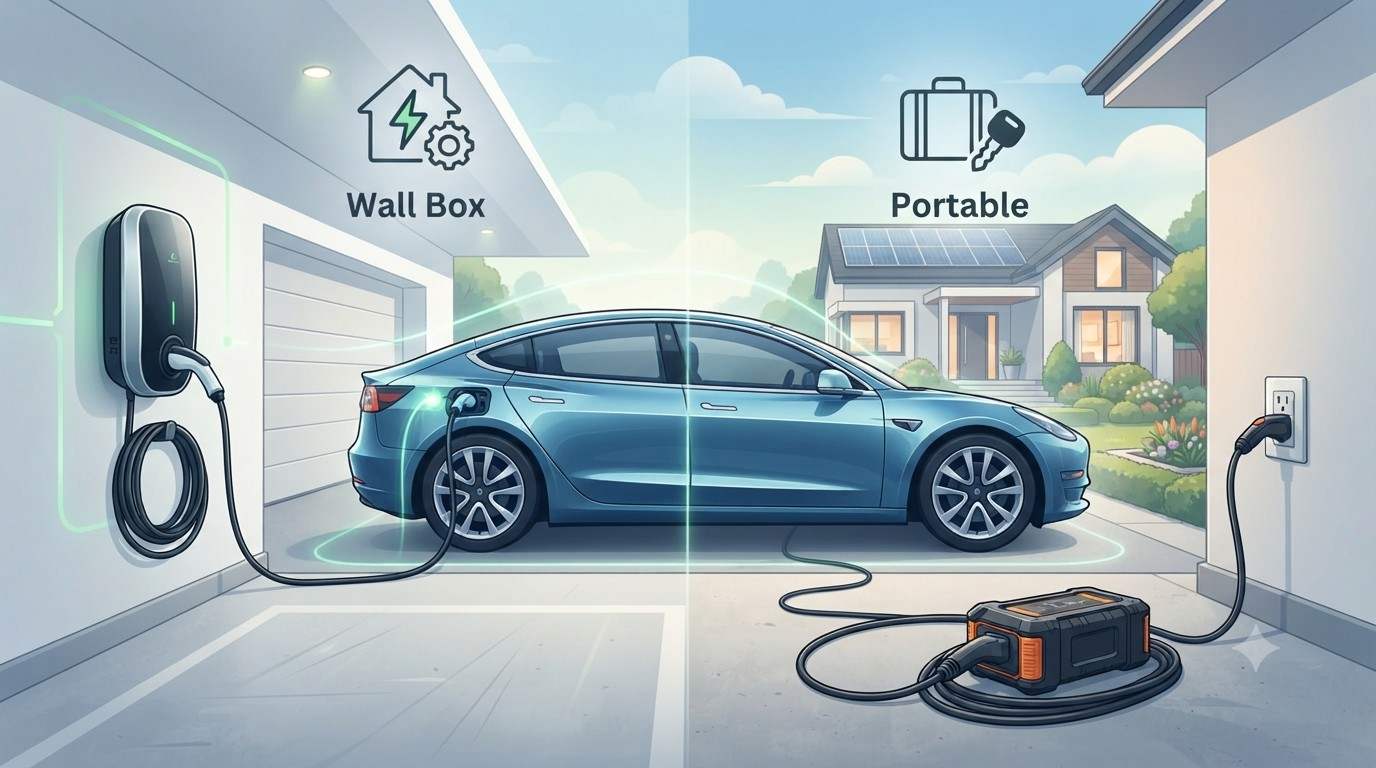
Home wallbox purchase and installation.
Scheduled maintenance and wear items.
Comprehensive insurance for both cars.
Loan interest, if financed.
Battery warranty and ownership restrictions.
Expected resale value after five years.
State-specific EV registration and road-tax benefits.
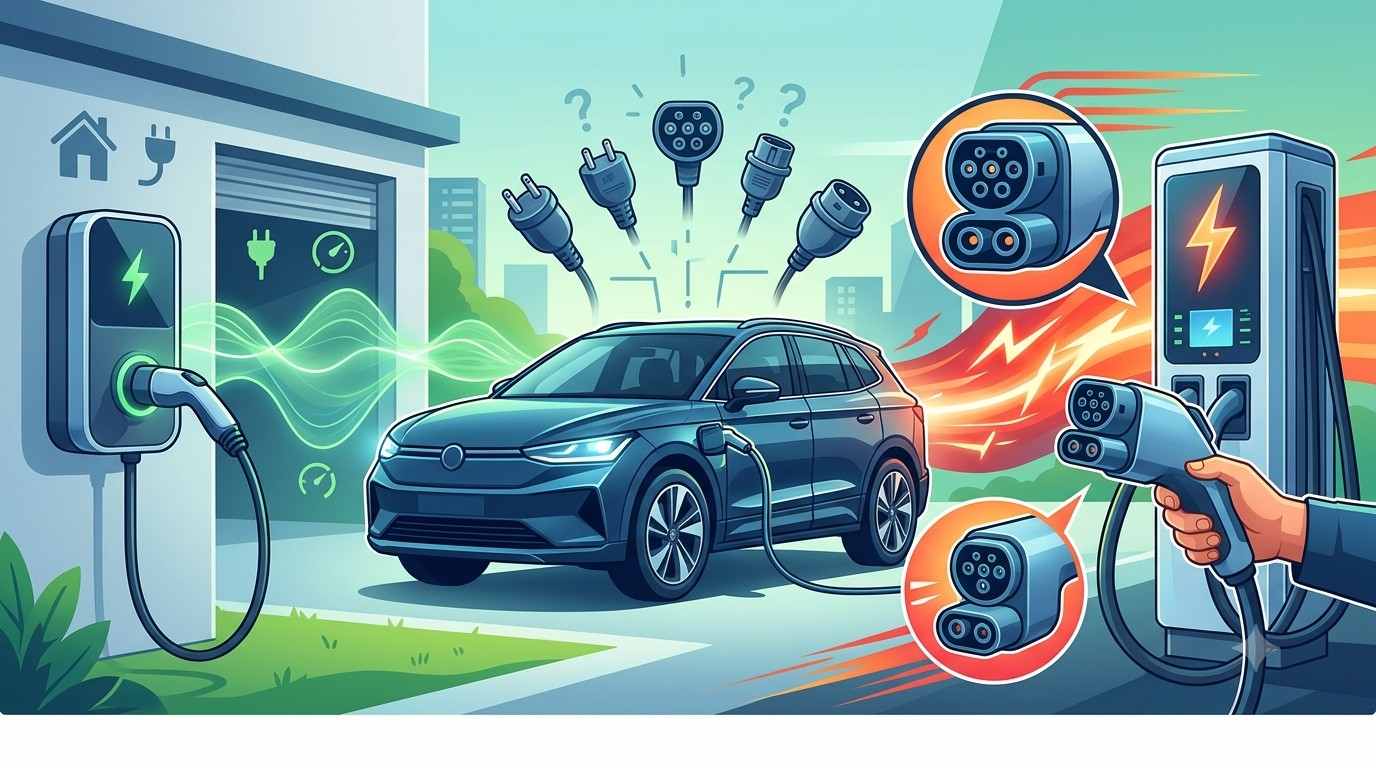
For the EV, also compare the cost of home charging with public charging. Our guide on choosing the right AC, DC and CCS2 charger for your electric car explains the different charging options.
Not necessarily. Public charging tariffs differ by operator, location, charger power and applicable taxes. If you depend on DC fast charging for almost all your energy, your per-kilometre cost can rise considerably. Calculate the cost using the actual charging rates on your regular routes instead of using a home electricity tariff.
Compare the total loan interest, not just the monthly EMI. An EV often requires a larger loan because of its higher purchase price. Even when its running costs are lower, the additional interest can delay the point at which the EV becomes cheaper. Compare both cars using the same down payment, loan tenure and interest rate.
It can, but not in every case. EVs have substantial battery weight and instant torque, which can increase tyre wear when driven aggressively. The actual replacement cost depends on tyre size, brand, wheel specification and driving habits. Check the price of all four replacement tyres before comparing ownership costs.
It can. Changes in battery technology, new vehicle prices, battery health and warranty transfer rules influence used-EV demand. A battery diagnostic report and remaining warranty can make a meaningful difference when selling. Don't assume an EV and a petrol car will retain the same percentage of their original value.
It can reduce your charging expense, particularly when you have surplus solar generation and a compatible charging arrangement. But the solar system itself has an installation and maintenance cost. Calculate the additional solar investment, daytime charging availability, grid electricity you still purchase and any export credit before counting solar charging as free.
An EV offers much cheaper energy costs. In our Nexon example, it saves approximately ₹4 lakh over five years at 12,000 km of annual driving.
But the higher purchase price can prevent the EV from becoming the cheaper overall option within those five years.
For buyers covering 15,000–20,000 km annually, charging mainly at home and planning to keep the vehicle for several years, an EV can offer a compelling financial advantage.
For buyers covering fewer kilometres, depending on public charging or changing cars within three to five years, a petrol car can still make more financial sense.
Don't buy an EV just because electricity is cheaper than petrol. Buy it when your driving distance, charging access, purchase price and ownership period make the complete calculation work.