2026-11-17
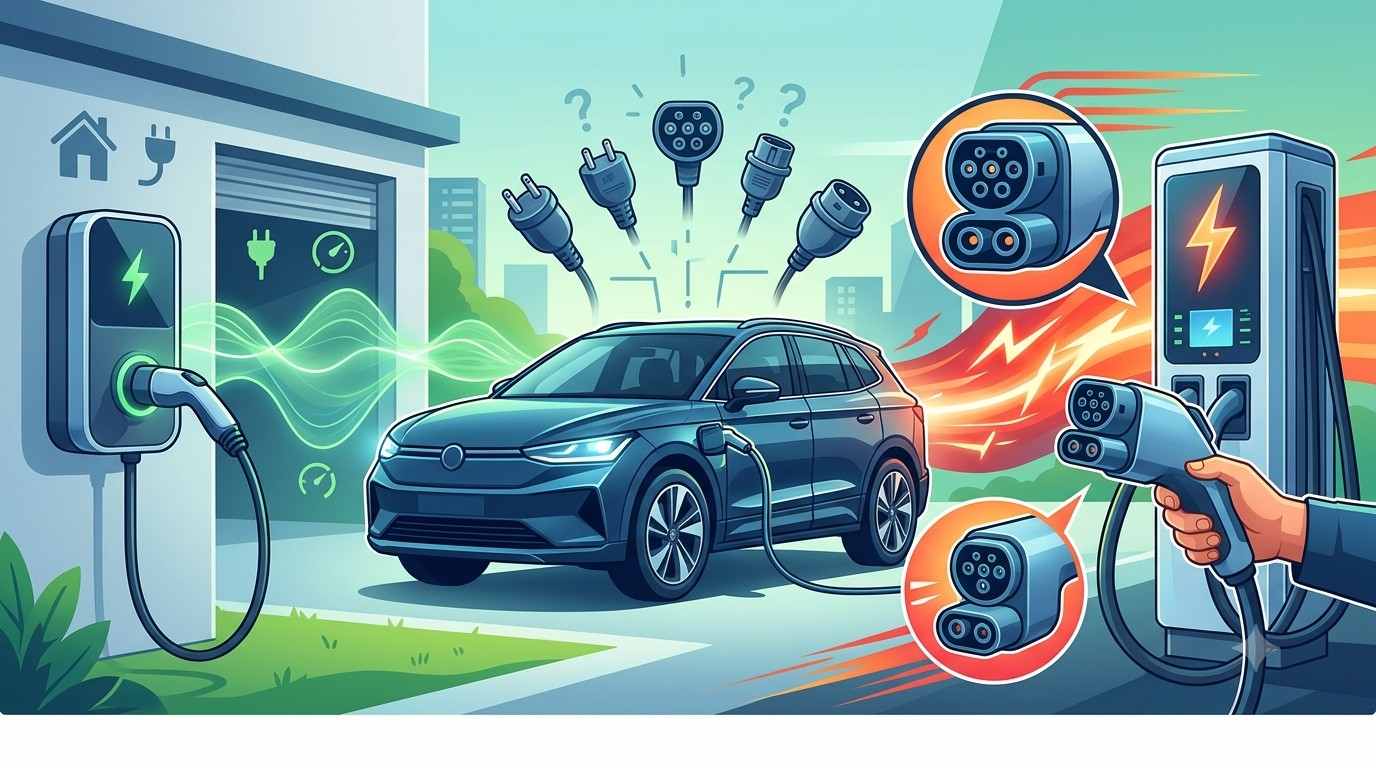
Quick answer: For most electric car owners in India, an AC home wallbox is the right choice for everyday charging, while a CCS2-compatible DC fast charger is better for highway journeys and quick top-ups.
But the charger’s power rating isn't the only thing that matters. Your EV has its own charging limits. A 22 kW AC charger won't charge a car at 22 kW if its onboard charger supports only 7.2 kW. The same applies to DC fast charging.
Before choosing a charger, check three things: your car's AC charging capacity, its maximum DC charging power and the connector it supports.
Let's understand how to match them.
AC and DC charging both supply electricity to an EV, but they differ in where the electricity is converted before reaching the battery.
AC charging supplies alternating current (AC) to the vehicle. The car's onboard charger converts this electricity into direct current (DC), which the battery can store.
This makes AC charging suitable for places where a vehicle stays parked for several hours, such as homes, offices and residential parking areas.
Common AC charging options include:
3.3 kW AC chargers
7.2 kW AC wallboxes
11 kW AC chargers
22 kW AC public charging points
The actual speed depends on the car's onboard charger and the power available at the charging point.
For example, a car with a 3.3 kW onboard charger won't charge faster just because you connect it to a 7.2 kW wallbox.
DC charging supplies direct current to the vehicle's battery system. The conversion from grid AC to battery-ready DC happens inside the charging station rather than the car's onboard AC charger.
This allows DC chargers to supply much higher power, making them useful at highway stops and public charging stations.
Common public DC charger ratings include 30 kW, 60 kW, 120 kW and 150 kW or higher.
However, connecting a car to a 150 kW charger doesn't mean it will receive 150 kW. The vehicle's maximum DC charging capacity, battery temperature and current charge level decide how much power it accepts.
| Factor | AC Charging | DC Fast Charging |
| Electricity supplied | Alternating current | Direct current |
| Where conversion happens | Inside the car | Inside the charging station |
| Main component | Onboard charger | DC charging equipment and vehicle battery controls |
| Typical use | Home, office and overnight charging | Highways and quick top-ups |
| Charging speed | Usually slower | Usually faster |
| Common connectors | Type 2 | CCS2 |
| Best suited for | Daily charging | Long-distance journeys |
Which is better? Neither is universally better. AC charging is generally more practical for everyday use, while DC charging saves time when you're travelling or need to recharge quickly.
Type 2 and CCS2 are two important EV charging connector standards. They are related, but they aren't interchangeable terms.
A Type 2 connector is used for AC charging. It is commonly found on home wallboxes, workplace charging points and public AC charging stations.
It has a seven-pin design that supports communication between the vehicle and charging equipment, along with the AC power connection.
In India, Type 2 is an important AC charging connector for electric passenger cars.
CCS2 stands for Combined Charging System 2, also called Combo 2.
It combines the Type 2 AC connection with two additional larger pins for DC fast charging.
This allows a compatible vehicle to use both AC charging and DC fast charging through the same vehicle inlet.
In simple terms:
Type 2: AC charging connection.
CCS2: Combined AC and DC charging connection, with additional DC pins.
India's EV charging standards information from NITI Aayog identifies Type 2 and CCS2 among the connector options used for AC and DC charging infrastructure.
| Feature | Type 2 | CCS2 |
| Full name | Type 2 | Combined Charging System 2 |
| Charging supported | AC | AC and DC |
| Connector design | Seven-pin design | Type 2 section plus two large DC pins |
| Common use | Home and public AC charging | AC charging and public DC fast charging |
| DC fast charging | No | Yes, on compatible vehicles |
Important: A Type 2-only vehicle cannot use DC fast charging simply because a public station has a CCS2 connector. The car must have a compatible CCS2 inlet and support DC charging.
Always check the exact vehicle variant before booking a charger installation or planning a highway trip.
This is one of the most important checks before buying an EV charger.
The charging speed depends on the lowest applicable limit in the charging system.
For AC charging:
Maximum charging power = The lowest of the car's onboard charger capacity, the wallbox output and the available electrical supply.
For DC charging:
Maximum charging power = The lowest of the car's current DC charging limit and the charger's available output.
Battery temperature, state of charge and charging-station power sharing can reduce the actual speed further.
Suppose your EV supports 7.2 kW AC charging.
Connect it to a 3.3 kW AC charger: charging is limited to around 3.3 kW.
Connect it to a 7.2 kW AC wallbox: it can accept up to around 7.2 kW, subject to supply and charging conditions.
Connect it to an 11 kW AC charger: it still cannot exceed its 7.2 kW onboard charging limit.
Suppose your EV supports a maximum DC input of 50 kW.
Connecting it to a 120 kW compatible CCS2 station won't force 120 kW into the battery. The vehicle controls how much power it accepts.
This is why you should check your car's charging specifications before paying extra for a higher-rated home charger.
Check the following details in your vehicle's official specification sheet or owner's manual:
Maximum AC charging power.
Maximum DC fast charging power.
Charging connector type.
Estimated AC charging time.
Estimated DC charging time, including the percentage range covered.
Don't rely only on the showroom's general statement that a car supports fast charging. Ask for the exact figures for your variant.
For most owners with fixed parking, an AC wallbox is the most practical everyday charging option.
The right power rating depends on your car's onboard charger and how long it stays parked.
| Your car's AC charging capacity | Practical home charging choice |
| 3.3 kW | A compatible 3.3 kW AC charger |
| 7.2 kW | A compatible 7.2 kW AC wallbox |
| 11 kW | An 11 kW AC setup, provided your electrical supply supports it |
| 22 kW | A compatible 22 kW setup, provided your car and electrical connection support it |
These are matching examples, not a rule that every EV owner must install the largest available charger.
If you drive a short distance daily and your car stays parked overnight, a suitable lower-power AC charger may be enough. You don't need to spend more just to get a higher number on the wallbox.
Some EV manufacturers supply a portable charger designed for a suitable 15A socket. However, this doesn't mean every household socket is safe for charging an electric car.
An EV may draw a sustained electrical load for several hours. The socket, wiring, earthing and circuit protection must be suitable for that job.
Before using a portable charger regularly:
Check whether the vehicle manufacturer permits that charging method.
Have an electrician inspect the socket, wiring and earthing.
Check that the circuit has the required protective devices.
Avoid loose sockets, unsuitable extension cables and multi-plug adapters.
For regular home charging, a properly installed wallbox on a suitable circuit is generally the better choice.
The Indian government's EV charging guidance allows owners to charge vehicles at residences and offices using existing electricity connections. However, the available electrical load and installation safety still need to be checked.
Read our guide on whether a household socket is suitable for EV charging before relying on a portable charging cable.
Home charging can become more complicated when you use shared parking.
Before purchasing an EV, check:
Whether your housing society permits charger installation.
Whether you have an assigned parking space.
Whether a suitable electricity connection can reach that space.
Whether separate metering or an approved billing arrangement is possible.
Whether the building's electrical capacity can support the installation.
Get permission before arranging the work. A car may support 7.2 kW charging, but that doesn't mean your apartment building can supply it without changes.
DC fast charging makes the most sense when time matters.
Use it when:
You're travelling between cities.
Your remaining range is not enough to reach your destination.
You need a quick recharge during a highway break.
Home or workplace charging isn't available.
You have a long journey with planned charging stops.
Before selecting a station, check its connector and power rating.
For example, a 60 kW CCS2 station may be a better match for a car that accepts up to 60 kW than travelling to a much more powerful station that offers no practical speed advantage for that vehicle.
Also, don't expect the charging rate to remain constant from an almost empty battery to 100%.
Most EVs reduce charging power as the battery approaches a high state of charge. This is why manufacturers often quote DC fast-charging times for a specific range, such as 10% to 80%, rather than 0% to 100%.
Fast charging does not automatically damage an EV battery. Modern electric cars use a battery management system (BMS) to monitor battery conditions and control charging.
However, frequent high-power charging under certain conditions, especially when the battery experiences excessive heat, can contribute to faster degradation.
For everyday use, AC charging is often the convenient option. Keep DC fast charging for situations where you actually need the speed, and follow the manufacturer's battery-care instructions.
For a closer look at battery health, read whether fast charging damages an EV battery.
Let's use a real vehicle example to understand the difference between home AC charging and public DC fast charging.
Tata's published Nexon.ev charging specifications list the following figures for its 45 version:
| Charging option | Manufacturer-published charging time |
| 7.2 kW AC wallbox | 10% to 100% in approximately 6 hours 36 minutes |
| 60 kW DC fast charger | 10% to 80% in approximately 40 minutes |
These are manufacturer-published estimates, not independent Wheels42 test results. Actual charging times can vary with battery temperature, starting charge level, power supply and other conditions.
Imagine an owner who uses the Nexon.ev for daily office travel and parks it at home overnight.
A 7.2 kW AC wallbox is a practical choice. The vehicle can recharge while the owner is asleep, without needing a public charging stop every day.
Now consider a weekend drive between cities.
The same owner can use a compatible 60 kW DC fast charger during a highway break. A 10% to 80% charging session takes approximately 40 minutes according to Tata's published figure.
The important lesson is that the owner doesn't need to choose between AC and DC charging.
Use AC charging for routine needs and compatible DC fast charging when a journey demands it.
That's a more practical charging plan than buying the highest-rated charger available.
Before purchasing a home charger or relying on a public charging network, go through these checks.
Confirm whether your vehicle supports Type 2 AC or CCS2 charging.
Check the maximum AC input power and onboard charger rating.
Check the maximum DC charging power.
Match your home wallbox to the vehicle's AC limit.
Have your home wiring, earthing and electrical load checked.
Check whether your apartment or parking facility permits installation.
Check CCS2 charger availability on your regular highway routes.
Compare manufacturer-published charging times for the same battery percentage range.
Read the vehicle's battery charging recommendations.
If you're still deciding which EV to purchase, start by comparing electric cars available in India. Then use the complete EV buying guide for India to check charging access, range, ownership costs and battery warranty.
Yes, provided the charger, connector and electrical supply are compatible. However, your car will still accept a maximum of around 7.2 kW under suitable conditions. A 22 kW wallbox won't make its onboard charger faster.
No, not simply because the station is rated at 150 kW. A compatible EV and charging station communicate and regulate the power supplied. The car's charging system limits the power it accepts. Always check connector and vehicle compatibility.
Yes, a vehicle with a CCS2 inlet can generally use a compatible Type 2 AC charging point through the AC section of its inlet. You need the correct charging cable and the car must support that AC charging connection.
It may be possible, but you need permission from the property owner or relevant housing society, along with an approved electrical installation. Check the parking arrangement, meter, cable route and available load before buying the charger.
The advertised power is not guaranteed throughout a charging session. A battery that's too hot or cold may accept less power, and charging usually slows as the battery approaches a high state of charge. Public stations may also share available power between vehicles. Compare the charging percentage range and conditions before assuming there's a fault.
For most Indian EV owners, a compatible AC wallbox is the sensible choice for daily charging, especially when the car stays parked overnight.
A CCS2 DC fast charger is more useful for highway travel and quick top-ups, provided the vehicle supports DC fast charging.
Don't buy a charger just because it has a higher kW rating. Match its output to your car's onboard charging capacity, DC input limit, connector and available electrical supply.
The right charger is the one your car can actually use, at a speed that suits your daily routine.








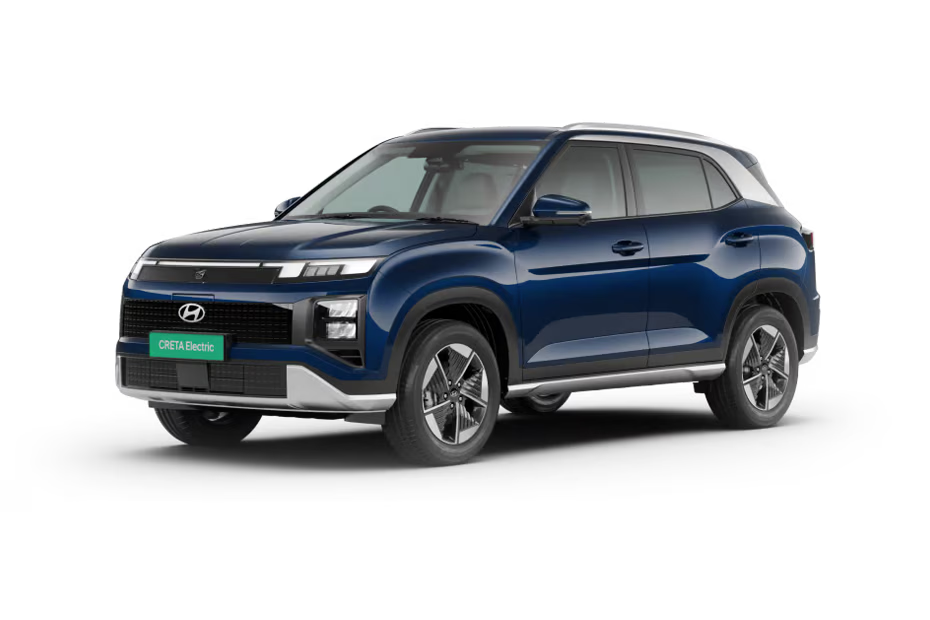
Hyundai
₹18.03 - 23.67 Lakh