
2026-11-22
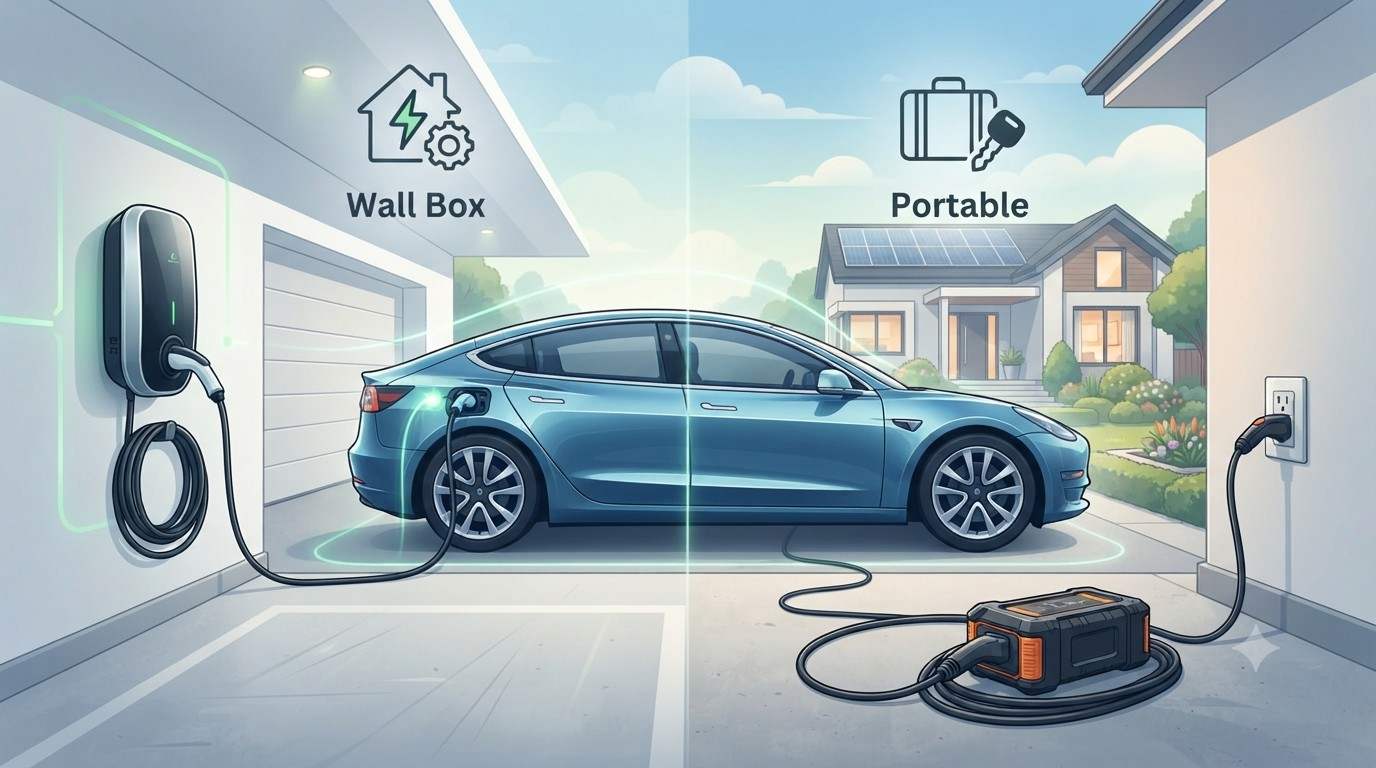
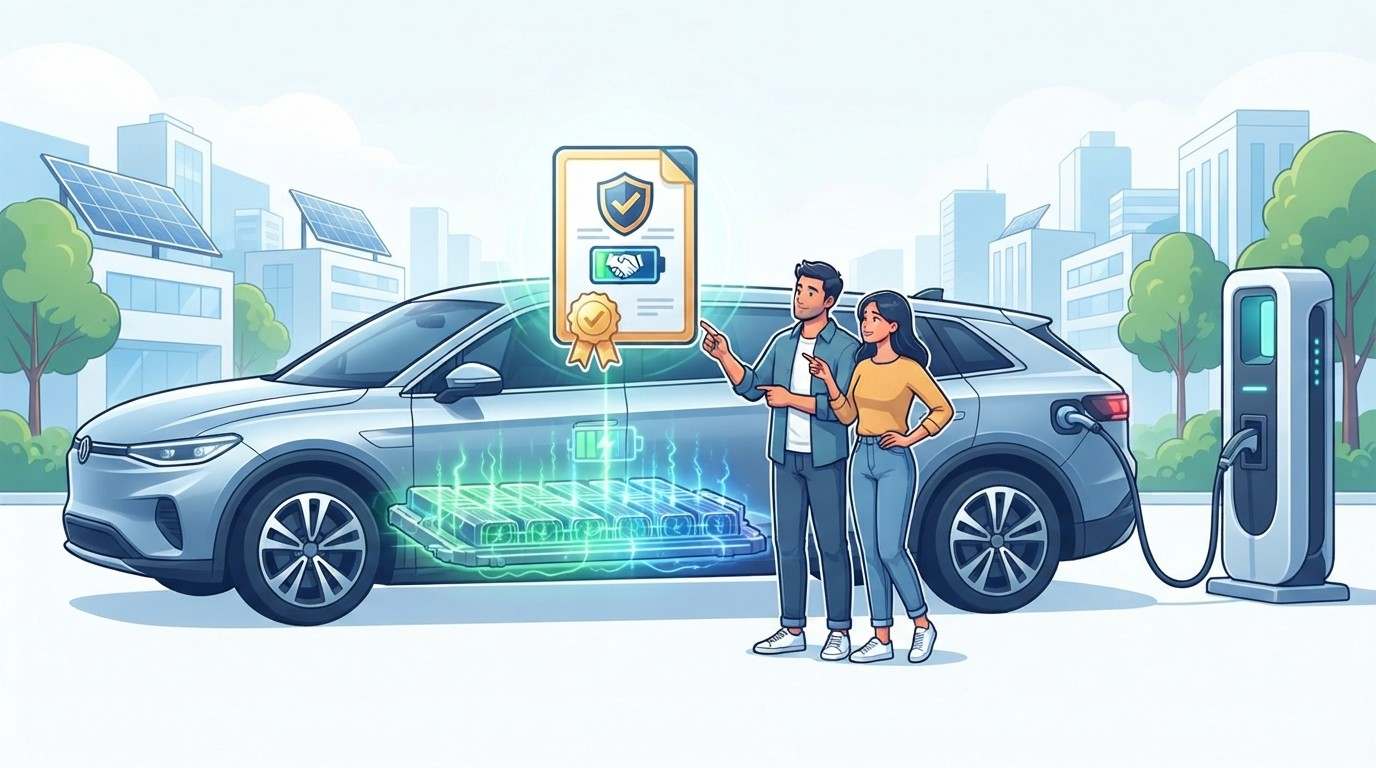
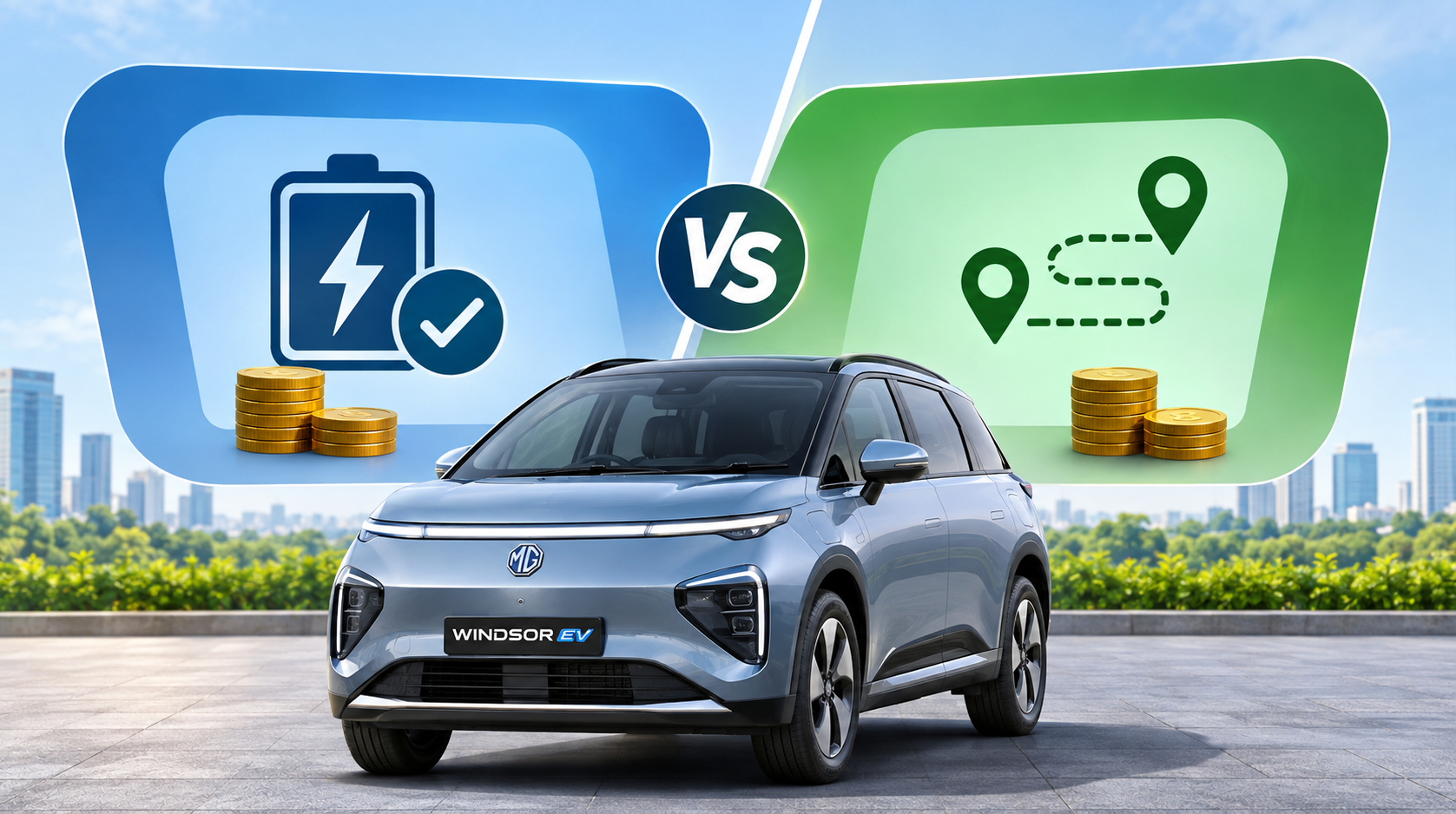
Quick answer: If you drive an electric car regularly and have dedicated parking, a 7.2 kW AC wallbox is usually the better long-term choice. But if you drive 30–50 km daily and park overnight, a manufacturer-approved 15A portable charger can be enough.
The biggest mistake is buying a wallbox just because it's faster. You might spend ₹40,000–₹80,000 on installation when your daily driving only needs two or three hours of portable charging.
The right choice depends on three things: how much you drive, how long your car stays parked and how much AC charging power your EV supports.
Let's break it down with actual charging figures, Indian installation costs and the electrical issues you should check before connecting your car.
A wallbox is a fixed AC charging unit installed near your parking space. A portable EV charger is a movable charging unit that connects to a compatible fixed electrical outlet.
Both supply AC electricity to your car. The vehicle's onboard charger converts it into DC power for the battery.
Here's how they compare:
| Factor | Wallbox | Portable charger |
| Installation | Fixed installation | Usually plug-in |
| Common power | 3.3 kW, 7.2 kW and higher | Often around 2.3–3.3 kW |
| Charging speed | Faster with a higher-rated unit | Usually slower |
| Portability | Fixed | Can be carried |
| Smart features | Available on selected models | Depends on model |
| Initial expense | Higher | Often included with the car |
| Best for | Regular home charging | Lower daily usage and backup |
A wallbox is designed for regular home or workplace charging. It is mounted on a wall or suitable stand and connected to a dedicated electrical circuit.
Depending on the model, it can provide 3.3 kW, 7.2 kW or higher AC charging power.
Some smart wallboxes also offer:
Scheduled charging during selected hours.
Mobile app monitoring.
Energy consumption tracking.
RFID access control.
Dynamic load management.
Solar charging integration.
You don't need all these features. For most homes, the most important things are the correct power rating, electrical protection and a reliable installation.
A portable charger is generally supplied with the electric car as an accessory. It includes a charging cable and an in-line control and protection unit.
Some models support compatible 15A fixed socket connections. They are particularly useful when the car stays parked for several hours and doesn't need a large amount of energy every night.
But remember, a portable EV charger isn't an ordinary extension cable or multi-plug board. It is purpose-built charging equipment.
You don't need a 7.2 kW wallbox simply because your EV has a large battery.
What matters is how much energy you use every day and how much time the car gets to recharge.
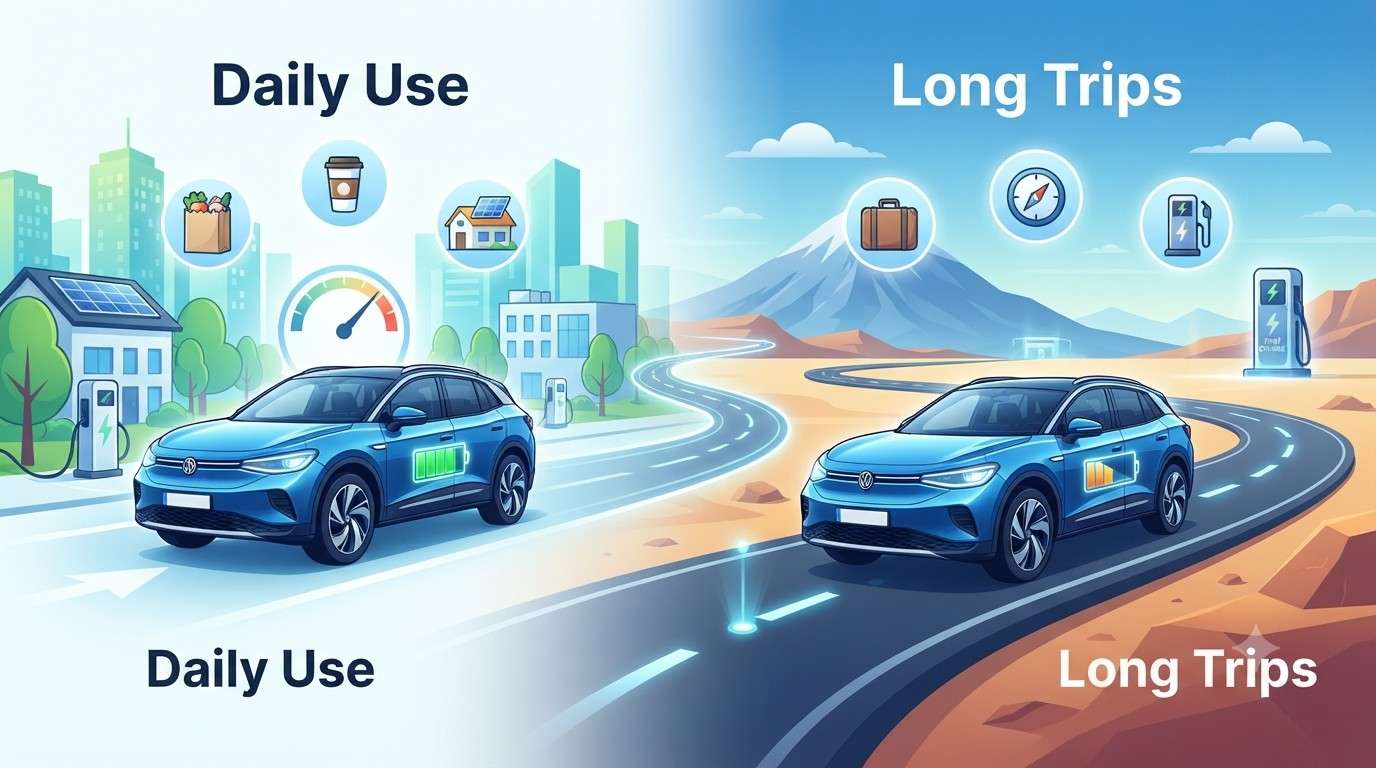
| Your daily driving | Practical recommendation |
| Up to 30 km | Portable charger can be enough |
| 30–50 km | Portable charger can work well with overnight parking |
| 50–80 km | Compare portable and 7.2 kW wallbox |
| 80–120 km | Wallbox is generally more convenient |
| Above 120 km | Higher-powered compatible wallbox is worth considering |
These are practical buying guidelines, not fixed technical limits. A driver covering 100 km daily can still use a portable charger if the charging window is long enough.
Use this simple formula:
Daily energy required = Daily kilometres ÷ Real-world efficiency (km/kWh)
Approximate charging time = Energy required ÷ Average charging power
Let's take a person driving 45 km daily in an EV that delivers 7 km per kWh.
Daily distance: 45 km
Energy consumed: 45 ÷ 7 = 6.4 kWh
Average battery charging power from the portable setup: approximately 2.3–2.5 kW
Estimated replenishment time: approximately 2.5–3 hours
This is a planning estimate based on average charging performance. Actual charging time changes with the vehicle, battery level, charging losses and electricity supply.
Here's the interesting part: If your car stays parked for 10 hours every night, you have plenty of time to recover that daily energy using a portable charger.
A wallbox becomes more useful when you need to replenish much more energy within a shorter parking window.
Yes, a higher-powered wallbox can charge faster, but your car's onboard charger decides how much AC power it can accept.
For example, if your EV supports only 3.3 kW AC charging, connecting a 7.2 kW wallbox won't make it charge at 7.2 kW.
Before buying, check:
Maximum AC charging power supported by your car.
Wallbox output rating.
Available household electrical load.
Single-phase or three-phase supply requirements.
For example, a 7.2 kW wallbox operating at 230V draws approximately 31A. That's a significant continuous load for a household connection.
Your air conditioner, geyser, induction cooktop and other appliances also consume electricity. A load assessment helps prevent the main circuit from tripping when everything runs together.
Read how an EV's onboard charger controls home charging speed before selecting a wallbox.
Tata's official specifications publish the following charging estimates for the Nexon.ev 45:
| Charging option | 10% to 100% charging time |
| 15A portable charger | 17 hours 36 minutes |
| Standard AC home wallbox option | 17 hours 36 minutes |
| 7.2 kW AC wallbox | 6 hours 36 minutes |
These are manufacturer-published estimates, not independent Wheels42 test results.
The difference is important. A standard lower-powered AC charger and a suitable portable charger can take similar time, while the 7.2 kW wallbox makes a substantial difference.
So, don't compare a wallbox with a portable charger simply by their names. Compare their actual power ratings and your vehicle's AC charging limit.
For a typical 7.2 kW home wallbox, budget around ₹30,000–₹55,000 for the charger hardware. Installation and electrical work can take the total to approximately ₹40,000–₹80,000.
Here is an indicative late-2026 cost breakdown.
| Component | Approximate cost |
| Basic 7.2 kW wallbox | ₹30,000–₹45,000 |
| Smart/app-enabled wallbox | ₹45,000–₹55,000+ |
| 6 sq mm armoured copper cable, where specified | ₹180–₹300 per metre |
| MCB, compatible RCCB/RCBO and protection equipment | ₹2,500–₹5,000 |
| Labour, mounting and basic conduit work | ₹3,000–₹10,000 |
These are indicative market estimates, not fixed manufacturer prices or a Wheels42 installation quotation. Actual prices vary by brand, GST, cable route, city and installation requirements.
For example, some Indian wallbox product listings start around ₹29,000, while installer and market pricing guides quote higher amounts for branded or smart units.
The wallbox itself isn't always the biggest expense.
Consider a home where the electricity meter is 20 metres away from the parking space. The installation needs a longer cable run, conduit, mounting and electrical protection.
Another home might have parking directly beside the distribution board. The installation could be much simpler.
Your final quote can increase when:
The parking area is far from the electrical panel.
Existing wiring needs replacement.
A separate earthing arrangement is required.
The sanctioned electrical load needs upgrading.
The wall or floor needs drilling and civil work.
A separate EV meter or connection is requested.
Ask the installer for an itemised quote. Don't accept a single installation amount without knowing what it includes.
This is where many first-time EV owners make mistakes.
A 15A socket might look suitable, but its rating doesn't tell you whether the wiring behind it can support several hours of continuous charging.
The common causes include:
Loose connections behind the socket.
Worn or poor-quality socket contacts.
Undersized conductors for the actual load.
Poorly tightened electrical terminals.
Multiple high-power appliances sharing the same circuit.
An unsuitable or damaged plug.
For example, a socket might be marked 15A, but the cable connected to it may not be suitable for that continuous load.
Don't assume 1.5 sq mm, 2.5 sq mm or 4 sq mm wiring is automatically correct. The electrician must calculate the cable size based on current, cable length, installation method, temperature, voltage drop and applicable standards.
A 2.5 or 4 sq mm conductor can suit some installations, but it isn't a universal answer for every 15A or wallbox circuit.
Before charging regularly, ask a qualified electrician to check:
Dedicated electrical circuit for EV charging.
Correctly rated MCB and compatible residual-current protection.
Proper earthing and earth-continuity testing.
Cable size and insulation.
Tight and suitable socket or charger connections.
Available sanctioned load.
Protection against relevant electrical faults.
The CEA's 2023 safety regulations require separate overload protection and prohibit cord extension sets and portable socket outlets for EV charging.
This is why using a multi-plug board or an ordinary extension lead to reach your car is not a safe solution.
Some Indian homes experience voltage fluctuations, especially where the local supply or house wiring is weak.
A portable EV charger can reduce power or stop charging if its input voltage goes outside the permitted range. Poor neutral connections, loose terminals and excessive voltage drop can also trigger charging interruptions.
Here's what to do:
Note the charging error shown by the charger.
Check whether the interruption happens repeatedly at similar times.
Ask an electrician to measure the supply voltage while the charger is operating.
Have the neutral, earth and electrical connections inspected.
Contact your electricity distribution company if the incoming supply is outside its permitted range.
Don't buy a random voltage stabiliser or bypass the charger's protection. Check the manufacturer's recommendations first.
A charger stopping because it detects an electrical problem is better than forcing it to continue through an unsafe connection.
Yes. The Ministry of Power's 17 September 2024 EV charging guidelines specifically address residential and community charging.
The guidelines recognise private charging points in designated parking spaces, existing electricity connections, separate metering and community charging arrangements.
Under Section 16 of the guidelines:
Housing societies can establish community EV charging stations in consultation with the electricity distribution company.
Residents can install private charging points in their designated parking spaces.
Electricity can be supplied through an existing meter or a separate sub-meter.
A society can seek an increase in sanctioned load if its community charging arrangement needs more power.
Under Section 15, residential owners can use an existing electricity connection or request a separate metered EV connection.
Don't begin by arguing about the rules. Submit a written request with the proposed installation details.
You can use the following format:
Subject: Request for Permission to Install a Private EV Charging Point
Dear Society Committee,
I am planning to install a private AC electric vehicle charging point at my allotted parking space.
The proposed installation will use a dedicated electrical circuit, appropriate protection and proper earthing. I will arrange an electrical load assessment and use a qualified installer.
As per the Ministry of Power's Guidelines for Installation and Operation of Electric Vehicle Charging Infrastructure, dated 17 September 2024, Section 16 covers private EV charging points in designated residential parking spaces.
Please let me know the society's required installation process, approved cable route and metering arrangements.
I am willing to share the installation drawing, electrical assessment and any required documents before the work begins.
Regards,
Resident
Get the property owner's permission before installing a permanent wallbox.
A portable charger is easier to carry when you move, but it still needs a suitable fixed electrical connection. You cannot simply connect it through an extension board to reach an outside parking space.
For tenants, confirm the charging arrangement before purchasing the EV.
Let's use Tata's published charging figures to calculate whether a daily commuter actually needs a wallbox.
Consider an owner who:
Drives 45 km every day.
Gets around 7 km per kWh in normal driving.
Parks at home for 10–12 hours.
Owns a Tata Nexon.ev 45.
Has a properly tested electrical connection for the portable charger.
45 km ÷ 7 km/kWh = 6.4 kWh
The owner needs to replenish approximately 6.4 kWh in the battery each day.
Using Tata's published 17 hours 36 minutes for a 10% to 100% portable charging session as a rough full-session average, this daily energy requirement could take around 2.5–3 hours to replenish.
This is a calculated planning estimate, not a measured Wheels42 charging session. Actual top-up times vary with battery level, charging losses and supply conditions.
Let's compare.
| Factor | 15A portable charger | 7.2 kW wallbox |
| Daily energy required | 6.4 kWh | 6.4 kWh |
| Estimated recharge time | 2.5–3 hours | Around 1–1.2 hours |
| Overnight parking | 10–12 hours | 10–12 hours |
| Additional installation expense | None if suitable existing point is available | Approximately ₹40,000–₹80,000 installed |
For this owner's routine, the portable charger is sufficient. The car has several additional hours available overnight, so a faster wallbox doesn't provide much practical benefit for the daily commute.
But imagine the owner starts driving 120 km daily, has only four hours of parking at home or needs to share the vehicle with another driver.
The 7.2 kW wallbox becomes more useful.
The lesson: The faster charger isn't automatically the better purchase. It must solve a charging-time problem you actually have.
This is a worked case study using Tata's published charging specifications and stated driving assumptions. It is not a claimed Wheels42 customer installation or independent charging test.
Home charging is becoming part of India's wider EV infrastructure planning.
The Ministry of Power's 2024 guidelines recognise residential charging, workplace charging and community charging in housing societies. They also allow homeowners to seek additional sanctioned electrical load or separate EV connections.
This matters because residential charging doesn't need to depend entirely on public charging stations.
Some developments that are likely to make home charging more useful include:
Smart charging: Wallboxes that schedule charging and monitor household electricity use.
Load management: Chargers that reduce their power when other home appliances are operating.
Solar integration: Homeowners using compatible solar inverters and smart chargers to charge from available rooftop solar power.
Apartment charging: More private and shared charging points in designated residential parking.
Vehicle-to-Grid: Bidirectional charging, where compatible cars and equipment can send power back to the grid.
These developments are at different stages. Smart scheduling and load management are already available on some chargers, while bidirectional residential charging is not yet a standard feature in Indian homes.
For a typical buyer, a properly installed wallbox or an approved portable charging arrangement is still the practical choice.
Before paying for installation, use this checklist:
Check the car's maximum AC charging power.
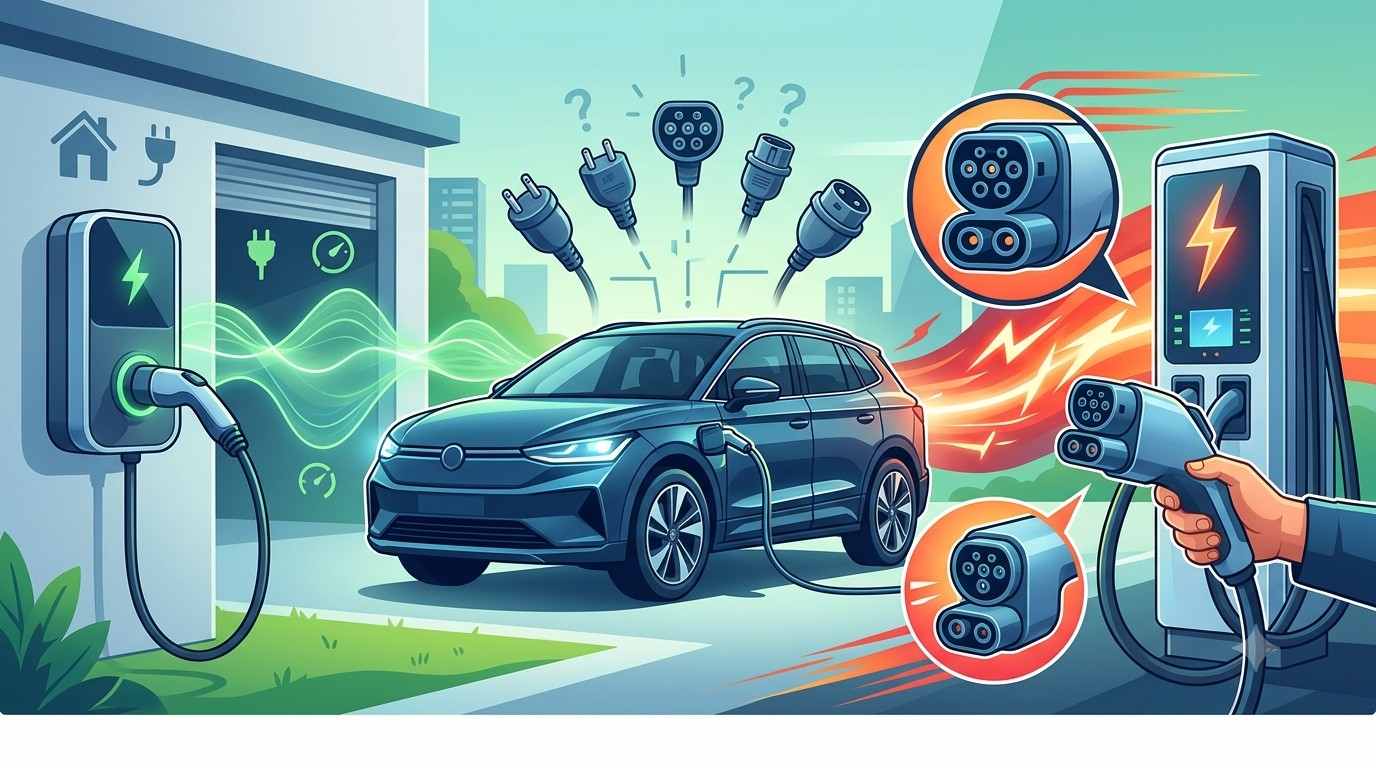
Confirm the charger and vehicle connector compatibility.
Calculate your daily electricity requirement.
Compare the overnight charging time.
Check available sanctioned load.
Get the wiring and earthing inspected.
Confirm the MCB and residual-current protection requirements.
Check cable length from the electrical panel to parking.
Get an itemised installation quotation.
Confirm warranty and after-sales support.
Get society or landlord permission where needed.
If you are still deciding which EV to purchase, our complete EV buying guide for India explains how home charging, battery size, range and ownership costs fit together.
Stop charging. Switch off the supply at the appropriate breaker before handling the connection, provided it is safe to do so. Don't continue using that outlet after it cools down. Have an electrician inspect the plug, socket contacts, wiring and circuit protection. Replacing only the socket faceplate without checking the wiring can leave the original problem unresolved.
Only if your electrical connection and sanctioned load can handle the combined demand. A 7.2 kW wallbox draws roughly 31A at 230V, before adding other household appliances. Ask for a load assessment or install a compatible dynamic load-management system that reduces charging power when household demand rises.
Not automatically. Most EV charging equipment is designed to operate within a specified input-voltage range and has built-in protection. First check the manufacturer's permitted range and have any repeated under-voltage or over-voltage issue diagnosed. A stabiliser must be correctly rated and approved for the charging equipment, not selected like a stabiliser for a television.
Don't assume a normal household inverter or generator can support EV charging. The equipment must provide enough continuous power and a compatible electrical output, earthing and protection arrangement. Check the EVSE and vehicle manufacturer's instructions before attempting backup charging. A regular home inverter is not automatically suitable for this load.
Not before checking the included charger. Ask the dealer for its power rating, connector, installation scope and warranty. A bundled 7.2 kW wallbox might already meet your requirements. Buying another unit without checking the supplied equipment can waste ₹30,000–₹55,000 or more.
For regular home charging, a 7.2 kW wallbox is the better long-term option when you drive longer distances, have a short parking window or need to recharge quickly.
But a portable charger can be enough for many Indian owners driving 30–50 km daily with overnight parking. It saves installation costs and can replenish the day's energy without requiring a faster charging setup.
Before spending ₹40,000–₹80,000 on a wallbox, calculate your daily energy requirement and check your actual overnight charging time.
Choose a wallbox when you need the speed. Choose a portable charger when it already does the job. And never compromise on the electrical installation just to save money.