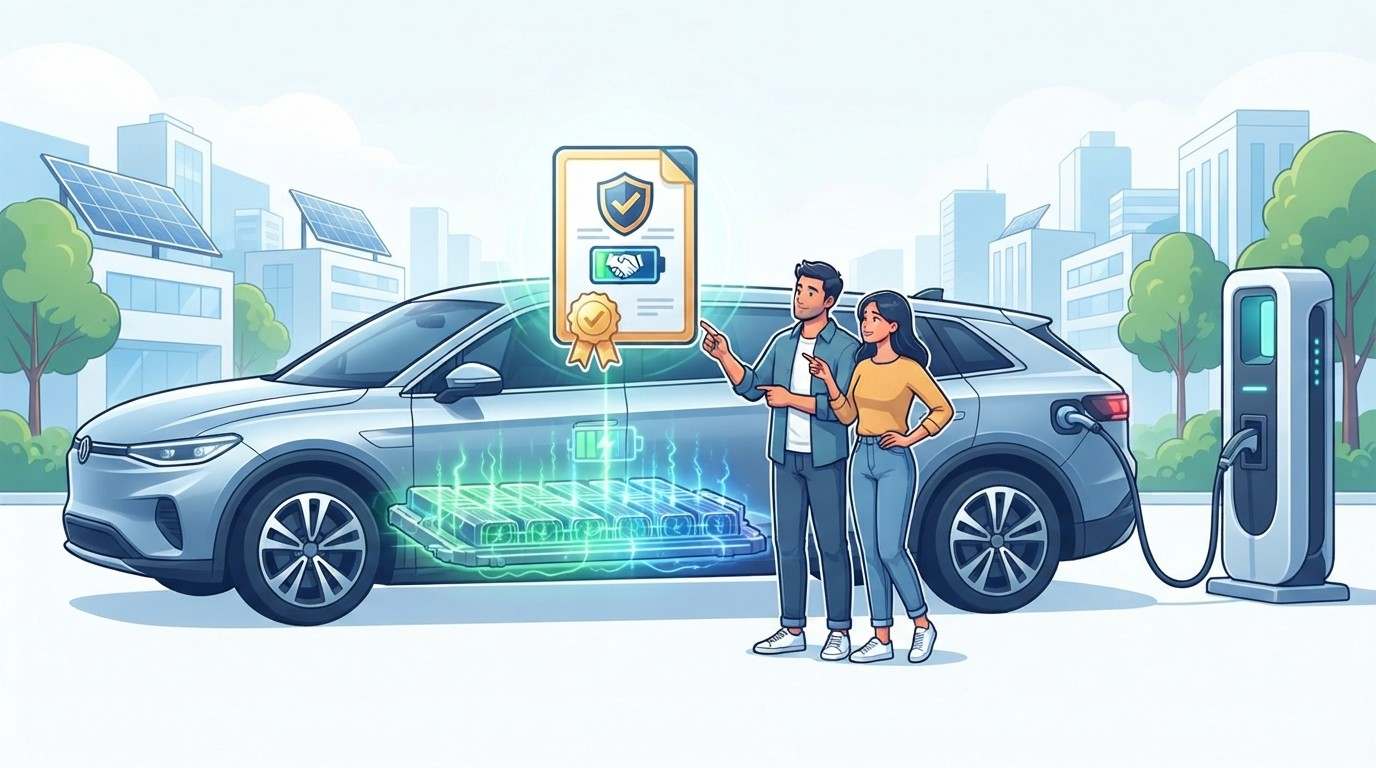
Quick answer: Before buying an electric car in India, check its battery warranty duration, kilometre limit, minimum State of Health (SoH), ownership-transfer rules and exclusions. Most importantly, find out whether the warranty covers battery capacity falling below a specific percentage or only manufacturing defects.
An eight-year battery warranty doesn't automatically mean the manufacturer will replace your battery if its range reduces after five years. Similarly, a lifetime battery warranty may apply only to the first registered private owner.
The traction battery is one of the most expensive components of an electric car. So, understanding its warranty can save you from a costly surprise later.
Here's what you should check before booking an EV.
What Does an EV Battery Warranty Actually Cover?
An EV battery warranty protects the owner against certain battery-related failures and capacity problems during the stated coverage period.
Depending on the manufacturer, it can cover:
-
Manufacturing defects in the high-voltage battery pack.
-
Faulty battery cells or modules.
-
Internal battery-related electrical failures.
-
Excessive battery capacity loss beyond the manufacturer's specified limit.
-
Repair or replacement of eligible defective battery components.
But not every battery warranty offers the same protection.
Some manufacturers publish a minimum battery capacity requirement, while others assess degradation against their internal battery ageing standards.
What is State of Health (SoH) in an EV battery warranty?
State of Health, or SoH, indicates the battery's remaining energy-storage capacity compared with its original condition.
For example, if an EV battery originally has 40 kWh of nominal energy capacity:
| Battery SoH |
Approximate remaining capacity |
| 100% |
40 kWh |
| 90% |
36 kWh |
| 80% |
32 kWh |
| 70% |
28 kWh |
| 60% |
24 kWh |
Suppose a manufacturer provides warranty coverage if the battery falls below 70% SoH during the warranty period.
The manufacturer may then be responsible for an eligible repair or replacement, depending on the warranty terms and diagnostic results.
Important: A 70% SoH threshold does not mean every EV battery should retain 70% capacity throughout its life. It is a warranty condition, not a prediction of normal battery ageing.
Is an 8-Year or 1,60,000 km EV Battery Warranty Good?
Yes. An eight-year or 1,60,000 km warranty provides a defined coverage period, provided the vehicle meets the manufacturer's conditions.
However, the phrase whichever comes first is important.
Consider an EV with an eight-year or 1,60,000 km battery warranty.
-
Owner A drives 10,000 km annually. The eight-year time limit arrives before the kilometre limit.
-
Owner B drives 25,000 km annually. The 1,60,000 km limit arrives in approximately 6 years and 5 months.
Both owners have the same advertised warranty, but their actual coverage periods differ.
Before buying, calculate your expected annual driving distance. A high-mileage driver should pay particular attention to the kilometre limit.
Does the battery warranty start from the purchase date or registration date?
This depends on the manufacturer's warranty document.
It may start from the delivery date, first registration date or another defined date in the policy. For a used EV, the original owner's delivery and registration dates matter more than the date you purchase the vehicle.
Ask the dealer to confirm the exact start and expiry dates in writing.
What Does Lifetime EV Battery Warranty Really Mean?
A lifetime battery warranty sounds attractive, but it doesn't mean every battery component is covered forever under every ownership situation.
Some manufacturers restrict lifetime coverage to the first registered private owner. When the vehicle is sold, the next owner may receive a shorter fixed warranty.
Here are examples from manufacturer-published Indian warranty policies.
EV battery warranty comparison in India
| Manufacturer and model |
First registered private owner |
After ownership change / other applicable coverage |
| Tata Nexon.ev 45, Curvv.ev, Punch.ev 40 and Tiago.ev 24 |
Lifetime, defined as 15 years |
8 years / 1,60,000 km for eligible subsequent registration |
| Mahindra BE 6, XEV 9e and XEV 9S |
Lifetime battery warranty |
10 years / 2,00,000 km |
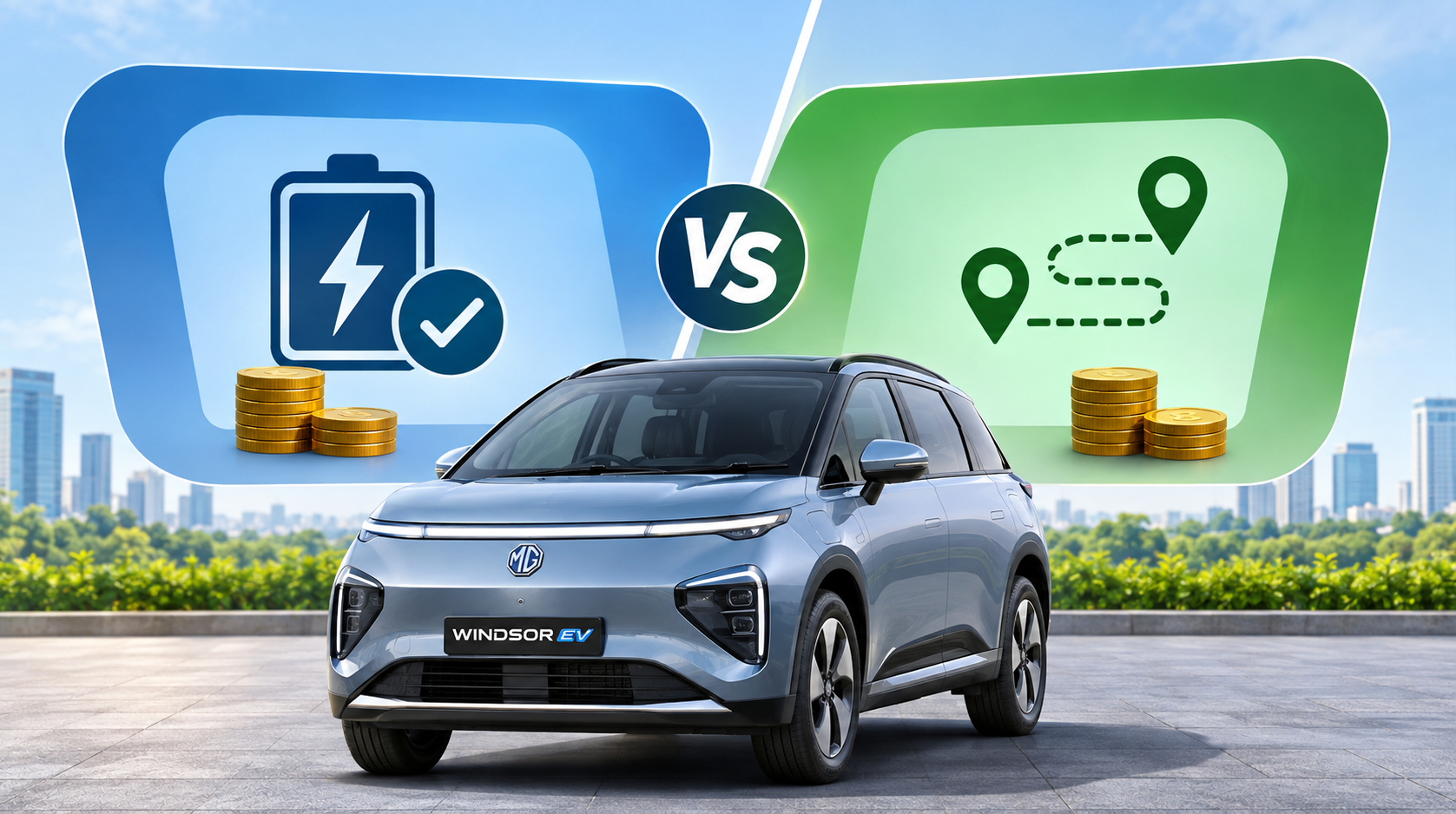
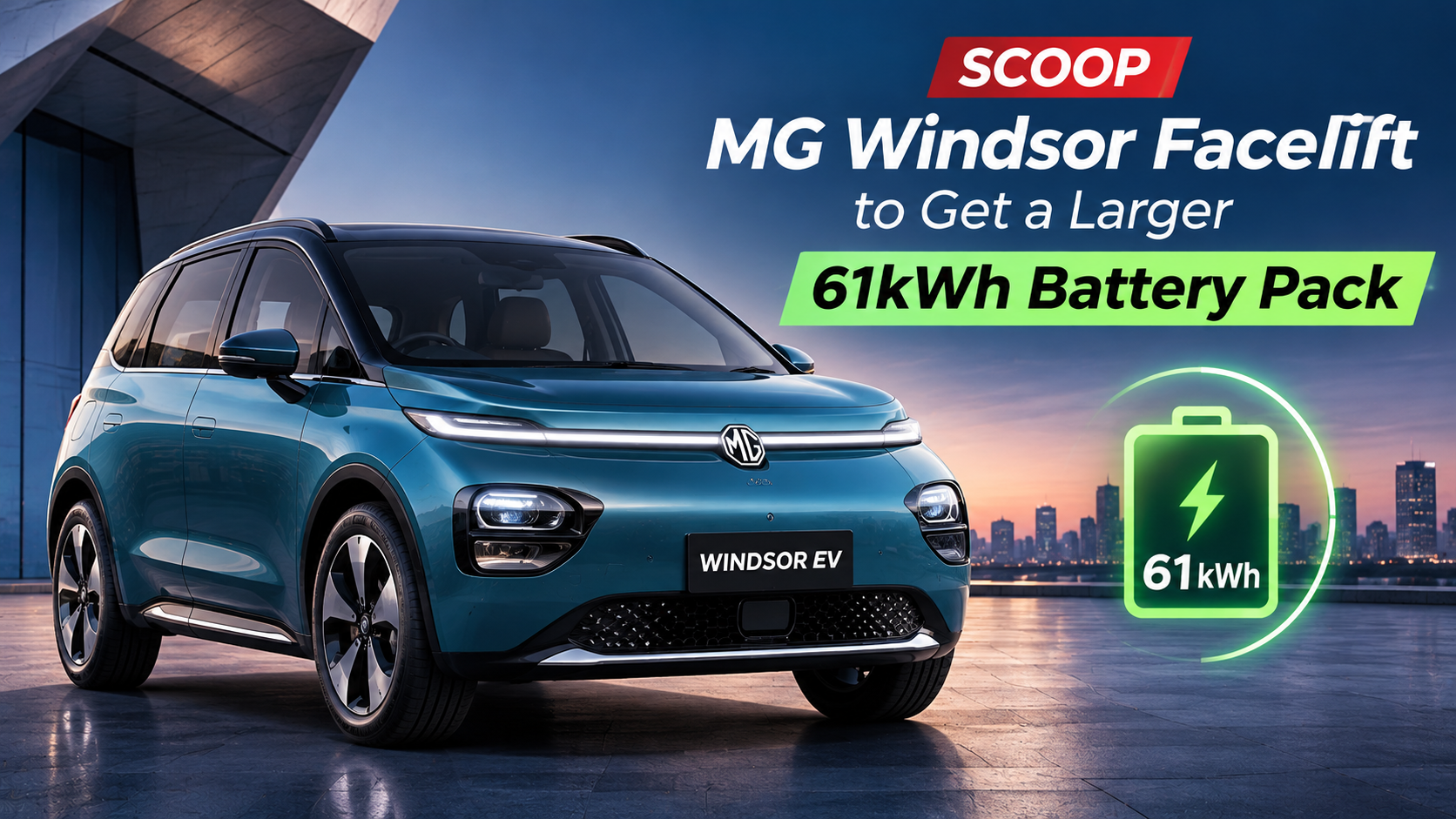
| JSW MG Windsor EV |
Lifetime, until validity of first registration certificate |
8 years / 1,60,000 km |
| Hyundai Creta Electric |
8 years / 1,60,000 km |
Subject to applicable warranty terms |
These are examples of published policies, not a universal comparison of all EV variants. Commercial registrations, eligibility, model year and purchase date can change the coverage.
Notice something important. Tata explicitly defines lifetime as 15 years from the first registration. MG Windsor's published manual ties first-owner coverage to the validity of the original registration certificate. Mahindra's headline offer specifies lifetime coverage for the first registered private owner.
The three offers should not automatically be treated as identical.
What happens to Tata EV battery warranty after resale?
Tata's published warranty page lists a lifetime high-voltage battery warranty for the first registration of eligible models, with unlimited kilometres subject to fair personal use.
For subsequent registration, the listed coverage is eight years or 1,60,000 km. The manufacturer's published policy also defines a 70% minimum SoH threshold for eligible capacity-related coverage.
Commercial and fleet-use vehicles have different warranty conditions.
What happens to Mahindra EV battery warranty after resale?
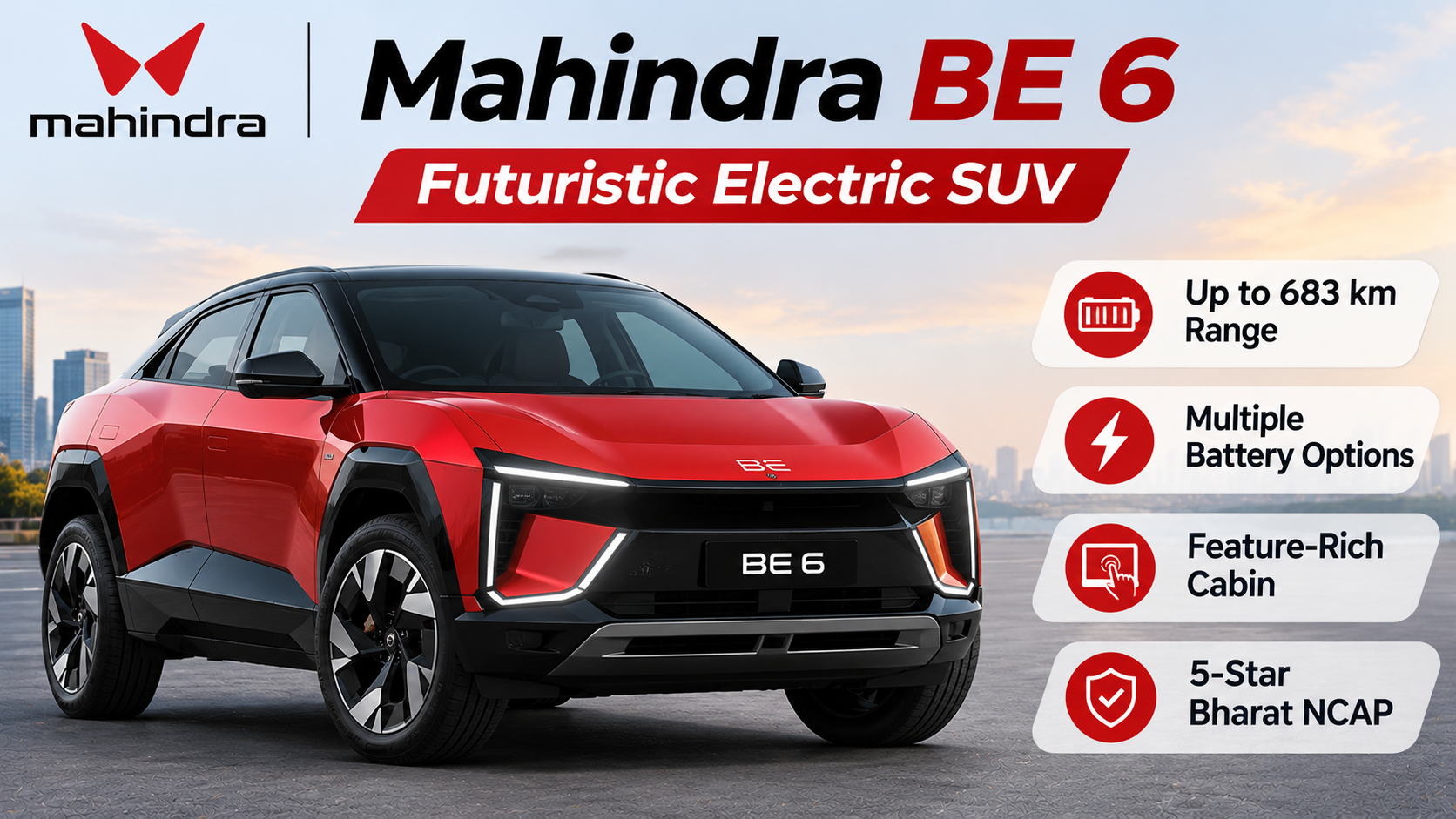
Mahindra offers lifetime high-voltage battery coverage to the first registered private owner of its electric SUVs.
In case of ownership change, the published terms specify ten years or 2,00,000 km from the first-ever delivery date, whichever comes earlier.
This is worth checking when comparing a new Mahindra EV with a pre-owned one.
What happens to MG Windsor EV battery warranty after resale?
The published JSW MG Windsor EV warranty manual offers lifetime high-voltage battery coverage to the first owner of an eligible privately registered retail car, until the validity period of the first registration certificate.
After ownership changes, the coverage becomes eight years or 1,60,000 km from delivery to the first owner, whichever comes earlier.
The manual also explains that excessive battery capacity loss is assessed by an authorised MG EV dealer against its acceptable degradation standards.
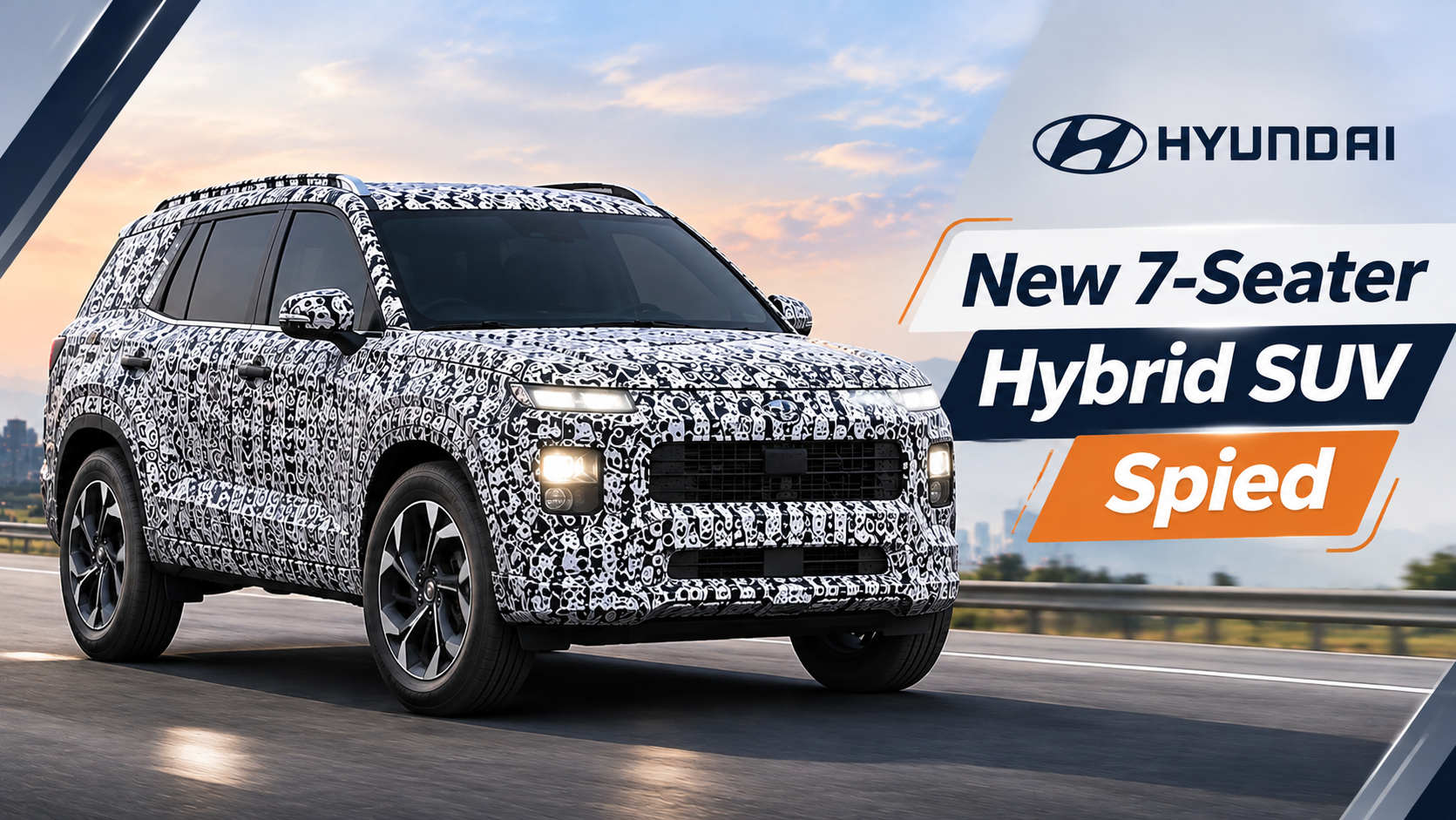
Is Hyundai's 8-year battery warranty enough?
Hyundai's official Creta Electric information specifies eight years or 1,60,000 km of battery warranty, whichever comes first.
This is a clearly defined coverage period. However, the duration alone doesn't tell you everything about battery capacity protection. Ask the dealer for the complete warranty document and check the minimum capacity conditions, claim process and transfer provisions.
Our advice: Don't select an EV simply because its advertisement says lifetime warranty. Compare the actual coverage, battery capacity conditions and ownership-transfer rules.
Does an EV Battery Warranty Cover the Entire Battery Pack?
Not necessarily. A manufacturer may choose to repair defective cells or modules instead of replacing the entire battery pack.
This is an important distinction because a battery pack contains multiple components, and one faulty module doesn't automatically mean the complete pack needs replacement.
For example, Tata's published HV battery warranty states that when the battery falls below its specified 70% SoH threshold, the manufacturer may repair or replace the HV battery or cells at its discretion.
The stated remedy aims to restore battery capacity to the steady-state SoH before repair or replacement, or 80% SoH, whichever is higher.
The MG Windsor manual also describes repairing the portion that has suffered excessive capacity loss where possible. If it cannot be repaired, the pack may be replaced using a new, remanufactured or reconditioned battery, depending on the manufacturer's decision.
Does the EV battery warranty cover the motor and charger too?
Not automatically.
An electric car has several high-voltage and electrical components, and their warranty periods can differ.
For example, the published MG Windsor warranty schedule lists:
| Component |
Published warranty |
| High-voltage traction battery |
Lifetime for eligible first private owner |
| Traction motor |
8 years / 1,60,000 km |
| 12V battery |
1 year |
| AC charger |
1 year |
This shows why you should check the warranty for each component separately. Don't assume the lifetime battery offer also covers the onboard charger, wallbox, 12V battery, inverter or all electrical wiring for the same period.
What Can Void or Limit an EV Battery Warranty?
A long warranty is useful only when you understand its conditions.
Manufacturers can reject claims when damage is caused by circumstances excluded from their warranty policies.
Common examples in manufacturer warranty documents include:
-
Using an unsuitable or unapproved battery charger.
-
Unauthorised modifications to the vehicle.
-
High-voltage repairs by an unauthorised workshop.
-
Neglecting the recommended maintenance schedule.
-
Damage caused by misuse or improper operation.
-
Physical damage caused by accidents or external impacts.
The exact exclusions differ between manufacturers. Not every manufacturer applies the same conditions in the same way.
Can fast charging void an EV battery warranty?
No, using a compatible DC fast charger does not automatically void the battery warranty.
However, the manufacturer may have conditions covering incorrect charging equipment, damage caused by improper usage or failure to follow the owner's manual.
Modern EVs have a Battery Management System (BMS) that controls battery charging and temperature. Still, battery temperature, charging patterns and prolonged exposure to high charge levels can influence long-term battery health.
Read our guide on whether frequent DC fast charging affects EV battery health to understand the difference between normal fast charging and harmful operating conditions.
Can charging to 100% affect warranty coverage?
Charging to 100% does not automatically void an EV battery warranty. However, certain manufacturers recommend different daily charging limits depending on battery chemistry.
For example, some LFP-powered EVs have different charging instructions from NMC-powered EVs. Follow the exact recommendations for your vehicle instead of applying one charging rule to every EV.
Our article on whether every EV needs to be charged to 100% every night explains these differences.
Does EV Charging Infrastructure in India Affect Your Ownership Decision?
Battery warranty and charging infrastructure are two different things, but both matter when buying an EV.
A good battery warranty provides protection against specified battery problems. A dependable charging network makes it easier to use your car without worrying about finding a compatible charging station.
What is the current EV charging infrastructure in India?
According to the Ministry of Heavy Industries, data from the BHEL portal reported the following figures on 21 July 2026:
| Public EV charging infrastructure |
Number |
| Total public charging stations |
52,718 |
| Public stations equipped with fast chargers for cars |
16,561 |
These figures should not be confused. Not every public EV charging station is equipped with a fast charger suitable for passenger cars.
What is the government doing to expand EV charging stations?
The PM E-DRIVE scheme has earmarked ₹2,000 crore for public EV charging infrastructure across India.
As reported in the government's October 2026 factsheet:
-
₹851 crore had been approved for deploying 8,147 chargers.
-
The approved deployment covered three oil marketing companies and ten states.
-
The scheme has been extended until 31 March 2028.
These are approved deployment figures, not confirmation that all the chargers are already installed and operational.
What does this mean for future EV buyers?
India's charging infrastructure is developing through government support, oil marketing companies and private charging operators.
The next important step is improving station reliability, coverage on highways, compatible charging points and access to authorised EV service centres.
For buyers, this means checking more than just the number of charging stations near their homes. Confirm that the stations on your regular routes are operational, support your vehicle's connector and provide suitable charging power.
You should also check whether the manufacturer's authorised service network can perform battery diagnostics and handle warranty claims in your city.
The charging network may improve during your ownership, but don't base your purchase decision on future stations that have only been announced or approved.
Case Study: Why Battery Warranty Transfer Matters When Buying a Used EV
Let's consider a hypothetical buyer, Rahul, who is comparing two three-year-old electric cars in the used market.
Both vehicles have travelled approximately 45,000 km.
He initially prefers the MG Windsor EV because its first owner received lifetime battery warranty coverage. But after reading the warranty manual, he realises that the transfer conditions are different.
Comparing the warranty after resale
| Particulars |
Used MG Windsor EV |
Used Mahindra EV |
| Vehicle age |
3 years |
3 years |
| Odometer reading |
45,000 km |
45,000 km |
| First-owner coverage |
Lifetime, subject to eligibility |
Lifetime for eligible first registered private owner |
| Subsequent-owner coverage |
8 years / 1,60,000 km |
10 years / 2,00,000 km |
| Approximate remaining time |
5 years |
7 years |
| Approximate remaining kilometre allowance |
1,15,000 km |
1,55,000 km |
Illustrative calculation using the manufacturers' published transfer terms. It assumes the warranty starts from the first delivery date and no coverage has already expired for other reasons. The individual vehicle's warranty record must be confirmed.
What should Rahul do before buying?
He shouldn't make the decision based only on the remaining warranty.
He should:
-
Obtain the original invoice and first delivery date.
-
Confirm the current warranty status with an authorised dealership.
-
Request a battery diagnostic report with available SoH and fault information.
-
Check the complete service and repair history.
-
Confirm that the new owner can receive the remaining battery warranty.
-
Inspect the battery enclosure for underbody damage or signs of poor repairs.
A used EV with five years of confirmed battery warranty and a healthy battery can be a better purchase than another car carrying a longer advertised warranty but an uncertain service history.
The lesson: When buying a second-hand EV, the transferable warranty matters more than the first owner's original lifetime warranty advertisement.
What Should You Check Before Buying an EV Battery Warranty?
Before booking an electric car, ask the dealer for the complete battery warranty document, not just a brochure mentioning eight years or lifetime coverage.
Use this checklist:
-
What is the battery warranty duration?
-
What is the maximum kilometre limit?
-
Is coverage based on whichever comes first?
-
What is the minimum guaranteed SoH?
-
Does it cover manufacturing defects and excessive capacity degradation?
-
Does the manufacturer repair individual modules or replace the full pack?
-
Is the warranty valid only for the first registered private owner?
-
What happens when the car is sold?
-
Are taxi, fleet and commercial registrations covered differently?
-
Are there restrictions on charging equipment and external repairs?
-
Is the traction motor covered separately?
-
What is the warranty on the onboard charger and home wallbox?
-
Where can you get an authorised battery diagnostic test?
Also compare the EV's service network and public charging support before making a final decision.
If you're still comparing models, start with the complete EV buying guide for India and then shortlist vehicles based on their battery capacity, warranty and actual ownership requirements.
What Should You Do If Your EV Battery Develops a Problem Under Warranty?
Don't wait until the warranty is about to expire.
If you notice unusual range loss, battery warnings, unexpected charging behaviour or repeated charging interruptions, get the vehicle inspected.
Follow these steps:
-
Record the vehicle's odometer reading and note when the problem started.
-
Save dashboard warnings, charging records and other relevant information.
-
Visit an authorised service centre.
-
Request a battery diagnostic report and available State of Health measurements.
-
Submit a formal warranty claim if the findings suggest an eligible issue.
-
Keep the job card, diagnostic report and written response from the dealership.
If the claim is rejected, ask for the technical reason and the specific warranty clause used. You can escalate the matter through the manufacturer's customer support process and, where appropriate, seek consumer redressal.
Don't attempt high-voltage battery repairs yourself or allow an unauthorised workshop to open the pack.
Frequently Asked Questions About EV Battery Warranty
1. Will the manufacturer replace my entire EV battery if its SoH falls below 70%?
Not necessarily. The warranty may allow the manufacturer to repair individual cells or modules instead of replacing the entire pack. For example, Tata's published terms allow repair or replacement at the manufacturer's discretion, subject to the specified capacity restoration conditions. Always check the actual remedy stated in your vehicle's warranty.
2. Does EV comprehensive insurance cover battery damage caused by flooding or accidents?
A manufacturer's battery warranty and motor insurance serve different purposes. Battery damage caused by an accident, external impact or flooding may need to be assessed under your comprehensive motor insurance policy and any relevant battery or EV protection add-on. Don't assume every policy covers every type of battery damage. Check the policy wording, exclusions and claim conditions before buying insurance.
3. Does a replacement EV battery receive a fresh eight-year warranty?
Not automatically. The replacement part may carry separate warranty conditions, but that doesn't mean the original vehicle's entire warranty period restarts. For example, the MG Windsor warranty manual states that repairs or replacements do not extend the original vehicle warranty period. Ask for the replacement-part warranty in writing before approving the work.
4. Is battery warranty different for a commercial or taxi-registered EV?
Yes. Many manufacturers provide more favourable battery coverage for eligible private owners than for commercial or fleet users. Tata, for example, publishes different battery warranty periods for certain private and non-private registrations. MG Windsor's lifetime battery warranty is also restricted to eligible private retail cars. Always disclose the intended usage before booking the vehicle.
5. What happens to battery warranty if I choose Battery-as-a-Service (BaaS)?
In a BaaS arrangement, the battery is provided under a separate ownership or rental agreement rather than being treated exactly like a conventional customer-owned battery. Hyundai introduced BaaS for the Creta Electric in July 2026, with a per-kilometre battery payment option. Before choosing this arrangement, check who owns the battery, who pays for repairs, what happens when the vehicle is sold and whether the battery agreement can be transferred. Read the BaaS contract alongside the vehicle warranty.
Final Verdict: What Matters More Than an EV Battery Warranty Number?
An eight-year warranty, 1,60,000 km coverage or a lifetime battery offer can make EV ownership more comfortable. But the headline duration is only one part of the agreement.
Check the battery's minimum SoH requirement, repair or replacement conditions, kilometre limit, private-use restrictions and ownership-transfer policy.
Also check whether authorised battery diagnostics and reliable charging facilities are available in your area.
The best EV battery warranty is not the one with the biggest number in its advertisement. It's the one that provides clear, useful protection throughout your ownership.
Official Manufacturer and Government References
-
Tata Motors EV Battery Warranty and Coverage
-
Mahindra Electric SUV Warranty Terms
-
JSW MG Windsor EV Service and Warranty Manual
-
Hyundai Creta Electric Official Warranty and BaaS Information
-
Ministry of Heavy Industries: EV Charging Station Figures
-
PM E-DRIVE Scheme: Official Factsheet