Renault India Sees Strong Hybrids Becoming a Key Growth Engine
Khyati Sharma 2026-09-30
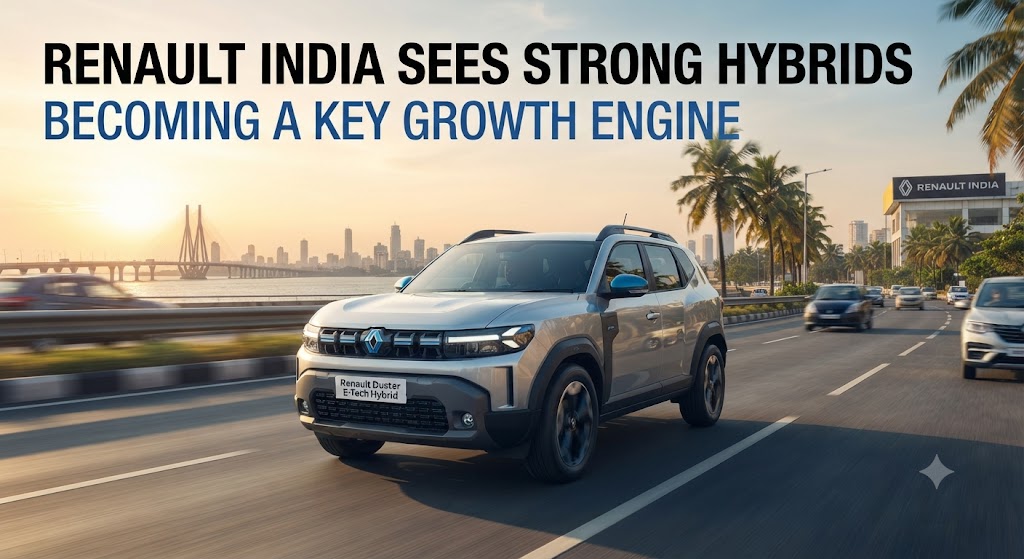
Renault India is placing increasing importance on strong hybrid technology as the company prepares to expand its product portfolio in the country. The automaker believes strong hybrids could become a significant volume-generating powertrain in India over the medium term, particularly as the market gradually moves away from diesel while electric vehicles continue to develop
Renault India's Vice President for Sales and Marketing Francisco Marques recently described hybrids as an important transition technology for the Indian market. He said the company expects strong hybrids to play a major role over the coming years.
Strong Hybrids Could Play a Bigger Role in India
India's passenger-vehicle market is currently moving towards multiple powertrain technologies rather than switching immediately from internal-combustion engines to EVs.
While diesel demand has been declining, electric vehicles still face challenges related to charging infrastructure and charging capacity. Against this backdrop, Renault sees strong hybrids as one technology that can bridge the gap between conventional petrol vehicles and fully electric cars.
A strong hybrid can operate using its electric motor for certain driving conditions while also using an internal-combustion engine when required. This combination can help improve fuel efficiency without requiring owners to depend entirely on external charging infrastructure.
Renault Duster Hybrid to Lead the Strategy
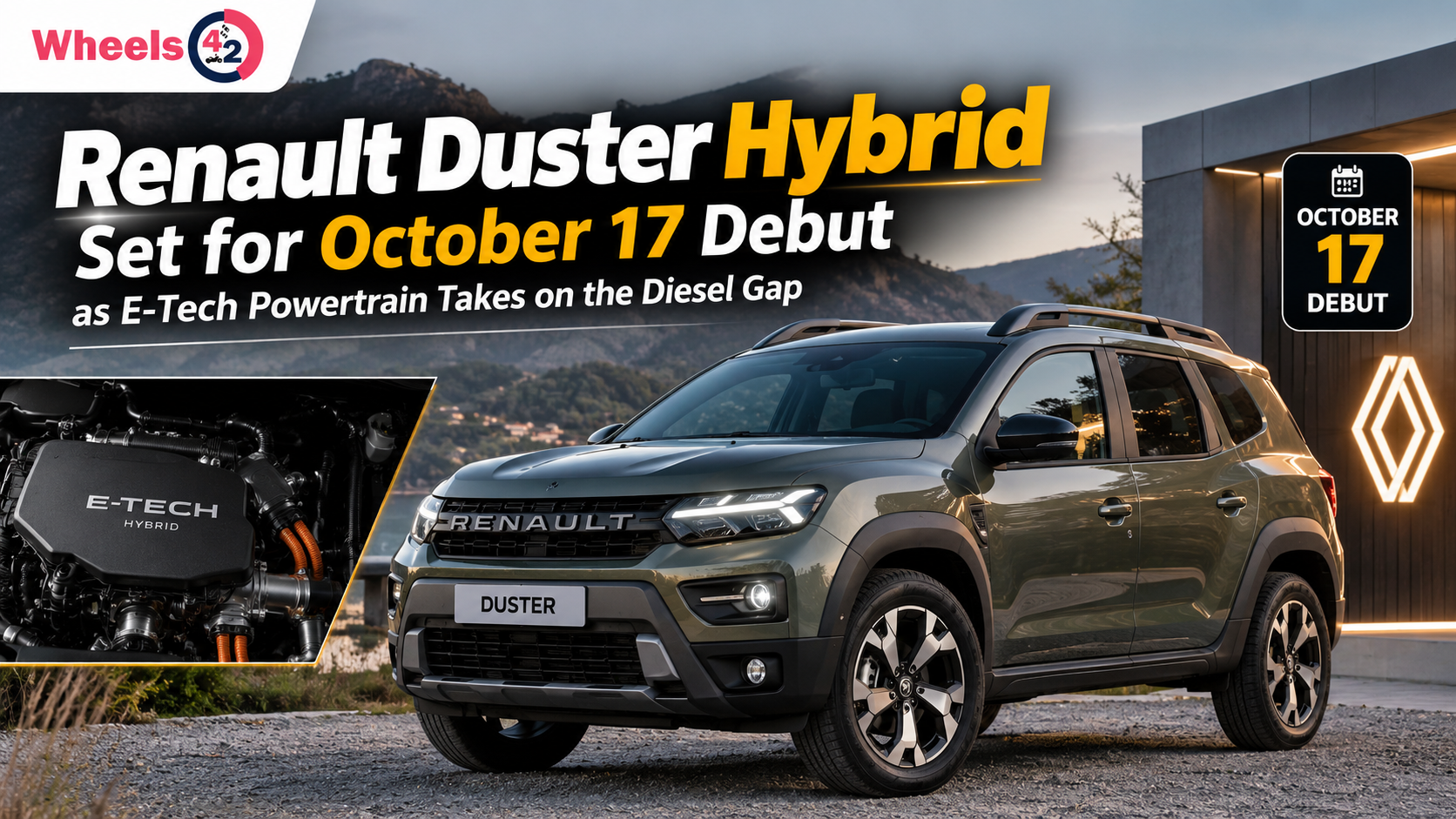
The company's strongest immediate example of this strategy is the Renault Duster.
Renault is preparing to introduce its first strong-hybrid model in India with the Duster. The hybrid version will add another powertrain option to the SUV alongside its petrol engines.
Renault has already positioned the new Duster as a key part of its India product strategy. The company has said its India portfolio will expand to seven multi-energy models by 2030, covering different segments and including strong-hybrid and fully electric powertrains.
Why Hybrid Technology Matters for Renault
Renault's move towards strong hybrids comes at a time when Indian buyers are increasingly considering fuel efficiency, running costs and electrified powertrains.
For customers who want lower fuel consumption but are not ready to switch to a fully electric vehicle, a strong hybrid can provide an alternative.
The technology also removes the need for frequent external charging during normal use, making it potentially suitable for customers who travel long distances or live in areas where public charging infrastructure is still developing.
Diesel Demand Is Changing
Diesel-powered passenger vehicles have historically been particularly popular in India's SUV market. However, tighter emission regulations and changing consumer preferences have reduced the availability of diesel options.
Renault itself does not currently offer a diesel powertrain in the new Duster. The strong-hybrid version therefore provides an electrified alternative for customers who may previously have considered diesel for its fuel efficiency.
The upcoming Duster hybrid is expected to compete with strong-hybrid versions of models such as the Maruti Suzuki Grand Vitara, Toyota Urban Cruiser Hyryder and Maruti Suzuki Victoris.
Renault's Multi-Powertrain Approach
Renault is not abandoning petrol engines in favour of a single technology. Instead, its India strategy involves multiple powertrain choices.
The company's futuREady India plan calls for seven models by 2030 using a combination of internal-combustion engines, strong hybrids and electric powertrains.
This approach allows Renault to target different customer requirements while India's automotive market continues to evolve.
Renault's Planned India Portfolio
Area
Renault's Strategy
Portfolio by 2030
7 models
Powertrain approach
Multi-energy
Strong hybrids
Key part of future portfolio
EVs
Planned alongside hybrids
Petrol engines
Continue for relevant applications
India role
Major global market and technology hub
Manufacturing
Chennai-based operations
Early Hybrid Demand Has Been Encouraging
Renault has already seen strong interest in hybrid technology around the Duster. Earlier in 2026, company executives said demand for the Duster's hybrid version had exceeded expectations, with the variant reportedly sold out for the year at that point and Renault working on increasing capacity.
This early response provides an indication of the potential customer interest Renault sees in hybrid SUVs.
However, long-term demand will depend on several factors, including vehicle pricing, fuel prices, availability, efficiency, consumer awareness and competition from both hybrid and electric models.
Renault India Is Expanding Its Product Line-Up
The hybrid strategy is part of a much larger expansion plan.
Renault Group has stated that it wants India to become one of the Renault brand's top three global markets by 2030. The company plans to expand its Indian portfolio while also strengthening engineering, manufacturing and export capabilities.
Renault's India sales momentum has also improved. Renault Group reported that its sales in India increased 61.2% in the first half of 2026 compared with the same period a year earlier.
Strong Hybrid vs EV: What Buyers Should Know
Strong hybrids and EVs offer different ownership experiences.
Factor
Strong Hybrid
Full EV
Petrol engine
Yes
No
Electric motor
Yes
Yes
External charging
Generally not required
Required
Long-distance flexibility
High
Dependent on charging availability
Fuel consumption
Lower than conventional petrol in suitable conditions
No petrol consumption
Tailpipe emissions
Yes
None during driving
Charging infrastructure dependence
Low
Higher
Best suited for
Buyers wanting electrification without charging dependence
Buyers ready for full electric ownership
Neither technology is identical, and the right choice depends on an individual buyer's driving pattern, charging access and priorities.
What This Means for Renault's Future
Renault's increasing focus on strong hybrids suggests the company expects India's powertrain transition to happen gradually rather than through an immediate move to full EV adoption.
The company is simultaneously preparing electric vehicles while expanding hybrid technology. Renault Group's global strategy also calls for full-hybrid offerings beyond 2030 in markets where they continue to match customer requirements.
For India, the Duster hybrid could therefore be just the beginning of a wider hybrid product strategy.
 Khyati Sharma 2026-09-30