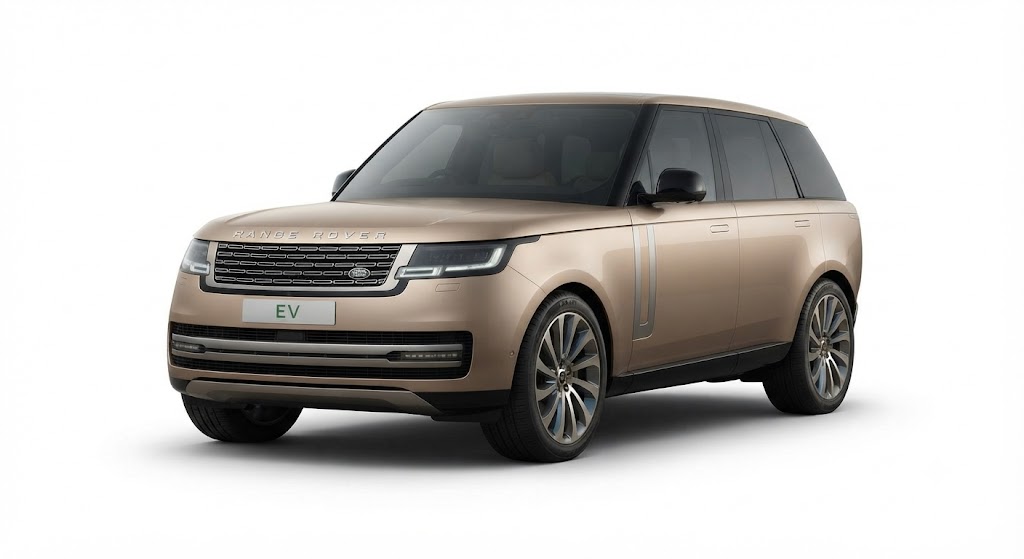
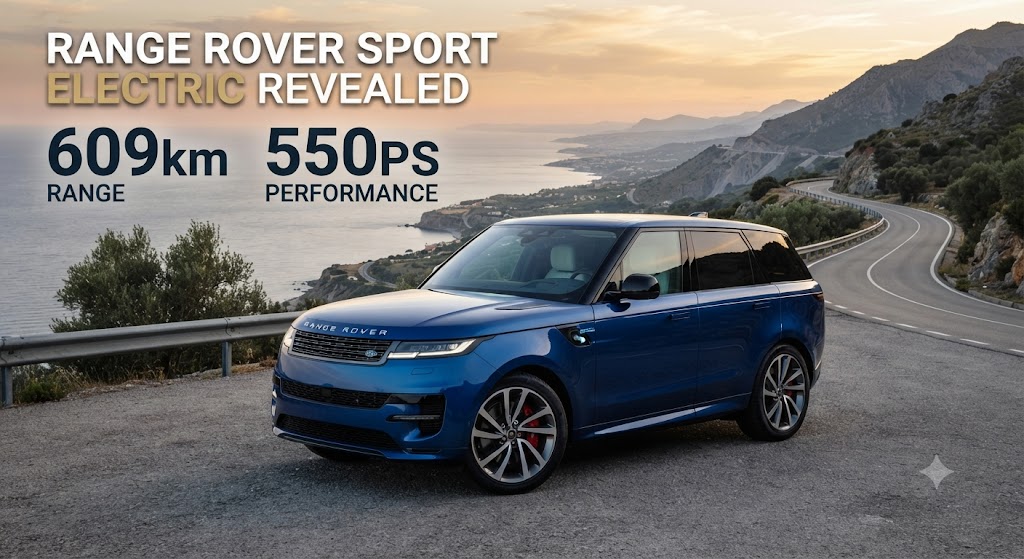
The Range Rover Sport Electric has officially been revealed as the latest fully electric addition to the Range Rover family. Combining the familiar muscular design of the Range Rover Sport with a dual-motor electric powertrain, the new SUV delivers up to 550 PS, 850 Nm of torque and a claimed WLTP range of up to 609 km.
The electric SUV is powered by a 118.5kWh battery and uses an advanced 800V electrical architecture. Range Rover says it can accelerate from 0-100 kmph in around 4.5 seconds, while its fast-charging system can add up to 220 km of range in just 10 minutes under suitable conditions.
New Range Rover Sport Electric: What Has Changed?
Although the overall design remains unmistakably Range Rover Sport, the electric version introduces significant changes underneath the body.
The SUV is based on the MLA-Flex architecture and has been engineered specifically to accommodate its large battery pack while maintaining the Sport's performance and all-terrain capabilities.
According to Range Rover, the electric model has a body structure that is 61% stiffer than the PHEV version, while its centre of gravity is 73mm lower. These changes are intended to improve handling and stability.
The electric powertrain also delivers much faster torque response than the Range Rover Electric, with Range Rover highlighting the Sport's performance-focused tuning.
550 PS and 850 Nm From Dual Electric Motors
The Range Rover Sport Electric gets two 260kW electric motors, providing all-wheel drive and a combined output of up to 550 PS and 850 Nm.
The SUV can accelerate from 0-100 kmph in approximately 4.5 seconds. With Dynamic Launch Mode activated, the vehicle can achieve 0-60 mph in 4.3 seconds.
The high torque output is one of the major highlights of the electric SUV. Range Rover says the Sport Electric has the highest torque of any Range Rover Sport model to date.
Performance Highlights
- Dual electric motors
- Up to 550 PS
- Up to 850 Nm torque
- All-wheel drive
- 0-100 kmph in approximately 4.5 seconds
- 0-60 mph in 4.3 seconds with Dynamic Launch Mode
- 800V electrical architecture
609km Claimed Range
One of the most important figures is the SUV's battery range.
The Range Rover Sport Electric uses a 118.5kWh lithium-ion battery and offers up to 609 km of WLTP range. Range Rover also lists an estimated real-world range of approximately 535 km.
The two figures should not be confused. The 609 km figure is based on the standardised WLTP testing procedure, while real-world range can vary depending on driving style, temperature, terrain, vehicle load, wheel size and other conditions.
|
Range figure
|
Claimed figure
|
|
Maximum WLTP range
|
Up to 609 km
|
|
Estimated real-world range
|
Up to 535 km
|
|
Battery capacity
|
118.5 kWh
|
Fast Charging With 800V Technology
Range Rover has equipped the Sport Electric with an 800V electrical architecture, allowing it to make use of high-power DC charging.
Using a compatible 350kW rapid DC charger, the SUV can charge from 10% to 80% in approximately 22 minutes.
The company also says that under suitable conditions, the vehicle can gain up to 220 km of driving range in around 10 minutes. Actual charging times can vary depending on battery temperature, charger capability, state of charge and other conditions.
Charging Highlights
|
Charging detail
|
Range Rover Sport Electric
|
|
Electrical architecture
|
800V
|
|
Rapid DC charger
|
Up to 350kW
|
|
10-80% charging
|
Approx. 22 minutes
|
Built for More Than Just Road Performance
The Range Rover Sport Electric has also been engineered to maintain the model's off-road character.
The SUV features virtual all-wheel drive and advanced traction-management systems. Range Rover says it can wade through up to 900mm of water and tackle inclines of up to 45 degrees.
This is significant because large luxury EVs often focus heavily on road performance. Range Rover is positioning the Sport Electric as an SUV that retains the brand's traditional all-terrain capability while moving to an electric powertrain.
Advanced Chassis Technology
The electric model gets a range of technologies designed to balance performance, comfort and body control.
These include:
- Adaptive Dynamics
- Twin Valve Dampers
- Electronic Active Roll Control
- All-Wheel Steering
- Intelligent torque management
- Advanced traction management
The combination of a lower centre of gravity, stiffer body and electric torque delivery is designed to make the Sport Electric feel more responsive while maintaining the refined ride associated with the Range Rover brand.
Design: Familiar Range Rover Sport Looks
The Range Rover Sport Electric retains the muscular proportions and overall design language of the existing Sport.
However, the electric model receives aerodynamic changes to improve efficiency. These include an aero-optimised grille and alloy wheel designs that help distinguish the EV from its petrol, diesel and hybrid counterparts.
The familiar silhouette is therefore retained, while the detailing makes the electric model identifiable.
Interior and Technology
Inside, the Range Rover Sport Electric continues with the premium cabin layout associated with the Sport range.
The focus remains on luxury, comfort and connected technology rather than creating a completely separate EV-style interior.
The SUV also supports the Range Rover App, which allows owners to manage charging schedules, locate charging stations and monitor charging remotely.
Range Rover Sport Electric Variants
Range Rover says the electric SUV will be offered in several specifications, including:
- Dynamic SE
- Dynamic HSE
- Autobiography
- First Edition
The availability of individual variants can vary by market.
Price and Availability
In the UK, the Range Rover Sport Electric is available to order from £109,810 for the Dynamic SE specification, with deliveries expected to begin in early 2027.
For India, an exact official launch date and India-specific pricing have not been announced by Range Rover. Indian automotive industry listings currently point to an expected March 2027 launch, with an estimated price in the region of ₹2.40-2.50 crore. These India figures should be treated as estimates until Range Rover confirms them officially.
Range Rover Sport Electric vs Existing Sport
|
Feature
|
Range Rover Sport Electric
|
|
Powertrain
|
Dual electric motors
|
|
Drive
|
All-wheel drive
|
|
Battery
|
118.5 kWh
|
|
Maximum Power
|
550 PS
|
|
Maximum Torque
|
850 Nm
|
|
WLTP Range
|
Up to 609 km
|
|
Estimated Real-World Range
|
Up to 535 km
|
|
0-100 kmph
|
Approx. 4.5 seconds
|
|
0-60 mph
|
4.3 seconds
|
|
Charging Architecture
|
800V
|
|
10-80% DC Charging
|
Approx. 22 minutes
|
|
Maximum Water Wading
|
900 mm
|
|
Seating
|
5
|
|
Production
|
Solihull, UK
|
Battery and Durability Testing
The battery pack is housed in a high-strength aluminium enclosure. Range Rover says its new battery testing laboratory subjects batteries to extreme vibration and shock testing across a wide temperature range, from -40°C to +90°C.
The company says the testing programme is intended to help ensure battery safety and durability under demanding conditions.
Range Rover Sport Electric: Key Highlights
The new electric SUV brings together several important technologies:
609 km range: The maximum claimed WLTP range gives the Sport Electric a substantial touring capability.
550 PS and 850 Nm: The dual-motor setup provides strong performance and instant electric torque.
800V charging: The high-voltage architecture enables rapid charging when paired with suitable infrastructure.
900mm water wading: The electric powertrain does not mean the SUV has abandoned Range Rover's off-road focus.
Lower centre of gravity: The battery positioning helps lower the centre of gravity compared with the PHEV version.
Luxury-focused cabin: The Sport Electric retains the premium character expected from the Range Rover Sport family.
The Range Rover Sport Electric brings a fully electric powertrain to one of the brand's most performance-focused SUVs. With 550 PS, 850 Nm, a 118.5kWh battery and up to 609 km of WLTP range, it combines high performance with long-distance EV capability.
Its 800V charging system, claimed 22-minute 10-80% charging time and up to 220 km of range added in 10 minutes also address one of the major considerations for luxury EV buyers.
What makes the model particularly notable is that Range Rover has attempted to preserve the Sport's all-terrain identity rather than turning it into a purely road-focused electric SUV. With 900mm water-wading capability, advanced traction management and all-wheel drive, the Sport Electric retains a strong connection with the capabilities associated with the Range Rover name.
For Indian buyers, the model is currently expected to arrive around March 2027, although the India launch date and pricing remain subject to official confirmation.

 Khyati Sharma 2026-09-30