Tata Aeris
5.29 Lakh*

 Khyati Sharma 2026-09-26

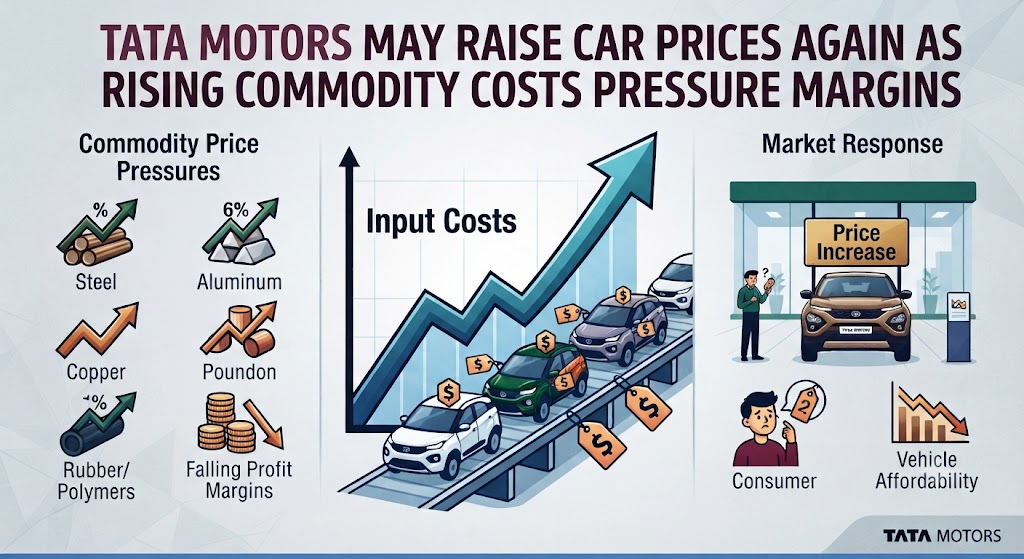
Tata Motors Passenger Vehicles is evaluating another round of price increases for its cars and SUVs as higher commodity costs continue to put pressure on margins. The company, however, is expected to take a gradual approach rather than introduce a sharp increase that could affect customer demand.
Tata Motors Passenger Vehicles Managing Director Shailesh Chandra said the company is continuing to absorb part of the increase in commodity costs while also working on internal cost-reduction measures. The company is reviewing the situation regularly to determine when another price adjustment may be appropriate.
Tata Motors has already implemented a price increase in September 2026, with select passenger vehicles becoming costlier by up to ₹25,000 from September 1.
However, the company has indicated that another hike is not being introduced immediately. Instead, future increases could be brought in smaller and gradual steps, allowing Tata Motors to manage rising costs without creating a sudden impact on vehicle demand.
|
Factor |
Current Situation |
|
Commodity costs |
Continuing to pressure margins |
|
September price revision |
Up to ₹25,000 on select models |
|
Further hike |
Under evaluation |
|
Expected approach |
Smaller, gradual increases |
|
Cost control |
Internal cost-reduction efforts continue |
Automakers are facing higher costs across several areas, including raw materials, components and other operating expenses. For Tata Motors, the challenge is to balance these higher costs against a market where customers remain sensitive to vehicle prices.
The company has been absorbing a significant portion of the increase instead of immediately passing the entire burden to customers. According to Shailesh Chandra, the gap between rising commodity costs and the pace at which manufacturers can increase vehicle prices is putting pressure on margins.
The situation is not limited to Tata Motors. Other major carmakers in India have also announced price increases during 2026 as input costs remain elevated.
Despite higher vehicle prices, India's passenger-vehicle market has remained strong. Tata Motors expects the upcoming festive season to support demand, with SUVs and new products continuing to attract buyers.
The company therefore has to balance two objectives: protecting margins from rising costs while keeping its cars competitively priced.
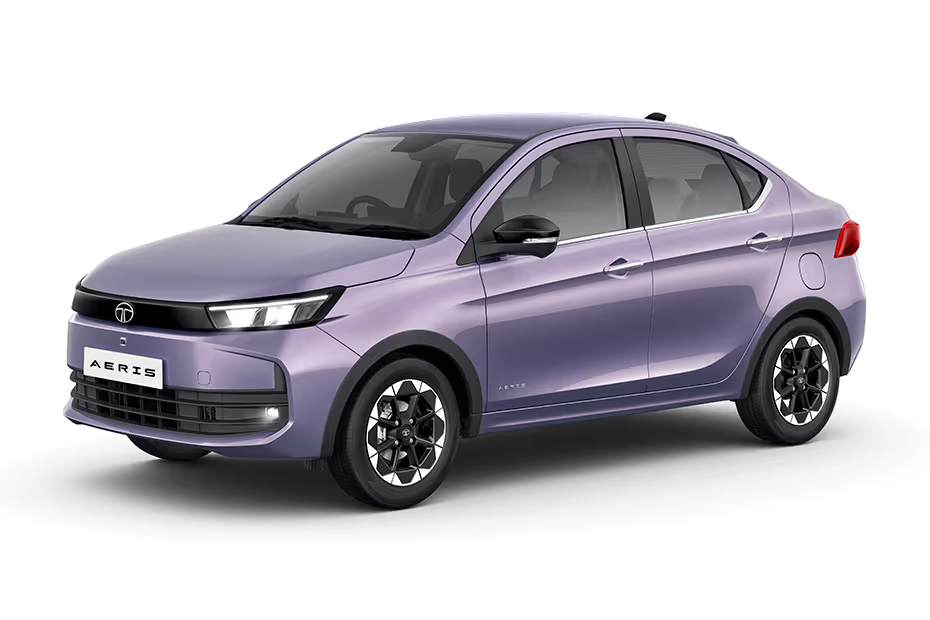
Recent Tata launches, including the Aeris compact sedan, are also expanding the company's product portfolio and giving buyers more choices across different price segments.
For customers planning to purchase a Tata car or SUV, another price revision could increase the overall purchase cost if implemented. However, Tata Motors has not announced the amount or timing of another passenger-vehicle price hike, so buyers should not assume that a specific model will become more expensive yet.
The company is expected to continue monitoring commodity prices and its cost position before making its next decision.
For now, Tata Motors' message is clear: rising costs remain a concern, but any future price increase is likely to be measured and progressive rather than a sudden major jump.










Porsche
₹142.00 - 231.52 Lakh