Khyati Sharma 2026-10-06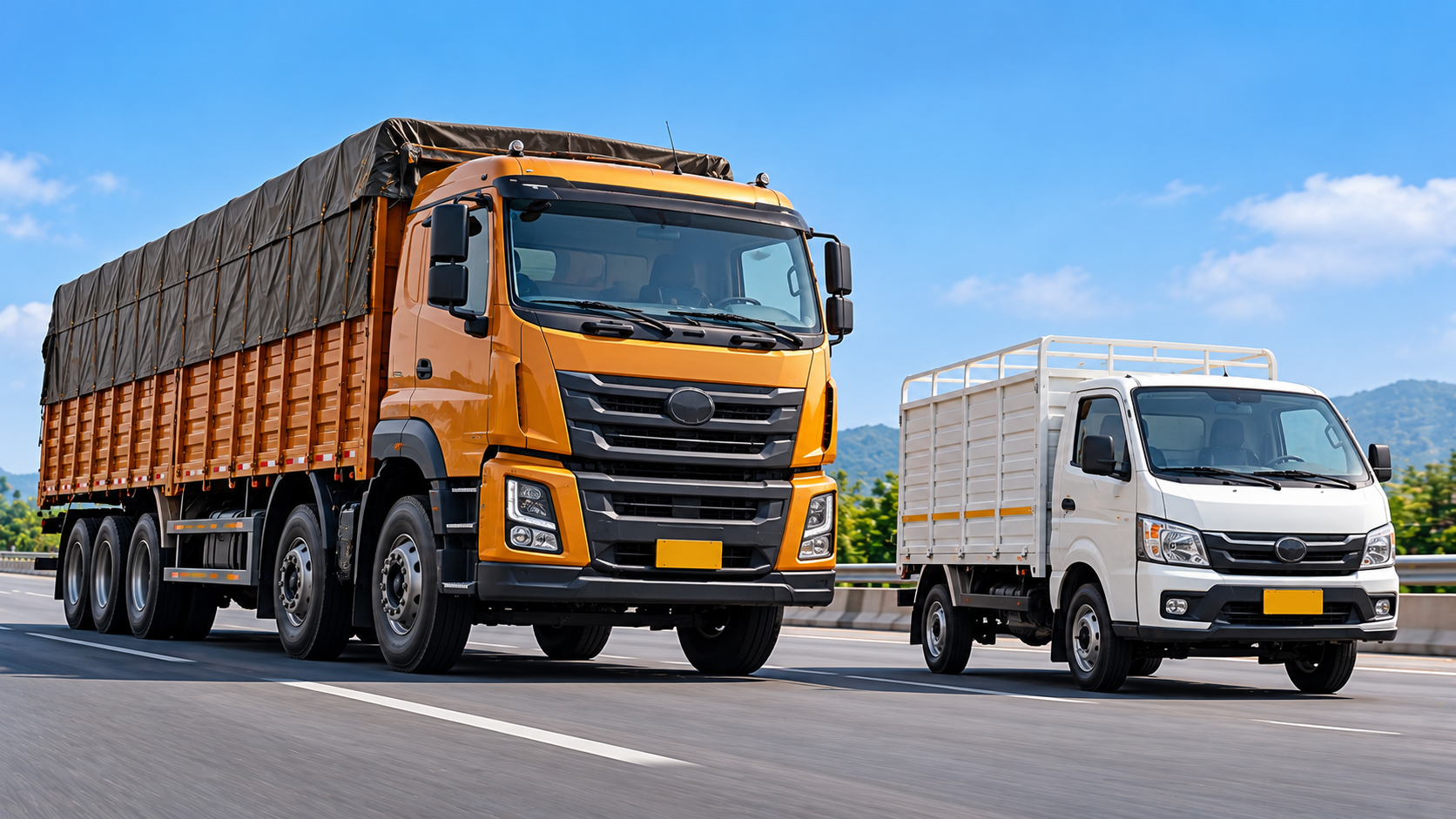
A bigger truck may carry more goods in a single trip, but does that automatically mean it earns more money? The answer is no. Although large trucks can generate higher revenue per trip, their profitability depends on fuel consumption, maintenance expenses, freight demand, route conditions, financing costs and the number of trips completed each month.
In India's growing transportation and logistics industry, trucks play an important role in moving construction materials, agricultural products, machinery, consumer goods and industrial supplies. Different businesses require different types of commercial vehicles, ranging from small delivery trucks to heavy-duty freight carriers.
For a transport business owner, choosing the right truck is an important financial decision. Purchasing a larger vehicle without sufficient cargo demand can increase expenses without generating enough additional income. Similarly, choosing a truck that is too small for regular bulk shipments can result in more trips, higher labour costs and missed business opportunities.
A larger truck generally offers a higher payload capacity, allowing it to carry more goods in a single journey. When customers pay according to the weight or volume of cargo transported, this additional capacity can increase the amount earned per trip.
For example, a truck carrying 15 tonnes of construction materials may earn considerably more per journey than a smaller vehicle carrying only 3 or 5 tonnes, assuming similar routes and freight rates.
Large trucks are particularly useful for transporting cement, steel, coal, minerals, agricultural commodities and industrial machinery. These goods often move in bulk between factories, warehouses, construction sites and distribution centres.
However, higher capacity creates a financial advantage only when the truck has sufficient cargo. If a large vehicle regularly operates with half its capacity unused, the owner may be paying for capacity that does not generate revenue.
Therefore, transport operators should consider both the maximum legal payload and the quantity of goods they can realistically transport every day.
Although a large truck can earn more per trip, it usually requires a greater initial investment and may have higher running expenses.
Fuel is one of the biggest costs in commercial transportation. Heavy trucks generally consume more fuel than smaller vehicles, although actual consumption depends on engine efficiency, payload, road conditions, driving style and traffic.
Maintenance expenses can also be higher. Heavy-duty vehicles may require more expensive tyres, replacement components and specialised servicing. Insurance, financing, permits and other operating expenses can further increase the overall cost.

The main expenses associated with operating a truck include:
Diesel or other fuel expenses
Driver salaries and trip allowances
Tyres, servicing and repairs
Insurance and applicable permits
Tolls, parking and loading charges
Loan instalments and interest
Depreciation and unexpected breakdowns
For example, a truck earning ₹30,000 per trip might appear more attractive than one earning ₹12,000. However, if the larger vehicle costs ₹23,000 to operate while the smaller one costs ₹8,000, the difference in profit is much smaller than the difference in revenue.
The important point is that revenue and profit are not the same. A business should calculate what remains after all relevant expenses rather than selecting a vehicle based only on its earning potential per trip.
A smaller truck can be a better business investment for local deliveries, especially when customers require frequent shipments to different locations.
Indian cities often have congested roads, narrow market streets, limited parking spaces and restrictions on heavy commercial vehicles. A large truck may struggle to access certain delivery locations, increasing waiting times and operating expenses.
Smaller commercial vehicles are often better suited to transporting furniture, groceries, parcels, electrical goods, household items and smaller construction supplies.
Their advantages may include lower purchase prices, easier manoeuvrability, reduced fuel consumption on suitable routes and lower costs when the shipment does not require a large payload.
Smaller vehicles can also help businesses complete multiple short-distance deliveries in a day. This is especially useful when customers are located close to one another.
However, smaller trucks are not always the cheaper option. If a business regularly transports large quantities of goods, several trips with a small vehicle may cost more than one journey with a larger truck.
The best choice depends on the type of cargo, delivery distance and the number of shipments available.
One of the most important factors affecting profitability is utilisation. This refers to how effectively a truck's carrying capacity and available operating time are used.
Suppose a truck can legally carry 20 tonnes but regularly transports only 8 tonnes. The owner is paying for a large vehicle without fully using its capacity.
Another truck with a 5-tonne payload that consistently operates with full loads may use its capacity more efficiently.
Truck owners should monitor three important factors:
Load utilisation: How much of the permitted payload is being used on each trip.
Vehicle utilisation: How often the vehicle is working rather than remaining idle.
Empty running: How far the truck travels without cargo, especially on return journeys.
A truck that completes profitable trips consistently may outperform a larger vehicle that remains idle for several days. However, high utilisation alone does not guarantee success. A vehicle can remain busy throughout the month and still lose money if freight rates are too low or costs are excessive.
The objective is to keep the truck productively employed while ensuring that every trip contributes positively to the business.
Return loads can make a significant difference to the profitability of a transportation business.
Consider a truck carrying goods from Delhi to Mumbai. The operator earns revenue on the outward journey, but if the vehicle returns empty, the business still incurs fuel expenses, driver costs and other return-trip expenses.
If the operator secures a return shipment, the same journey can generate additional revenue. This can help spread the cost of operating the vehicle across two revenue-generating trips.
Truck owners can improve their chances of securing return loads by building relationships with manufacturers, wholesalers, distributors, transport brokers and logistics companies. Freight-booking platforms may also help identify available shipments.
However, operators should consider the additional distance, loading time, waiting periods and payment terms before accepting a return load.
The goal is not simply to keep the truck moving. It is to make each journey commercially worthwhile and reduce unproductive kilometres.

|
Particulars |
Smaller Truck |
Bigger Truck |
|
Cargo per trip |
5 tonnes |
15 tonnes |
|
Revenue per loaded trip |
₹12,000 |
₹30,000 |
|
Operating cost per trip |
₹8,000 |
₹22,000 |
|
Profit before fixed costs per trip |
₹4,000 |
₹8,000 |
|
Loaded trips per month |
20 |
12 |
|
Monthly contribution |
₹80,000 |
₹96,000 |
|
Monthly fixed costs |
₹30,000 |
₹50,000 |
|
Estimated monthly profit |
₹50,000 |
₹46,000 |
|
|
|
|
As a result, the smaller truck generates an estimated monthly profit of ₹50,000, compared with ₹46,000 for the larger vehicle.
This demonstrates why truck owners should calculate monthly profitability rather than comparing revenue from individual journeys.
Actual results will vary according to the freight rate, fuel consumption, route distance, financing arrangements, maintenance requirements and number of productive trips completed.
Before purchasing a commercial vehicle, an operator should estimate the expected revenue and expenses.
A basic calculation is:
Net profit = Total revenue − Total expenses
Total expenses should include fuel, driver wages, tolls, repairs, tyres, insurance, permits, parking, financing costs and other relevant business expenses.
For example, a truck generating ₹4 lakh in monthly revenue may not be a better investment than one generating ₹2.5 lakh. If the first truck has significantly higher fuel, maintenance and financing costs, its final profit could be lower.
It is also important to distinguish between cash flow and profit. Customers may take several weeks to pay invoices, while fuel bills, salaries and loan instalments must be paid on time.
A transport business therefore needs sufficient working capital to manage delayed payments, unexpected repairs and periods of low demand.
Owners should also account for depreciation, because a truck gradually loses value over time. Ignoring depreciation can make the business appear more profitable than it really is.
|
Transport requirement |
Suitable truck type |
Main consideration |
|
Local parcel deliveries |
Small commercial truck |
Manoeuvrability and delivery frequency |
|
Furniture and household goods |
Small or medium truck |
Cargo volume and access |
|
Construction materials |
Medium or heavy truck |
Payload and site access |
|
Cement and bulk industrial goods |
Heavy-duty truck |
Regular bulk demand |
|
Long-distance freight |
Medium or heavy truck |
Fuel efficiency and return loads |
|
Mining and construction sites |
Specialised tipper |
Terrain and contracted work |
|
Refrigerated goods |
Refrigerated truck |
Temperature control and specialist costs |

Truck owners can improve their earnings through better planning and cost management, regardless of vehicle size.
Secure regular customers: Long-term transport contracts can make revenue more predictable and reduce dependence on occasional shipments.
Reduce empty kilometres: Finding return loads can improve the financial performance of a round trip.
Monitor fuel consumption: Tracking mileage and fuel usage can help identify inefficient driving, poor vehicle condition or unexpected cost increases.
Maintain the vehicle regularly: Preventive maintenance can reduce breakdowns, costly repairs and lost working days.
Plan routes carefully: Avoiding unnecessary detours and delays can save fuel and improve delivery efficiency.
Control financing costs: Loan repayments should remain manageable even during months when demand is weaker than expected.
Track profit per trip: Compare freight income with direct expenses and allocate monthly fixed costs to understand which routes are genuinely profitable.
Maintain a cash reserve: Unexpected repairs, delayed customer payments and periods of low demand can create financial pressure.
Safety should never be compromised to improve revenue. Overloading a truck beyond its permitted limits increases safety risks, can damage the vehicle and may result in legal penalties.
Conclusion
A bigger truck does not always earn more money. Although a large vehicle can carry more cargo and generate higher revenue per trip, it also involves greater investment and potentially higher operating expenses.
Smaller trucks can be more profitable for local deliveries, frequent short-distance trips and smaller shipments. Larger trucks may offer better returns for regular bulk transportation and long-distance freight when sufficient cargo is available.
Ultimately, truck profitability depends on selecting the right vehicle, securing reliable customers, reducing empty journeys, controlling expenses and using the vehicle efficiently.














_A_Checklist_Before_You_Take_Delivery.jpeg)