




2026-10-06
The short version: choose by how deeply the accessory reaches into your car, not by brand or price. If it just sits in or on the car, like mats or a sunshade, buy aftermarket and keep the savings. If it's wired in, sits near a safety system, or changes something the law checks, go company-fitted, or get the service centre to approve it in writing first. And no, an aftermarket accessory doesn't void your whole warranty. It can cost you the one claim it causes, which is a different problem. Here's how to sort any accessory in about a minute.
Salespeople use the phrase loosely, and honestly, that's where half the confusion starts. When someone says company-fitted, they could mean any of these.
Factory-fitted. Built into the car at the plant as part of the variant. It's inside the ex-showroom price, it sits under the car's own warranty, and insurers count it in your insured value automatically. You can't add it later, which is exactly why these items decide which variant to buy in the first place.
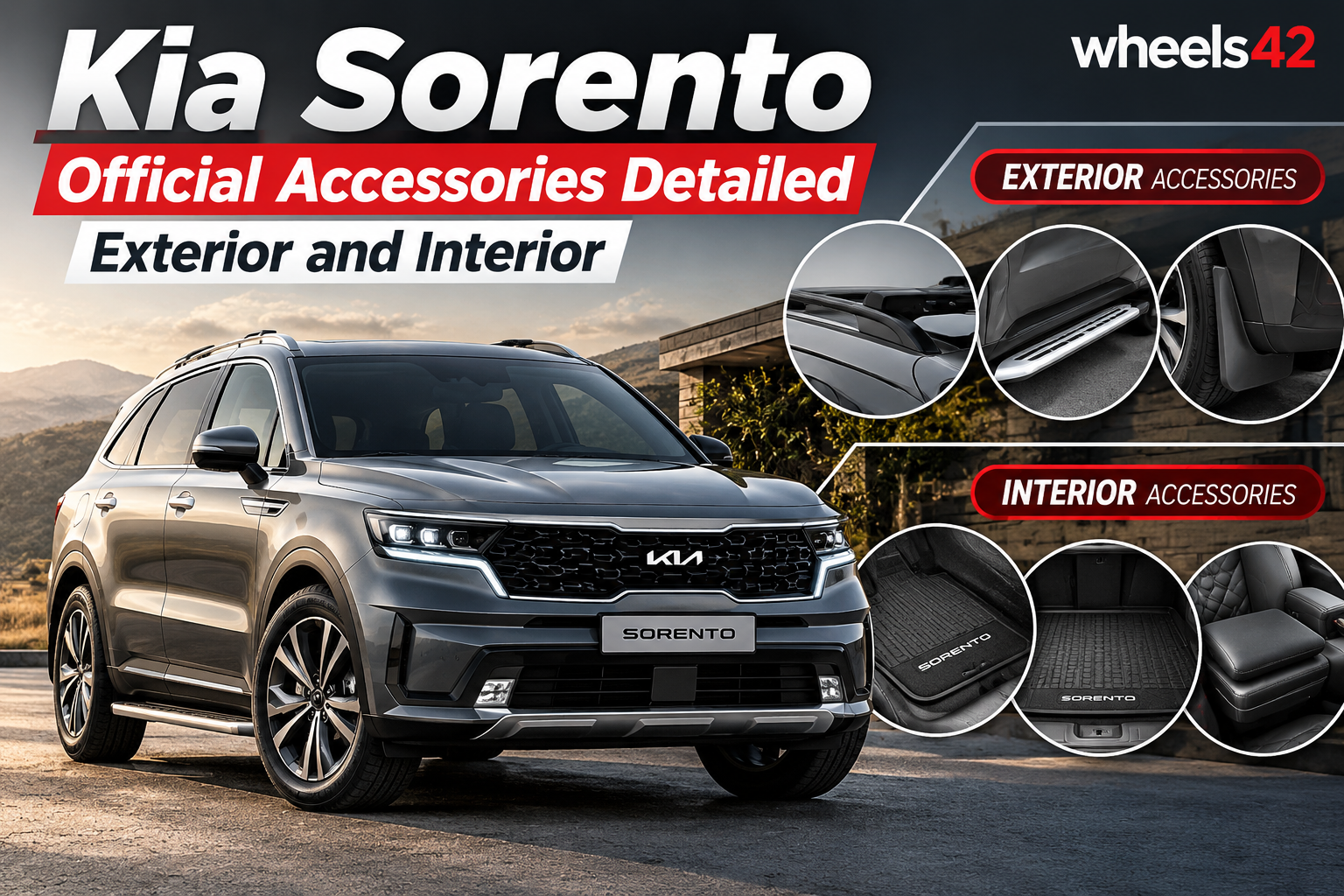
Dealer-fitted genuine accessories. This is what most dealers mean by "company accessories". The manufacturer makes or approves them, the dealership fits them after the car is built, and you pay for them separately. They usually carry their own warranty, often shorter than the car's, so ask what it is.
Aftermarket. Made and fitted by someone outside the manufacturer's network. Quality runs from excellent to awful.
So factory fitted vs aftermarket accessories isn't a real choice for most items, since factory-fitted can't be added after delivery. The real fight is between the second and third bucket, and that's what OEM vs aftermarket car accessories actually comes down to. Next time you hear "company-fitted", ask which one. The answer changes the price, the warranty, and what you can negotiate.
Here's the simplest way to decide. The deeper an accessory reaches into your car, the more a mistake costs. So put every accessory on one of four rungs.
| Rung | What it is | Examples | Aftermarket? |
|---|---|---|---|
| 1 | Sits on or in the car | Floor mats, sunshade, boot liner, phone holder | Safe to buy aftermarket |
| 2 | Plugs into an existing socket | Dashcam on the 12V socket, wireless charger | Fine, if it comes out without a trace |
| 3 | Wired, cut or drilled into the car | Aftermarket touchscreen, wired reverse camera, extra lights, central locking | Risky. Go company-fitted, or get approval in writing |
| 4 | Changes how the car behaves or what the law checks | Wheel and tyre size, suspension, ECU remap, window film, CNG kit | Avoid under warranty unless approved in writing |
One small catch on rung 1: floor mats near the pedals must be fixed in place. A loose mat that slides under the brake pedal is a bigger problem than any warranty clause.
This matches what Autocar India found in its July 2026 look at accessories and warranty. Disputes usually come down to how something was fitted, not just what was fitted. Anything that needs a wire cut, a hole drilled or a panel altered is where trouble starts, and a plug-and-play item from an authorised dealer is usually fine.
Not the whole warranty. If a modification affects a particular component, the manufacturer can deny claims for that component, and unrelated parts stay covered. That's the honest version, and it's more useful than the scary one.
So where does "it'll void everything" come from? Partly it's a fair warning, because real disputes do happen. Partly it's sales, since dealers earn margin on the accessories they fit. Both can be true at the same time.
Here's what to do about it. Read the car warranty clauses for accessories in your booklet, and look for wording like "unauthorised modification", "non-genuine parts" and "electrical alteration". Then, before any rung 3 or 4 accessory, ask the service centre in writing: "If I fit this, which parts of my warranty does it affect?" A written answer beats a verbal reassurance every time. Keep the invoice, the fitter's details and the fitter's own warranty too.
Infotainment. Aftermarket infotainment system vs company-fitted comes down to wiring. A third-party screen usually means tapping into the car's loom, and depending on the car, you can lose steering-wheel controls or the tie-in with the reverse camera and warning chimes. If an electrical fault shows up later, guess whose problem it becomes. If your variant already has a usable screen, leave it alone while the car is under warranty. If the base trim has none, a dealer-fitted genuine unit, or a fitter your service centre has cleared in writing, is the safer route.
Alloy wheels. Company-fitted alloy wheels vs aftermarket is mostly about fit. Factory alloys are matched to the car's tyre size, load rating and speedometer. Aftermarket ones can work well, but only if the overall tyre diameter stays within a few percent of the original. Go bigger without checking and you get a harsher ride, a speedometer that reads wrong, and pricier tyres. Learn to read tyre size before you shop, because the numbers on the sidewall tell you exactly what will and won't fit.
Seat covers. Aftermarket seat covers safety is a safety question first, not a warranty one. Many cars now have airbags built into the side of the front seats, and they open through the seat's side panel. A cover that wasn't made for that can slow or block them, and some manufacturers say not to use covers on those seats at all. If your car has side airbags in the seats, stick to covers the manufacturer lists for your model, or skip them. Look for an airbag label on the side of the seat, or check the owner's manual.
Insurance. Factory-fitted items sit inside your insured value automatically. Accessories fitted outside the factory are covered only if you declare them to your insurer, which adds a small premium based on their depreciated value. Skip that step and a claim for stolen speakers or a smashed aftermarket screen may not be paid in full. So keep your invoices and tell your car insurance provider about anything you add. If the dealer bills genuine accessories separately, ask whether the insurer counts them as part of the vehicle or wants them declared too.
The law. Some popular accessories aren't just risky, they're illegal. Under the Central Motor Vehicles Rules, front and rear glass must let through at least 70% of light, and side windows at least 50%. Factory glass that meets this is fine. Dark film that cuts it lower is illegal and can get you fined, and sources disagree on whether film that meets the numbers is accepted everywhere, so check with your local RTO first. Tint is only one example. Wheel sizes, lights and exhausts are others, and knowing which legal car modifications are fine and which need RTO approval saves you a challan later.
Are aftermarket accessories worth it? Often, yes, on rungs 1 and 2. But the pros and cons of aftermarket car accessories only make sense side by side.
| Company-fitted (factory or dealer-fitted) | Aftermarket | |
|---|---|---|
| Fit | Matched to your exact model | Varies by brand and fitter |
| Warranty | Covered, or has its own accessory warranty | Fitter's warranty only, and it can affect related claims |
| Price | Usually higher | Often lower, with a wider range |
| Choice | Limited | Huge |
| Paperwork | One invoice, easy to declare | Keep every invoice, declare to your insurer |
The benefits of company-fitted accessories are mostly peace of mind, one invoice and one place to complain. OEM car parts vs aftermarket cost is where the savings are real. But a saving only counts if it's bigger than what a failure could cost you.
Say a dealer-fitted accessory pack costs ₹40,000, and similar aftermarket items cost ₹26,000. You save ₹14,000. That's a clean win for mats, a dashcam and a boot liner. But if the saving comes from a wired-in head unit, and a wiring fault later lands a ₹30,000 electrical repair on you because the claim was refused, you're ₹16,000 behind. These numbers are only examples, so plug in your own quotes.
The rule is short. On rungs 1 and 2, take the saving. On rungs 3 and 4, take it only if it's bigger than the worst repair the accessory could cause, and only with approval in writing.
One more thing. Dealers will often discount accessory packs if you push, but most buyers never try. Ask for the car's price without the pack first, then negotiate the accessory bill separately. A bundled pack can quietly lift your on-road price by tens of thousands before you've noticed.
So, car accessories company fitted or aftermarket? Use the ladder. Shallow accessories, go aftermarket and save. Deep ones, go company-fitted or get it in writing. And don't let anyone, a dealer or a fitter, make that call for you with a vague promise. Accessories are one small decision inside the wider new car buying process, but a wrong call can cost you a warranty claim, an insurance payout, or in the seat-cover case, something far more important.
Sources: Autocar India, "All accessories that can void your car warranty" (July 2026); Central Motor Vehicles Rules, 1989, Rule 100 (glass visibility); insurer explainers on IDV and accessories cover (Zurich Kotak, Policybazaar); airbag and seat cover guidance in manufacturers' owner's manuals.