
 Khyati Sharma 2026-07-23
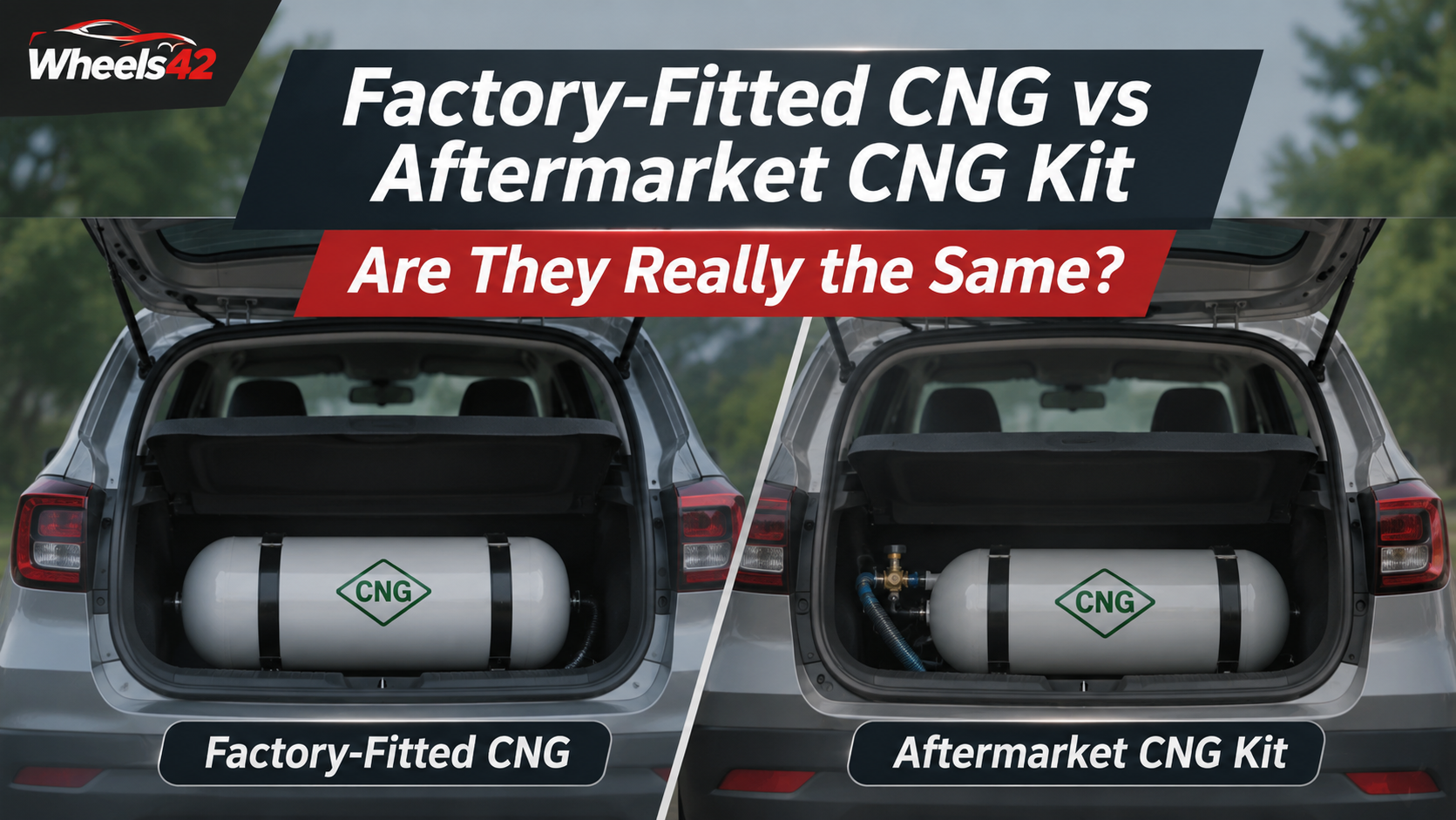
A factory-fitted CNG car and an aftermarket CNG conversion may use the same fuel, but they are not identical. Differences in engineering, safety integration, warranty, performance, installation quality and maintenance can affect the overall ownership experience.
CNG has become an attractive alternative to petrol for Indian car buyers looking to reduce their running costs. With petrol prices remaining relatively high in many cities, compressed natural gas offers an opportunity to save money, particularly for people who drive long distances every day. As a result, manufacturers are increasingly offering factory-fitted CNG options across hatchbacks, sedans and SUVs.
However, buyers who already own a petrol car may consider another option: installing an aftermarket CNG kit. This can appear to be a convenient way to enjoy lower fuel expenses without purchasing a new vehicle. It also raises an important question: is a factory-fitted CNG car exactly the same as a petrol car converted to CNG through an aftermarket kit?
Documents Required to Buy a New Car in India (Complete Checklist)
A factory-fitted CNG car is designed and manufactured by the vehicle manufacturer to operate on both petrol and compressed natural gas. The CNG system is incorporated into the vehicle during production or through an authorised manufacturer-controlled process.
The manufacturer considers the CNG system while developing the vehicle's fuel delivery, engine calibration, wiring, mounting arrangements and other relevant components. This allows the system to work with the vehicle's original engineering.
Factory-fitted CNG vehicles generally come with a dedicated CNG cylinder, pressure regulator, injectors, fuel lines, electronic control systems and other components required for operation. The vehicle is tested and approved in its intended configuration before being offered to customers.
Many factory-fitted CNG cars also feature a dual-fuel system. This means the driver can use petrol or CNG, depending on availability and driving requirements. The vehicle usually starts on petrol and switches to CNG according to its programmed operating conditions, although the exact behaviour depends on the model.
Another important advantage is that the manufacturer takes responsibility for the original vehicle configuration and provides warranty coverage according to its published terms and conditions. Buyers also receive a vehicle with the CNG system already installed, rather than having to arrange a separate conversion.

An aftermarket CNG conversion involves installing a CNG kit in a vehicle that was originally manufactured as a petrol-powered model. The installation is generally carried out by an authorised retrofitment centre or a qualified workshop using an approved kit suitable for the vehicle.
The conversion typically includes a CNG cylinder, pressure regulator, gas injectors, electronic control unit, high-pressure pipes, valves and other necessary components. These parts are added to the existing vehicle rather than being incorporated during its original manufacturing process.
Depending on the vehicle and kit, the installer may need to modify or integrate parts of the fuel delivery system, engine management system and electrical connections. The quality of these modifications is important because an incorrectly installed system can affect performance, reliability and safety.
Not every petrol car is suitable for every CNG kit. Vehicle compatibility, engine type, fuel-injection technology, emissions requirements and the availability of an approved retrofitment solution must be considered before installation.
A legal conversion also requires compliance with applicable vehicle regulations, including the necessary type approval and registration-related procedures. Simply installing a cylinder and kit does not automatically make a vehicle legally authorised to operate on CNG.
Manual vs Automatic Car: Pros and Cons Explained
Although both systems use compressed natural gas, their installation and integration are different. A factory-fitted vehicle is developed around the CNG system, while an aftermarket conversion adapts an existing petrol vehicle.
|
Comparison point |
Factory-fitted CNG |
Aftermarket CNG conversion |
|
Installation |
Installed during manufacturing or through an authorised manufacturer-controlled process |
Added to an existing petrol vehicle |
|
Engineering |
Developed and calibrated for the vehicle |
Adapted to the vehicle's existing design |
|
Compatibility |
Designed for the specific model and variant |
Depends on vehicle and approved kit compatibility |
|
Engine calibration |
Manufacturer-developed calibration |
Calibration depends on the kit and installation |
|
Safety integration |
Designed as part of the original vehicle configuration |
Depends on approved components and installation quality |
|
Warranty |
Manufacturer warranty according to stated terms |
Original warranty may be affected by conversion-related conditions |
|
Performance |
Calibrated for the factory CNG configuration |
Depends on kit quality, calibration and engine condition |
|
Boot space |
Cylinder placement considered during vehicle design |
Cylinder placement may reduce available luggage space |
|
Documentation |
Supplied as an approved CNG vehicle configuration |
Requires applicable approval and registration endorsement |
|
Maintenance |
Manufacturer-prescribed service schedule |
Vehicle and retrofit-system maintenance requirements apply |
One of the biggest differences between factory-fitted and aftermarket CNG systems is the level of vehicle integration.
In a factory-fitted CNG car, the manufacturer develops the system around the vehicle's engine and overall architecture. The fuel delivery system, engine management software, wiring and component placement are considered together.
This allows the manufacturer to calibrate the engine for CNG operation and ensure that the relevant systems work together. The CNG cylinder and associated components are also installed according to the vehicle's designed mounting arrangements.
An aftermarket conversion has a different starting point. The vehicle was originally designed to run on petrol, and the CNG system is added later. The installer must make the necessary changes while working within the existing vehicle layout.
A properly approved and professionally installed kit can provide reliable operation. However, the quality of integration can vary depending on the kit, workshop expertise and compatibility of the vehicle.
This is why buyers should not assume that every aftermarket conversion will deliver the same experience as a factory-fitted CNG car.
Safety is one of the most important considerations when choosing a CNG vehicle.
CNG is stored under high pressure, so the cylinder, valves, pipes, connectors and pressure regulator must meet the applicable standards. The installation must also be carried out correctly to reduce the possibility of gas leakage or damage to the system.
Factory-fitted CNG vehicles are developed and tested as a complete vehicle configuration. Manufacturers consider the placement of the cylinder, protection of fuel lines and integration of the system with other vehicle components.
In an aftermarket conversion, safety depends heavily on the approval of the kit, the quality of the components and the installation process. An approved retrofitment kit installed by a qualified centre can be a suitable solution, but an unauthorised or poorly executed conversion can introduce serious risks.
Buyers should check the cylinder's approval and identification details, applicable inspection or testing requirements, installation documentation and the credentials of the retrofitment centre.
It is also important to have the system inspected at the recommended intervals. Any smell of gas, damaged pipe, loose connection or unusual operating behaviour should be treated seriously. The vehicle should not continue to be driven until the issue has been checked by a qualified professional.

Many buyers worry that converting a petrol car to CNG will reduce engine performance. This is an important consideration because CNG and petrol have different combustion characteristics.
A CNG engine calibration is developed to manage the fuel-air mixture and ignition requirements associated with natural gas. Factory-fitted CNG cars are calibrated by the manufacturer for their intended dual-fuel operation.
Even so, a CNG version may produce less power or torque than its petrol counterpart. The difference varies by model and engine design. Drivers may notice changes during quick acceleration, overtaking or driving uphill, particularly when the vehicle is carrying passengers and luggage.
An aftermarket conversion can also result in a change in performance. The extent of the difference depends on the kit, engine condition, installation quality and calibration.
An incorrectly calibrated system may cause rough idling, hesitation, poor acceleration or an illuminated engine warning light. These problems are not inevitable with every conversion, but they highlight the importance of selecting the correct kit and a capable installer.
For people who frequently drive on highways, travel through hilly areas or carry heavy loads, a test drive in the intended fuel mode is particularly useful.
Petrol vs Diesel vs CNG vs Electric Cars: How to Choose the Right Fuel Type
Warranty coverage is another area where the two options can differ.
When a customer purchases a factory-fitted CNG vehicle, the manufacturer provides warranty coverage according to the vehicle's warranty booklet and applicable conditions. This generally gives buyers a clearer route for handling defects covered under the warranty.
An aftermarket conversion can complicate warranty matters. Installing a non-factory CNG system may affect coverage for components or failures related to the conversion, depending on the manufacturer's warranty terms and the circumstances of the claim.
It does not automatically mean that every part of the original vehicle loses all warranty protection. However, damage or failure linked to the conversion may not be covered by the manufacturer.
Before installing an aftermarket kit, owners should contact the vehicle manufacturer or authorised dealer and request written clarification about the warranty implications.
They should also ask the retrofitment centre about the warranty offered on the CNG kit, installation work and replacement components. A kit warranty and the original vehicle warranty are separate matters and should not be confused.
Cylinder placement can have a major impact on the everyday usability of a CNG car.
In factory-fitted CNG models, manufacturers generally consider the cylinder's position while designing the vehicle's luggage compartment. Some models use a boot-mounted cylinder, while newer packaging approaches may use alternative arrangements to improve luggage practicality.
However, factory-fitted CNG does not automatically mean that the boot remains as spacious as the petrol version. Buyers should check the actual luggage capacity and the position of the cylinder before making a purchase.
With aftermarket conversions, the cylinder is usually installed in the boot or another approved location. This can reduce the available luggage area and make it more difficult to carry large suitcases.
The amount of space lost depends on the cylinder size and vehicle design. Owners should also ensure that the cylinder and its mounting arrangement do not obstruct essential vehicle equipment or compromise safe installation.
People who regularly travel with family members and large amounts of luggage should pay particular attention to this point.
Lower running costs are among the biggest reasons for choosing CNG. However, the savings depend on more than just the fuel price.
A factory-fitted CNG car is calibrated for its intended CNG operation. Its real-world mileage will depend on the engine, vehicle weight, driving style, traffic conditions, air-conditioning use and maintenance.
An aftermarket-converted vehicle can also deliver attractive fuel savings when the correct kit is installed and calibrated properly. However, mileage may vary between different installations, even when the same petrol vehicle is converted.
For a fair comparison, buyers should calculate the cost per kilometre rather than relying only on the advertised mileage figure.
For example, a vehicle that consumes less CNG per kilometre may offer lower running costs, but the total ownership calculation should also include the installation cost, cylinder inspections, maintenance and any additional repairs.
The availability of CNG stations is another important factor. A vehicle may be economical to operate, but frequent detours or long queues at CNG stations can reduce the convenience of using it.
Both factory-fitted and aftermarket CNG systems require regular maintenance.
The vehicle owner must follow the manufacturer's service schedule and the CNG system's recommended inspection requirements. The cylinder, valves, pressure regulator, gas lines, filters and related components should be checked by qualified technicians.
Factory-fitted CNG vehicles generally have a manufacturer-defined maintenance procedure. This makes it easier for owners to approach authorised service centres for scheduled inspections and repairs.
Aftermarket systems may require visits to the retrofitment centre or a workshop familiar with the specific kit. Owners should retain installation records, service invoices and component details to make future maintenance easier.
The cylinder must also undergo applicable periodic inspection and testing as required by relevant regulations. Owners should never ignore the cylinder's prescribed inspection date.
Using unqualified technicians or non-approved replacement parts can compromise the reliability and safety of either type of system.

Legal compliance is essential when converting a petrol car to CNG.
An aftermarket CNG kit must be approved for the relevant vehicle application and installed in accordance with applicable regulations. The installation should be completed through an authorised or qualified retrofitment facility, as required.
The vehicle's registration certificate must also be updated to reflect the approved fuel change or additional fuel system. The owner should follow the applicable Regional Transport Office (RTO) procedure and obtain the required endorsement.
Insurance details must be updated as well. The insurer should be informed about the conversion, and the policy should reflect the vehicle's authorised fuel configuration. Failure to disclose a modification can create complications during a claim.
Owners should not rely on verbal assurances from an installer. They should collect the necessary approval documents, installation certificate, cylinder information and RTO-related paperwork.
Requirements can depend on the vehicle, kit approval and applicable transport regulations. Therefore, it is advisable to confirm the current procedure with the relevant RTO and insurer before beginning the conversion.
For someone purchasing a new vehicle, a factory-fitted CNG model is generally the more straightforward choice. It offers a system developed for that particular vehicle, manufacturer-defined servicing and a clearer warranty arrangement.
For an existing petrol-car owner, an aftermarket conversion may make financial sense if an approved kit is available for the vehicle and the conversion is performed by a qualified installer.
However, the decision should not be based only on the initial kit price. The owner must consider installation quality, warranty implications, legal documentation, boot-space reduction and long-term maintenance.
A person who drives extensively within a city and has convenient access to CNG stations may find either option economical. Someone who regularly travels on highways or through hilly areas should also evaluate the vehicle's performance under load.
An Odometer Reading Alone Reveals a Vehicle’s True Wear
One common mistake is choosing an aftermarket kit only because it is cheaper. A low installation price does not guarantee compatibility, quality or safety.
Another mistake is assuming that every petrol engine can be converted. Some vehicles may not have an approved retrofitment solution, and the engine's design can affect its suitability.
Buyers should also avoid installing used or unidentified cylinders, ignoring inspection requirements or accepting incomplete documentation. The cylinder and related components are critical parts of a high-pressure fuel system.
It is equally important not to assume that a factory-fitted CNG car will always deliver better mileage than every converted vehicle. Actual efficiency depends on the model, driving conditions and maintenance.
Finally, never treat a CNG conversion as a simple accessory installation. It is a modification to the vehicle's fuel system and must be approached with appropriate technical and legal care.
A factory-fitted CNG car and an aftermarket-converted petrol car may use the same fuel, but they are not identical in engineering, installation, calibration, safety integration and warranty arrangements.
Factory-fitted CNG vehicles generally offer better integration with the original vehicle design and a more straightforward manufacturer-supported ownership experience. Aftermarket conversions can be a practical alternative for existing petrol-car owners, provided the vehicle is compatible and the installation uses an approved kit through a qualified facility.
The right choice depends on the buyer's budget, driving requirements, vehicle compatibility and access to authorised service support. Before making a decision, it is important to compare the complete ownership cost rather than focusing only on the price of CNG or the initial conversion expense.
Ultimately, saving money on fuel should never come at the expense of vehicle safety, legal compliance or long-term reliability.











BMW
₹177.90 Lakh

Mahindra
₹11.39 - 14.95 Lakh