
 Khyati Sharma 2026-11-12
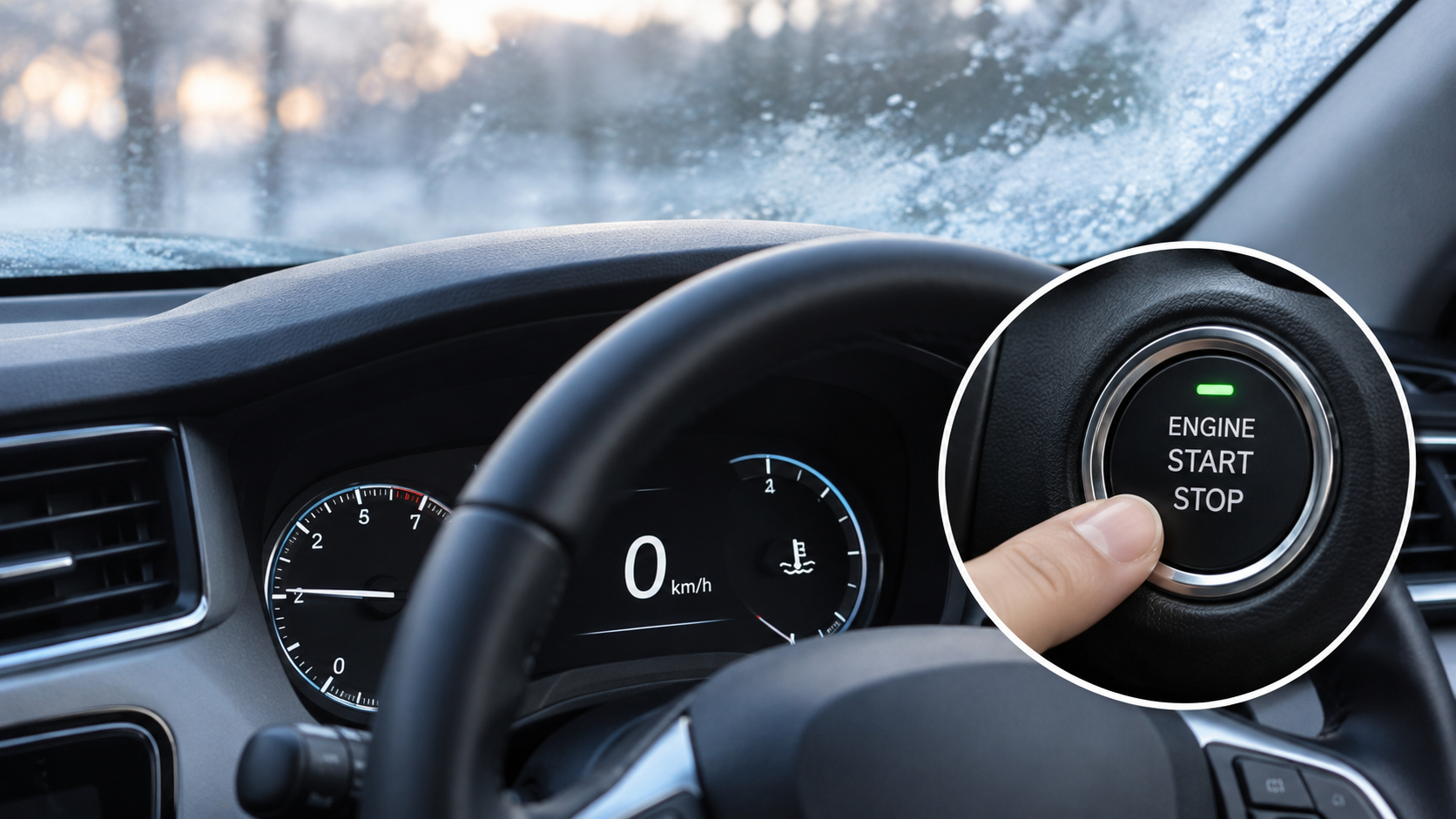
Many car owners believe that starting their vehicle and allowing it to idle for five to ten minutes before driving is necessary to protect the engine. This practice is particularly common during winter mornings, when drivers assume that the engine needs sufficient time to reach its operating temperature before the vehicle can be driven safely.
However, modern cars are designed differently from older vehicles. Advances in engine technology, electronic fuel injection, engine oils and temperature management systems have significantly reduced the need for extended idling before driving.
So, is warming up your car for several minutes really beneficial, or is it simply an outdated driving habit? Let's understand how modern engines work and what manufacturers recommend.
CNG Cars Explained: Why Keeping Petrol in the Tank Still Matters
The belief that every car needs to idle for several minutes before moving comes largely from older automotive technology.
Older vehicles, particularly those equipped with carburettors, often required additional time to stabilise their engine operation after a cold start. During cold conditions, fuel evaporation and air-fuel mixture management could be less smooth, making initial engine operation difficult.
Modern petrol cars use electronic fuel injection systems that automatically adjust fuel delivery according to engine temperature and operating conditions.
Modern diesel engines also use sophisticated engine management systems to regulate combustion during cold starts.
As a result, most modern passenger cars do not require several minutes of stationary idling before being driven under normal conditions.
Today's vehicles use advanced engine management systems that monitor several operating parameters, including coolant temperature, intake air temperature and engine load.
When the engine is started from cold, the electronic control unit adjusts fuel injection and ignition timing to support stable operation.
Engine oil also begins circulating through important engine components shortly after the engine starts. This helps lubricate moving parts and reduce friction.
Although the engine may not immediately reach its normal operating temperature, it can generally be driven gently after a short initial period.
The important point is to avoid demanding high engine performance until the engine has warmed up sufficiently.

Allowing a modern car to idle for five to ten minutes every morning can create several disadvantages without providing meaningful additional protection under normal conditions.
1. Increased Fuel Consumption
An engine consumes fuel even when the vehicle is stationary. Extended idling increases fuel consumption without covering any distance.
Repeated unnecessary idling can increase fuel expenses over time.
2. Increased Emissions
During a cold start, the engine management system may use a richer air-fuel mixture to maintain stable combustion.
Keeping the engine running while stationary can increase unnecessary emissions, particularly before the exhaust after-treatment system reaches its effective operating temperature.
3. Wasted Time
Waiting several minutes before every journey adds unnecessary time to daily travel routines.
For most modern passenger vehicles, a short initial period followed by gentle driving is sufficient under normal conditions.
How Many Airbags Do You Really Need? A Safety Primer
4. Slower Warm-Up Compared with Gentle Driving
An engine generally warms up more quickly when operating under a light load than when simply idling.
Gentle driving allows the engine and other vehicle systems to gradually reach their normal operating temperatures.
However, this does not mean drivers should immediately accelerate aggressively after starting the vehicle.
|
Comparison |
Older Cars |
Modern Cars |
|
Fuel system |
Often carburettor-based |
Electronic fuel injection |
|
Cold starting |
May require longer stabilisation |
Generally easier and electronically managed |
|
Engine oil |
Older oil formulations |
Advanced mineral, semi-synthetic and synthetic oils |
|
Warm-up requirement |
May need additional idling |
Usually a brief pause is sufficient |
|
Driving after starting |
Depends on engine design |
Gentle driving is generally recommended |
|
Fuel efficiency |
Often less efficient during cold starts |
Better electronic fuel management |
|
Emission control |
Older emission systems |
Advanced catalytic converters and emission controls |
The correct approach is to allow the engine to stabilise briefly and then drive smoothly.
1. Start the Engine and Allow a Short Pause
After starting the vehicle, give the engine a few seconds to stabilise. This allows the lubrication system to begin circulating oil through the engine.
2. Avoid Immediate Hard Acceleration
Do not press the accelerator aggressively immediately after a cold start. Keep engine speed moderate and avoid unnecessary high-load driving.
3. Drive Smoothly Until the Engine Warms Up
Use gentle acceleration and avoid sudden throttle inputs. This allows the engine oil, coolant and other mechanical components to gradually reach their normal operating conditions.
4. Follow the Manufacturer's Instructions
Some vehicles have specific cold-start procedures, particularly certain diesel models and vehicles operating in extremely cold temperatures.
Always follow the instructions provided in the owner's manual.
Does Coasting Downhill in Neutral Save Fuel? The Truth Behind This Driving Myth
Cold weather does affect engine operation, but it does not automatically mean that every car needs ten minutes of idling.
At low temperatures, engine oil becomes more viscous, meaning it flows less easily than when warm. The battery also experiences additional stress, while fuel evaporation and combustion conditions can change.
Modern synthetic engine oils and electronic engine management systems are designed to handle a wide range of operating temperatures.
During normal winter conditions, drivers can generally start the vehicle, allow a brief stabilisation period and begin driving gently.
In extremely cold climates, however, additional precautions may be necessary. Vehicles equipped with diesel glow plugs, engine block heaters or specific cold-weather systems should be operated according to manufacturer recommendations.

Turbocharged engines also do not generally require five to ten minutes of idling after every cold start.
However, turbochargers operate at high speeds and temperatures, making proper engine lubrication particularly important.
After starting a cold turbocharged engine, avoid immediately applying heavy acceleration or high engine loads. Gentle driving allows engine oil and other components to warm up gradually.
Similarly, after sustained high-load driving, follow the manufacturer's recommendations for stopping the engine. Some vehicles use advanced cooling and lubrication systems designed to manage turbocharger temperatures after the engine is switched off.
How to Choose Between Two Similar Car Models: A Decision Framework
Occasional idling is not normally harmful to a properly maintained vehicle. For example, leaving the engine running briefly while waiting in traffic or adjusting vehicle settings is generally not a major concern.
However, prolonged and repeated idling can contribute to unnecessary fuel consumption, emissions and carbon deposits under certain operating conditions.
In some modern diesel vehicles, frequent short journeys and prolonged idling can also interfere with the conditions needed for diesel particulate filter regeneration.
Therefore, unnecessary long-duration idling should be avoided.
The belief that every modern car needs five to ten minutes of idling before driving is largely an outdated practice.
Modern petrol and diesel engines use advanced fuel injection, electronic engine management and improved lubrication systems that allow them to operate efficiently shortly after starting.
For most modern passenger cars, allowing a brief stabilisation period and then driving gently is the better approach.
Avoid aggressive acceleration, high engine speeds and heavy loads until the engine reaches its normal operating temperature. During extremely cold weather, follow the manufacturer's specific recommendations.
Ultimately, proper servicing, the correct engine oil and sensible driving habits are more important for engine longevity than spending several minutes warming up a stationary vehicle every morning.














Maruti
₹5.79 - 10.66 Lakh