Khyati Sharma 2026-11-14
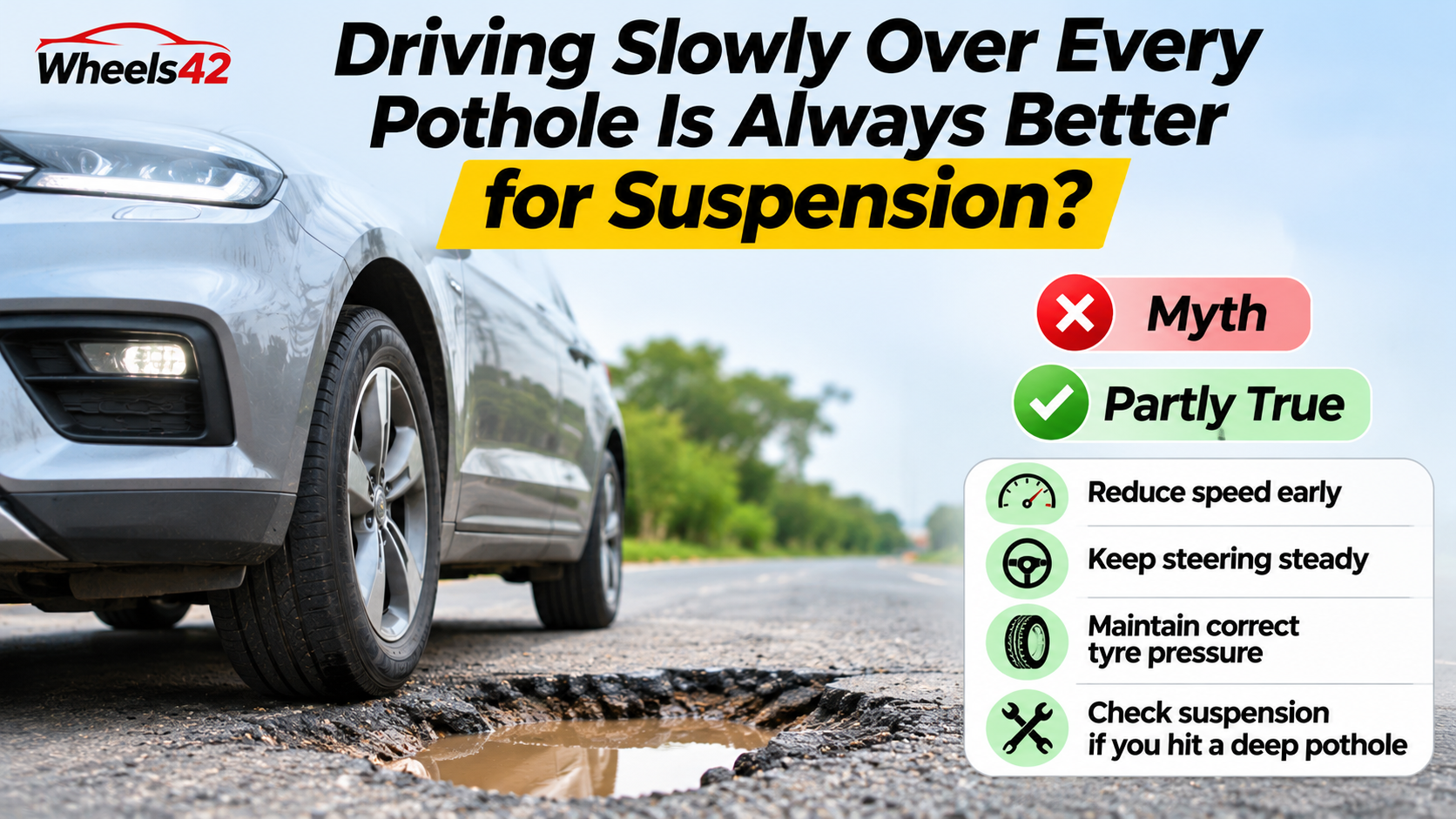
Myth! Reducing speed before reaching a pothole can help minimise damage to your car, but driving extremely slowly over every pothole is not necessarily the safest approach. The depth and shape of the pothole, tyre condition, suspension design, vehicle speed and driving technique all influence the impact.
Indian roads frequently have potholes, broken surfaces and uneven patches, particularly during and after the monsoon. Many drivers respond by crawling over every pothole, believing that the slower the car moves, the better it is for the suspension. Others suddenly apply the brakes or turn the steering wheel to avoid the damaged section.
However, the correct approach is slightly different. Drivers should reduce speed safely before reaching the pothole, avoid sudden braking or steering movements at the last moment and allow the wheels to pass through the obstacle in a controlled manner.
Reducing speed before reaching a pothole generally reduces the energy of the impact. When a vehicle hits a deep pothole at high speed, the tyre, wheel rim, suspension and steering components can experience a sudden force.
At a lower, controlled speed, the wheel has a better chance of moving through the depression without experiencing such a severe impact. This can reduce the risk of damage to the tyre sidewall, alloy wheel, shock absorbers and other suspension parts.
Suddenly applying the brakes just before the pothole can also be counterproductive. Braking transfers more vehicle weight towards the front wheels, potentially increasing the load on the front suspension when it encounters the damaged surface.
Car Loan vs Cash Purchase: Which Makes More Financial Sense?
A car's suspension system is designed to absorb road impacts and keep the tyres in contact with the road. It consists of several components that work together to maintain stability, comfort and handling.
When a wheel enters a pothole, it moves downward into the depression and then travels upward as it reaches the opposite edge. This movement places sudden demands on the suspension system.
The severity of the impact depends on several factors, including the pothole's depth, sharpness, width and the speed of the vehicle.
The following components may be affected:
Shock Absorbers and Struts
Shock absorbers and struts control the movement of the suspension and help prevent excessive bouncing.
A severe pothole impact can place additional stress on these components. If they are already worn, the impact may make existing problems more noticeable.
Damaged shock absorbers can cause excessive bouncing, reduced stability and uneven tyre wear.
Suspension Arms and Bushes
Control arms connect the wheels to the vehicle's chassis or subframe. Rubber bushes help reduce vibration and allow controlled movement between suspension components.
A strong impact can damage bushes or, in severe cases, bend suspension arms. This may affect wheel alignment and steering behaviour.
Ball Joints and Steering Components
Ball joints allow suspension components to move while maintaining their connection. Tie rods and other steering parts help control wheel direction.
A hard impact may damage or loosen these components, particularly if they are already worn.
Springs
Coil springs support the vehicle's weight and absorb road irregularities. Although they are designed to handle repeated movement, a severe impact can damage a weakened or already compromised spring.
A broken spring may produce unusual noises, uneven ride height or changes in handling.

Driving slowly is generally preferable to hitting a pothole at high speed. However, crawling over every road imperfection does not automatically guarantee better suspension protection.
The problem is not low speed itself. It is how the driver approaches and crosses the obstacle.
For example, suddenly braking hard immediately before a pothole can shift weight towards the front of the vehicle. If the front wheels then enter the depression, the suspension may experience a greater load.
Similarly, making a sharp steering movement at the last moment can expose the tyre and wheel to an awkward impact angle. It may also create a safety risk if another vehicle, cyclist or pedestrian is nearby.
On a very deep or sharp-edged pothole, even a low-speed impact can damage a tyre or wheel. The suspension cannot completely eliminate the forces created by a severe road defect.
Drivers should therefore focus on smooth speed reduction, proper steering control and choosing a safe path rather than following a fixed rule that every pothole must be crossed at crawling speed.
How Many Airbags Do You Really Need? A Safety Primer
Yes. Vehicle speed is one of the important factors affecting the severity of pothole impacts.
When a car hits a pothole at higher speed, the wheel encounters the damaged surface more abruptly. This can increase the likelihood of tyre damage, bent rims, alignment changes and suspension problems.
At a lower speed, the driver has more time to assess the road and control the vehicle. The wheel also encounters the obstacle with less impact energy.
However, speed is not the only factor. A shallow pothole may be manageable at a moderate speed, while a deep pothole with sharp edges can cause damage even when the car is moving slowly.
Tyre profile also matters. Cars equipped with low-profile tyres have shorter sidewalls, which provide less cushioning against sharp road impacts than tyres with taller sidewalls.
Vehicle weight, tyre pressure, suspension condition and wheel design can also influence the outcome.

Drivers should reduce speed before reaching a pothole, but they should avoid harsh braking at the moment of impact.
If the pothole is visible from a distance, gently slow down while maintaining a safe gap from the vehicle ahead. This gives you time to prepare without making sudden movements.
As you approach the pothole, avoid stamping on the brakes at the last moment. Where safe and appropriate, release the brakes before the wheel reaches the pothole so that the suspension can move more freely.
This does not mean drivers should never brake near a pothole. Safety comes first. If stopping is necessary to avoid a serious hazard, do so safely rather than following a technique that could put other road users at risk.
The key is to avoid sudden braking directly into the pothole when there is enough distance to slow down earlier.
A Push-Start Button Means the Car Can Run Without a Healthy Key-Fob Battery: Myth or Fact?
Avoiding a pothole is generally preferable if there is a safe and legal path around it.
However, drivers should never make a sudden steering movement without checking surrounding traffic. Moving into another lane unexpectedly can cause a collision with a vehicle, motorcycle or cyclist.
If the pothole cannot be avoided safely, reduce speed and keep the steering controlled. For a pothole that must be crossed, approaching with the wheels straight is generally preferable to striking its edge at a sharp angle.
A sharp-edged pothole hit at an angle can place uneven forces on the tyre and wheel. It can also affect steering control.
If there is sufficient space and visibility, a gentle adjustment in the vehicle's path may help avoid the damaged section. If not, maintaining a controlled line is usually safer than attempting a last-second swerve.
Tyres are the first major point of contact between a car and the road. Their condition and pressure can influence how effectively they handle pothole impacts.
Incorrect tyre pressure can increase the risk of damage.
Underinflated tyres: A tyre with insufficient pressure may flex excessively, increasing the risk of sidewall damage or the wheel rim striking the road edge.
Overinflated tyres: Excessively high pressure can reduce the tyre's ability to absorb certain road impacts and may make the ride harsher.
Worn tyres: Tyres with damaged sidewalls, insufficient tread or ageing rubber may be more vulnerable to road hazards.
Owners should maintain tyre pressure according to the vehicle manufacturer's recommendation, usually mentioned on the driver's door label or in the owner's manual.
Do not use the maximum pressure printed on the tyre sidewall as the normal recommended pressure. That figure is not the same as the vehicle manufacturer's recommended setting.
How to Choose Between Two Similar Car Models: A Decision Framework
Ground clearance is another important factor, particularly on Indian roads.
It refers to the distance between the road surface and the lowest relevant part of the vehicle's underbody when measured under specified conditions.
Cars with higher ground clearance may have a lower risk of the underbody scraping against raised road edges or uneven surfaces. However, higher ground clearance does not make a vehicle immune to pothole damage.
A pothole can still affect the tyres, wheels, suspension and steering components regardless of the vehicle's ground clearance.
Low-clearance sedans and hatchbacks may need extra care when approaching deep potholes, broken road edges and uneven surfaces. However, even SUVs with higher ground clearance should not be driven aggressively over damaged roads.
Ground clearance helps with underbody clearance, while tyre size, suspension travel and vehicle speed influence how the wheels handle the impact.
|
Vehicle Component |
Possible Pothole Damage |
Warning Signs |
|
|
Tyres |
Sidewall bulges, cuts or internal damage |
Air loss, visible bulge or vibration |
|
|
Alloy wheels |
Bent or cracked rim |
Air leakage or steering vibration |
|
|
Shock absorbers |
Damage or worsening of existing wear |
Excessive bouncing or fluid leakage |
|
|
Suspension arms and bushes |
Bending, cracks or looseness |
Knocking sounds or unstable handling |
|
|
Steering components |
Damage or altered alignment |
Steering pull or unusual steering feel |
|
|
Wheel alignment |
Incorrect wheel angles |
Vehicle pulling to one side or uneven tyre wear |
|
|
Underbody |
Scraping or impact damage |
New noises, dents or fluid leaks |
|
Even if the car appears to be driving normally after hitting a pothole, it is worth checking for visible damage.
First, find a safe place to stop. Do not inspect the tyres or wheels while standing in moving traffic.
Look for cuts, bulges or other visible damage on the tyre sidewalls. Check the wheel rims for dents or cracks and look for signs of air leakage.
During the next drive, pay attention to any changes in vehicle behaviour.
Watch for these warning signs:
Steering wheel vibration at certain speeds
Vehicle pulling towards the left or right
New knocking or clunking sounds
Uneven tyre wear
Excessive bouncing after crossing bumps
A sudden change in ride comfort
Visible tyre bulges or pressure loss
If the vehicle develops severe vibration, steering problems or a visibly damaged tyre, avoid continuing at normal speeds. Stop safely and arrange professional assistance.
A mechanic should inspect the tyres, wheels, suspension and steering if there are signs of damage. Wheel alignment should also be checked when the impact has caused pulling or uneven tyre wear.

Indian roads can have unpredictable potholes, particularly during the monsoon and in areas where road surfaces have deteriorated.
A few simple driving habits can reduce the chances of damage.
Look ahead: Maintain enough distance from the vehicle in front so that you can identify potholes early.
Reduce speed gradually: Slow down before reaching the damaged section rather than braking suddenly at the last moment.
Avoid sudden steering: Never swerve without checking surrounding traffic.
Keep tyres properly inflated: Use the pressure recommended by the vehicle manufacturer.
Be careful around puddles: Water can hide potholes and make their depth difficult to judge.
Avoid tailgating: Following too closely reduces your ability to see road damage and react safely.
Check the vehicle after a severe impact: Look for tyre damage, vibration, steering changes and unusual noises.
Maintain the suspension: Worn shocks, bushes and steering components should be inspected and repaired when necessary.
These practices cannot eliminate every risk, but they can help reduce unnecessary stress on the vehicle and improve driving safety.
Driving slowly over potholes is generally better than hitting them at high speed, but the idea that every pothole must be crossed extremely slowly is not entirely correct.
Reducing speed early, maintaining proper tyre pressure and keeping the steering under control are more important than simply crawling over every damaged road surface.
A pothole can damage tyres, alloy wheels, suspension arms, shock absorbers and steering components, even when the vehicle is travelling at a relatively low speed. The severity of the impact depends on the pothole's depth, shape, vehicle speed and overall condition of the car.